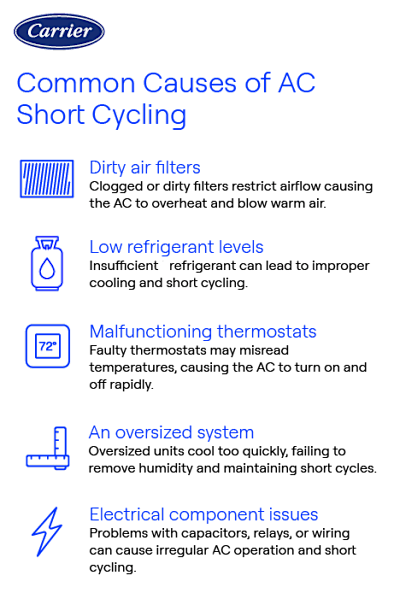
Is your air conditioner turning on and off too quickly? This problem, known as short cycling, can be frustrating and costly.
You might wonder why your AC won’t run smoothly or why your energy bills are rising without good reason. Understanding what causes your air conditioner to short cycle is the first step to fixing it. You’ll discover the common reasons behind this issue and how to prevent damage to your system.
Keep reading to protect your comfort and save money on repairs.
Common Signs Of Short Cycling
Short cycling happens when your air conditioner turns on and off too fast. This can cause problems with cooling and increase your energy costs.
Knowing the signs of short cycling can help you spot issues early and protect your AC unit.
Frequent On-off Cycles
Your air conditioner should run for a while before shutting off. If it starts and stops often, it may be short cycling. This puts stress on the system and can cause damage.
- The AC runs for only a few minutes at a time.
- The compressor frequently switches off and on.
- You hear the unit start up multiple times an hour.
Inconsistent Cooling
Short cycling can make your home feel warmer or cooler in some rooms. The AC does not run long enough to cool the entire space evenly.
| Effect | Description |
| Cold Spots | Some rooms feel colder than others. |
| Warm Rooms | Parts of the house stay warm despite the AC running. |
| Fluctuating Temperature | The temperature changes often in short periods. |
Increased Energy Bills
Short cycling makes your air conditioner work harder. This wastes electricity and raises your energy bills.
Signs that your energy bill is higher due to short cycling:
- Your bill goes up but your usage stays the same.
- The AC runs often but does not cool well.
- You notice a spike in energy use in certain months.

Credit: greenleafair.com
Thermostat Issues
Air conditioners may short cycle because of thermostat problems. The thermostat controls when the AC turns on and off.
If the thermostat has issues, the AC can run too short or too often. This wastes energy and can damage the system.
Improper Thermostat Placement
Placing the thermostat in the wrong spot can cause short cycling. If it is near heat sources, it reads wrong temperatures.
For example, putting it near windows or vents makes it think the room is warmer or cooler than it is.
- Near direct sunlight
- Close to kitchen appliances
- Near air vents or doors
- On exterior walls exposed to heat
Faulty Thermostat Wiring
Bad wiring inside the thermostat can cause the AC to start and stop too fast. Loose or damaged wires confuse the system.
Wiring problems can also cause the thermostat to lose power or send wrong signals to the air conditioner.
- Loose wire connections
- Corroded or broken wires
- Incorrect wiring during installation
Incorrect Thermostat Settings
Wrong thermostat settings can make the AC short cycle. Setting the temperature too close to the room temperature causes quick on-off cycles.
Using the wrong mode or schedule can also confuse the system and waste energy.
- Temperature set too close to current room temp
- Wrong system mode selected (heat/cool/fan)
- Incorrect schedule or timer settings
Airflow Problems
Air conditioners rely on steady airflow to cool your home effectively. Poor airflow can cause the system to work harder than needed.
When airflow is blocked or reduced, the air conditioner may turn on and off quickly. This is called short cycling.
Clogged Air Filters
Air filters clean dust and dirt from the air before it enters your AC. When filters get clogged, air cannot pass through easily.
This forces the system to work harder and can cause it to short cycle to avoid overheating.
Blocked Vents And Registers
Blocked or closed vents stop air from flowing freely in your home. This reduces the air pressure inside the AC system.
Low pressure can make the air conditioner shut off quickly and turn on again often, leading to short cycling.
- Furniture blocking vents
- Closed or partially closed registers
- Objects placed in front of vents
Dirty Evaporator Coils
Evaporator coils absorb heat from your home’s air. Dirt and dust on the coils block airflow and reduce cooling.
Dirty coils cause the system to work inefficiently. This can trigger short cycling to protect the AC from damage.
Refrigerant-related Causes
Air conditioners need the right amount of refrigerant to work well. Problems with refrigerant can cause the system to short cycle. Short cycling means the AC turns on and off too often. This can hurt the unit and raise energy bills.
We will look at three main refrigerant issues that cause short cycling. These include low refrigerant levels, refrigerant leaks, and overcharged refrigerant.
Low Refrigerant Levels
Low refrigerant means the AC does not have enough coolant to remove heat. The system works harder and shuts off quickly to prevent damage. This causes the short cycle.
- Cooling is less effective
- Compressor may overheat
- System pressure drops
- Thermostat turns unit off early
Refrigerant Leaks
Leaks let refrigerant escape from the AC system. This lowers the amount of refrigerant inside. Leaks often cause low refrigerant levels and short cycling.
| Leak Location | Effect on AC |
|---|---|
| Coils | Reduced cooling capacity |
| Connections | Pressure drops quickly |
| Valves | Frequent cycling on and off |
Overcharged Refrigerant
Too much refrigerant can also cause short cycling. Overcharging raises pressure inside the system. The safety controls then turn the AC off to avoid damage.
Signs of overcharged refrigerant:
- High pressure readings
- Ice forming on coils
- Compressor shuts off quickly
- Reduced cooling efficiency
Mechanical Failures
Mechanical failures often cause air conditioners to short cycle. This means the unit turns on and off too quickly. Short cycling can damage the system and raise energy costs.
Understanding common mechanical problems can help identify why your air conditioner short cycles. Key parts like the compressor, capacitors, and fan motors may fail.
Faulty Compressor
The compressor pumps refrigerant through the system. A faulty compressor may cause the air conditioner to short cycle. It can overheat or lose pressure quickly.
- Overheating due to worn parts
- Low refrigerant pressure
- Electrical issues inside the compressor
- Blocked or leaking refrigerant lines
Malfunctioning Capacitors
Capacitors help start the compressor and fan motor. If capacitors fail, the air conditioner may short cycle. The unit struggles to start or stops quickly.
| Capacitor Problem | Effect on AC |
| Weak capacitor | Delays startup, causes quick shutdown |
| Open capacitor | Stops compressor or fan motor |
| Shorted capacitor | Draws excess current, triggers safety shutdown |
Worn-out Fan Motors
The fan motor moves air over the coils to cool the system. A worn-out fan motor causes poor airflow. This leads to overheating and short cycling.
Signs of fan motor problems include:
- Strange noises from the fan
- Fan stops running intermittently
- Unit shuts off before cooling fully

Credit: unitedstatesolutions.com
Electrical Problems
Electrical issues are common reasons for air conditioners to short cycle. These problems stop the AC from running smoothly. Fixing electrical faults can prevent damage.
Short cycling means the AC turns on and off quickly. This wastes energy and wears out parts. Understanding electrical causes helps with repairs.
Short Circuits
Short circuits happen when wires touch each other wrongly. This causes a sudden surge of electricity. The AC turns off to stop damage.
Short circuits can damage the compressor or control board. They also increase fire risk. Regular checks reduce short circuit problems.
Loose Wiring Connections
Loose wires cause poor electrical flow inside the AC. This makes the system stop and start often. Loose connections also cause sparks.
Vibrations and heat can loosen wires over time. Tightening connections helps the AC run steadily. Inspect wires regularly for safety.
Tripped Circuit Breakers
Circuit breakers cut power to protect the AC from damage. If a breaker trips, the AC stops working. This causes short cycling as it resets.
Breakers trip due to overloads or electrical faults. Checking the breaker panel and fixing problems keeps the AC running well.
System Oversizing And Undersizing
Air conditioners that are too large or too small for a space can cause short cycling. This means the system turns on and off frequently. Short cycling reduces comfort and wastes energy.
Understanding how oversizing and undersizing affect your air conditioner helps you avoid these problems.
Impact Of Oversized Units
Oversized air conditioners cool a room quickly. This sounds good but causes issues. The system shuts off before it removes enough humidity. This leaves the air feeling damp and uncomfortable.
- Shorter cooling cycles lead to more frequent starts and stops.
- Higher wear and tear on parts like the compressor.
- Increased energy consumption and utility bills.
- Reduced system lifespan due to stress from cycling.
- Poor humidity control causing indoor discomfort.
Consequences Of Undersized Units
Undersized air conditioners run longer to cool a space. They may never reach the set temperature. This constant running also causes short cycling but for different reasons.
| Issue | Effect |
| Continuous operation | Higher energy costs |
| Inability to cool properly | Discomfort and hot spots |
| Increased wear | More repairs and shorter system life |
| Frequent cycling | Stress on compressor and other parts |
Preventive Maintenance Tips
Short cycling in air conditioners happens when the system turns on and off too often. This can waste energy and damage the unit. You can stop short cycling with simple maintenance tasks.
Doing regular checks and cleaning keeps your air conditioner running smoothly. Below are key tips to prevent short cycling and improve your system’s lifespan.
Regular Filter Replacement
Dirty filters block airflow and make the air conditioner work harder. This can cause the system to short cycle. Change filters often to keep air flowing well.
- Check filters every month during heavy use
- Replace filters at least every 3 months
- Use filters recommended by your AC manufacturer
- Keep extra filters on hand for quick swaps
Routine Professional Inspections
Licensed technicians find issues that are hard to spot. Regular inspections catch problems before they cause short cycling or bigger damage.
| Inspection Task | Purpose |
| Check refrigerant levels | Ensure proper cooling and prevent overload |
| Inspect electrical connections | Avoid shorts and unsafe conditions |
| Test thermostat operation | Keep temperature control accurate |
| Examine compressor and fan | Maintain smooth system cycling |
Cleaning Coils And Vents
Dirty coils and vents reduce airflow and cooling. Clean parts help the system run longer without turning on and off too fast.
- Turn off power before cleaning
- Use a soft brush or vacuum on coils
- Clear debris from vents and around the unit
- Keep outdoor units free of leaves and dirt
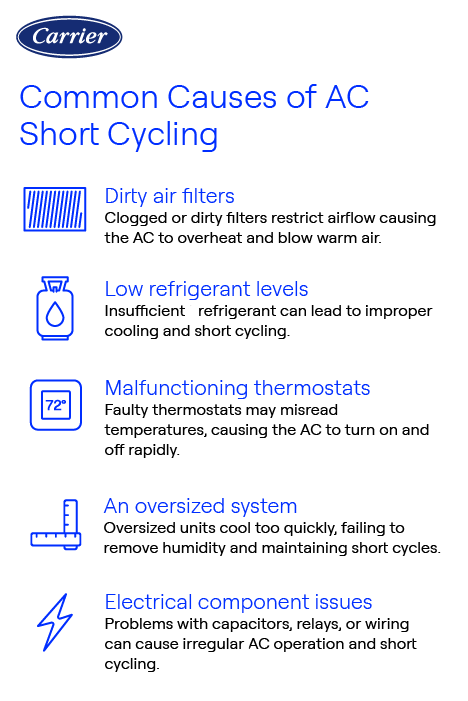
Credit: www.carrier.com
Frequently Asked Questions
What Is Ac Short Cycling?
AC short cycling occurs when your air conditioner turns on and off frequently. This can prevent the system from properly cooling your home. Short cycling can be caused by thermostat issues, refrigerant leaks, or oversized units. Addressing the root cause can help restore efficient cooling performance.
How Does A Dirty Filter Cause Short Cycling?
A dirty filter restricts airflow, causing your AC to work harder. This can lead to overheating and short cycling. Regularly changing or cleaning filters ensures optimal airflow. This, in turn, helps maintain efficient and consistent cooling performance, preventing short cycling.
Can Thermostat Issues Cause Short Cycling?
Yes, incorrect thermostat placement or settings can cause short cycling. If the thermostat is near heat sources, it may read temperatures inaccurately. This can cause the AC to switch on and off too frequently. Ensuring the thermostat is properly placed and calibrated can resolve this issue.
How Can Refrigerant Leaks Lead To Short Cycling?
Refrigerant leaks lower the refrigerant levels in your AC system. This can cause the compressor to overheat, leading to short cycling. Identifying and repairing leaks promptly can restore refrigerant levels. This ensures your air conditioner operates efficiently without frequent cycling.
Conclusion
Air conditioner short cycling can cause many problems. It wastes energy and raises your bills. It also wears out parts faster than normal. Common causes include dirty filters, refrigerant issues, or wrong thermostat settings. Fixing these problems helps your AC run smoothly.
Regular maintenance keeps your system healthy and efficient. Pay attention to signs like frequent stops and starts. Catching issues early saves money and stress later. Keep your home cool without extra costs or repairs. Simple care makes a big difference for your air conditioner’s life.