If you’re serious about fishing, you know that connecting your braided line to fluorocarbon leader the right way can make all the difference. A strong, reliable knot means fewer lost fish and more time enjoying your catch.
But tying these two lines together can be tricky if you don’t know the right technique. In this guide, you’ll discover simple steps to create a secure, durable knot that holds up under pressure. Keep reading to learn how to tie braided fishing line to fluorocarbon easily and confidently every time.

Credit: www.reddit.com
Choosing The Right Line
Choosing the right fishing line is important for a strong and reliable connection. Braided lines and fluorocarbon lines each have unique features. Understanding these helps you pick the best lines for your fishing needs.
This guide explains the types of braided lines, the characteristics of fluorocarbon, and how to match their strengths.
Types Of Braided Lines
Braided fishing lines come in several types. They differ in material, thickness, and strength. Choosing the right type depends on your fishing style and target fish.
- Dyneema: Very strong and thin, good for long casts.
- Spectra: Offers great abrasion resistance and strength.
- Polyethylene: Affordable and good for general use.
- Microfilament: Smooth and easy to handle.
Fluorocarbon Characteristics
Fluorocarbon lines are nearly invisible underwater. They resist water absorption and have high abrasion resistance. These features help in clear water and rocky areas.
| Feature | Benefit |
| Low Visibility | Fish are less likely to see the line |
| High Density | Sinks faster, good for deep fishing |
| Abrasion Resistant | Lasts longer near rocks and debris |
| Water Resistant | Keeps strength even when wet |
Matching Line Strengths
Matching the strength of braided and fluorocarbon lines is key to avoid weak points. The breaking strength should be close for both lines to work well together.
Follow these tips to match line strengths:
- Check the pound test ratings on both lines.
- Choose fluorocarbon with the same or slightly lower strength than braided line.
- Consider the stretch difference; fluorocarbon stretches less.
- Avoid big gaps in strength to prevent knots from slipping or breaking.
Essential Tools And Materials
Tying braided fishing line to fluorocarbon requires specific tools. Using the right materials helps make strong, reliable knots.
Having proper tools makes the process easier and ensures your fishing setup lasts longer.
Need For Scissors And Knot Tying Tools
Sharp scissors are essential to cut braided and fluorocarbon lines cleanly. A clean cut prevents frayed ends that weaken knots.
Knot tying tools help hold lines steady while you tie. These tools reduce hand strain and improve knot accuracy.
- Use scissors designed for fishing line or sharp nail clippers.
- Knot tying tools include pliers, forceps, or specialized knot tiers.
- Choose tools that fit comfortably in your hand.
Optional Accessories
Optional accessories can make tying knots easier and protect your fishing gear. These are not required but helpful.
- Line conditioner to reduce line memory and improve knot grip.
- Small containers to keep knots and tools organized.
- Water spray bottle to wet lines before tightening knots.
Preparing The Lines
Preparing your braided and fluorocarbon lines properly helps create a strong knot. This step makes fishing easier and safer.
Focus on trimming, cleaning, and moistening the lines before tying. These small actions improve knot strength and durability.
Trimming And Cleaning
Trim the ends of both lines to remove any frayed or damaged parts. Use sharp scissors or a line cutter for a clean cut.
- Cut about 1 inch from the end of the braided line.
- Cut a similar length from the fluorocarbon line end.
- Remove any dirt or debris from the lines by wiping with a dry cloth.
- Ensure the cut ends are smooth and even for easier knot tying.
Moistening For Knot Tying
Moisten the line ends before tying to reduce friction and heat. This prevents the lines from weakening or breaking.
Here are tips to moisten your lines effectively:
- Use saliva or clean water to wet the lines.
- Apply moisture evenly on both braided and fluorocarbon ends.
- Avoid soaking lines too much; a light wetting is enough.
- Moisten the knot area just before tightening the knot.
Strong Knots For Braided To Fluorocarbon
Tying braided fishing line to fluorocarbon requires strong knots. These knots keep your line secure during fishing. Using the right knot helps prevent line slippage and breakage.
Below are three effective knots that work well for connecting braided line to fluorocarbon. Each knot offers strength and reliability for fishing.
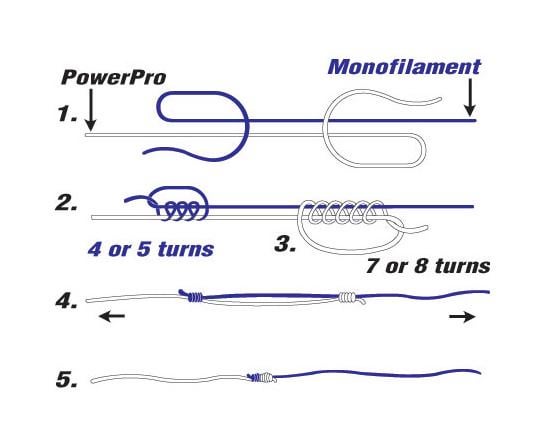
Double Uni Knot Steps
The Double Uni Knot is a popular choice for joining braided and fluorocarbon lines. It holds well and is easy to tie with practice.
To tie the Double Uni Knot, you create two uni knots around each other and then pull tight.
- Overlap the ends of braided and fluorocarbon lines.
- Make a loop with one line and wrap the tag end 4-6 times around both lines.
- Pass the tag end back through the loop and pull to form the uni knot.
- Repeat the same steps with the other line.
- Moisten the knots and pull both standing lines to slide the knots together.
- Trim the tag ends close to the knots.
Fg Knot Technique
The FG Knot is strong and slim, ideal for braided to fluorocarbon connections. It resists slipping and fits through rod guides easily.
This knot requires wrapping the braid tightly around the fluorocarbon line in a specific pattern.
- Hold the fluorocarbon line straight and place the braid alongside it.
- Wrap the braided line tightly around the fluorocarbon 10-12 times.
- Keep the wraps neat and close together without overlapping.
- Pull the fluorocarbon line to tighten the wraps firmly.
- Secure the braid with several half-hitch knots around the fluorocarbon.
- Trim excess braid and moisten the knot before pulling tight.
Improved Clinch Knot Guide
The Improved Clinch Knot is simple and works well for attaching fluorocarbon to hooks or leaders. It can also connect braided to fluorocarbon with care.
This knot is best for lighter line connections and requires careful tightening to avoid damage.
- Thread the braided line through the fluorocarbon loop or eye.
- Wrap the tag end around the standing line 5-7 times.
- Pass the tag end through the small loop near the eye.
- Then pass the tag end back through the large loop created.
- Moisten the knot and pull the standing line to tighten.
- Trim the tag end close to the knot.
Tips For Secure Knots
Tying braided fishing line to fluorocarbon needs strong knots. Secure knots help keep your line from slipping off.
Use the right techniques to make your knots tight and reliable for fishing.
Avoiding Slippage
Braided line is slick and can slip easily on fluorocarbon. To stop this, use knots that grip well.
Make sure the knot wraps tightly around the fluorocarbon line to avoid slipping under pressure.
- Use knots like the FG knot or Uni knot for better grip
- Wrap the braided line multiple times around the fluorocarbon
- Keep the wraps tight and close together
Proper Tightening Methods
Tighten knots slowly and evenly to avoid weakening the line. Quick pulls can damage fibers.
Wet the line before tightening. This reduces friction and keeps the knot smooth.
- Moisten the line with water or saliva before pulling tight
- Pull on both ends gently and steadily
- Check that the knot tightens evenly without bunching
Testing Knot Strength
After tying, test the knot by pulling it hard. This checks if it will hold during fishing.
Look for any slipping or loosening and retie if needed. A strong knot means less chance of losing fish.
- Pull on the braided line and fluorocarbon line separately
- Watch for any movement or loosening in the knot
- Retie knots that slip or feel weak

Credit: www.youtube.com
Common Mistakes To Avoid
Tying braided fishing line to fluorocarbon can be tricky. Many anglers make simple mistakes that weaken the connection. Avoid these errors to keep your line strong and reliable.
Understanding what not to do helps you fish with confidence. Here are common mistakes and how to avoid them.
Using Incompatible Knots
Not all knots work well with braided and fluorocarbon lines. Using the wrong knot can cause slippage or breakage. Choose knots designed for these materials.
- Double Uni Knot: Good for joining braided and fluorocarbon.
- Albright Knot: Strong and reliable for different line types.
- FG Knot: Best for high strength but harder to tie.
Overtightening Risks
Tightening knots too much can damage the line. Braided and fluorocarbon lines are sensitive to pressure. Pull knots firmly but stop before the line feels strained.
| Effect | Cause | Prevention |
| Line Fraying | Excessive tightening | Tie knots with moderate tension |
| Weakened Knot | Crushing fibers | Use lubricants like water or saliva |
| Slip Risk | Uneven knot tightening | Pull knots evenly and slowly |
Ignoring Line Condition
Old or damaged line reduces knot strength. Fluorocarbon can get stiff and braided line may fray. Inspect lines before tying knots.
- Check for discoloration or stiffness in fluorocarbon.
- Look for frayed or worn spots in braided line.
- Replace lines that show any damage before fishing.
Maintaining Your Knots
Tying braided fishing line to fluorocarbon is a common practice. Keeping your knots strong is very important for a good catch. Regular care helps avoid losing fish or gear.
Proper maintenance makes your knots last longer. It also keeps your fishing line safe and ready for use every time.
Regular Inspection
Check your knots before and after fishing. Look for any signs of wear or damage. Small cuts or frays can weaken the knot.
Feel the knot with your fingers. If it feels rough or loose, it may need attention. Pay close attention to the area where the lines join.
- Look for frayed or damaged line near the knot
- Check if the knot slips or feels loose
- Make sure the knot is tight and secure
- Test the knot by pulling gently
Replacing Worn Knots
Replace knots at the first sign of damage. A worn knot can break under pressure. Cutting off the old knot and tying a new one keeps your gear safe.
Use strong and simple knots like the Double Uni or FG knot. Make sure the new knot is tight and neat. Trim any excess line close to the knot.
- Cut off the old knot completely
- Retie the knot carefully with both lines
- Tighten the knot slowly and firmly
- Trim the tag ends close to the knot
- Test the new knot before fishing

Credit: www.reddit.com
Frequently Asked Questions
What Is The Best Knot For Tying Braid To Fluorocarbon?
The best knot for tying braid to fluorocarbon is the FG knot. It is strong and reliable, maintaining nearly 100% of the line’s strength. This knot is ideal for anglers who need a smooth connection. It passes easily through guides, making it a favorite for many.
How Do You Tie An Fg Knot?
To tie an FG knot, start by wrapping the braid around the fluorocarbon. Make 20 alternating wraps. Then, secure it with half hitches and a final knot. Trim the ends. This method ensures a strong, smooth connection ideal for fishing.
Why Use Fluorocarbon With Braided Line?
Fluorocarbon is nearly invisible underwater, offering a stealthy presentation. It is also abrasion-resistant, making it durable against rough surfaces. Pairing it with braided line combines strength and sensitivity, providing the best of both worlds for anglers seeking efficiency.
Is The Albright Knot Good For Braid To Fluorocarbon?
Yes, the Albright knot is effective for braid to fluorocarbon. It is easy to tie and strong. This knot is suitable for various fishing situations. Its compact nature helps when casting through guides, offering a reliable alternative to the FG knot.
Conclusion
Tying braided fishing line to fluorocarbon does not have to be hard. Use the right knots and tighten them well. This keeps your line strong and reliable. Practice a few times to get the hang of it. Good knots help you catch more fish without losing gear.
Keep your fishing gear ready and enjoy your time on the water. Simple steps lead to better fishing results every time.