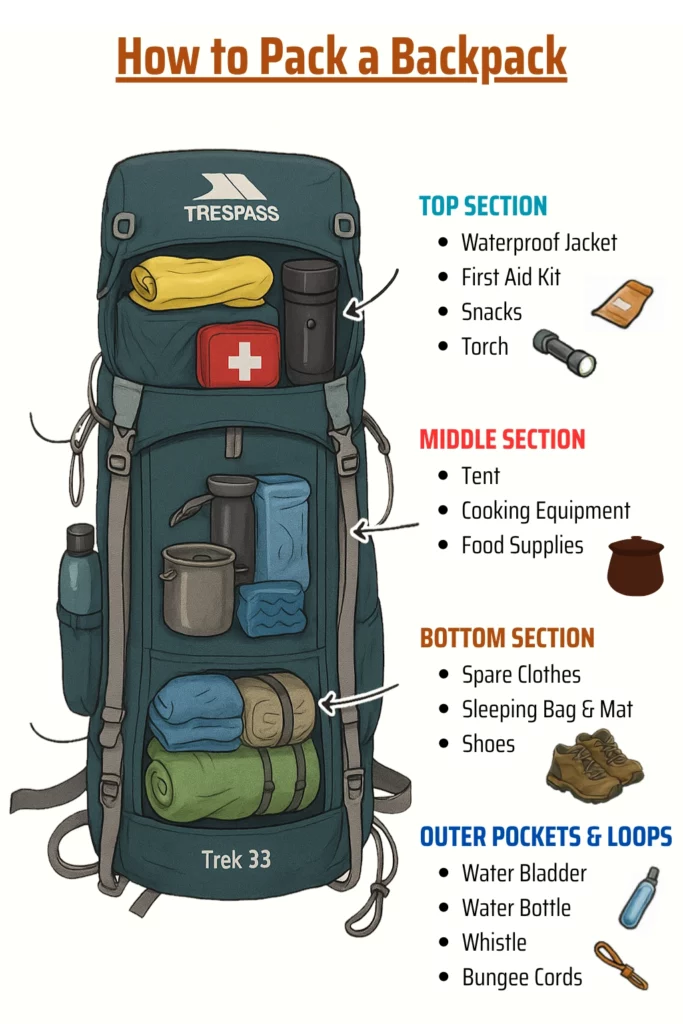
Packing your hiking backpack the right way can make or break your outdoor adventure. If you’ve ever felt tired too soon, struggled to find what you need, or ended up with a sore back, this guide is for you.
You’ll learn simple, smart tips to organize your gear so you carry less weight, stay comfortable, and enjoy every step of your hike. Keep reading, and discover how to pack like a pro—your next hike will thank you!
Choosing The Right Backpack
Picking the right backpack is key for a good hiking trip. Your pack should fit well and hold all your gear safely.
Think about how long your hike will be and what you need to carry. This helps you choose the best size and features.
Backpack Sizes And Capacities
Backpacks come in many sizes. They are measured in liters, which tells how much space you have. Choose a size based on your trip length.
| Trip Length | Backpack Size (Liters) |
| Day Hike | 15-30 L |
| Weekend Trip | 30-50 L |
| Multi-Day Trip | 50-70 L |
| Extended Trips | 70+ L |
Features To Look For
Good backpacks have features that make hiking easier. Look for strong zippers, padded straps, and good ventilation.
- Adjustable shoulder straps and hip belts
- Multiple compartments for organizing gear
- Water-resistant material to protect your items
- Hydration bladder pocket
- Compression straps to keep load stable
Fitting Your Backpack
Fit is very important. A well-fitted backpack feels comfortable and reduces strain on your back.
| Body Part | Fit Tip |
|---|---|
| Torso Length | Measure from neck base to hip bone |
| Hip Belt | Sits on top of your hip bones, not your waist |
| Shoulder Straps | Should hug your shoulders without digging in |
| Load Lifters | Adjust to pull weight close to your body |
Credit: pangolinswithpacks.com
Essential Gear For Hiking
Packing your hiking backpack the right way makes your trip safer and more fun. You need to bring the right gear for comfort and safety. This guide helps you know what to pack.
Focus on clothing, navigation tools, and safety items. These are the most important parts of your hiking gear.
Clothing And Footwear
Wear clothes that protect you from weather changes. Choose layers you can add or remove easily. Good shoes keep your feet safe and dry.
- Moisture-wicking base layer to stay dry
- Insulating middle layer for warmth
- Waterproof outer layer to block rain and wind
- Comfortable hiking boots with good grip
- Extra socks to keep feet fresh
- Hat and gloves for sun and cold protection
Navigation Tools
Navigation tools help you find the right path and avoid getting lost. Bring tools that work well and are easy to use.
- Paper map of the hiking area
- Compass for direction
- GPS device or smartphone with offline maps
- Whistle to signal for help
Safety And First Aid
Safety gear protects you in emergencies. A first aid kit helps treat minor injuries on the trail.
- Basic first aid kit with bandages and antiseptic
- Emergency blanket to stay warm
- Multi-tool for repairs and tasks
- Headlamp or flashlight with extra batteries
- Personal medications if needed
- Sunscreen and insect repellent
Packing Techniques For Balance
Packing your hiking backpack correctly helps keep your balance on the trail. A well-packed bag feels lighter and easier to carry. It also reduces strain on your back and shoulders.
Good packing means placing gear in a way that keeps your center of gravity stable. This guide shares key tips to pack for balance and comfort.
Weight Distribution Tips
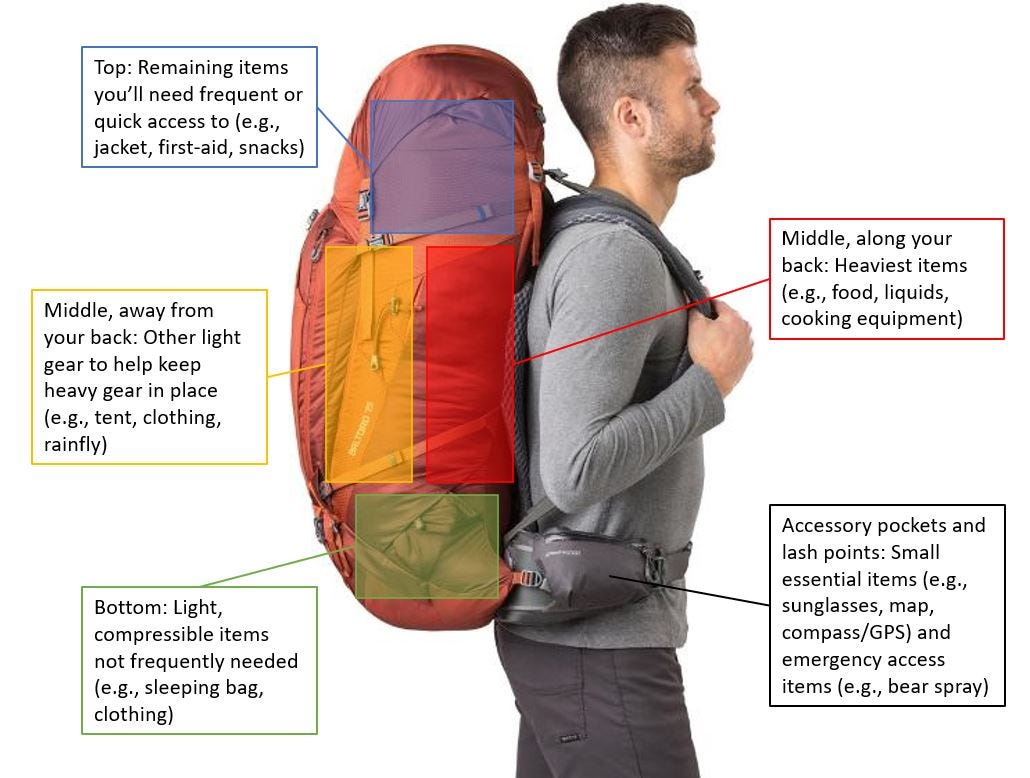
Heavy items should be close to your back and near the middle of the pack. This keeps the weight centered and prevents you from leaning backwards or forwards.
- Place heavy gear like water and food near your spine.
- Put medium weight items above or below the heavy load.
- Light items should go on the outside or at the top of the pack.
- Keep frequently used items in side or front pockets for easy reach.
Layering Your Gear
Layer your gear inside the backpack to protect fragile items and keep things organized. Start with a base layer of soft items to cushion your load.
| Layer | Type of Gear | Reason |
| Bottom | Sleeping bag, clothes | Cushions and fills space |
| Middle | Heavy and solid items | Keeps weight centered |
| Top | Light items, rain jacket | Easy access and quick packing |
Securing Loose Items
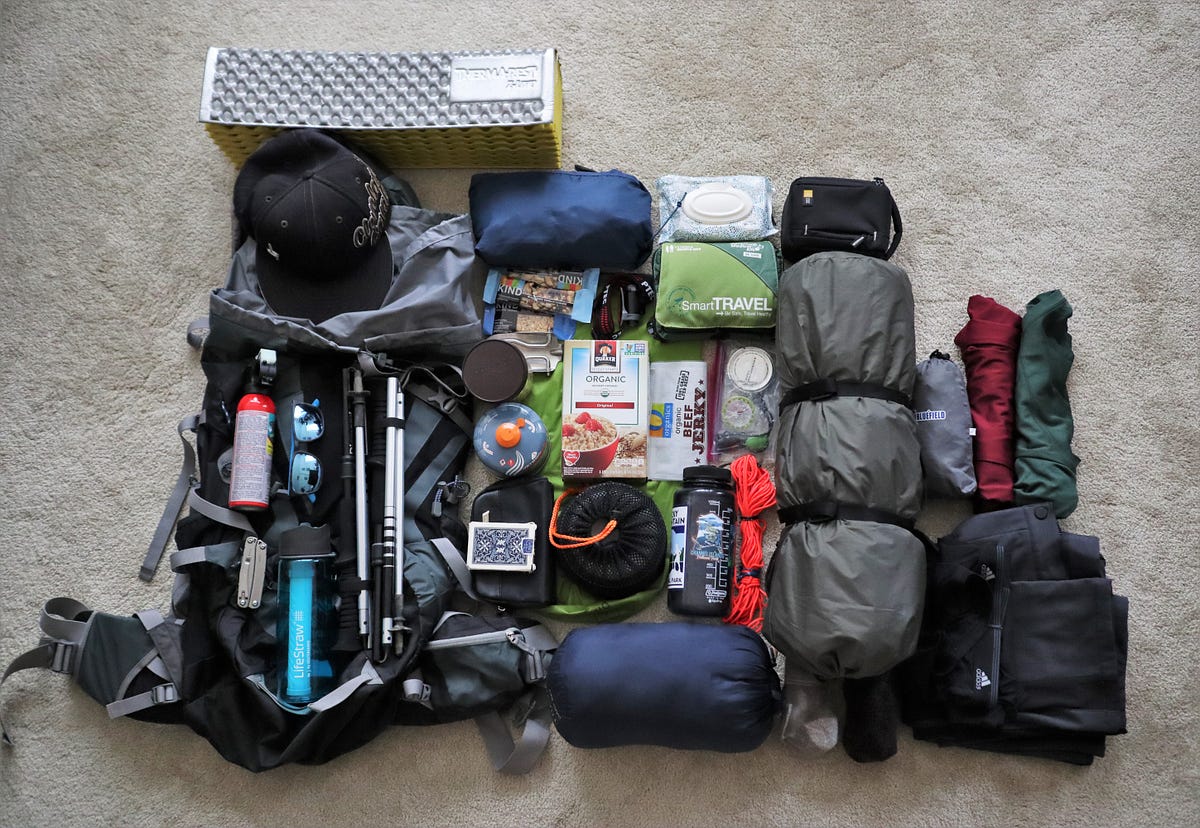
Loose items can shift and throw off your balance while hiking. Use straps and pockets to keep everything in place. Make sure nothing moves inside your pack.
- Use compression straps to tighten your pack.
- Place small items in zippered pockets or stuff sacks.
- Fill empty spaces with soft gear like clothing.
- Check your pack before each hike to secure loose ends.
Credit: pangolinswithpacks.com
Lightweight Packing Strategies
Packing light is key to a comfortable hiking trip. Carrying less weight helps you move faster and saves energy.
Use smart methods to keep your backpack light without missing important gear.
Choosing Multipurpose Items
Select items that serve more than one purpose to reduce what you carry. A single item with many uses saves space and weight.
- A bandana can be a towel, sun shield, or pot holder.
- A jacket that works as both rain gear and insulation.
- A knife that also functions as a can opener and screwdriver.
- Cookware that doubles as a bowl and storage container.
Minimizing Non-essentials
Leave out items that are nice to have but not needed for safety or comfort. Focus on essentials only.
| Item | Keep or Leave |
| Extra clothes | Keep only one extra set |
| Books or magazines | Leave behind |
| Heavy toiletries | Use travel-sized or skip |
| Multiple pairs of shoes | Keep just hiking boots |
Using Compression Bags
Compression bags reduce the size of soft items like clothes and sleeping bags. This saves space and helps organize your pack.
Benefits of compression bags:
- Protect gear from moisture
- Keep items compact and neat
- Make packing and unpacking easier
Organizing For Easy Access
Packing a hiking backpack well helps you find things fast. Organize your items to keep them easy to reach.
Good organization saves time and keeps your hike smooth. Think about where you put each item.
Packing Zones
Divide your backpack into zones for different types of gear. This helps keep your items in order.
Put heavy items near your back and center for balance. Light items go at the top and sides.
- Bottom zone: sleeping bag and light items
- Middle zone: heavy gear like food and stove
- Top zone: clothes and rain gear
- Side pockets: water bottles and small tools
Quick Reach Items
Keep items you use often in easy-to-reach spots. This saves time and hassle during your hike.
Use outer pockets or the top compartment for these things. Examples include maps, snacks, and sunscreen.
- Map and compass
- Snacks and energy bars
- Sunscreen and lip balm
- First aid kit
- Rain jacket
Keeping Gear Dry
Protect your gear from water to keep it safe and working. Use dry bags or plastic bags inside your pack.
Place waterproof items at the top or in separate compartments. Keep electronics and clothes dry this way.
- Use dry bags for clothes and sleeping bags
- Seal electronics in waterproof cases
- Keep rain gear in an easy access spot
- Cover your backpack with a rain cover

Credit: www.myogtutorials.com
Final Checks Before Hitting The Trail
Before starting your hike, it is important to double-check your backpack. Final checks help make sure you are ready and safe.
These checks focus on comfort, balance, and emergency gear. Proper packing saves energy and prevents problems.
Weight And Comfort Test
Try carrying your packed backpack for a few minutes. This helps you feel its weight and balance.
Check if the weight feels right and if it causes any pain or discomfort. Make changes if needed.
- Walk around to test comfort
- Feel for pressure points
- Adjust items inside if weight feels uneven
Adjusting Straps
Make sure all straps are tightened and adjusted for your body. Straps keep the backpack stable.
Check shoulder, chest, and waist straps. They should hold the pack close but not too tight.
- Tighten shoulder straps evenly
- Use chest strap to stop swaying
- Fasten waist strap for better load support
Emergency Preparedness
Before you leave, verify your emergency supplies are easy to reach. Quick access is key in an emergency.
Check items like first aid kit, whistle, and flashlight. Keep them in outer pockets or top compartments.
- Place first aid kit in an accessible spot
- Keep whistle where you can reach it fast
- Store flashlight with fresh batteries on top
Frequently Asked Questions
How To Choose The Right Hiking Backpack Size?
Choosing the right backpack size depends on the length of your trip and personal needs. For day hikes, a 20-30 liter pack is ideal. For multi-day trips, consider a 50-70 liter pack. Ensure the backpack fits comfortably and distributes weight evenly on your hips and shoulders.
What Essentials To Pack For A Hiking Trip?
Pack essentials like water, food, a first-aid kit, and navigation tools. Add extra clothing, a flashlight, and a multi-tool. Don’t forget sunscreen, insect repellent, and a whistle for emergencies. Tailor your pack to the hike’s length and weather conditions to stay prepared.
How To Organize A Hiking Backpack Efficiently?
Organize by weight and accessibility. Place heavy items in the center for balance. Keep frequently used items like snacks and maps in outer pockets. Use compartments to separate clothes, gear, and food. Efficient packing reduces strain and helps you find essentials quickly during your hike.
What Are The Best Tips For Packing Light?
Pack multipurpose items to reduce weight. Choose lightweight, quick-dry clothing and compact gear. Limit food to essentials and repackage to save space. Use collapsible containers and leave non-essential items behind. Packing light increases comfort and efficiency on the trail.
Conclusion
Packing your hiking backpack well makes your trip easier and safer. Keep heavy items close to your back for balance. Place things you need often on top or in side pockets. Distribute weight evenly to avoid strain. Use compression straps to keep everything tight.
Remember, a well-packed bag saves energy and keeps you comfortable. Take time to organize before you start your hike. Enjoy the trail with less worry about your gear. Simple steps can make a big difference on your adventure.