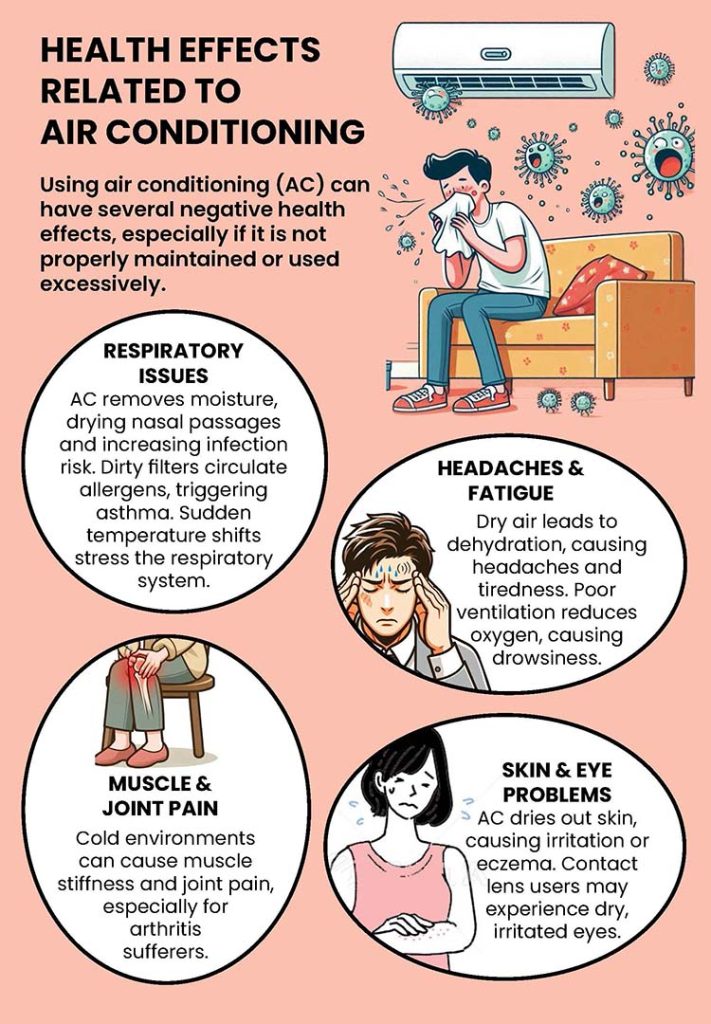
Have you ever felt a headache after spending time in a room with the air conditioner on? You’re not alone.
Many people wonder if their AC is to blame for those nagging headaches. Understanding this connection can help you find relief and enjoy cool comfort without discomfort. Keep reading to discover why your air conditioner might cause headaches and what you can do to stop them.

Credit: theconversation.com
How Air Conditioners Affect Your Head
Air conditioners cool indoor air, but they can also cause headaches. Many people feel pain or discomfort after spending time in cooled rooms. Understanding how air conditioning affects your head can help you avoid these problems.
This article looks at three common ways air conditioners may trigger headaches: cold air and sinus pressure, dry air and dehydration, and airborne allergens and irritants.
Cold Air And Sinus Pressure
Cold air from an air conditioner can tighten blood vessels in your head. This change can cause sinus pressure. When your sinuses feel blocked or inflamed, you may get a headache.
Sudden exposure to cold air can also irritate sensitive nerves in your nose and head. This irritation may lead to pain or discomfort.
Dry Air And Dehydration
Air conditioners remove moisture from the air. This dry air can dry out your skin and nasal passages. Dry sinuses can cause irritation and headaches.
- Dry air reduces moisture in your body
- Dehydration can trigger headaches
- Staying hydrated helps prevent pain
- Use a humidifier to add moisture indoors
Airborne Allergens And Irritants
Air conditioners can spread dust, mold, and pollen inside your home. These airborne irritants can cause allergic reactions. Allergies often lead to headaches, sneezing, and congestion.
| Common Airborne Irritants | Effects on Head |
| Dust | Sinus pressure and headaches |
| Mold Spores | Allergic reactions and headaches |
| Pollen | Congestion and sinus pain |
Credit: www.searsheatingcooling.com
Common Headache Types Linked To Ac Use
Air conditioners can cause different types of headaches. Many people feel pain after spending time in cold, dry air. Understanding these headache types helps to manage them better.
Below are common headaches linked to air conditioner use. Each has unique causes and symptoms.
Tension Headaches
Tension headaches happen when muscles in your head and neck tighten. Cold air from an AC can cause this muscle tension. It may lead to a dull, steady ache around the forehead or back of the head.
- Muscle stiffness from cold air
- Stress from discomfort or noise
- Poor posture while sitting near the AC
Migraine Triggers
Migraines are strong headaches that cause throbbing pain. Cold air and sudden temperature changes can trigger migraines. Some people are sensitive to the dry air or noise from the AC unit.
| Trigger | How It Affects Migraines |
| Cold Air | Can cause blood vessel changes in the brain |
| Dryness | Leads to dehydration, increasing migraine risk |
| Noise | May trigger migraine in sensitive individuals |
Sinus Headaches
Sinus headaches happen when sinuses become inflamed or blocked. Cold, dry air from an AC can dry out nasal passages and cause irritation. This leads to pressure and pain in the face and forehead.
Common causes of sinus headaches linked to AC use:
- Dry air causing nasal dryness
- Sudden temperature changes irritating sinuses
- Increased risk of sinus infections from recycled air
Environmental Factors Inside Ac Rooms
Air-conditioned rooms can sometimes cause headaches. The environment inside these rooms affects how you feel. Understanding these factors helps to reduce discomfort.
Three key factors inside AC rooms can trigger headaches. These include poor ventilation, temperature changes, and humidity levels.
Poor Ventilation
Air conditioners often recycle indoor air. This can reduce fresh air flow. Without enough fresh air, carbon dioxide builds up.
High carbon dioxide levels cause headaches and tiredness. Dust and allergens may also stay in the air, making it harder to breathe.
- Low fresh air circulation
- Increased carbon dioxide
- More dust and allergens
Temperature Fluctuations
Sudden changes in room temperature can stress the body. Moving from hot outdoors to cold AC rooms causes discomfort.
Cold air can tighten muscles and reduce blood flow. This may lead to headaches and stiffness in the neck.
- Quick changes in temperature
- Muscle tension from cold air
- Reduced blood circulation
Humidity Levels
Air conditioners can dry out the air. Low humidity causes dry skin, nose, and throat. This dryness may trigger headaches.
On the other hand, high humidity makes the room feel stuffy. Both too dry and too humid air can be uncomfortable.
- Dry air causes irritation
- High humidity feels heavy
- Both extremes can cause headaches

Credit: www.searsheatingcooling.com
Behavioral Causes Related To Ac Use
Air conditioners help keep rooms cool and comfortable. But using AC can sometimes cause headaches. This happens because of certain behaviors linked to AC use.
Understanding these behaviors can help you avoid headaches. Let’s look at some common causes related to AC use.
Prolonged Exposure
Spending too much time in an air-conditioned room can cause headaches. The cool air can dry out your nose and throat. This dryness may lead to discomfort and headaches.
Also, staying long in cold air can cause muscle tension. Tense muscles in the neck and shoulders can trigger headaches.
Incorrect Thermostat Settings
Setting the thermostat too low can cause sudden temperature changes. These changes may stress your body. This stress can lead to headaches.
Setting the AC too cold also reduces humidity. Dry air affects your sinuses and may cause head pain. Keeping the temperature moderate helps prevent headaches.
- Avoid setting the thermostat below 22°C (72°F)
- Keep temperature changes slow and steady
- Maintain moderate humidity levels
Lack Of Hydration
Air conditioners can dry the air around you. This dryness can cause your body to lose water faster. If you do not drink enough water, you may get dehydrated.
Dehydration is a common cause of headaches. Drinking enough water helps keep your body hydrated and reduces headache risk.
- Drink water regularly when using AC
- Limit caffeine and sugary drinks
- Use a humidifier to add moisture to the air
Tips To Prevent Ac-induced Headaches
Air conditioners can cause headaches if used incorrectly. Cold and dry air may irritate your head and sinuses.
Follow simple tips to avoid headaches while keeping cool during hot days.
Maintain Proper Humidity
AC units often remove moisture from the air. This can dry your skin and nasal passages. Low humidity can lead to headaches.
- Use a humidifier to add moisture to rooms
- Avoid setting the AC too cold, which dries air more
- Place water bowls near vents to increase humidity
- Open windows occasionally to let fresh air in
Regular Ac Maintenance
Dirty AC filters and poor airflow can cause headaches. Dust and mold build-up may irritate your sinuses.
| Maintenance Task | Frequency |
| Clean or replace filters | Every 1-3 months |
| Check for mold or mildew | Seasonally |
| Inspect ducts and vents | Annually |
| Schedule professional service | Yearly |
Stay Hydrated
Dehydration is a common cause of headaches. AC air can dry out your body, so drink plenty of water.
- Drink water throughout the day
- Avoid excessive caffeine or alcohol
- Eat fruits with high water content
- Keep a water bottle nearby indoors
Adjust Temperature Gradually
Sudden temperature changes can trigger headaches. Lower the AC temperature slowly to help your body adjust.
Try these tips to reduce AC headaches:
- Set the thermostat a few degrees higher than usual.
- Turn on the AC 30 minutes before staying in the room.
- Use fans to circulate air evenly.
- Avoid direct airflow on your face or neck.
When To Seek Medical Advice
Air conditioners can cause headaches for some people. It is important to know when to see a doctor.
Some headaches are normal and go away. Others need medical help to find the cause.
Persistent Headaches
If your headache lasts for many days, you should get medical advice. Long headaches may show a health problem.
Do not ignore headaches that do not improve with rest or pain medicine.
Severe Symptoms
See a doctor if your headache is very strong or sudden. Severe headaches need quick medical checks.
- Headache with vision problems
- Headache with weakness or numbness
- Headache after a head injury
- Headache with fever and neck stiffness
Other Underlying Conditions
People with other health issues should talk to their doctor if headaches start or worsen.
Conditions like high blood pressure or sinus problems can cause headaches with air conditioner use.
Frequently Asked Questions
Can Air Conditioning Trigger Headaches?
Yes, air conditioning can trigger headaches for some people. This may be due to cold air exposure, dehydration, or poor air quality. It’s important to maintain a moderate temperature, stay hydrated, and ensure regular maintenance of the AC unit to minimize these risks.
Why Does Cold Air Cause Headaches?
Cold air can cause headaches by constricting blood vessels in the head and neck. This can lead to tension and discomfort. To prevent this, try to avoid direct exposure to cold air and maintain a comfortable indoor temperature.
How Can Dehydration From Ac Lead To Headaches?
Air conditioning can reduce humidity levels, leading to dehydration. Dehydration can cause headaches due to reduced blood flow and oxygen to the brain. Drinking plenty of water and using a humidifier can help maintain hydration and reduce headache risks.
Does Poor Ac Maintenance Affect Headaches?
Yes, poor AC maintenance can worsen air quality and trigger headaches. Dirty filters and vents can circulate dust and allergens, causing discomfort. Regular cleaning and maintenance of your air conditioning system can improve air quality and reduce headache occurrences.
Conclusion
Air conditioners can sometimes cause headaches for some people. Cold air and dry rooms often lead to discomfort. Poor maintenance may spread dust and germs. Adjusting the temperature and cleaning filters helps a lot. Staying hydrated and taking breaks from cool air can reduce headaches.
Everyone reacts differently to air conditioning. Paying attention to your body is important. Simple changes can make your room comfortable and headache-free.