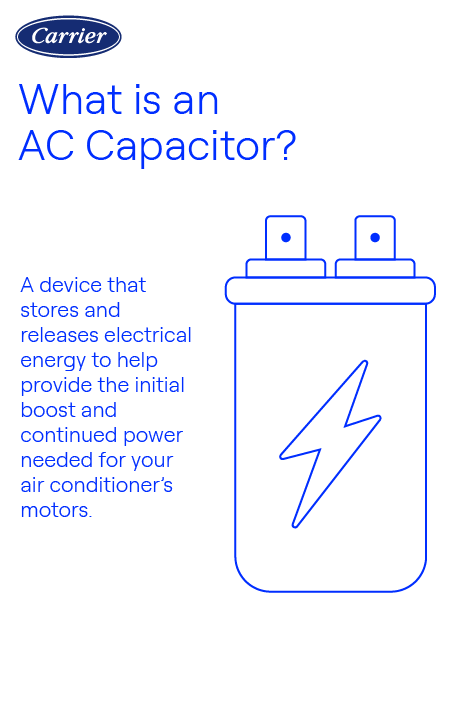
Have you ever wondered why your air conditioner sometimes struggles to start or cool your room efficiently? The secret often lies in a small but powerful component called the capacitor.
Understanding how a capacitor works in your air conditioner can help you spot problems early and keep your unit running smoothly. You’ll discover the role this tiny device plays and why it’s so important for your comfort. Keep reading to learn how your air conditioner depends on the capacitor to keep you cool when it matters most.

Credit: miamigohvac.com
Capacitor Basics
A capacitor stores and releases electric energyin an air conditioner. It helps start the motor and keeps it running smoothly. Capacitors are like small batteries that charge and discharge quickly.
Types Of Capacitors In Ac
- Start Capacitor:Provides a boost to start the motor.
- Run Capacitor:Keeps the motor running efficiently.
- Dual Capacitor:Combines start and run functions in one unit.
Capacitor Components
| Component | Description |
|---|---|
| Plates | Two metal sheets that store electric charge. |
| Dielectric | Insulating material between the plates. |
| Terminals | Connect the capacitor to the AC circuit. |
Credit: www.bettlink.com
Role In Air Conditioner
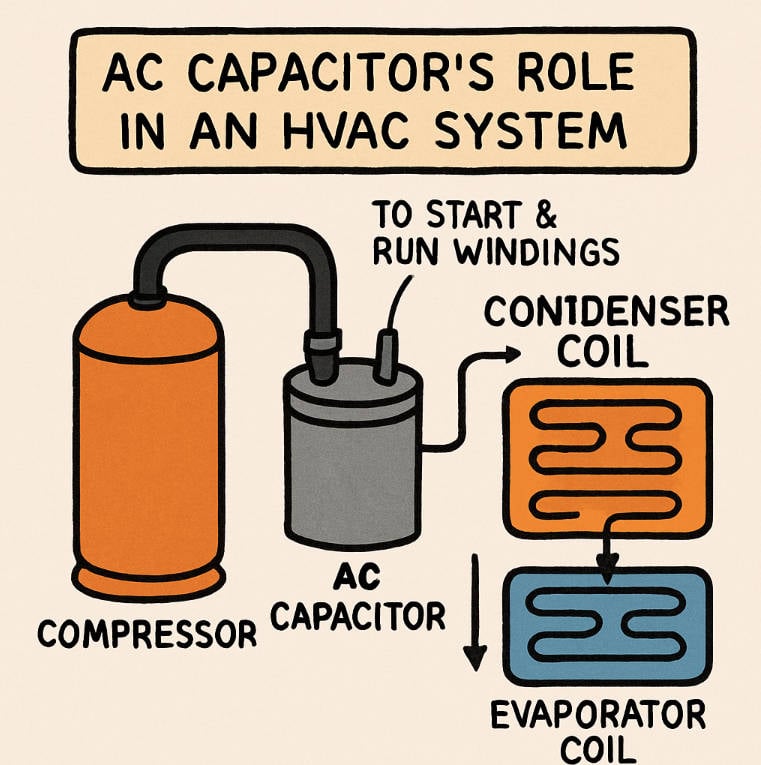
A capacitor is key in starting the compressor. It stores electric energy and releases it quickly. This burst of power helps the compressor motor to start turning.
The capacitor also powers the fan motor. It gives the fan a boost to start spinning and keeps it running smoothly. Without the capacitor, the fan might struggle or stop.
Capacitors help maintain efficiency in the air conditioner. They keep the motors running at the right speed. This saves energy and helps the unit last longer.
How Capacitors Store And Release Energy
A capacitor in an air conditioner stores and releases electrical energy. It helps the motor start and run smoothly.
Charging Cycle:The capacitor collects electric charge from the power source. It builds up energy by holding opposite charges on two plates separated by an insulator. This stored energy is ready to use when needed.
Discharging Cycle:The capacitor releases the stored energy to the motor. This helps the motor gain speed quickly and keeps it running steadily. The cycle repeats as the capacitor charges and discharges continuously.
Signs Of A Failing Capacitor
Common symptomsof a failing capacitor include slow or no start of the air conditioner. The unit may make a humming noise but not start. Sometimes, the fan or compressor stops working suddenly. A bulging or leaking capacitor can be seen on close inspection. Frequent tripping of the circuit breaker also signals capacitor problems.
Impact on AC performanceis significant. A bad capacitor makes the AC less efficient, causing higher electricity bills. The unit may stop cooling properly or work intermittently. Over time, other parts like the compressor can get damaged. Repair costs rise if the capacitor issue is ignored. Early detection keeps the AC running smoothly and saves money.
Testing And Replacing Capacitors
Always disconnect powerbefore working on the air conditioner. Capacitors store energy that can shock you. Wear insulated glovesand use tools with insulated handles. Avoid touching terminals directly. Discharge the capacitorusing a resistor or a screwdriver with an insulated handle before testing or replacing.
- Multimeter to test capacitor charge
- Insulated screwdriver for discharge
- Replacement capacitor with matching ratings
- Protective gloves and safety glasses
- Wrench or pliers for removing fasteners
Turn off power at the breaker. Discharge the capacitor to avoid shock. Remove wires carefully and note their positions. Unscrew the old capacitor and replace it with the new one. Reconnect wires exactly as before. Restore power and test the air conditioner for proper function.
Improving Ac Performance With Capacitors
Upgrading capacitor ratingscan help your air conditioner run more smoothly. A capacitor with the right rating ensures the motor gets the power it needs. Using a capacitor with higher or lower ratings may cause damage or reduce efficiency. Always choose capacitors that match the AC model’s specifications. This simple change can improve cooling and save energy.
Regular maintenancekeeps the capacitor and AC working well. Check the capacitor for signs of swelling or leaks. Clean dust and dirt from the AC unit to avoid strain. Tighten loose connections and replace worn parts promptly. Proper care helps the capacitor last longer and keeps the AC running at its best.

Credit: www.ic-components.com
Frequently Asked Questions
What Is The Role Of A Capacitor In An Air Conditioner?
A capacitor stores and releases electrical energy to start the compressor motor. It helps maintain smooth motor operation and increases efficiency. Without it, the motor might not start or could overheat.
How Does A Capacitor Improve Air Conditioner Efficiency?
The capacitor provides an initial boost to the compressor motor and fan. This reduces energy consumption and prevents motor strain. As a result, the air conditioner runs more efficiently and lasts longer.
Can A Faulty Capacitor Cause Air Conditioner Failure?
Yes, a faulty capacitor can prevent the compressor or fan motor from starting. This leads to poor cooling or no cooling at all. Replacing a bad capacitor often fixes these issues quickly.
How Long Does An Air Conditioner Capacitor Last?
Typically, capacitors last between 5 to 10 years. Heat, voltage fluctuations, and wear reduce their lifespan. Regular maintenance can help identify issues before complete failure occurs.
Conclusion
A capacitor helps an air conditioner start and run smoothly. It stores and releases electrical energy quickly. This process powers the motor and compressor efficiently. Without a capacitor, the air conditioner may not work well. Regular checks keep the capacitor in good shape.
This ensures your AC stays cool and reliable. Simple parts like capacitors make a big difference. Understanding their role helps you care for your AC better. It keeps your home comfortable all year long.