If you ride a motorcycle, knowing how to read your tire is crucial for your safety and performance. Tires carry you through every twist and turn, so understanding what the numbers and symbols mean can help you spot issues early and keep your bike running smoothly.
You’ll learn simple steps to decode your motorcycle tire’s sidewall information. By the end, you’ll feel confident checking your tires like a pro, saving yourself time, money, and maybe even a dangerous situation. Let’s dive in and make sure your tires are always ready for the road.

Credit: www.amazon.com
Tire Markings Explained
Motorcycle tires have many numbers and letters on their sides. These markings tell you important details about the tire. Learning to read them helps you choose the right tire for your bike.
Knowing what each marking means can also help you check if a tire fits your bike’s needs. Let’s look at the main parts of tire markings.
Decoding Size Numbers
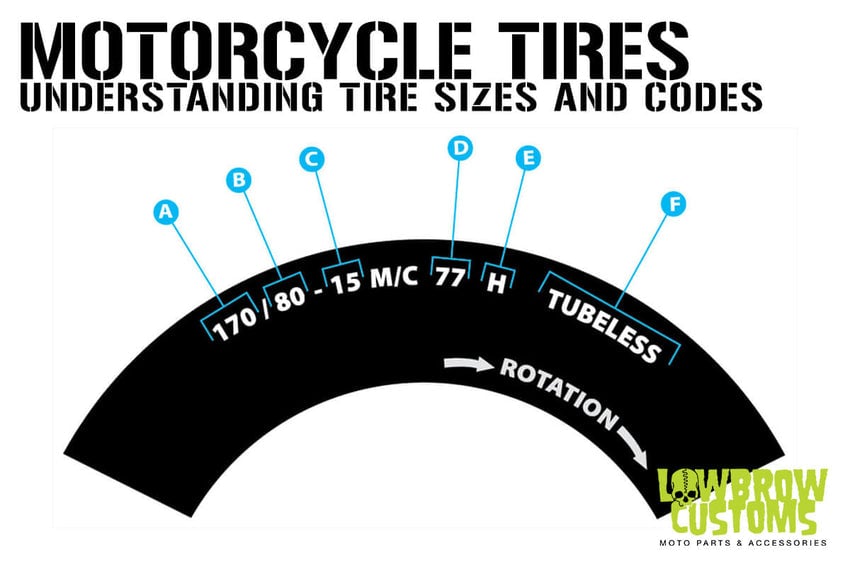
Tire size is shown by numbers that tell you the tire’s width, aspect ratio, and rim diameter. These numbers help you find a tire that fits your wheel perfectly.
For example, a tire size might read 120/70 ZR17. Each part has a meaning.
- 120– Tire width in millimeters
- 70– Aspect ratio (height as % of width)
- ZR– Tire construction and speed rating
- 17– Rim diameter in inches
Understanding Load And Speed Ratings
Load and speed ratings show how much weight the tire can carry and the maximum speed it can handle safely. These ratings use codes on the tire sidewall.
The load index is a number, and the speed rating is a letter. Together, they ensure the tire matches your bike’s performance.
| Load Index | Max Load (lbs) | Speed Rating | Max Speed (mph) |
|---|---|---|---|
| 58 | 520 | H | 130 |
| 59 | 551 | V | 149 |
| 60 | 584 | W | 168 |
| 61 | 597 | Z | 149+ |
Identifying Tire Type Symbols
Tire types are shown by symbols or letters on the tire. These tell you if the tire is for street, off-road, or other uses. Knowing this helps pick the right tire for your riding style.
- M/C– Designed for motorcycles
- TL– Tubeless tire
- TT– Tire with tube inside
- DOT– Meets US safety standards
- Radial– Shows if tire has radial construction
Checking Tire Condition
Regularly checking your motorcycle tires helps keep you safe on the road. It shows if the tires need repair or replacement.
Look closely at your tires to find any problems. Early spotting can prevent accidents and extend tire life.
Inspecting Tread Depth
Tread depth shows how much life your tire has left. Deeper tread grips the road better, especially in wet conditions.
- Use a tread depth gauge or a coin to measure depth.
- Check multiple spots around the tire.
- Replace tires if tread is below the recommended depth.
- Look for tread wear indicators built into the tire.
Spotting Cracks And Damage
Cracks and cuts can lead to tire failure. Check sidewalls and tread for any damage.
| Type of Damage | What to Look For | Action Needed |
| Cracks | Small lines on sidewalls or tread | Replace tire if cracks are deep or widespread |
| Cuts | Sharp splits or holes | Repair if small; replace if large |
| Bulges | Raised areas on the tire surface | Replace tire immediately |
Recognizing Uneven Wear Patterns
Uneven wear can cause handling problems. It may show issues with alignment or tire pressure.
- Wear on one edge may mean low tire pressure.
- Center wear is often from over-inflation.
- Patchy wear can signal suspension problems.
- Check and adjust tire pressure regularly.
- Have a mechanic inspect your bike if uneven wear appears.
Reading Tire Pressure
Knowing how to read your motorcycle tire pressure keeps you safe on the road. Proper pressure helps your tires last longer and improves riding comfort.
This guide explains how to find the right tire pressure, use a pressure gauge, and adjust pressure for different riding conditions.
Locating Recommended Psi
The recommended PSI (pounds per square inch) is the ideal air pressure for your tires. You can find this information in several places.
- Check the motorcycle owner’s manual.
- Look on a sticker near the frame or swingarm.
- Inspect the tire sidewall for maximum pressure details.
Use the PSI suggested by the manufacturer, not the maximum number on the tire.
Using A Pressure Gauge
A pressure gauge measures the air inside your tire. Use it when the tires are cold for the best reading.
| Type of Gauge | Features |
| Dial Gauge | Easy to read, no batteries needed |
| Digital Gauge | Accurate, backlit display |
| Stick Gauge | Simple, compact, less precise |
Press the gauge firmly on the valve stem to get a steady reading. If pressure is low, add air and check again.
Adjusting For Riding Conditions
Tire pressure changes with riding style, load, and weather. Adjust your PSI to match these factors.
- Lower pressure slightly for off-road or wet roads to increase grip.
- Increase pressure for high-speed riding to improve stability.
- Add air if carrying a passenger or heavy load.
- Check pressure often during hot weather as heat raises tire pressure.

Credit: www.youtube.com
Understanding Tire Age
Knowing the age of your motorcycle tire is important for safety. Old tires can lose grip and fail while riding.
Reading the tire’s age helps you decide if it is still safe to use. This guide explains how to check the tire age.
Finding The Dot Code
Look on the tire sidewall for a code that starts with “DOT”. This code shows the tire meets safety rules.
The DOT code also tells you when the tire was made. It is a small group of letters and numbers.
- The code starts with “DOT”
- It is followed by letters and numbers
- Look for the last four digits in the code
Interpreting Manufacture Date
The last four digits of the DOT code show the week and year the tire was made. For example, 2319 means week 23 of 2019.
The first two digits are the week number from 01 to 52. The last two digits are the year.
| DOT Code End | Meaning |
|---|---|
| 2319 | Made in the 23rd week of 2019 |
| 5018 | Made in the 50th week of 2018 |
| 0417 | Made in the 4th week of 2017 |
When To Replace Old Tires
Motorcycle tires usually last about five to six years from the manufacture date. After that, the rubber hardens and loses grip.
Check your tires for cracks, flat spots, or worn tread. Replace tires if they show these signs or are older than six years.
- Replace tires older than six years
- Replace if you see cracks or damage
- Replace if the tread is worn below safe levels
Identifying Tire Direction
Reading a motorcycle tire correctly is important for safety and performance. One key part is knowing the tire’s direction.
The tire must roll the right way to grip the road and wear evenly. This guide shows how to identify tire direction.
Finding Rotation Arrows
Look for small arrows on the tire sidewall. These arrows show which way the tire should rotate.
The arrow points forward when the tire is on the bike. This helps the tire grip the road better.
- Check the sidewall carefully for the arrow mark.
- The arrow may be raised or printed on the rubber.
- Use a flashlight if the tire is dirty or worn.
- If no arrow is present, the tire may be non-directional.
Mounting Tires Correctly
Mount the tire so the rotation arrow points forward on the motorcycle. This ensures proper tire function.
Incorrect mounting can cause poor traction and uneven tire wear. Always double-check the arrow before installation.
- Align the tire arrow with the forward direction of the wheel.
- Match the tire size to the wheel rim size.
- Use proper tools to avoid damage during mounting.
- Balance the tire after mounting for smooth rides.

Credit: cheaptiresasap.com
Choosing The Right Tire
Choosing the right motorcycle tire is important for safety and performance. Tires affect how your bike handles on the road.
Reading tire details helps you pick the best tire for your needs. Look at size, type, and tread pattern.
Matching Tires To Riding Style
Your riding style affects which tire works best. Different tires suit different types of riding.
For example, sport riders need tires with good grip and quick response. Cruisers look for comfort and durability.
- Sport tires offer better traction at high speeds
- Touring tires last longer and provide a smooth ride
- Off-road tires have deep treads for dirt and mud
- Standard tires are good for everyday riding
Considering Weather And Terrain
Weather and terrain also affect tire choice. Some tires work better in wet or dry conditions.
Choose tires made for the surfaces you ride on. Check the tire’s tread pattern and rubber type.
- Wet-weather tires have grooves to channel water away
- Dry-weather tires use softer rubber for better grip
- Off-road tires have strong treads for rough terrain
- All-season tires balance performance in many conditions
Frequently Asked Questions
What Do The Numbers On A Motorcycle Tire Mean?
The numbers show tire width, aspect ratio, and rim diameter. For example, 120/70ZR17 means 120mm width, 70% height, and 17-inch rim. Understanding these helps choose the right tire size for your bike.
How To Identify Tire Tread Wear Indicators?
Tread wear indicators are small raised bars in the grooves. When the tread wears down to these bars, the tire needs replacement. Checking them ensures safe riding and proper tire grip.
What Does The Tire Speed Rating Indicate?
The speed rating shows the maximum safe speed for the tire. It is represented by a letter like W, V, or Z. Knowing this helps match the tire to your bike’s performance and riding style.
How Can I Find The Tire’s Manufacturing Date?
Look for the DOT code on the tire sidewall. The last four digits indicate the week and year of manufacture. For example, 2519 means the 25th week of 2019. This helps check tire age and safety.
Conclusion
Reading a motorcycle tire is easier than it seems. Check the numbers on the sidewall carefully. They tell you the size, type, and speed rating. Know these details to pick the right tire for your bike. Also, understanding tire codes helps with safety and performance.
Keep your tires in good shape for a smooth ride. Practice reading them often to feel more confident. Riding safe starts with knowing your motorcycle tires well. Simple steps make a big difference. Keep learning and stay safe on the road.