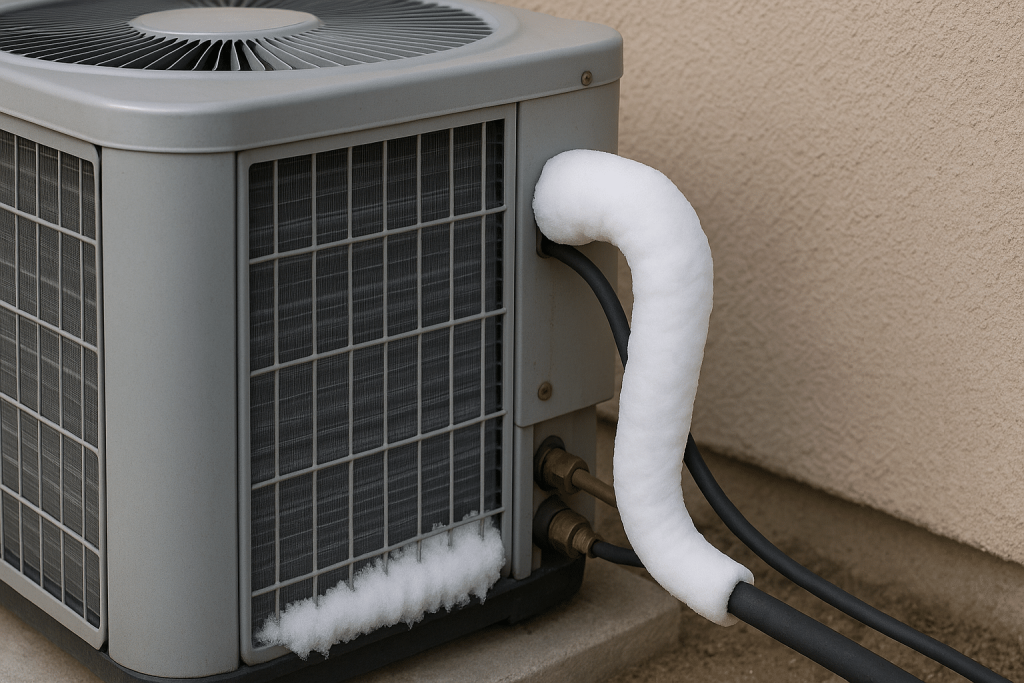
Is your air conditioner suddenly covered in ice? This can be frustrating, especially when you need it the most.
But don’t worry—your AC freezing up is a common problem with simple solutions. If you act quickly, you can avoid costly repairs and get your home cool again. Keep reading to discover what causes your air conditioner to freeze and exactly what you can do to fix it before things get worse.
Your comfort is just a few easy steps away.
Signs Of A Frozen Ac
A frozen air conditioner does not cool your home well. It can cause damage if you ignore it.
Knowing the signs helps you fix the problem quickly and avoid costly repairs.
Ice On Evaporator Coils
The most obvious sign is ice buildup on the evaporator coils. These coils get very cold to remove heat from the air.
If the coils freeze, you will see white or blue ice covering them. This stops the AC from cooling properly.
Reduced Airflow
Frozen coils block air from passing through the AC system. This lowers the airflow from vents.
You may notice weak or no air coming from the vents even when the AC is on.
- Air feels less cold or warm
- Vents blow air slowly
- Rooms stay hot or humid
Unusual Noises
A frozen AC may make strange sounds. Ice can cause the fan to struggle or the compressor to work hard.
Listen for clicking, banging, or rattling noises from the AC unit. These sounds often mean ice is blocking parts.

Credit: www.delcohvac.com
Common Causes Of Freezing
An air conditioner can freeze up for several reasons. Knowing the common causes helps you fix the problem quickly.
Freezing stops your AC from cooling properly. It can cause damage if not addressed soon.
Dirty Air Filters
Dirty air filters block airflow. This makes the evaporator coil too cold and causes ice to form.
- Replace or clean filters every 1-3 months
- Use the correct filter size for your unit
- Check filters more often in dusty areas
Low Refrigerant Levels
Low refrigerant means the AC cannot absorb heat well. This causes the coil to freeze over time.
| Cause | Effect |
| Refrigerant Leak | Reduces cooling power and leads to freezing |
| Improper Charge | Too little refrigerant causes coil temperature to drop |
| Old System | May lose refrigerant naturally over time |
Blocked Airflow
Blocked airflow can come from closed vents or dirty ducts. This lowers air movement over the coil.
Common signs of blocked airflow:
- Some rooms feel colder than others
- Air vents feel weak or no air flows out
- Dust buildup around vents
Thermostat Issues
A faulty thermostat can cause the AC to run too long or stop too soon. This may lead to freezing.
- Thermostat placed in direct sunlight gives wrong readings
- Old thermostats may fail to turn off the compressor
- Incorrect thermostat settings can overwork the system
Immediate Steps To Take
An air conditioner freezing up can stop it from cooling your home. It needs quick action to avoid damage.
Follow these steps to fix the problem safely and get your AC working again.
Turn Off The Ac
Turn off your air conditioner right away if you see ice on the coils. Running it while frozen can harm the system.
Switch off the thermostat and the circuit breaker to stop power to the unit. This helps the ice melt safely.
Switch To Fan Mode
After turning off cooling, set your AC to fan mode. This moves air without cold refrigerant flowing.
Fan mode helps melt the ice faster by circulating warmer air over the frozen parts.
Check And Replace Filters
Dirty or clogged filters reduce airflow and can cause freezing. Check your air filters for dust and debris.
Replace old filters with clean ones. Good airflow helps prevent the AC from freezing again.

Credit: www.davisheat.com
Thawing The Ice Safely
An air conditioner can freeze up when it works too hard or has low refrigerant. Thawing the ice carefully helps avoid damage. Use safe methods to melt the ice and protect your unit.
Below are three safe ways to thaw the ice on your air conditioner. Follow these tips to keep your system working well.
Use A Hair Dryer
A hair dryer can gently warm frozen parts of the air conditioner. Keep it on a low heat setting and hold it several inches away. Move the dryer slowly over the ice until it melts.
- Set hair dryer to low or medium heat
- Keep dryer 6 to 12 inches from the ice
- Move the dryer evenly to avoid hot spots
- Do not use high heat to prevent damage
Allow Natural Melting
Sometimes the best way is to turn off the air conditioner and let ice melt by itself. This method avoids risk but takes longer. Make sure the area is dry to prevent water damage.
| Action | Details |
| Turn off AC unit | Stop cooling to let ice thaw |
| Use a towel | Absorb melting water safely |
| Wait patiently | Ice may take several hours to melt |
| Check system | Restart only after ice fully melts |
Avoid Sharp Objects
Do not use knives, screwdrivers, or sharp tools to chip away ice. These can damage the coils or other parts. Instead, use soft tools or let ice melt naturally.
- Do not scrape ice with sharp tools
- Use plastic or rubber tools if needed
- Handle the unit gently to avoid leaks
- Call a professional if unsure
Preventing Future Freezing
Air conditioners can freeze up and stop working well. You can stop this problem with simple actions. Keep your unit running smoothly by preventing ice build-up.
Follow these tips to avoid freezing and keep your air conditioner cooling properly all summer long.
Regular Maintenance
Regular care helps your air conditioner stay in good shape. Clean and check your unit often to prevent ice from forming. Replace air filters every few months to keep air flowing well.
- Turn off power before cleaning the unit
- Clear dirt and debris from coils
- Check for leaks or damage
- Schedule professional service yearly
Keep Vents Clear
Blocked vents reduce airflow and cause freezing. Keep all vents open and clean. Move furniture or curtains that block air from flowing freely.
| Tip | Reason |
| Keep vents open | Allows air to circulate properly |
| Remove dust and dirt | Prevents airflow blockage |
| Clear surrounding areas | Ensures no obstruction near vents |
Monitor Refrigerant Levels
Low refrigerant causes ice to form on coils. Watch for signs like weak cooling or strange noises. Call a technician to check and refill refrigerant if needed.
Signs of low refrigerant:
- Warm air from vents
- Ice buildup on coils
- Hissing sounds near unit
- Higher energy bills
When To Call A Professional
Air conditioners can freeze for different reasons. Some problems you can fix yourself. Others need a professional’s help.
Knowing when to call a professional saves time and prevents damage. It also keeps your AC working safely.
Persistent Freezing
If your air conditioner freezes often, it is a serious issue. This means the problem is not simple or short-term.
Repeated freezing can damage parts inside the AC. A professional can find the root cause and fix it right.
Refrigerant Leaks
Low refrigerant causes freezing. If your AC has a refrigerant leak, you should call a technician.
Only trained experts can safely handle refrigerant. They can find leaks and refill the correct amount.
Complex Repairs
Some repairs need special tools and skills. Complex issues like electrical or compressor problems require a professional.
Trying to fix complex problems yourself can be risky. Let a professional protect your safety and the AC system.

Credit: a1heating.com
Frequently Asked Questions
Why Does My Air Conditioner Freeze Up?
Air conditioners freeze due to poor airflow, low refrigerant, or dirty filters. These issues cause the coils to get too cold, leading to ice buildup.
How Can I Prevent My Ac From Freezing Again?
Regularly clean filters, maintain proper refrigerant levels, and ensure good airflow. Schedule annual HVAC checkups to keep your AC running smoothly.
Is It Safe To Use A Frozen Air Conditioner?
No, using a frozen AC can damage the compressor. Turn it off, let the ice melt, and address the underlying problem before restarting.
Can A Dirty Filter Cause My Ac To Freeze?
Yes, dirty filters restrict airflow, causing the evaporator coil to freeze. Replace or clean filters monthly during heavy use for optimal performance.
Conclusion
A frozen air conditioner needs quick attention to work well. Turn off the unit to stop more ice from forming. Check the air filter and clean or replace it if dirty. Clear any blocked vents to help air flow freely.
Let the ice melt before turning the AC back on. Regular maintenance can prevent freezing issues. Acting fast saves your AC and keeps your home cool. Stay aware and take care to avoid future problems.