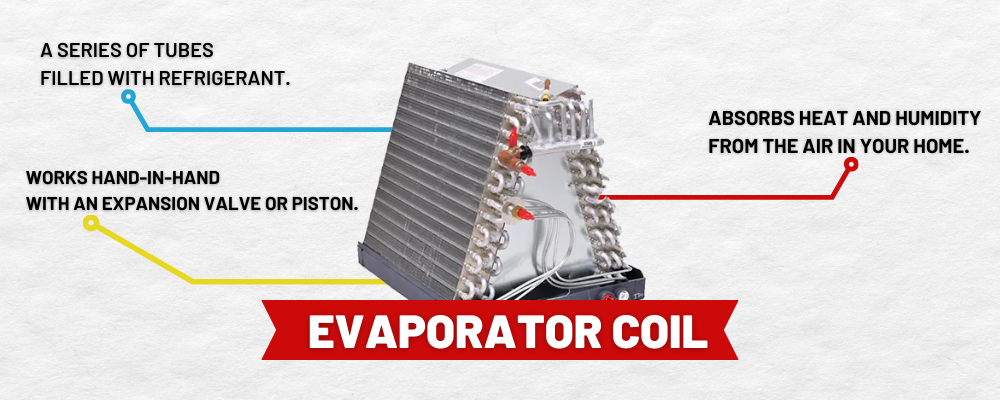
Have you ever wondered how your air conditioner keeps your room cool and comfortable, especially on the hottest days? The secret lies in a small but powerful part called the evaporator.
Understanding what the evaporator does can help you appreciate how your AC works and why regular maintenance matters. You’ll discover the crucial role the evaporator plays in cooling your space and how it affects your comfort every day. Keep reading to learn how this hidden hero makes your air conditioner a lifesaver during summer.
Role Of The Evaporator
The evaporator is a key part of an air conditioner. It helps cool the air inside your home or office.
This component works by removing heat from the air and making the space feel cooler.
Core Cooling Function
The evaporator’s main job is to cool the air. It does this by using a cold refrigerant inside its coils.
- Warm air passes over the cold evaporator coils.
- The refrigerant inside absorbs the heat from the air.
- As heat leaves the air, the temperature drops.
- Cooled air is then blown back into the room.
Heat Absorption Process
The evaporator absorbs heat through a process called evaporation. This is how it works:
| Step | Description |
| 1 | Warm air hits the evaporator coils. |
| 2 | The refrigerant inside the coils absorbs heat. |
| 3 | The refrigerant changes from liquid to gas. |
| 4 | Heat leaves the air, making it cooler. |
| 5 | The cooled air is pushed into the room. |

Credit: autoacrepair1.com
Evaporator Components
The evaporator is a key part of an air conditioner. It helps cool the air inside your home or office. The evaporator has several important parts that work together.
These parts include coils, fins, and a connection to the expansion valve. Each part plays a special role in the cooling process.
Coils And Fins
The evaporator coils carry cold refrigerant inside the air conditioner. The refrigerant absorbs heat from the air around the coils. This makes the air cooler.
The fins are thin metal sheets attached to the coils. They help move heat away from the coils faster. This improves the cooling efficiency.
- Coils hold cold refrigerant
- Refrigerant absorbs heat from air
- Fins increase surface area for heat transfer
- Fins help cool air faster
Expansion Valve Connection
The expansion valve controls the flow of refrigerant into the evaporator. It reduces the pressure of the refrigerant. This makes the refrigerant very cold.
The cold refrigerant enters the evaporator coils through this connection. The valve helps keep the cooling process steady and efficient.
How The Evaporator Cools Air
The evaporator is a key part of an air conditioner. It helps cool the air inside your home or office. The evaporator works by using a special fluid called refrigerant.
This section explains how the evaporator cools the air by looking at two things: how it interacts with the refrigerant cycle and how it removes moisture from the air.
Refrigerant Cycle Interaction
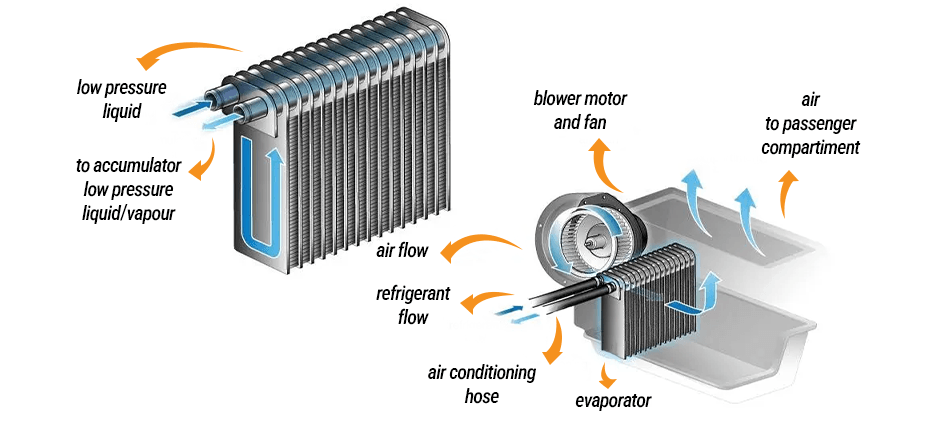
The evaporator is part of the refrigerant cycle. Warm air from the room passes over the evaporator coils. Inside these coils, the refrigerant absorbs heat from the air.
- The refrigerant enters the evaporator as a cold, low-pressure liquid.
- It absorbs heat and changes into a gas.
- This process lowers the temperature of the air around the coils.
- The cooled air then flows back into the room.
- The warm refrigerant gas moves to the compressor to continue the cycle.
Airflow And Moisture Removal
The evaporator also helps remove moisture from the air. When warm air hits the cold coils, water vapor condenses on the surface. This process makes the air less humid.
| Process | Effect |
| Warm air meets cold coils | Air temperature drops |
| Water vapor condenses | Moisture collects on coils |
| Condensate drains away | Air becomes drier |
| Cooled, dry air returns | Comfort improves |
Signs Of Evaporator Issues
The evaporator is a key part of an air conditioner. It helps cool the air inside your home. When the evaporator has problems, the AC does not work well.
Knowing the signs of evaporator issues can help you fix problems early. This keeps your air conditioner running smoothly.
Reduced Cooling Efficiency
The most common sign of an evaporator problem is reduced cooling. Your AC may blow warm or less cold air than before.
A dirty or damaged evaporator coil can stop the AC from cooling well. Dust and dirt block the coil, reducing its ability to absorb heat.
Ice Formation
Ice can form on the evaporator coil if there is a problem. This happens when the coil gets too cold or airflow is blocked.
Ice buildup stops the coil from working right. It can cause the AC to stop cooling and may damage the system.
- Low refrigerant levels
- Dirty air filters
- Blocked airflow
- Faulty fan motor
Unusual Noises
Strange sounds from your air conditioner can mean evaporator problems. You might hear rattling, hissing, or buzzing noises.
These noises can come from loose parts, refrigerant leaks, or dirty coils. Fixing the issue early can stop more damage.
Maintenance Tips For Evaporators
The evaporator in an air conditioner plays a key role in cooling your home. Keeping it clean and checked regularly helps it work well. Poor maintenance can cause bad smells and reduce cooling power.
This guide covers simple cleaning and inspection tips. These steps protect your evaporator and make your air conditioner last longer.
Cleaning Procedures
Cleaning the evaporator removes dust and dirt that block airflow. Clean parts help the air conditioner cool better and use less energy.
- Turn off the power before cleaning.
- Use a soft brush or cloth to wipe the coils gently.
- Spray a no-rinse coil cleaner to remove stubborn dirt.
- Clean or replace air filters often to reduce dirt buildup.
- Check and clean the drain pan and drain line to prevent clogs.
Regular Inspections
Inspecting the evaporator helps find problems early. Look for damage, leaks, or mold. Early fixes avoid costly repairs.
| Inspection Item | What to Check | Why It Matters |
| Coils | Clean and free of damage | Ensures good heat transfer |
| Drain Pan | No standing water or rust | Prevents water damage and mold |
| Air Filters | Clean or replaced regularly | Keeps air clean and system efficient |
| Connections | No loose or corroded parts | Prevents leaks and system failure |
Credit: www.fridayparts.com
Impact On Energy Consumption
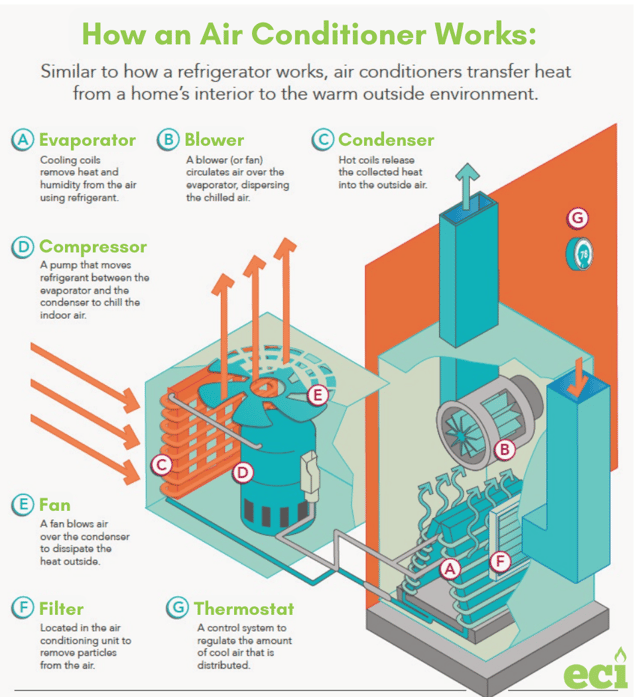
The evaporator in an air conditioner plays a key role in energy use. It absorbs heat from inside a room. This process cools the air, making your space comfortable.
Efficient evaporators help reduce the power the system needs. This lowers electricity bills and saves energy over time.
Efficiency And Cost Savings
An evaporator that works well improves cooling speed. It uses less energy to reach the desired temperature. This means your air conditioner runs less time.
- Faster cooling reduces electricity use
- Less strain on the AC extends its life
- Lower energy bills save money monthly
- Proper maintenance keeps the evaporator efficient
Environmental Benefits
Efficient evaporators lower the carbon footprint of air conditioners. Using less electricity means fewer greenhouse gas emissions.
| Benefit | How It Helps |
| Reduced Power Use | Less fuel burned for electricity |
| Lower Emissions | Fewer pollutants released |
| Energy Conservation | Supports sustainable resource use |
Credit: www.ecicomfort.com
Frequently Asked Questions
What Role Does The Evaporator Play In Ac Cooling?
The evaporator absorbs heat from indoor air, cooling it down. It allows refrigerant to evaporate and remove heat, making the air cooler and comfortable.
How Does The Evaporator Work In An Air Conditioner?
The evaporator coil contains cold refrigerant. Warm indoor air passes over it, transferring heat to the refrigerant, which evaporates and cools the air.
Why Is The Evaporator Important For Ac Efficiency?
The evaporator ensures effective heat absorption, critical for cooling. A clean, functioning evaporator improves AC efficiency and reduces energy consumption.
Can A Dirty Evaporator Affect Ac Performance?
Yes, dirt blocks airflow and reduces heat absorption. This causes poor cooling, higher energy use, and potential system damage.
Conclusion
The evaporator plays a key role in cooling the air inside your home. It absorbs heat from the air and helps make your space comfortable. Without the evaporator, your air conditioner cannot work well. Understanding its function helps you appreciate your AC system more.
Keep your evaporator clean and well-maintained for best results. This simple part keeps your home cool during hot days. It is a small but powerful component of your air conditioner.