Are you struggling to get your fishing line just right? Adding the perfect weight can make all the difference between a frustrating day on the water and a successful catch.
But how do you put a weight on your fishing line without it slipping or affecting your bait? In this guide, you’ll discover simple, step-by-step tips that anyone can follow. By the end, you’ll know exactly how to balance your line for better casting and more bites.
Keep reading, and soon you’ll be fishing smarter, not harder.
Choosing The Right Weight
Adding weight to your fishing line helps cast farther and reach the right depth. Picking the right weight is key for a good fishing experience.
The weight you use depends on the type of fish, water conditions, and your fishing method. Learn about different weights to make the best choice.
Types Of Fishing Weights
Fishing weights come in many shapes and sizes. Each type works best for specific fishing styles and water conditions.
- Sinker Weights:These are simple round or oval shapes. They work well for most fishing needs.
- Split Shot Weights:Small and easy to attach. Good for light fishing and fine control.
- Bank Sinkers:Heavy and flat. They stay on the bottom in strong currents.
- Egg Sinkers:Oval and smooth. They slide on the line to reduce fish feeling the weight.
- Pyramid Sinkers:Shaped like a pyramid. They dig into sand or mud to hold your bait steady.
Matching Weight To Fishing Conditions
The right weight depends on water depth, current speed, and fish size. Lighter weights work in calm water and shallow spots.
Heavier weights help in deep water or strong currents. They keep your bait where fish are hiding.
- Use light weights for small fish and slow water.
- Choose medium weights for moderate currents and average fish size.
- Pick heavy weights for deep water and strong currents.
Materials And Durability
Fishing weights come in different materials. Each material affects weight, durability, and environmental impact.
- Lead:Common and heavy. Easy to shape but can harm the environment.
- Tungsten:Denser than lead. Smaller size for the same weight and eco-friendly.
- Steel:Durable and rust-resistant. Good for rough conditions.
- Bismuth:Non-toxic and safer for water life. Heavier than steel but lighter than lead.
Choose a weight material that fits your fishing needs and respects local rules. Some places ban lead weights to protect wildlife.
Attaching Weights To The Line
Adding weight to your fishing line helps your bait sink to the right depth. It also keeps the line steady in the water.
There are several ways to attach weights. Each way works best for different fishing styles and conditions.
Using Split Shot Weights
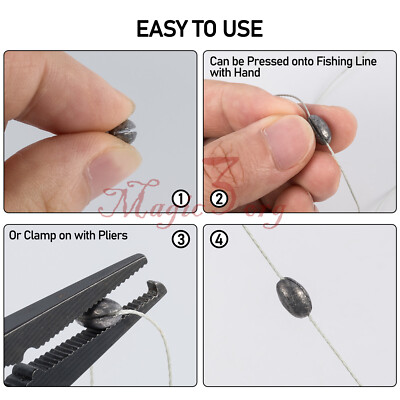
Split shot weights are small round pieces of metal with a slit. You can pinch them onto the fishing line easily.
They are good for fine-tuning how deep your bait goes. You can add or remove split shots quickly during fishing.
- Pinch the weight on the line near the hook
- Use pliers to avoid damaging the line
- Place several split shots to increase weight
Tie-on Sinkers And Their Uses
Tie-on sinkers have a small loop or eyelet for tying directly to the line. They hold firmly and stay in place.
These weights work well for deeper water fishing. They help cast the line farther and keep the bait steady.
- Thread the line through the sinker’s eye
- Tie a strong knot to secure it
- Check the knot before casting
Slide-on Weights Setup
Slide-on weights have a hole that lets the line pass through. You slide the weight up the line to adjust its position.
This setup allows the bait to move freely. It is useful for fishing with live bait or lures.
- Thread the line through the weight’s hole
- Add a bead or stopper below the weight
- Attach the hook below the stopper
Adjusting Weight Placement
Knowing where to place the weight on your fishing line is key to catching fish. Proper placement helps your bait move naturally and reach the right depth.
This guide explains how to adjust the weight for better sensitivity, casting, and to protect your line.
Optimal Distance From Hook
Placing the weight too close to the hook can scare fish away. Too far, and the bait may not move well. The right distance lets the bait swim naturally.
- Place the weight 6 to 12 inches from the hook for most fishing types.
- Use a shorter distance for small, slow-moving baits.
- Increase distance for larger baits or faster currents.
Balancing Sensitivity And Casting Distance
Weight affects how far you can cast and how well you feel bites. Too much weight reduces sensitivity. Too little weight limits casting range.
| Weight Size | Sensitivity | Casting Distance |
| Light (1/16 – 1/8 oz) | High | Short to medium |
| Medium (1/4 – 1/2 oz) | Medium | Medium to long |
| Heavy (3/4 oz and above) | Low | Long |
Avoiding Line Damage
Incorrect weight placement can cause line damage. Too much pressure near knots weakens the line. Rough edges on weights can cut the line.
- Use smooth, round weights to protect your line.
- Place weights away from knots and swivels.
- Check the line often for wear or frays near the weight.
- Replace weights with sharp edges to prevent cuts.

Credit: mysterytacklebox.com
Techniques For Different Fishing Styles
Adding weight to a fishing line helps you cast further and keep bait at the right depth. Different fishing styles need different ways to put on weight.
Learn simple methods for shore casting, boat fishing, and fly fishing to improve your catch rate.
Casting From Shore
When fishing from shore, you need weight to cast your line far and keep bait steady in the current. Use split shot weights for easy adjustments.
- Pinch split shot weights onto the line about 12 to 18 inches above the hook.
- Add more weights if you want to cast farther or fight strong currents.
- Move weights closer to the hook if you want bait to sink faster.
- Use small, round weights to avoid scaring fish.
Boat Fishing Weight Setup
Boat fishing lets you reach deeper water. Use heavier weights to reach the bottom or keep your bait in place.
| Weight Type | Use | Best For |
| Sinkers | Slide freely on the line | Deep water fishing |
| Egg sinkers | Allow bait to move naturally | Current or drift fishing |
| Bank sinkers | Hold bait in one spot | Strong currents |
| Split shot | Adjust bait depth | Light fishing setups |
Fly Fishing Adjustments
Fly fishing usually uses light lines and small flies. Add weight carefully to avoid spooking fish.
Here are common ways to add weight in fly fishing:
- Attach split shot weights near the fly for deeper water.
- Use weighted flies that have built-in weight.
- Add a weighted leader or tippet to help the fly sink.
- Use sinking lines for fishing below the surface.
Troubleshooting Weight Issues
Putting weight on a fishing line can sometimes cause problems. Knowing how to fix these issues helps you fish better. This guide covers common troubles and solutions.
Focus on three key areas: preventing snags, handling line breaks, and adjusting to water conditions. Each section offers clear tips and tools.
Preventing Snags And Tangles
Snags and tangles happen when the weight catches on underwater objects or the line loops. Use the right weight and attach it carefully.
- Choose a weight size that fits the fishing spot
- Attach weights with swivel clips to reduce line twist
- Cast beyond weeds or rocks to avoid snags
- Keep the line tight to prevent loops and tangles
- Regularly check the line for twists and fix them
Dealing With Line Breakage
Line breakage often happens from too much weight or weak knots. Use strong knots and lighter weights if the line is thin.
| Cause | Solution |
| Too heavy weight | Use a lighter weight |
| Weak knot | Retie with a stronger knot |
| Old or damaged line | Replace the fishing line |
| Sharp edges on weight | Use smooth or covered weights |
Adapting To Changing Water Conditions
Water conditions like current and depth change often. Adjust your weight to match these changes for better control.
- Use heavier weights in strong currents
- Switch to lighter weights in shallow or calm water
- Test different weights to find what works best
- Keep extra weights in your tackle box for quick changes

Credit: mysterytacklebox.com

Credit: www.youtube.com
Frequently Asked Questions
How Do You Attach A Weight To A Fishing Line?
To attach a weight, thread the line through the weight’s hole. Secure it using a knot or a stopper. This helps cast farther and keep bait deeper.
What Types Of Weights Work Best For Fishing Lines?
Split shot, egg sinkers, and bullet weights are popular. Choose based on fishing depth and water conditions for optimal performance.
Why Is Adding Weight Important For Fishing?
Weights help sink the bait to the fish’s depth. They improve casting distance and stabilize the line against currents.
How Much Weight Should I Put On My Fishing Line?
Use light weights for shallow water and small fish. Heavier weights suit deep water or strong currents. Adjust based on fishing conditions.
Conclusion
Adding weight to your fishing line helps cast farther and control bait depth. Choose the right weight size for your fishing spot and target fish. Attach the weight securely to avoid losing it during casting. Practice tying knots and placing weights until you feel confident.
Small changes make big differences in fishing success. Keep experimenting with weight types and positions for best results. Enjoy your time fishing with better control and more catches. Simple steps lead to better fishing days.