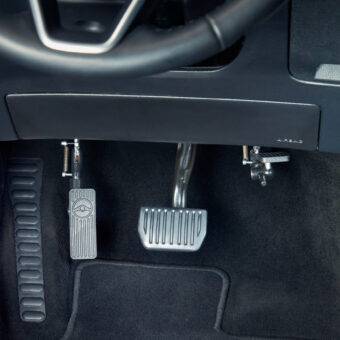
Have you ever sat behind the wheel and wondered, “Which pedal on a car is the brake?” It might seem simple, but knowing exactly which pedal to press can make all the difference in your safety and confidence while driving. Whether you’re learning to drive for the first time or just need a quick refresher, understanding the brake pedal is key to controlling your car smoothly and avoiding accidents.
Keep reading, and you’ll discover everything you need to know to spot the brake pedal instantly and use it with confidence every time you drive.

Credit: www.youtube.com
Identifying The Brake Pedal
The brake pedal is an important part of a car. It helps you stop the car safely.
Knowing which pedal is the brake is very important for all drivers. This guide will help you find it quickly.
Location Of The Brake Pedal
The brake pedal is in the middle of the pedals. It is between the clutch and the gas pedals in manual cars.
In automatic cars, the brake pedal is to the left of the gas pedal. It is easy to reach with your right foot.
- Middle pedal in manual cars
- Left pedal in automatic cars
- Near the driver’s right foot
Appearance And Size Differences
The brake pedal is usually larger than the gas pedal. It is wide enough to press easily.
Its surface often has a rubber cover. This helps prevent your foot from slipping while braking.
- Larger than gas pedal
- Wide and flat surface
- Rubber or textured cover
Comparison With Other Pedals
The gas pedal is smaller and thinner than the brake pedal. It is on the right side.
The clutch pedal is found only in manual cars. It is on the far left and is similar in size to the brake pedal.
| Pedal | Position | Size | Purpose |
|---|---|---|---|
| Brake | Middle (manual), Left (automatic) | Largest | Stop the car |
| Gas (Accelerator) | Right | Smallest | Speed up the car |
| Clutch | Left (manual only) | Medium | Change gears |
How The Brake Pedal Works
The brake pedal is a key control in a car. It helps the driver stop or slow down the vehicle safely.
Pressing the brake pedal sends force to the braking system. This force helps the car reduce speed or stop.
Mechanical Functionality
The brake pedal is connected to a mechanical arm called the brake booster. When you push the pedal, it moves this arm.
This movement applies pressure to the brake master cylinder. The master cylinder converts the pedal force into hydraulic pressure.
Hydraulic System Role
The brake system uses hydraulic fluid to transfer pressure from the pedal to the brakes at each wheel.
When you press the pedal, fluid pushes brake pads against the wheels’ rotors. This creates friction and slows the car.
- Brake fluid moves in the brake lines
- Pressure increases at the brake calipers
- Brake pads clamp on the rotors
- Friction slows or stops the wheels
Safety Features Linked To Braking
Modern cars have safety features that help the brake pedal work better and safer. One example is ABS.
ABS stops the wheels from locking up during hard braking. This helps maintain steering control and prevents skidding.
- Anti-lock Braking System (ABS) prevents wheel lock
- Brake Assist increases braking force in emergencies
- Electronic Brakeforce Distribution balances braking
- Brake lights alert drivers behind you
Common Mistakes With The Brake Pedal
Many new drivers confuse the brake pedal with other pedals. This confusion can lead to dangerous driving. Understanding the brake pedal is important for safety.
Using the brake pedal incorrectly causes accidents and vehicle damage. Learning common mistakes helps avoid these problems.
Confusing Brake With Accelerator
Some drivers press the accelerator instead of the brake by mistake. This error often happens in panic situations. It can cause sudden speeding instead of stopping.
The brake pedal is usually the middle or left pedal in automatic cars. The accelerator is on the right side. Knowing their position helps avoid confusion.
- The brake pedal is wider and firmer than the accelerator.
- The accelerator pedal is smaller and softer to press.
- Practice feeling the pedals with your foot before driving.
Impact Of Improper Pedal Use
Using the wrong pedal can cause accidents and injuries. Pressing the accelerator instead of the brake may lead to crashes. This mistake risks your life and others.
Improper brake use also harms your car. Hard braking can wear out brake pads quickly. This increases repair costs and reduces safety.
- Accidents from wrong pedal use can cause injuries.
- Brake wear increases with sudden or harsh stops.
- Fuel consumption rises if brakes are used incorrectly.
Tips To Avoid Pedal Errors
Practice helps you remember which pedal is the brake. Sit in the car and press pedals without starting it. Feel their position and size.
Always look at the pedals before driving. Keep your foot ready above the brake pedal. This habit reduces reaction time and errors.
- Practice pedal placement with the car off.
- Keep your right foot near the brake when stopped.
- Stay calm and focus on pedal use while driving.
- Ask an experienced driver to guide you initially.

Credit: gotodobbs.com
Variations In Pedal Layouts
The brake pedal is a key control in any car. It helps you stop or slow down safely.
Car pedal layouts can differ based on the type of transmission and the country. Some vehicles have special pedals too.
Manual Vs Automatic Transmission
Manual cars have three pedals: clutch, brake, and accelerator. The brake is the middle pedal.
Automatic cars have two pedals: brake and accelerator. The brake is always on the left side.
- Manual: Left = clutch, Middle = brake, Right = accelerator
- Automatic: Left = brake, Right = accelerator
Pedal Layouts In Different Countries
Most countries use the same pedal order for cars with left-hand drive. The brake is in the middle or left.
Some countries have right-hand drive cars. The pedals stay the same but the driver sits on the right side.
- Left-hand drive: brake in the middle or left
- Right-hand drive: pedal order is the same
- Brake pedal position does not change
Adaptations For Special Vehicles
Some vehicles have extra pedals or controls. These can change how the brake pedal looks or works.
For example, buses or trucks may have larger brake pedals. Cars for disabled drivers may have hand controls.
- Buses/trucks: bigger brake pedals for safety
- Disabled driver cars: hand brake controls
- Race cars: special pedal setups for speed
Tips For New Drivers
Learning to drive means understanding your car’s controls well. Knowing which pedal is the brake is very important for safety.
This guide helps new drivers practice brake control, recognize how brakes respond, and build confidence behind the wheel.
Practicing Brake Control
The brake pedal is always the one in the middle or on the left side of the right foot area. It helps you slow down or stop your car safely.
- Press the brake pedal gently to avoid sudden stops.
- Practice braking in empty parking lots.
- Try to feel how much pressure is needed to slow down smoothly.
- Use your right foot only for braking and accelerating.
Recognizing Brake Responsiveness
Brakes react differently in every car. Knowing how your brakes respond helps you drive safely and avoid accidents.
| Condition | Brake Response |
| New car | Brakes respond quickly and smoothly |
| Wet roads | Brakes may feel less effective, need more pressure |
| Worn brake pads | Brakes respond slowly and may make noise |
| Heavy load | Brakes need more force to stop the car |
Building Confidence Behind The Wheel
Confidence comes from practice and knowing your car’s controls. Use safe areas to build your driving skills before busy roads.
Try this simple exercise:
- Find a quiet, empty parking lot.
- Drive slowly and press the brake gently.
- Notice how the car slows down.
- Practice stopping smoothly and steadily.
- Repeat until you feel comfortable with brake control.

Credit: www.reddit.com
Frequently Asked Questions
Which Pedal Controls The Car’s Braking System?
The brake pedal is the one that controls the car’s braking system. It is usually the middle or left pedal in manual cars and the right pedal in automatic cars.
How To Identify The Brake Pedal In A Car?
The brake pedal is wider and often labeled or textured for easy identification. It is located to the left of the accelerator pedal in automatic cars.
Why Is Knowing The Brake Pedal Important For Drivers?
Knowing the brake pedal helps ensure safe driving. It allows drivers to stop the car effectively and avoid accidents.
Is The Brake Pedal Different In Manual And Automatic Cars?
Yes, the brake pedal is present in both, but manual cars also have a clutch pedal on the left. The brake pedal remains in the middle or right position.
Conclusion
The brake pedal is the one in the middle or left of the gas pedal. Press it gently to slow down or stop your car. Knowing this helps you drive safely and avoid accidents. Always keep your foot ready near the brake pedal, especially in traffic.
Practice makes it easier to use the brake smoothly. Remember, stopping on time can save lives. Stay alert and drive carefully every time you get behind the wheel.