Are you wondering how many BTUs your air conditioner needs to keep your space cool and comfortable? Understanding BTUs is key to choosing the right air conditioner that fits your room size and keeps your energy bills low.
If you pick the wrong size, your AC might not cool properly, or it could waste electricity. You’ll discover exactly what BTUs mean, how to calculate the right amount for your space, and why it matters for your comfort and savings.
Keep reading to make sure you get the perfect air conditioner for your home or office.
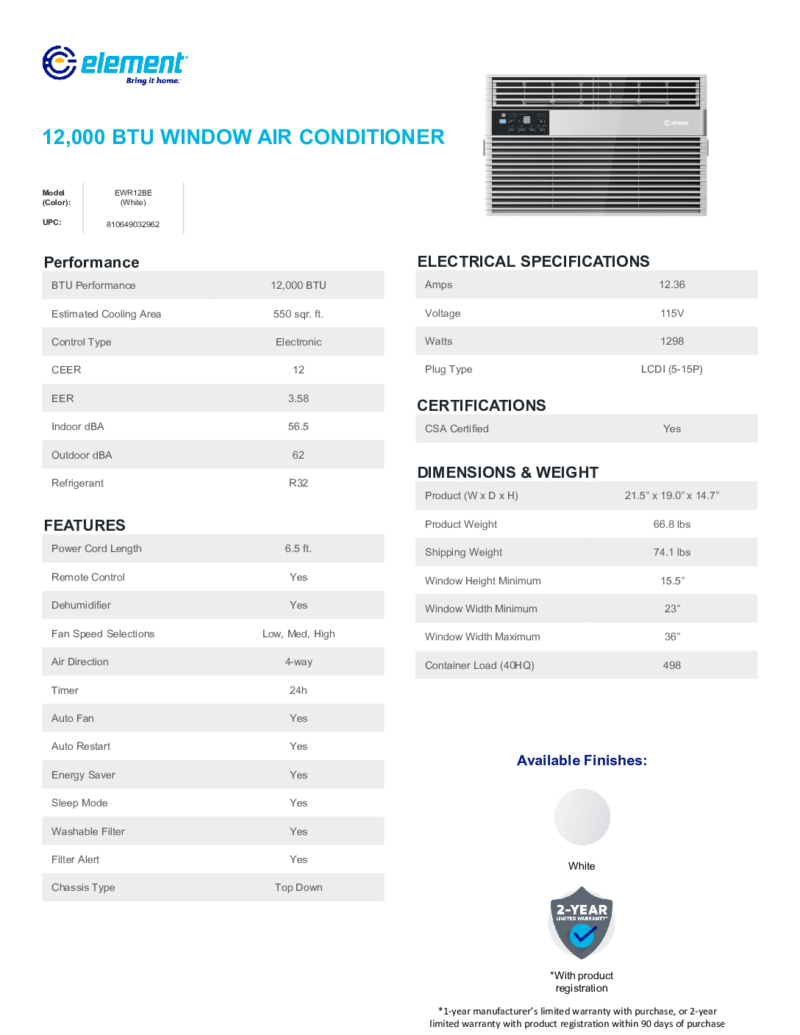
Credit: elementelectronics.com
Btu Basics
BTU is a common term used for air conditioners. It helps measure how much cooling power an AC has.
Understanding BTU can help you choose the right air conditioner for your space. This guide explains the basics.
What Is Btu
BTU stands for British Thermal Unit. It is the amount of heat needed to raise one pound of water by one degree Fahrenheit.
In air conditioners, BTU measures the cooling capacity. The higher the BTU, the more cooling power the AC has.
Btu And Cooling Power
BTU tells you how much heat the air conditioner can remove from a room in one hour. This number shows the AC’s strength.
| BTU Rating | Room Size (Square Feet) |
| 5,000 BTU | Up to 150 sq ft |
| 8,000 BTU | 150 to 350 sq ft |
| 12,000 BTU | 350 to 550 sq ft |
| 18,000 BTU | 550 to 1,000 sq ft |
| 24,000 BTU | 1,000 to 1,500 sq ft |
Why Btu Matters In Ac
Choosing the right BTU size is important for comfort and efficiency. Too small or too large BTU can cause problems.
- Too low BTU means the AC will not cool well.
- Too high BTU wastes energy and causes humidity issues.
- Proper BTU size saves money on electricity bills.
- It helps the AC last longer by reducing wear.
Calculating Btu Needs
BTU stands for British Thermal Unit. It measures how much heat an air conditioner can remove.
Knowing the right BTU size helps keep your room cool and saves energy.
Room Size And Btu
The size of your room is the main factor in choosing an air conditioner’s BTU.
Bigger rooms need air conditioners with higher BTU to cool properly.
| Room Size (square feet) | Recommended BTU |
|---|---|
| Up to 150 | 5,000 BTU |
| 150 – 250 | 6,000 BTU |
| 250 – 350 | 8,000 BTU |
| 350 – 450 | 10,000 BTU |
| 450 – 550 | 12,000 BTU |
Factors Affecting Btu Requirements
Some other things change how many BTU you need besides room size.
- Number of windows and sunlight exposure
- Room height and ceiling type
- Number of people usually in the room
- Heat from appliances and electronics
- Insulation quality of walls and doors
These factors can increase or decrease the BTU you should pick.
Using Btu Calculators
BTU calculators help you find the right size air conditioner fast.
They ask for room size and other details to give a BTU recommendation.
- Enter room length and width
- Add number of windows and people
- Include appliance heat if possible
- Get a suggested BTU number
Using a calculator reduces guessing and helps you buy the right unit.
Btu Ratings And Ac Types
BTU stands for British Thermal Unit. It measures the cooling power of air conditioners. The higher the BTU, the more cooling the unit provides.
Different types of air conditioners come with various BTU ratings. Choosing the right BTU helps cool your space efficiently without wasting energy.
Window Units
Window air conditioners are compact units installed in windows. They are common for cooling single rooms. Their BTU ratings usually range from 5,000 to 12,000 BTU.
Choose a window unit based on room size. Small rooms need lower BTU, and larger rooms need higher BTU units.
- 5,000–6,000 BTU: Rooms up to 150 square feet
- 7,000–8,000 BTU: Rooms up to 350 square feet
- 10,000–12,000 BTU: Rooms up to 550 square feet
Split Systems
Split systems have two parts: an indoor unit and an outdoor unit. They are quieter and more efficient. Their BTU ratings vary from 9,000 to 36,000 BTU.
These units work well for cooling larger rooms or multiple rooms. You can select the BTU based on the area size and insulation.
- 9,000–12,000 BTU: Small rooms and apartments
- 18,000–24,000 BTU: Medium-sized homes
- 30,000–36,000 BTU: Large homes and open spaces
Portable Acs
Portable air conditioners can move from room to room. They are easy to set up but often less powerful. Their BTU ratings are usually between 8,000 and 14,000 BTU.
Portable ACs are good for temporary cooling or small spaces. Check the BTU rating to match your room size for the best cooling.
- 8,000–10,000 BTU: Small rooms or offices
- 12,000–14,000 BTU: Medium rooms or larger spaces

Credit: minisplitsystemsdirect.com
Energy Efficiency And Btu
BTU measures how much heat an air conditioner can remove. It shows the unit’s cooling power. Energy efficiency helps lower electricity bills.
Choosing the right BTU for your space saves energy. It keeps rooms cool without wasting power. Understanding ratings can guide your choice.
Seer Ratings Explained
SEER stands for Seasonal Energy Efficiency Ratio. It shows how efficiently an air conditioner uses electricity. Higher SEER means better energy use.
Most new air conditioners have a SEER rating between 13 and 21. A higher rating lowers energy costs and helps the environment.
Matching Btu To Energy Use
| Room Size (sq. ft.) | Recommended BTU | Estimated Energy Use |
| 100 – 300 | 5,000 – 6,000 | Low |
| 300 – 500 | 7,000 – 8,000 | Moderate |
| 500 – 800 | 10,000 – 12,000 | High |
| 800 – 1,200 | 14,000 – 18,000 | Very High |
Choosing the right BTU avoids extra energy use. Too high BTU cools fast but wastes power. Too low BTU runs longer and uses more energy.
Tips For Efficient Cooling
- Close windows and doors while cooling
- Use ceiling fans to circulate air
- Set the thermostat to a comfortable, not too low, temperature
- Keep air filters clean and replace when needed
- Use curtains to block direct sunlight
Following these tips helps your air conditioner use less energy. It also extends the unit’s life and keeps your home comfortable.
Common Btu Mistakes
BTU measures how much cooling an air conditioner provides. Choosing the right BTU is very important for comfort.
Many people make mistakes with BTU size. These errors affect cooling and energy use.
Overestimating Btu
Picking an air conditioner with too many BTUs is common. People think bigger means better cooling.
Too much BTU cools the room fast but causes short cycles. This wastes energy and harms the unit.
- Short cycling reduces efficiency
- Air feels damp or unevenly cooled
- Unit wears out faster
Underestimating Btu
Choosing an air conditioner with too few BTUs means it can’t cool well. The room stays warm and uncomfortable.
The AC runs all the time to reach the desired temperature. This causes high energy use and faster wear.
- Long run times increase electricity bills
- Cooling is slow and uneven
- System may break down sooner
Impact On Energy Bills
Wrong BTU size affects how much energy your air conditioner uses. Both too big and too small cause waste.
Over-sized units turn on and off often, using more electricity. Under-sized units run constantly, also increasing bills.
- Proper BTU size saves money on energy
- Correct sizing improves comfort and efficiency
- Check room size to find the right BTU

Credit: www.lg.com
Choosing The Right Btu
BTU means British Thermal Unit. It measures how much heat an air conditioner can remove. Choosing the right BTU helps cool your space well.
If your AC has too few BTUs, it will not cool enough. Too many BTUs waste energy and make the room feel cold.
Assessing Your Space
First, measure the size of the room you want to cool. Bigger rooms need more BTUs. Also, note the room’s shape and ceiling height.
Windows, doors, and insulation affect cooling needs. More windows or poor insulation means you need a stronger AC.
- Measure the room’s square feet (length × width)
- Check how many windows let in sunlight
- Note if the room has high ceilings
- Think about insulation quality
Climate Considerations
Where you live changes how many BTUs you need. Hotter climates require higher BTU units to cool effectively.
Cooler areas may use less powerful air conditioners. Check your local weather to help decide the right BTU size.
- Hot, sunny places need more cooling power
- Humid areas may require extra capacity
- Cool climates often need less BTU
Future Proofing Your Ac
Think about how your space might change. Adding furniture or new windows can affect cooling needs. Choose a BTU size that can handle small changes.
Energy efficiency also matters. A properly sized AC saves money and lasts longer. Avoid buying a unit that is too big or too small.
- Plan for possible room changes
- Choose a unit with a little extra cooling power
- Check energy ratings for efficiency
- Avoid oversizing to save costs
Maintaining Btu Efficiency
BTU stands for British Thermal Unit. It measures how much heat an air conditioner can remove. Keeping your AC running at its best BTU level saves energy and money.
Simple care steps can keep your AC efficient and cool your home well. Learn about regular maintenance, cleaning, and when to upgrade your unit.
Regular Ac Maintenance
Regular maintenance helps your air conditioner work at full BTU capacity. Check the unit for leaks and make sure it runs smoothly. Clean the coils and check refrigerant levels.
- Inspect AC parts monthly
- Clear debris around outdoor units
- Check refrigerant levels yearly
- Schedule professional tune-ups
Cleaning And Filters
Dirty filters block airflow and reduce BTU efficiency. Clean or replace filters every 1 to 3 months. Clean the evaporator and condenser coils regularly.
| Cleaning Task | Frequency |
| Replace or clean filters | Every 1-3 months |
| Clean evaporator coils | Yearly |
| Clean condenser coils | Yearly |
| Clear drainage channels | Yearly |
When To Upgrade
Old AC units lose BTU power and cost more to run. Upgrade if your unit is over 10 years old or needs frequent repairs. New units use energy better and cool faster.
- Unit is more than 10 years old
- Cooling feels weak despite maintenance
- Energy bills keep rising
- Repairs cost more than half a new unit
Frequently Asked Questions
What Does Btu Mean In Air Conditioners?
BTU stands for British Thermal Unit. It measures the cooling power of an air conditioner. Higher BTU means stronger cooling capacity. Choosing the right BTU ensures efficient room cooling and energy use.
How Many Btu Do I Need For My Room?
Calculate room size in square feet. Multiply by 20 BTU for cooling needs. Small rooms need 5,000-8,000 BTU; larger rooms need more. Accurate BTU sizing prevents overworking or underperforming AC units.
Can An Air Conditioner Have Too Many Btus?
Yes, an oversized AC cools quickly but cycles off often. This wastes energy and reduces comfort. Proper BTU sizing ensures balanced cooling and efficient performance. Avoid buying an AC with excessive BTUs.
How Does Btu Affect Air Conditioner Energy Use?
Higher BTUs generally consume more electricity. Efficient BTU matching reduces energy waste. Correct BTU size lowers bills and improves cooling. Energy-efficient ACs balance BTU power with power consumption.
Conclusion
Choosing the right BTU for your air conditioner matters a lot. A proper BTU ensures your room stays cool and comfortable. Too low BTU means the room won’t cool well. Too high BTU wastes energy and money. Know your room size before picking an air conditioner.
This helps save power and keeps your space fresh. Remember, a balanced BTU brings better cooling and efficiency. Keep these tips in mind for a cool, happy home.