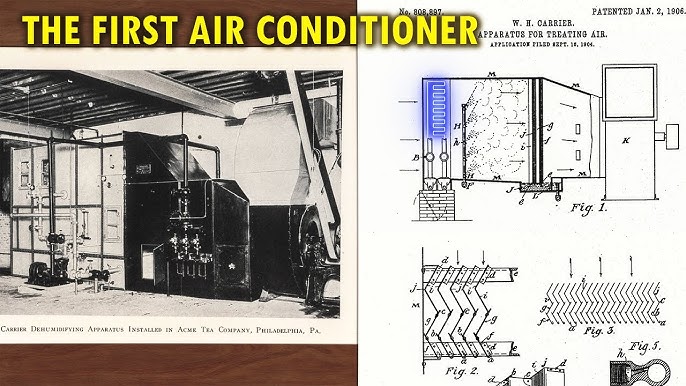
Have you ever stopped to wonder what the very first air conditioner looked like? You might think it was a sleek, modern box, but the truth is much more surprising.
Understanding how air conditioning began can change the way you appreciate the cool comfort you enjoy today. Stick with me, and you’ll discover the fascinating story behind this invention—one that transformed how we live and work. Ready to see how it all started?
Let’s dive in.

Credit: medium.com
Early Cooling Methods
People have tried to cool their homes and bodies for thousands of years. Before modern air conditioners, many simple ideas helped bring relief from heat.
These early ways to cool used natural materials and clever designs. They show how humans adapted to hot climates long ago.
Ancient Techniques
Ancient civilizations used several methods to stay cool. Many relied on water and shade to lower temperatures.
- Egyptians hung wet mats on windows to cool incoming air.
- Romans built aqueducts and fountains to add moisture and cool the air.
- Persians designed wind towers to capture breezes and direct them inside buildings.
- In India, people used thick walls and courtyards to reduce heat inside homes.
Predecessors To Air Conditioning
The first machines to cool air came from inventors who studied airflow and temperature. Their work led to the air conditioners we use today.
| Inventor | Invention | Year | Description |
| Benjamin Franklin | Ice Cooling Concept | 1758 | Used ice to cool air in rooms. |
| Willis Carrier | First Modern AC | 1902 | Controlled humidity and temperature for factories. |
| John Gorrie | Ice Machine | 1842 | Created ice to cool hospital rooms. |

Credit: www.curbsideclassic.com
Invention Of The First Air Conditioner
The first air conditioner changed how people lived and worked. It made indoor air cooler and more comfortable.
This invention helped many industries, especially printing and textile factories. It controlled humidity and temperature.
Willis Carrier’s Role
Willis Carrier invented the first modern air conditioner in 1902. He worked to solve a humidity problem at a printing plant.
- Carrier studied how to control humidity and temperature.
- He designed a system to cool air by passing it over cold coils.
- His invention used a fan to blow air through these coils.
- Carrier’s work led to better air quality and comfort indoors.
Design And Components
The first air conditioner had several key parts working together to cool air. These parts were new ideas at the time.
| Component | Function |
|---|---|
| Cooling Coils | Lower the air temperature by removing heat |
| Fan | Circulate air through the system |
| Water Pump | Move water to cool the coils |
| Humidity Control | Remove moisture from the air |
Appearance And Size
The first air conditioner looked very different from modern units. It was large and bulky, not small or sleek like today.
Its size made it hard to fit inside homes or offices. It needed space for all its parts to work.
Physical Description
The first air conditioner was a big box with many pipes and vents. It did not have a smooth or stylish design.
It looked more like an industrial machine than a home appliance. Fans and coils were visible parts of the device.
- Large rectangular shape
- Visible metal pipes and coils
- Multiple air vents
- Heavy and bulky structure
Materials Used
The first air conditioner was made mostly from metal parts. These parts helped to hold the system together and cool the air.
Copper was used for pipes because it moves heat well. Steel or iron formed the outer body for strength and durability.
- Copper pipes for heat transfer
- Steel or iron body frame
- Glass or plastic parts for some vents
- Insulation materials inside to keep cool air
How It Worked
The first air conditioner was invented in the early 1900s. It used a unique system to cool the air inside buildings.
This early device was quite different from modern air conditioners but laid the foundation for cooling technology.
Cooling Mechanism
The first air conditioner worked by removing moisture from the air and lowering its temperature. It used cooled coils to change the air conditions.
- Air passed over cold metal coils.
- Moisture in the air condensed on the coils.
- Dry and cooler air was then circulated back inside.
This process helped reduce humidity and made the room feel cooler and more comfortable.
Innovations Introduced
The first air conditioner brought several new ideas to cooling technology. It used chemicals to cool the coils instead of ice or water.
| Innovation | Description |
|---|---|
| Refrigerant Use | Used chemicals like sulfur dioxide to cool the coils efficiently. |
| Humidity Control | Removed moisture, improving air comfort and preventing mold. |
| Air Circulation | Forced air movement to spread cooled air evenly in rooms. |
Impact On Society
The first air conditioner changed how people live and work. It made hot places cooler and more comfortable. This new technology affected many parts of daily life.
Air conditioning helped industries grow and shaped building designs. It also made indoor spaces healthier and more pleasant for everyone.
Industrial Applications
Factories and offices started using air conditioners to control temperature. This led to better work conditions and higher productivity. Machines could also run more safely without overheating.
- Improved worker comfort and health
- Protected sensitive equipment from heat damage
- Allowed new manufacturing processes to develop
- Extended working hours in hot climates
Influence On Architecture
Air conditioning changed how buildings were designed. Architects no longer needed large windows for airflow. This allowed for taller buildings and sealed glass fronts.
| Before Air Conditioning | After Air Conditioning |
| Large windows for ventilation | Smaller or sealed windows |
| Thick walls for insulation | Thinner walls with insulation materials |
| Open floor plans for air flow | Flexible layouts with climate control |
| Limited building height | Skyscrapers with controlled environments |

Credit: medium.com
Evolution After The First Model
The first air conditioner was large and simple. It used basic cooling methods to lower air temperature.
Since then, air conditioners have changed a lot. They became more efficient and easier to use.
Technological Improvements
Early air conditioners used bulky parts and simple cooling techniques. New technology made them better.
Modern systems use compressors, refrigerants, and fans to cool air more efficiently. This saves energy and cools faster.
- Introduction of electric motors for better air flow
- Use of safe and effective refrigerants
- Improved temperature controls and sensors
- Energy-saving features and smart technology
Miniaturization And Modern Designs
Air conditioners used to be very large and heavy. Today, they are smaller and easier to install.
Modern air conditioners come in many designs. Some fit in windows, others are portable or built into walls.
- Compact window units for small rooms
- Portable units that move from room to room
- Split systems with quiet indoor parts
- Built-in central air systems for whole houses
Frequently Asked Questions
What Did The First Air Conditioner Look Like?
The first air conditioner, invented in 1902, was a large, boxy machine. It used cooling coils and fans to control humidity and temperature in factories.
Who Invented The First Air Conditioner?
Willis Carrier invented the first modern air conditioner in 1902. His design aimed to improve factory productivity by controlling indoor climate.
How Did The First Air Conditioner Work?
The first air conditioner used chilled water and cooling coils. Air passed over the coils, lowering temperature and reducing humidity indoors.
Where Was The First Air Conditioner Used?
The first air conditioner was installed in a printing plant in Brooklyn, New York. It helped maintain consistent paper quality by controlling humidity.
Conclusion
The first air conditioner was big and simple. It used water to cool the air. Over time, it became smaller and more effective. This invention changed how people stay comfortable. Today’s air conditioners trace their roots to this early design.
Knowing its history helps us appreciate modern cooling. The journey from then to now shows human creativity. Cooling technology keeps improving, making life easier for all.