If you’re using braided fishing line, you know how strong and sensitive it can be. But tying it together the right way can be tricky—and if you don’t get it right, you risk losing your catch or snapping your line.
What if you could learn a simple, reliable method to connect your braided lines quickly and securely? You’ll discover easy step-by-step techniques to tie braided fishing line that will keep your gear strong and ready for action every time. Keep reading, and you’ll never have to worry about weak knots again.

Credit: www.reddit.com
Choosing The Right Knots
Tying braided fishing line needs special knots. Braided lines are thin and slippery. Using the right knot keeps your line strong and secure.
Not all knots work well with braided lines. Picking the best knot helps avoid line breaks and lost fish.
Knots Best For Braided Line
Some knots hold better on braided lines than others. These knots create tight grips and do not slip easily.
- Palomar Knot: Easy to tie and very strong.
- Double Uni Knot: Good for joining two lines.
- Improved Clinch Knot: Works well for hooks and lures.
- San Diego Jam Knot: Great for braided lines and strong holds.
- Arbor Knot: Used to tie line to spool securely.
Factors Affecting Knot Strength
Knot strength depends on many things. The type of knot, line condition, and how you tie it all matter.
Wet lines often hold knots better. Tightening the knot slowly and evenly helps keep strength.
- Line type: Braided lines need knots that grip well.
- Line condition: Old or damaged line weakens knots.
- Tightening: Pull knots slowly to avoid damage.
- Lubrication: Wet the line before tightening to reduce friction.
- Number of wraps: More wraps can improve knot strength.
Preparing The Lines
Tying braided fishing lines requires careful preparation. This ensures strong and secure knots. Follow these steps to prepare your lines properly.
Preparation involves cleaning and aligning, and trimming the line ends. Each step is essential for a successful fishing experience.
Cleaning And Aligning
Before tying, ensure the lines are clean and properly aligned. This helps the knots hold better and prevents slipping.
- Rinse the lines with fresh water to remove dirt.
- Dry the lines with a soft cloth.
- Align the ends to ensure even tying.
Trimming Line Ends
Trimming the line ends is important for neat knots. It reduces fraying and enhances strength.
- Trim the line ends at a slight angle.
- Ensure both lines are of equal length before tying.
- Check the trimmed ends for any fraying.
Double Uni Knot
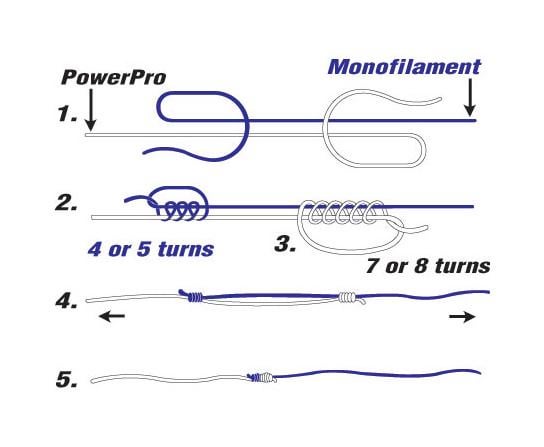
The Double Uni Knot is a strong way to tie braided fishing lines together. It works well with lines of similar or different sizes.
This knot is popular because it holds tight and is easy to tie. It keeps your line strong for fishing.
Step-by-step Instructions
Start by overlapping the ends of two braided lines by about 6 inches. Make sure both lines are straight and ready to tie.
Wrap one end around the other line and itself to make 5 tight turns. Pass the tag end through the loop near the overlap.
Repeat this process with the other tag end, making 5 turns and passing it through the loop in the opposite direction.
Pull both standing lines slowly to slide the knots together. Make sure the knots come close and sit tightly against each other.
Finally, trim the tag ends close to the knots, leaving a small amount of line to prevent slipping.
- Overlap lines by 6 inches
- Make 5 wraps with one tag end
- Pass tag end through loop
- Repeat with other tag end
- Pull standing lines to tighten knots together
- Trim tag ends close to knots
Tips For Maximum Strength
Wet your braided lines before tightening the knots. This reduces heat and friction, which can weaken the line.
Pull the knots slowly and evenly. Fast or uneven pulling may cause the knot to fail or damage the line.
- Always moisten the lines before tightening
- Pull knots slowly and steadily
- Leave a small tag end to avoid slipping
- Check knots regularly during fishing

Credit: www.youtube.com
Palomar Knot
The Palomar knot is a simple and strong way to tie braided fishing line together. It keeps the line’s strength and is easy to tie.
This knot works well with braided line because it does not slip or weaken the line much. Many anglers trust it for secure connections.
How To Tie The Palomar Knot
Start by doubling about six inches of braided line. Pass the loop through the eye of the hook or lure.
Make a loose overhand knot with the doubled line, leaving the loop big. Pull the hook or lure through this loop.
- Double 6 inches of line and pass through the eye.
- Make a loose overhand knot with the doubled line.
- Pass the hook or lure through the loop.
- Tighten the knot slowly by pulling both tag and main line.
- Trim the tag end close to the knot.
When To Use This Knot
Use the Palomar knot when you need a strong, reliable knot for braided lines. It works well for hooks, lures, and swivels.
This knot is best for fishing situations where line strength and knot security matter most. It is also good for beginners.
- Tying braided line to hooks or lures
- When you need a strong, slip-resistant knot
- Fishing with heavy or light braided lines
- When easy and fast knot tying is important
Fg Knot
The FG knot is a popular way to tie braided fishing line to a leader. It is strong and slim. This knot helps the line pass easily through the rod guides.
Many anglers choose the FG knot for its durability and low profile. It works well for different types of fishing.
Tying Process
Start by placing the leader and braided line side by side. The leader should be shorter. Wrap the braided line tightly around the leader many times.
Make about 20 tight wraps without overlaps. Then pull the braided line to tighten the wraps around the leader. Finish by tying a few half hitches to secure the knot.
- Place leader and braid side by side
- Wrap braid tightly around leader 20 times
- Pull braid to tighten wraps
- Tie half hitches to secure knot
- Trim excess line close to knot
Advantages Of Fg Knot
The FG knot is very strong. It does not slip or weaken easily. This makes it reliable for big fish and tough conditions.
This knot is also very slim. It slides smoothly through rod guides. This helps you cast farther and reduces line wear.
- High strength and low chance of slipping
- Very slim knot profile
- Works well with braided line
- Improves casting distance
- Reduces line damage from guides
Other Effective Knots
Tying braided fishing line can be tricky. Using the right knot helps keep your line strong and secure.
Here are two other good knots to try. They work well with braided lines and help you fish better.
Albright Knot
The Albright knot joins two lines of different thickness. It is strong and smooth to pass through guides.
To tie this knot, make a loop in the thicker line. Pass the thinner braided line through the loop and wrap it around both lines. Then, pass the braided line back through the loop and pull tight.
- Make a loop in the heavier line
- Pass the braided line through the loop
- Wrap braided line around both lines 10-12 times
- Pass braided line back through the loop
- Moisten and pull tight
Improved Clinch Knot
The Improved Clinch knot is simple and strong. It works well for tying braided line to hooks or lures.
Start by threading the line through the hook eye. Wrap the line around itself five to seven times. Pass the end through the small loop near the eye, then back through the big loop. Pull tight and trim the tag end.
- Thread line through hook eye
- Wrap line around itself 5-7 times
- Pass end through small loop near eye
- Pass end back through big loop
- Moisten and pull tight
- Trim tag end
Testing Knot Strength
Testing the strength of your knots is important for safe fishing. It ensures your braided line holds well under pressure.
By checking the knot strength, you avoid losing fish and gear. It helps you trust your fishing setup.
Pull Test Techniques
Pull testing your knot means applying steady force to see if it holds. Use your hands or a tool to pull the line.
- Hold the knot firmly with one hand.
- Pull the line slowly with the other hand or a clamp.
- Increase the force until the knot slips or breaks.
- Note how much pressure it takes to fail.
- Repeat to confirm consistent strength.
Common Mistakes To Avoid
Many anglers make simple errors that weaken their knots. Avoid these to keep your line strong.
| Common Mistake | Why It Matters |
| Not wetting the knot before tightening | Causes friction and weakens the line |
| Pulling the knot unevenly | Leads to improper tightening and slippage |
| Using damaged or old braided line | Reduces overall knot strength |
| Failing to test knots before fishing | Risk of losing fish due to weak knots |

Credit: www.wikihow.com
Maintaining Your Knots
Tying braided fishing lines is only the first part of fishing. Keeping knots strong is just as important. Regular care helps avoid losing fish or line breaks.
Check your knots often and fix or retie them if you see damage. This keeps your line reliable and ready for use.
Regular Inspection
Look closely at your knots before and after fishing trips. Check for signs of wear like fraying, loosening, or slipping. A weak knot can break under pressure.
- Feel the knot for any rough or thin spots
- Look for discoloration or damage on the line
- Test the knot by pulling gently to check tightness
- Replace knots that show any weakness
Retying When Necessary
Always retie knots that look weak or have been used many times. A fresh knot is stronger and safer than a worn one.
| Reason to Retie | Action |
| Frayed line | Cut old knot and tie a new one |
| Loose knot | Untie and tighten knot again |
| Line slipping | Choose a more secure knot style |
| After heavy catch | Inspect and retie if needed |
Frequently Asked Questions
How Do You Tie Two Braided Fishing Lines Together?
To tie two braided lines, use a double uni knot or a blood knot. These knots maintain strength and prevent slippage. Moisten the lines before tightening for a secure hold. Trim excess ends for a neat finish.
What Knot Works Best For Braided Fishing Line?
The double uni knot is ideal for braided lines. It offers high strength and reliability. It’s easy to tie and holds well under tension. This knot prevents line damage and slipping during fishing.
Can I Connect Braided Line To Monofilament Line?
Yes, you can connect braided to monofilament using a double uni knot. It securely joins different line types. This knot ensures smooth line flow through guides and maintains fishing strength.
Should I Wet The Braided Line Before Knotting?
Always wet braided line before tightening knots. Moistening reduces friction and heat, preventing line damage. It helps the knot tighten smoothly and stay secure during fishing.
Conclusion
Tying braided fishing line takes practice but is simple to learn. Use the right knots to keep your line strong and secure. Take your time to tighten each knot firmly and trim the ends neatly. This helps prevent slippage and ensures better fishing results.
With patience and care, your line will hold up well on every catch. Try these steps on your next fishing trip and see the difference. Keep practicing to improve your skills and enjoy fishing more.