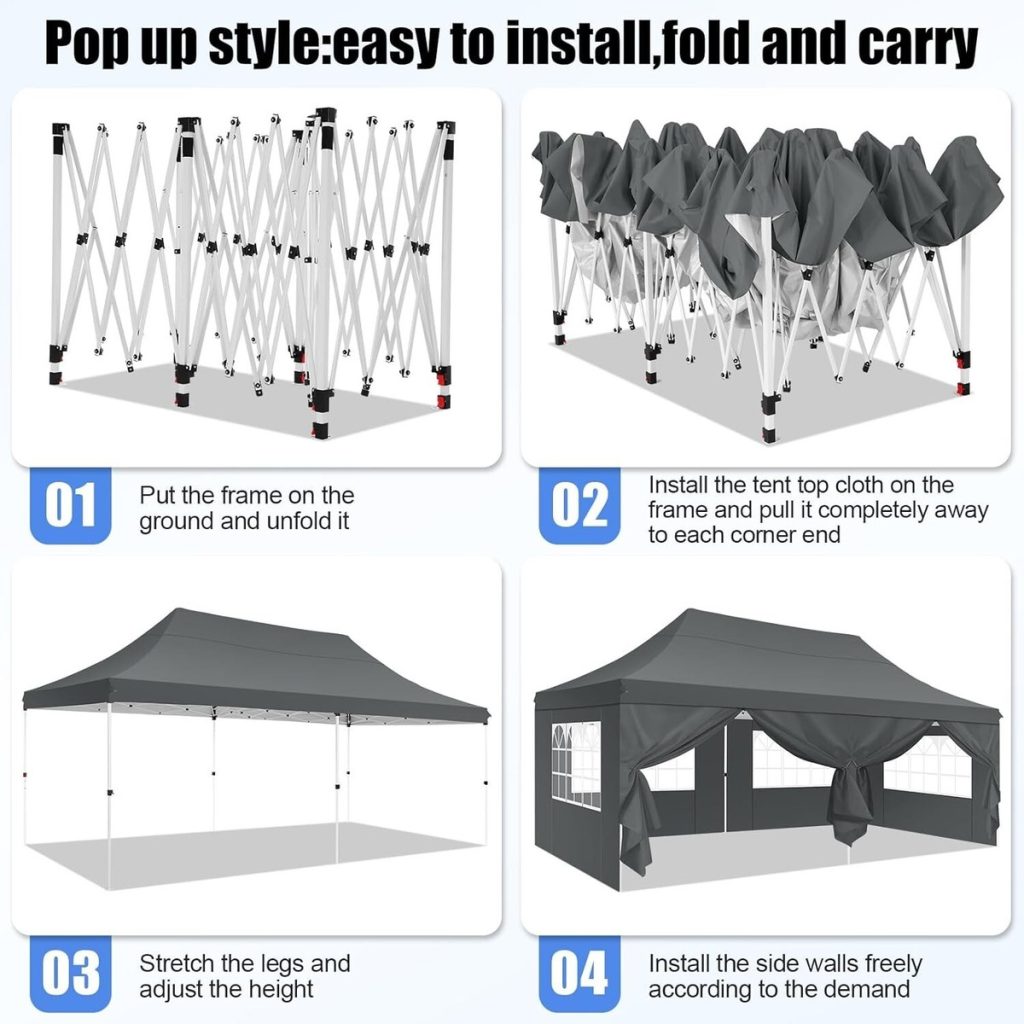
Folding a canopy tent might seem tricky at first, but once you know the right steps, it becomes quick and easy. Imagine packing up your tent without the hassle, saving time and effort for what really matters—enjoying your outdoor adventure.
In this guide, you’ll discover simple tips to fold your canopy tent neatly every time. By the end, you’ll feel confident and ready to tackle your next event or camping trip with ease. Let’s get started!

Credit: www.amazon.ca
Prepare The Tent
Folding a canopy tent starts with getting it ready. Preparing the tent carefully helps protect it from damage. It also makes folding easier and faster.
Focus on two main tasks before folding: clearing the area and removing all accessories. These steps ensure you have enough space and the tent is free from loose parts.
Clear The Area
Make sure the space around your tent is free of obstacles. This helps prevent accidents and gives you room to fold the tent smoothly.
- Pick up any rocks, sticks, or debris near the tent
- Move furniture or other items away from the folding space
- Check the ground for uneven spots or holes
- Clear enough space to fully collapse and fold the canopy
Remove Accessories
Take off all accessories attached to the tent. This includes walls, lights, and any extra gear. Removing these parts helps keep the tent fabric clean and undamaged.
| Accessory | Reason to Remove |
| Sidewalls | Prevent tearing and make folding easier |
| Lights | Avoid damage and electrical hazards |
| Anchors and Weights | Allow free movement of frame parts |
| Storage Bags | Keep the tent fabric clear and ready to fold |

Credit: www.mastercanopy.com
Collapse The Frame
Folding a canopy tent can seem tricky at first. It’s all about collapsing the frame correctly.
Follow these steps to make it easy and avoid damaging the tent.
Unlock Frame Joints
First, locate the frame joints. These are usually found where the tent legs meet the top frame.
Press the release buttons or levers to unlock these joints. This step loosens the frame for folding.
- Locate joints near the corners
- Press the button or lever at each joint
- Ensure all joints are unlocked
Fold Legs And Supports
Once the joints are unlocked, gently fold the legs inward. This will bring the canopy down.
Fold the support bars together as you bring the legs in. This makes the tent compact.
- Fold each leg towards the center
- Bring support bars together
- Ensure the tent is fully collapsed
Fold The Canopy Fabric
Folding the canopy fabric properly helps keep it clean and extends its life. It also makes storage easier and saves space.
Take your time to fold the fabric carefully. Follow simple steps to avoid wrinkles and damage.
Smooth Out Wrinkles
Lay the canopy fabric flat on a clean surface. Use your hands to gently press and smooth out any wrinkles or folds.
- Start from one corner and work toward the opposite side.
- Pull the fabric lightly to remove creases.
- Make sure the fabric lies flat and even.
- Avoid sharp bends that can damage the material.
Fold Into Sections
Divide the canopy fabric into smaller sections before folding it completely. This method keeps it neat and compact.
| Section | How to Fold | Tips |
| Widthwise | Fold the fabric in half or thirds across the width. | Make sure edges line up evenly. |
| Lengthwise | Fold the fabric lengthwise into long, narrow strips. | Keep folds smooth and straight. |
| Final Fold | Fold the strips into a compact square or rectangle. | Avoid tight folds that can cause creases. |
Secure The Folded Tent
After folding your canopy tent, you need to keep it secure. This helps protect the tent and makes it easier to carry.
Securing the tent prevents it from unfolding during transport or storage. Use simple tools to keep it tight and safe.
Use Straps Or Ties
Straps or ties hold the folded tent firmly in place. They stop the tent from opening up accidentally.
Use strong straps or reusable ties to wrap around the folded frame and fabric. Make sure they are tight but not too tight to damage the material.
- Use Velcro straps for easy adjustment
- Try bungee cords for extra hold
- Reusable zip ties work well for quick securing
- Check straps regularly for wear and tear
Check For Loose Parts
Look over the folded tent for any loose parts. Loose pieces can cause damage or get lost during storage.
Inspect joints, clips, and fabric edges. Tighten or fix anything that feels loose before storing the tent.
- Check all frame joints for stability
- Make sure clips and locks are secure
- Fold fabric edges neatly to avoid tears
- Replace missing or broken parts as soon as possible
Store The Tent Properly
Storing your canopy tent correctly keeps it safe and ready for the next use. Proper storage prevents damage and extends the tent’s life.
Two key tips help you store the tent well: choose a dry location and use a storage bag.
Choose A Dry Location
Pick a dry place to store your tent. Moisture can cause mold and damage the fabric and frame. Avoid damp basements or outdoor sheds without weather protection.
- Look for a cool, dry room with good airflow.
- Keep the tent away from direct sunlight to prevent fading.
- Store the tent off the ground to avoid water damage.
- Use shelves or hooks to keep the tent safe and clean.
Use A Storage Bag
Always pack your canopy tent in a storage bag after folding it. A bag protects the tent from dust, insects, and accidental tears.
| Storage Bag Features | Benefits |
| Water-resistant material | Keeps moisture out |
| Strong zipper or closure | Secures the tent inside |
| Ventilation mesh | Prevents mold and mildew |
| Handles or straps | Makes carrying easier |
Tips For Maintaining Your Tent
Proper care helps your canopy tent last longer. Simple maintenance keeps it strong and ready to use.
Follow easy steps to clean and check your tent after each use. This prevents damage and saves money.
Clean After Use
Always clean your tent before folding it. Dirt and moisture can cause mold and weaken fabric.
Use a soft brush or cloth with mild soap and water. Avoid harsh cleaners that damage the material.
- Remove leaves, dirt, and debris
- Spot clean stains gently
- Dry completely to prevent mold
- Store in a dry, cool place
Inspect For Damage
Check your tent for tears, broken poles, or loose parts after every use. Fix small problems fast.
Look closely at seams and zippers. Replace or repair damaged pieces to keep your tent safe and stable.
- Check fabric for holes or tears
- Inspect poles for bends or cracks
- Test zippers and fasteners
- Tighten screws and bolts

Credit: manuals.plus
Frequently Asked Questions
How Do You Start Folding A Canopy Tent?
Begin by removing any accessories and loosening the tent legs. Collapse the frame by pushing the legs inward evenly. This ensures the tent folds smoothly and prevents damage.
What Is The Best Way To Fold Canopy Tent Fabric?
Lay the fabric flat on a clean surface. Fold the fabric evenly into thirds or quarters, matching the frame’s size. Avoid sharp creases to protect the material.
How Can I Prevent Damage When Folding A Canopy Tent?
Fold slowly and avoid forcing the frame. Keep the fabric dry and clean before folding. Store the tent in its carrying bag to protect it from dust and moisture.
How Do I Store A Folded Canopy Tent Properly?
Store the tent in a cool, dry place away from direct sunlight. Use a breathable bag to avoid mold. Keep it off the ground to prevent moisture damage.
Conclusion
Folding a canopy tent can be simple with the right steps. Take your time and follow each step carefully. Keep the fabric clean and dry before folding. Store the tent in a cool, dry place to avoid damage. Regular care helps your tent last longer.
Practice folding a few times to get comfortable. Now, packing up your canopy tent won’t feel like a chore. Ready for your next outdoor adventure!