If you want to catch more fish and improve your fishing skills, knowing how to put weights and hooks on your fishing line is a must. It might seem tricky at first, but once you get the hang of it, you’ll see the difference in your fishing game.
This simple step can help your bait sink at the right depth and stay in place, making it easier to attract fish. You’ll learn clear, easy-to-follow tips to set up your fishing line like a pro. Stick with me, and you’ll be ready to fish smarter and catch more!
Choosing The Right Weights
Choosing the right weights for your fishing line affects how your bait moves. It helps you reach the fish and keep your line steady.
There are many types of fishing weights. Knowing which one to use depends on where and how you fish.
Types Of Fishing Weights
Fishing weights come in several shapes and sizes. Each type works best for specific fishing styles and water conditions.
- Split Shot: Small and round, easy to attach and remove.
- Egg Sinkers: Oval-shaped, good for smooth casting and letting bait move freely.
- Bullet Weights: Pointed shape, used for fishing in weeds or cover.
- Pyramid Sinkers: Triangular, hold well on sandy or muddy bottoms.
- Bank Sinkers: Heavy and rounded, suitable for strong currents.
Matching Weights To Fishing Conditions
Use lighter weights in calm water to avoid scaring fish. Heavier weights help in fast currents or deep water.
| Water Condition | Recommended Weight |
| Calm water | Light (1/16 to 1/4 oz) |
| Moderate current | Medium (1/4 to 1/2 oz) |
| Strong current | Heavy (1/2 oz and above) |
| Deep water | Heavier weights to reach bottom |
Weight Placement Strategies
Where you place the weight on your line changes how your bait moves and sinks.
- Fixed Weights: Attached tightly, keep bait near the bottom.
- Slip Weights: Slide on the line, allow fish to take bait without feeling resistance.
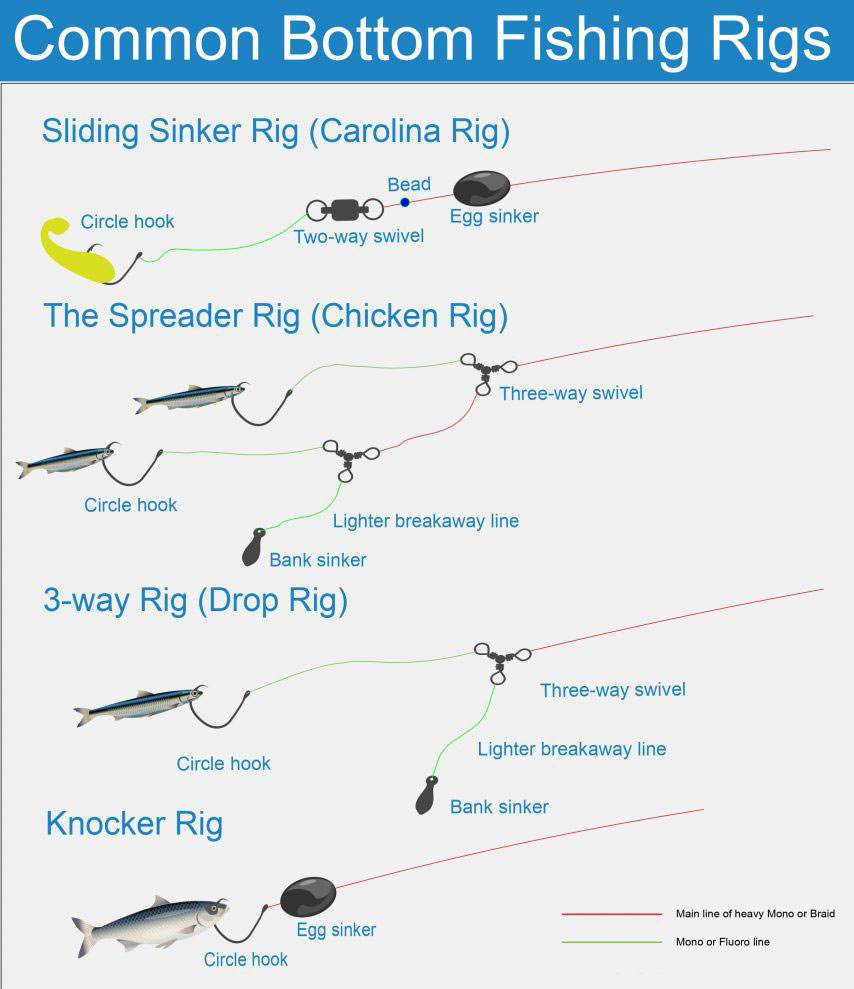
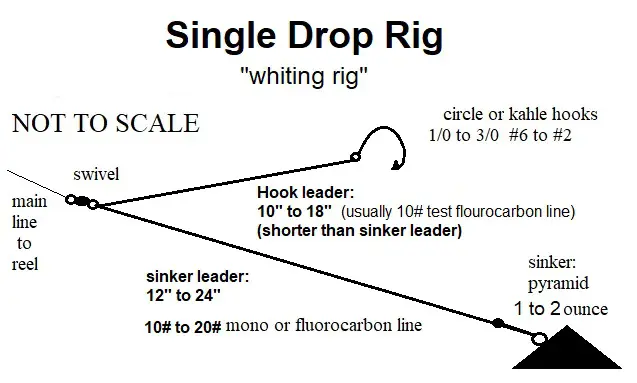
- Drop Shot Rig: Weight is at the bottom, bait floats above the weight.
- Carolina Rig: Weight slides above a swivel, giving bait natural movement.
Selecting Suitable Hooks
Choosing the right hook is crucial for successful fishing. Hooks come in various sizes and styles, each suited for different fish types and conditions. Understanding these options will help you make the best choice.
Consider the material, durability, and hook point types to ensure you select a hook that will last and perform well.
Hook Sizes And Styles
Hooks vary in size from tiny to large. Small hooks catch small fish. Large hooks are for big fish. Styles include J-hooks and circle hooks. J-hooks are versatile. Circle hooks reduce injury to fish.
- Small hooks for small fish
- Large hooks for bigger fish
- J-hooks are versatile
- Circle hooks protect fish
Material And Durability
Hooks are made from different materials like steel or alloy. Steel hooks are strong but may rust. Alloy hooks resist rust but may bend. Choose durable hooks for long-lasting use.
- Steel hooks are strong
- Alloy hooks resist rust
- Durable hooks last longer
Hook Point Types
Hook points come in several types. The common ones are needle points and knife-edge points. Needle points penetrate easily. Knife-edge points are sharp and cut quickly. Different points suit different fishing needs.
- Needle points penetrate easily
- Knife-edge points cut quickly
- Choose point type based on fishing needs
Attaching Weights To The Line
Adding weights to your fishing line helps control the depth and casting distance. It also keeps your bait in the right spot.
There are several ways to attach weights. Each method fits different fishing styles and water conditions.
Using Split Shot Weights
Split shot weights are small and easy to add. They clip directly onto the line without knots.
- Pinch the weight onto the line with pliers.
- Place the weight 6 to 12 inches above the hook.
- Add more weights if you need to sink faster.
- Check if the line moves freely after adding weights.
Sliding Weight Setup
Sliding weights let the bait move more naturally. The weight slides along the line to the sinker or hook.
| Component | Purpose |
| Sliding sinker | Allows free movement on the line |
| Stopper knot or bead | Prevents sinker from sliding too far |
| Hook | Holds the bait |
Thread the sinker on the line, then tie a stopper knot below it. Attach the hook below the knot.
Fixed Weight Methods
Fixed weights are tied or crimped in place. They do not move along the line.
- Tie the weight directly to the line with a knot.
- Use crimp sleeves to secure weights firmly.
- Place the weight close to the hook for better control.
- Check the knot or crimp before fishing.
Tying Hooks Securely
Tying hooks securely is important for fishing success. A strong knot keeps the hook attached during catches.
Using the right knot and tying it well helps prevent losing fish and gear.
Popular Fishing Knots
Some knots are better for tying hooks. The Improved Clinch Knot, Palomar Knot, and Snell Knot are common choices.
- Improved Clinch Knot:Easy to tie and strong for most hooks.
- Palomar Knot:Very strong and simple for braided lines.
- Snell Knot:Good for hooks with a straight eye.
Step-by-step Knot Tying
Follow these steps to tie the Improved Clinch Knot:
- Thread the line through the hook eye.
- Wrap the tag end around the main line 5-7 times.
- Pass the tag end through the small loop near the eye.
- Bring the tag end through the big loop created.
- Moisten the knot and pull tight slowly.
Practice these steps slowly to get a strong knot every time.
Ensuring Knot Strength
Always wet the line before tightening the knot. This stops friction and protects the line.
Pull the knot tight and test it by pulling hard on the hook and line. A good knot does not slip.
- Use quality fishing line for better strength.
- Trim excess tag end close to the knot.
- Check knots regularly during fishing.
Balancing Weights And Hooks
Balancing weights and hooks on a fishing line is key to a good catch. The right balance helps the bait move naturally and improves casting.
Adjusting weights and hooks depends on the bait, the distance you want to cast, and how sensitive the line feels.
Adjusting For Bait Type
Different baits need different weights to stay in place and look natural. Light baits need lighter weights to avoid sinking too fast. Heavy baits require heavier weights to keep them stable.
- Use small weights for soft or live bait.
- Choose heavier weights for large or dense bait.
- Match the hook size to the bait size for a natural fit.
- Check the bait’s movement in water to adjust weight.
Optimizing For Casting Distance
Adding the right weight helps you cast farther. Too light, and the line falls short. Too heavy, and it can tangle or break.
| Weight Size | Casting Distance |
| Light (1-3 grams) | Short casts, up to 20 meters |
| Medium (4-7 grams) | Medium casts, 20-40 meters |
| Heavy (8+ grams) | Long casts, over 40 meters |
Maintaining Line Sensitivity
Balanced weights and hooks keep the line sensitive. This helps feel bites and react quickly. Too much weight dulls sensitivity.
- Use the lightest weight that holds bait correctly.
- Choose hooks that do not add extra bulk.
- Test your setup by feeling the line with your fingers.
- Adjust if you miss bites or feel dull pulls.

Credit: mysterytacklebox.com
Common Mistakes To Avoid
Putting weights and hooks on a fishing line may seem simple. Yet, small errors can cause big problems.
Knowing what to avoid helps you fish better and protects your gear from damage.
Overweighting The Line
Adding too much weight can pull your line down too fast. It may scare fish or cause your line to break.
- Too heavy weights reduce bait movement.
- Line breaks more often with extra weight.
- Heavy weights cause trouble casting far.
- Fish may avoid a sinking bait that falls fast.
Improper Knot Tying
Tying knots the wrong way weakens the line. Knots can slip or break, losing your hook and catch.
| Common Knot Mistakes | Effects |
| Not tightening knots fully | Knot slips off the hook |
| Using wrong knot type | Line weakens at knot |
| Cutting tag ends too short | Knot unties easily |
| Twisting line while tying | Line tangles and weakens |
Ignoring Water Conditions
Water depth, current, and clarity affect weight and hook choice. Ignoring these can reduce fishing success.
- Fast currents need heavier weights to hold bait.
- Clear water calls for lighter, less visible weights.
- Deep water may require stronger hooks and lines.
- Adjust your setup to match the water conditions.
Tips For Different Fishing Environments
Putting weights and hooks on a fishing line changes with the water type. Different environments need different setups. Use the right method to catch fish easily.
Knowing how to adjust your line helps you fish better in fresh water, salt water, or moving water. These tips make your fishing more effective.
Freshwater Techniques
In freshwater, use lighter weights to avoid scaring fish. Small hooks work well for most fish in lakes and rivers. Adjust your weight to the depth you want to fish.
- Use split shot weights for slow sinking
- Choose size 6 to 10 hooks for small fish
- Place weights 12 to 18 inches above the hook
- Try different depths to find fish
Saltwater Adjustments
Saltwater fishing needs stronger hooks and heavier weights. Fish are bigger and water conditions are tougher. Use corrosion-resistant hooks and sinkers.
- Use circle hooks size 2 to 5/0 for big fish
- Choose heavy egg sinkers or pyramid weights
- Attach weights close to the hook in rough water
- Check gear often for rust
Fishing In Currents And Still Water
Currents need heavier weights to keep the bait steady. In still water, use lighter weights for natural bait movement. Position hooks to match water flow and fish behavior.
- Use pyramid sinkers in strong currents
- Choose split shot or small egg sinkers in still water
- Place weights 6 to 12 inches above the hook in currents
- In still water, place weight closer to the hook
Credit: greatdaysoutdoors.com

Credit: greatdaysoutdoors.com
Frequently Asked Questions
How Do You Attach Weights To A Fishing Line?
To attach weights, slide the sinker onto the line before tying the hook. Use split shot weights for easy adjustment. Secure the hook knot firmly to prevent slipping during casting or retrieving.
What Is The Best Hook Size For Fishing?
Choose hook size based on your target fish species. Smaller hooks suit panfish; larger hooks work for bass or catfish. Match hook size to bait size for better hook setting and catch rates.
Where Should Hooks Be Placed On The Fishing Line?
Hooks are tied at the line’s end, below the weight. This setup allows the bait to move naturally and improves hook setting. Adjust the distance between weight and hook depending on fishing technique.
Can I Use Multiple Hooks On One Fishing Line?
Yes, using multiple hooks increases catch chances. Attach hooks using a dropper loop or a paternoster rig. Space hooks evenly to avoid tangling and to target different fish depths.
Conclusion
Adding weights and hooks to a fishing line is simple and useful. Proper placement helps the bait sink and stay steady in water. Choose the right weight size to match your fishing spot. Tie hooks securely to avoid losing fish.
Practice these steps to feel more confident next time. Enjoy your fishing trips with better setups and more fun. Keep trying, and you will improve each time you fish.