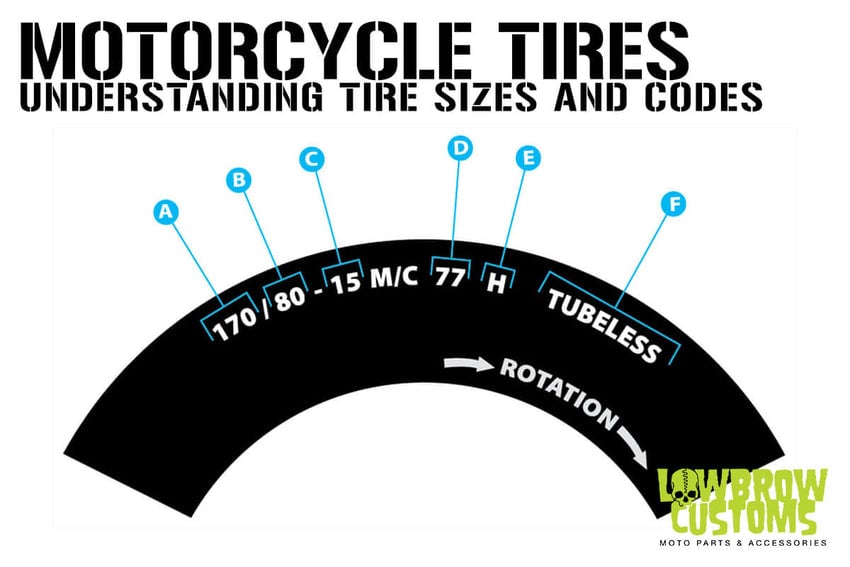
Have you ever looked at your motorcycle tires and wondered what all those numbers and letters really mean? Understanding these codes isn’t just for mechanics—it’s something every rider should know.
These numbers hold important information about your tire’s size, speed rating, and load capacity. Knowing what they mean can help you choose the right tires, improve your safety, and get the best performance out of your bike. Keep reading, and you’ll soon decode those numbers like a pro.
Your ride—and your safety—depend on it.
Tire Size Codes
Motorcycle tires have numbers that tell you their size and fit. These codes help you pick the right tire for your bike. Understanding these numbers keeps your ride safe and smooth.
The size code shows three main things: width, aspect ratio, and rim diameter. Each part gives important details about the tire’s shape and size.
Width Measurement
The width number is the first in the code. It shows how wide the tire is from side to side. This is measured in millimeters.
- A larger width means a wider tire.
- Wider tires offer more grip on the road.
- Narrow tires can be lighter and faster.
Aspect Ratio
The aspect ratio is the height of the tire’s sidewall. It is shown as a percentage of the tire’s width. For example, a ratio of 70 means the height is 70% of the width.
| Aspect Ratio | Meaning |
| 50 | Sidewall height is half the tire width |
| 70 | Sidewall height is 70% of the tire width |
| 90 | Sidewall height is 90% of the tire width |
Rim Diameter
The rim diameter is the last number in the tire code. It tells you the size of the wheel the tire fits. This number is measured in inches.
Here is a quick look at common rim sizes:
- 17 inches: Standard for many sport motorcycles
- 18 inches: Often used on cruisers and touring bikes
- 19 inches: Found on some off-road and adventure bikes

Credit: www.reddit.com
Load Index And Speed Rating
Motorcycle tires have numbers that tell you important information. These numbers help ensure safety and performance. Understanding them can make your ride smoother.
Two crucial numbers on your motorcycle tires are the load index and speed rating. They tell you how much weight your tires can carry and how fast they can go.
Load Capacity Numbers
The load index is a number on your tire. It shows the maximum weight your tire can handle. This is important for safe riding.
Higher numbers mean the tire can carry more weight. Look for these numbers to know how much load your bike can safely carry.
- 42: Can carry up to 330 pounds
- 58: Can carry up to 520 pounds
- 73: Can carry up to 805 pounds
Speed Symbol Meanings
The speed rating is a letter on your tire. It shows the top speed your tire can safely go.
Different letters mean different top speeds. Choose the right speed rating for your riding style.
| M | 81 mph |
| P | 93 mph |
| H | 130 mph |
Tire Construction Types
Motorcycle tires have different ways they are made inside. This is called tire construction. The construction affects how the tire performs on the road.
Knowing the type of construction helps you choose the right tire for your bike. It also helps you understand the numbers and letters on the tire sidewall.
Radial Vs. Bias-ply
There are two main types of motorcycle tire construction: radial and bias-ply. Each type has a different way of arranging the layers inside the tire.
Radial tires have layers that run across the tire from side to side. Bias-ply tires have layers that run diagonally.
- Radial Tires:Layers run at 90 degrees to the direction of travel.
- Bias-Ply Tires:Layers run at an angle, usually 30 to 40 degrees.
- Radial tires offer better grip and heat dissipation.
- Bias-ply tires are often stronger and better for heavy loads.
Identifying Construction Codes
Look at the tire sidewall to find the construction code. It usually appears after the tire size numbers.
The most common codes are “R” and “B” or “–”. “R” means radial construction. “B” or “–” means bias-ply construction.
- R:Radial tire
- B:Bias-ply tire
- – (dash):Bias-ply tire (sometimes used instead of B)
Manufacture Date And Age
The numbers on motorcycle tires tell you important details. One key detail is the tire’s manufacture date. This helps you know the tire’s age and condition.
Knowing the tire’s age is important for safety. Tires get weaker as they get older, even if you do not use them much.
Dot Code Breakdown
The DOT code is a set of letters and numbers on the tire sidewall. It tells where and when the tire was made. The last four digits show the tire’s manufacture week and year.
- The first two digits of the last four show the week of the year.
- The last two digits show the year the tire was made.
- For example, “2319” means the 23rd week of 2019.
- This helps you check if a tire is too old to use.
Tire Shelf Life
Motorcycle tires have a shelf life, meaning a safe period to use them. This depends on storage and use. Most makers suggest using tires within five years of manufacture.
| Age of Tire | Condition | Recommendation |
|---|---|---|
| Less than 3 years | Good condition | Safe to use |
| 3 to 5 years | Check carefully | Inspect for cracks or damage |
| Over 5 years | Likely worn or dry | Replace to stay safe |
Treadwear Indicators
Motorcycle tires have numbers and marks that tell you about their wear. Treadwear indicators help you see when tires need replacing.
Knowing these numbers and marks keeps you safe and improves tire life. Let’s look at what treadwear indicators mean.
Wear Bar Markings
Wear bars are small raised sections inside the grooves of the tire tread. They show how much tread is left on the tire.
- Wear bars appear when the tread depth is low.
- They help you see if the tire needs replacement.
- Riding with worn tires reduces grip and safety.
- Check wear bars regularly to avoid accidents.
Treadwear Ratings
Treadwear ratings show how long a tire should last compared to a standard tire. Higher numbers mean longer life.
| Rating | Meaning |
| 100 | Standard wear rate |
| 200 | Lasts twice as long as standard |
| 300 | Lasts three times as long |
| 400+ | Very long-lasting tire |

Credit: www.motorcyclecruiser.com
Additional Tire Markings
Motorcycle tires have many markings beyond size. These extra symbols tell you about tire quality and special uses.
Knowing these markings helps you pick the right tire for safety and performance.
Traction And Temperature Ratings
Tires have ratings for traction and temperature resistance. These show how well the tire grips and handles heat.
| Rating Type | Description | Grades |
|---|---|---|
| Traction | Measures tire grip on wet surfaces. | AA (best), A, B, C (lowest) |
| Temperature | Shows tire’s heat resistance at high speeds. | A (best), B, C (lowest) |
Look for these letters on the tire sidewall. Higher grades mean safer and better performance.
Special Purpose Symbols
Some tires have symbols showing they suit special uses. These marks guide you in choosing the right tire for your bike.
- M+S:Mud and Snow. Good for all-season riding.
- DOT:Meets US safety standards.
- TL:Tubeless tire.
- TT:Tire requires a tube.
- Reinforced:Stronger tire for heavier loads.
- Radial:Tire construction style.
Selecting The Right Tire
Understanding the numbers on motorcycle tires helps you pick the best tire. These numbers show size, type, and performance details.
Choosing the right tire improves safety and riding comfort. It matches the bike and your riding style.
Matching Tire To Bike Type
Different bikes need different tires. Sport bikes use tires that grip well on smooth roads.
Cruiser bikes require tires that last longer and handle well at lower speeds.
- Sport bikes: Tires with wide profiles and soft rubber
- Cruiser bikes: Tires with deeper treads and harder rubber
- Off-road bikes: Knobby tires for dirt and rough terrain
- Touring bikes: Tires designed for long-distance and comfort
Considering Riding Conditions
Think about where and how you ride before choosing tires. Wet or dry roads affect tire choice.
Some tires work best on smooth highways. Others are made for rough, uneven paths.
- Wet roads: Tires with deep grooves to channel water away
- Dry roads: Tires with smooth surfaces for better grip
- Off-road: Tires with large knobs for traction on dirt
- Mixed conditions: Tires that balance grip and durability
Maintenance Tips
Keeping motorcycle tires in good shape is key to safe riding. Regular checks help you spot problems early.
Understanding tire numbers helps with proper care. This guide covers important maintenance steps.
Checking Tire Pressure
Correct tire pressure improves grip and fuel efficiency. Check pressure before every ride for safety.
- Use a reliable tire pressure gauge.
- Check pressure when tires are cold.
- Compare readings to the motorcycle manual.
- Adjust pressure as needed to match recommendations.
- Inspect valve stems for damage or leaks.
Monitoring Tire Wear
Worn tires reduce traction and risk accidents. Watch tread depth and uneven wear patterns.
| Wear Sign | What to Do |
| Tread Depth Below 1.6 mm | Replace tires immediately |
| Uneven Wear on One Side | Check wheel alignment and suspension |
| Cracks or Bulges | Replace tire; do not ride |
| Flat Spots | Inspect brakes and riding habits |

Credit: cheaptiresasap.com
Frequently Asked Questions
What Do The Numbers On Motorcycle Tires Represent?
The numbers indicate tire width, aspect ratio, and rim diameter. They help riders choose the right tire size for safety and performance.
How To Read Tire Size On A Motorcycle Tire?
Look for a series like 120/70 ZR17. The first number is width in millimeters, second is aspect ratio, and last is rim diameter in inches.
Why Is Tire Aspect Ratio Important?
Aspect ratio affects the tire’s height and contact patch. It influences handling, comfort, and stability while riding.
What Does The Speed Rating On Motorcycle Tires Mean?
Speed rating shows the maximum speed the tire can safely handle. It’s indicated by a letter like H, V, or W.
Conclusion
Understanding the numbers on motorcycle tires helps you choose the right fit. These numbers show tire size, speed rating, and load limit. Knowing this keeps your ride safe and smooth. Check your tires regularly to avoid problems. Clear tire info makes maintenance easier for every rider.
Keep your bike ready for the road with the right tires. Simple details can make a big difference. Stay informed and enjoy your ride with confidence.