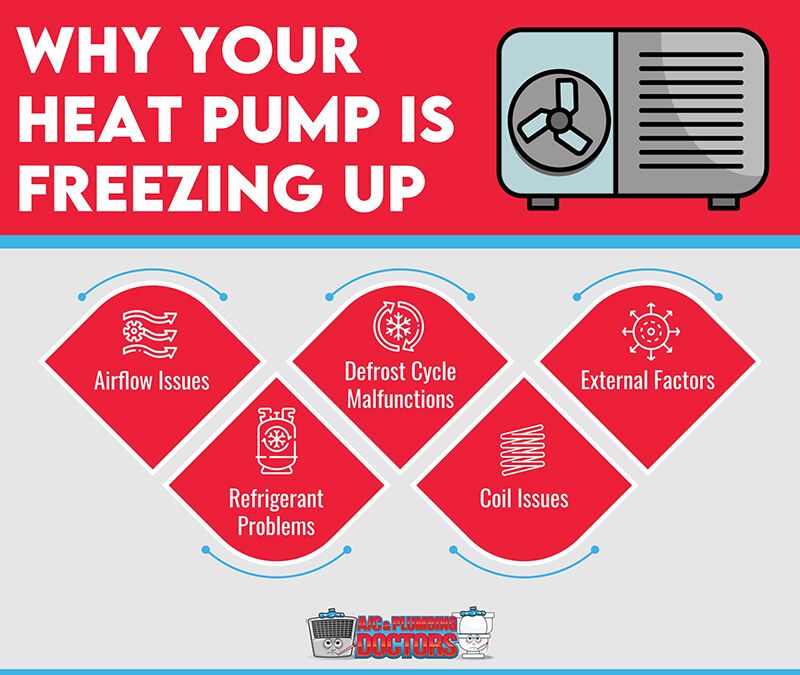
Have you ever noticed ice forming on your air conditioner and wondered why it’s freezing up? It’s frustrating when your AC stops cooling properly, especially on hot days.
But understanding what causes your air conditioner to freeze can help you fix the problem before it gets worse. You’ll discover the common reasons behind a frozen AC and simple steps you can take to keep your system running smoothly.
Keep reading to learn how to protect your comfort and avoid costly repairs.

Credit: www.delcohvac.com
Common Signs Of A Frozen Ac
A frozen air conditioner often stops cooling properly. It can lead to discomfort in your home or office.
Knowing the signs of a frozen AC helps you fix the problem early and avoid bigger damage.
Ice On The Evaporator Coil
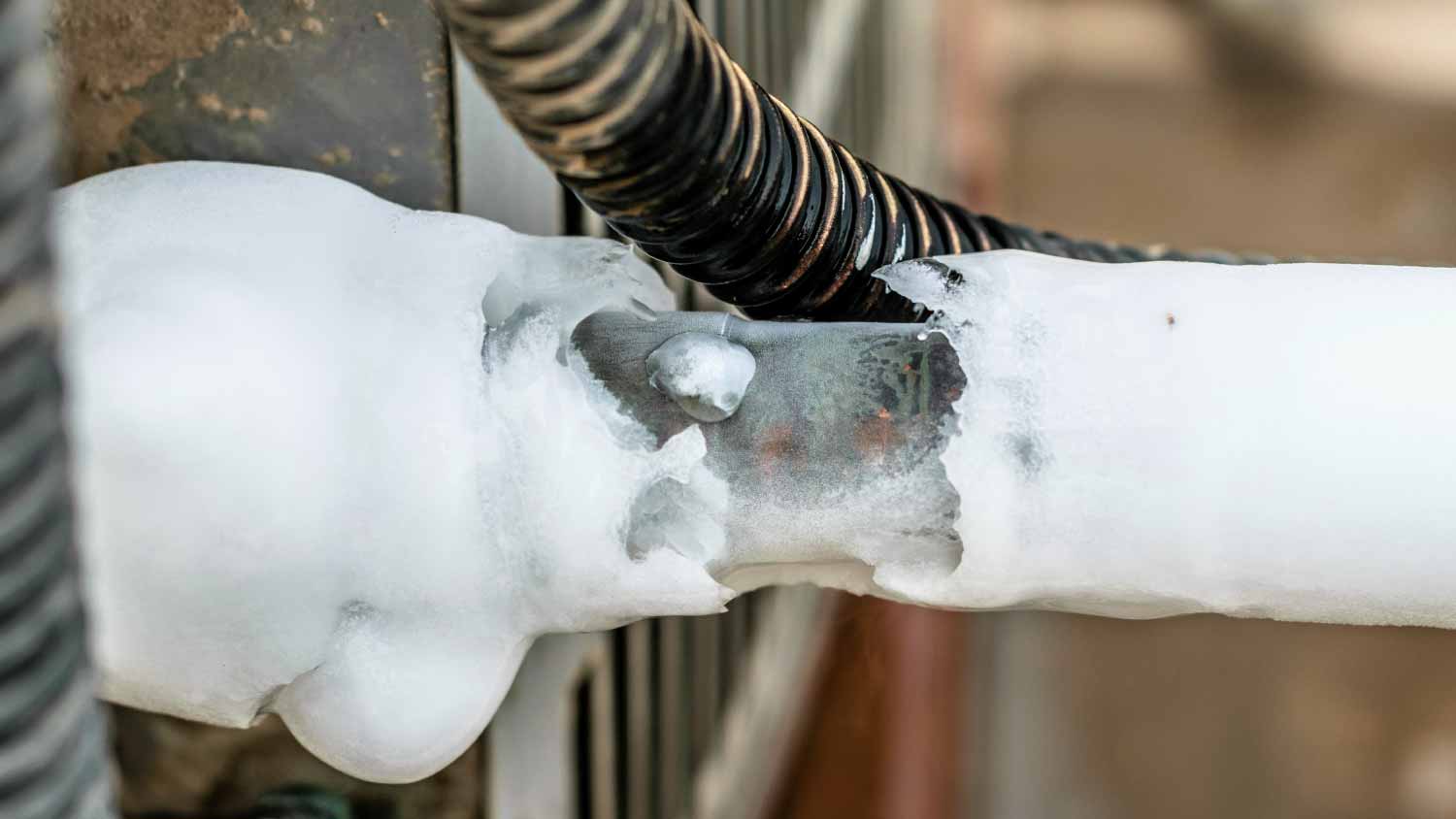
The evaporator coil inside your AC can get covered with ice. You might see frost or thick ice build-up.
Reduced Airflow
Frozen parts block airflow through the vents. The air coming out feels weak or barely cold.
Unusual Sounds
Your AC may make strange noises. These sounds happen because ice affects the fan and other parts.
Water Leaks Around The Unit
Ice melts when the AC is off or running less. This meltwater can leak near the indoor unit.
Higher Energy Bills
A frozen AC works harder to cool your space. This extra effort raises your electricity costs.
- Ice on the coil or pipes
- Weak or low airflow
- Strange noises from the unit
- Water leaking near the AC
- Increased energy bills
Low Refrigerant Levels
Air conditioners can freeze up when refrigerant levels are low. This is a common issue in many households.
Understanding the causes and solutions can help maintain your air conditioner’s efficiency. Let’s explore the impact of leaks and the recharge process.
Leaks And Their Impact
Refrigerant leaks can severely impact the performance of an air conditioner. These leaks reduce cooling capacity and efficiency.
- Leaks cause refrigerant levels to drop.
- Low levels make the coils freeze up.
- Frozen coils can damage the entire system.
Refrigerant Recharge Process
Recharging the refrigerant is crucial to restore cooling efficiency. This involves several key steps.
| Step | Description |
| 1 | Identify and repair leaks |
| 2 | Evacuate the system |
| 3 | Recharge with the correct refrigerant type |
Dirty Air Filters
Dirty air filters are a common reason air conditioners freeze up. When filters get clogged, airflow slows down. This makes the system work harder and colder than usual.
Without enough air moving, the moisture inside the unit can freeze. This leads to ice buildup on the coils and pipes.
Airflow Restriction
Dirty air filters block air from flowing smoothly through your AC. This restriction lowers the temperature inside the unit. The cold air causes moisture to turn into ice. Ice stops the system from cooling properly.
Restricted airflow also makes the compressor work too hard. It can cause damage and higher energy bills.
Filter Replacement Tips
Change your air filter every 1 to 3 months. This keeps airflow clean and steady. Use filters that fit your unit well. Avoid very cheap filters that trap less dust.
- Check filters monthly during high use
- Replace filters if they look dirty or clogged
- Use a vacuum to clean reusable filters
- Write the replacement date on the filter frame
- Keep extra filters on hand for quick changes
Credit: www.angi.com
Blocked Airflow
Blocked airflow is a common cause of air conditioners freezing up. When air cannot flow freely, the system struggles to work properly. This leads to ice forming on the coils.
Two main reasons for blocked airflow are obstructed vents and fan issues. Both can reduce the cooling efficiency and cause the unit to freeze.
Obstructed Vents
Vents and air filters can get blocked by dust, dirt, or furniture. This stops air from moving through the system. When the air is trapped, the coils can get too cold and freeze.
- Check and clean air vents regularly
- Keep furniture away from vents
- Replace air filters every 1–3 months
- Remove any debris near the outdoor unit
Fan Issues
The fan helps move air over the coils. If the fan is broken or dirty, airflow slows down. This causes the coils to freeze and the system to stop cooling well.
| Fan Problem | Effect on Airflow | Result |
| Dirty fan blades | Reduced airflow | Freezing coils |
| Broken motor | No airflow | System shutdown |
| Loose fan belt | Slower fan speed | Ice build-up |
Thermostat Malfunctions
An air conditioner can freeze up if its thermostat does not work properly. The thermostat controls the temperature and signals the AC to turn on or off. When it malfunctions, the system may run too long or not enough, causing ice build-up.
Two common thermostat problems cause freezing: incorrect temperature settings and sensor problems. These issues confuse the AC and stop it from working correctly.
Incorrect Temperature Settings
Setting the thermostat too low can make the air conditioner run constantly. This continuous running cools the coils too much and leads to freezing. Also, switching the thermostat from heat to cool too fast can cause the system to freeze.
- Thermostat set below the room temperature
- Rapid changes between heating and cooling modes
- Ignoring recommended temperature ranges
- Leaving the thermostat on cooling during cold weather
Sensor Problems
The thermostat uses a sensor to read the room temperature. If the sensor is faulty or misplaced, it gives wrong signals. This mistake causes the air conditioner to cool too much and freeze the coils.
| Sensor Issue | Effect on AC |
| Broken sensor | Inaccurate temperature readings |
| Sensor touching cold coil | False low temperature signal |
| Sensor out of position | Incorrect room temperature data |
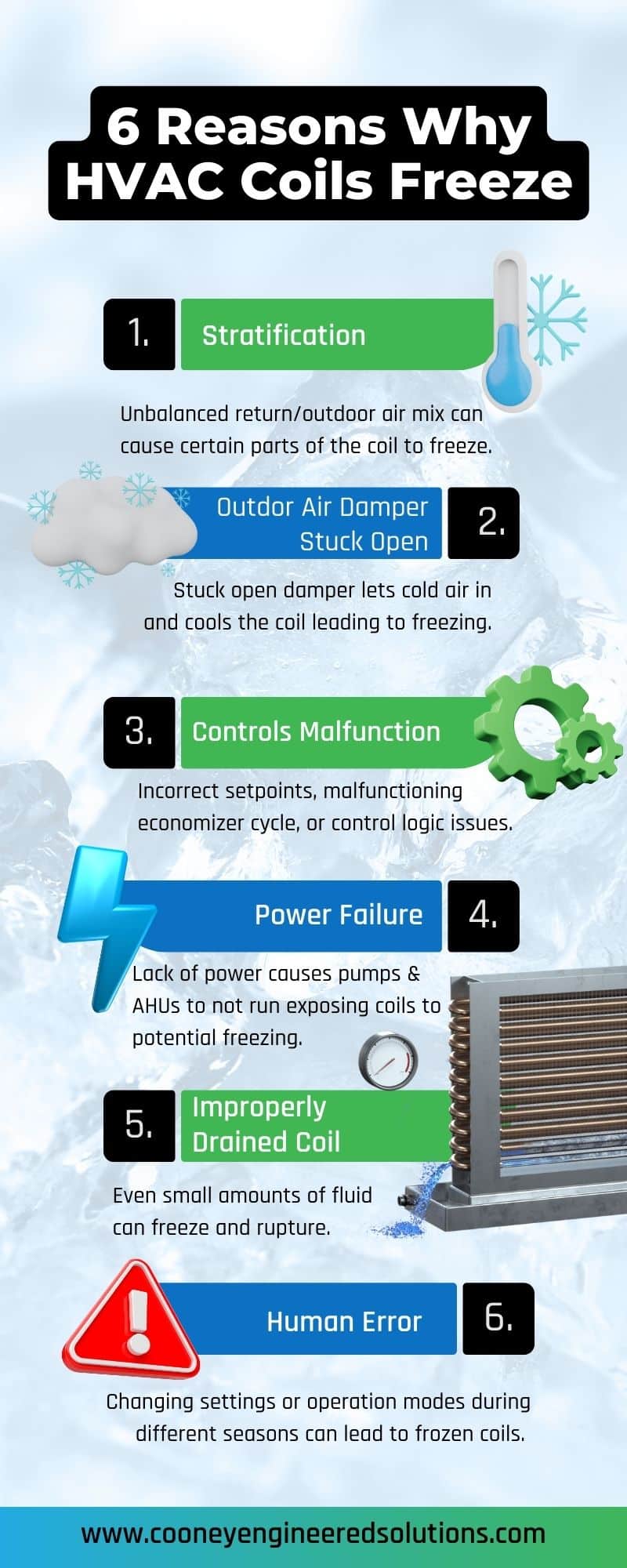
Credit: cooneyengineeredsolutions.com
Mechanical Failures
Air conditioners may freeze due to mechanical failures. These problems stop the system from working correctly.
Two common mechanical causes are compressor issues and expansion valve problems. Both affect cooling and airflow.
Compressor Issues
The compressor moves refrigerant through the air conditioner. If it breaks or works poorly, the system can freeze.
- Low refrigerant pressure reduces heat exchange.
- Worn compressor parts cause improper cooling.
- Electrical faults stop the compressor from running.
- Overheating can shut down the compressor.
Expansion Valve Problems
The expansion valve controls refrigerant flow into the evaporator. If it sticks or clogs, freezing may occur.
| Valve Issue | Effect on Air Conditioner |
| Stuck Open | Too much refrigerant cools coils too fast |
| Stuck Closed | Not enough refrigerant reduces cooling |
| Clogged Valve | Uneven refrigerant flow causes ice buildup |
Environmental Factors
Environmental conditions can cause an air conditioner to freeze up. These factors affect how well the system works and can lead to ice build-up.
Understanding these factors helps you spot problems early. Two main environmental causes are extreme humidity and outdoor unit conditions.
Extreme Humidity
High humidity makes the air conditioner work harder to remove moisture. This extra work can cause the evaporator coil to get too cold and freeze.
When the air is very humid, moisture can collect on the coils. This moisture can freeze and block airflow, causing the unit to freeze up.
- Moisture builds up on cold coils
- Excess moisture freezes into ice
- Frozen coils reduce cooling efficiency
Outdoor Unit Conditions
Outdoor units can freeze if they are dirty or blocked. Dirt and debris reduce airflow and cause the system to work harder.
Poor outdoor conditions like leaves, grass, or snow can cover the unit. This coverage makes the unit cold and can lead to freezing.
- Dirt blocks airflow around the unit
- Leaves and debris cover the coils
- Snow or ice on the unit causes freezing
Preventing Ac Freeze-ups
An air conditioner can freeze up if it is not cared for properly. Ice forms on the coils and stops the AC from working well.
Preventing freeze-ups keeps your AC running smoothly and avoids costly repairs. Regular care is key.
Regular Maintenance
Keep your air conditioner clean and check it often. Dirty filters or coils cause low airflow, which leads to freezing.
- Change or clean air filters every 1 to 3 months
- Clear debris around the outdoor unit
- Clean evaporator and condenser coils yearly
- Check and fix any leaks in the refrigerant lines
- Keep vents open and unblocked inside your home
Professional Inspections
Hire a professional to inspect your AC at least once a year. They can spot issues you might miss and fix small problems fast.
| Inspection Task | Why It Matters |
| Check refrigerant levels | Low levels cause freezing and poor cooling |
| Test thermostat settings | Wrong settings can make the AC run too long |
| Examine electrical connections | Loose wires can cause the system to fail |
| Inspect drain lines | Clogs lead to water buildup and ice formation |
Frequently Asked Questions
Why Does My Air Conditioner Freeze Up Suddenly?
An air conditioner freezes up due to restricted airflow or low refrigerant levels. Dirty filters and blocked vents reduce air circulation. Low refrigerant causes evaporator coils to get too cold. Both conditions lead to ice formation on the coils, causing the unit to freeze.
How Does Low Refrigerant Cause Ac Freezing?
Low refrigerant lowers the pressure in the AC system, causing the evaporator coil to become excessively cold. This extreme cold freezes moisture on the coil, forming ice. Low refrigerant often indicates leaks, which should be repaired by a professional to prevent freezing.
Can Dirty Air Filters Cause An Ac To Freeze?
Yes, dirty air filters block airflow over the evaporator coil. Reduced airflow causes the coil to get too cold, leading to ice buildup. Regular filter cleaning or replacement improves airflow and prevents freezing issues in your air conditioning unit.
Does A Frozen Ac Affect Its Efficiency?
A frozen air conditioner cannot cool effectively and uses more energy. Ice blocks airflow, reducing cooling capacity and straining the compressor. This inefficiency can increase utility bills and potentially damage the system if not addressed quickly.
Conclusion
An air conditioner freezes up mostly due to airflow or refrigerant issues. Dirty filters and blocked vents stop air from moving well. Low refrigerant levels also cause freezing inside the unit. Regular cleaning and timely repairs keep your AC working smoothly.
Catching problems early saves money and discomfort. Stay aware of these causes to keep your home cool and comfortable. Don’t ignore signs of freezing—act quickly to fix them. Your AC will thank you with better performance and longer life. Simple care goes a long way.