Have you ever wondered just how cold your air conditioner can really get? Whether you’re trying to beat the summer heat or create the perfect cozy environment, understanding your AC’s cooling power matters.
Knowing what to expect helps you set the right temperature, save energy, and stay comfortable without pushing your unit too hard. Keep reading, and you’ll discover the surprising facts about how cold your air conditioner can make your space—and how to get the most out of it every time.

Credit: www.lifestylewarehouse.co.uk
Ac Cooling Basics
Air conditioners cool rooms by removing heat from the air. They use a cycle of compression and expansion to lower the temperature inside your home.
Understanding how air conditioners work and how temperature settings affect cooling helps you get the best comfort.
How Air Conditioners Work
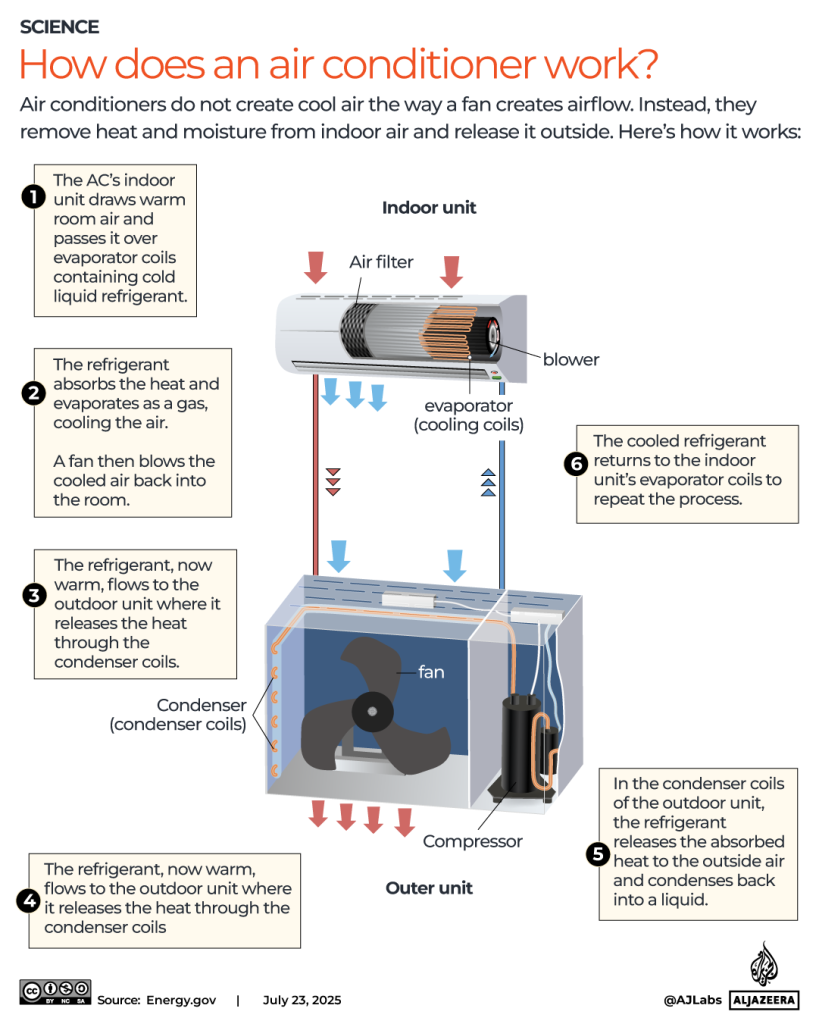
An air conditioner moves heat from inside your room to the outside. It uses a refrigerant that changes from gas to liquid and back.
- The compressor pumps refrigerant gas and raises its pressure and temperature.
- The hot gas moves to the condenser coil outside, where it cools and turns into liquid.
- The liquid refrigerant passes through an expansion valve, dropping in pressure and temperature.
- Cold refrigerant flows through the evaporator coil inside, absorbing heat from the room air.
- The cooled air is blown back into the room, lowering the temperature.
Temperature Settings Explained
Temperature settings control how cold the air conditioner cools. Lower settings make the AC work harder to reach colder air.
| Setting | Effect on Cooling | Energy Use |
| High (Cool) | Room gets colder faster | Uses more energy |
| Medium | Balanced cooling and energy use | Moderate energy use |
| Low (Warm) | Less cooling, saves energy | Uses less energy |

Credit: www.advantageairtech.com
Factors Affecting Ac Coldness
Air conditioners help keep our homes cool. How cold they get depends on several factors. Understanding these can help you optimize your AC’s performance.
Let’s explore some of the main factors that affect how cold your air conditioner can get.
Room Size And Insulation
The size of the room affects cooling. A large room takes longer to cool down. Small rooms cool faster with the same AC.
Insulation is also key. Good insulation keeps the cold air in and warm air out. Rooms with poor insulation might not get as cold.
- Large rooms need stronger AC units
- Proper insulation helps maintain temperature
- Gaps and leaks reduce cooling efficiency
Outdoor Temperature Impact
The outside temperature affects your AC’s performance. When it’s hot outside, the AC works harder to cool your home. On cooler days, it can reach lower temperatures more easily.
Extreme temperatures can strain the AC unit. It may struggle to maintain the desired indoor temperature.
Ac Unit Capacity
AC units come in different capacities. A unit’s capacity determines how much air it can cool. If the capacity is too low for the room size, it won’t cool effectively.
Choosing the right capacity is important. A unit with too high a capacity can be wasteful, cooling too quickly and cycling on and off.
- Match AC capacity to room size
- Higher capacity for larger rooms
- Proper sizing ensures efficient cooling
Typical Temperature Ranges
Air conditioners cool indoor spaces by lowering the temperature. The exact temperature they reach depends on several factors. These include the air conditioner’s settings and the room’s size.
Understanding typical temperature ranges helps set realistic expectations for cooling comfort. It also helps in choosing the right air conditioner.
Average Indoor Cooling Levels
Most air conditioners can cool rooms to a comfortable level. Typical indoor temperatures with AC range between 72°F and 78°F. This range keeps the air feeling fresh without being too cold.
- 72°F to 75°F is ideal for sleeping
- 75°F to 78°F suits daily living areas
- Temperatures below 72°F can feel too cold for some people
Minimum Achievable Temperatures
Air conditioners have limits on how cold they can make a room. The minimum temperature depends on the unit’s power and outside weather. Usually, ACs can lower the room temperature by about 15°F to 20°F below outside heat.
| Outside Temperature | Minimum Indoor Temperature |
|---|---|
| 90°F (32°C) | 70°F (21°C) |
| 85°F (29°C) | 65°F (18°C) |
| 80°F (27°C) | 60°F (16°C) |

Credit: thefurnaceoutlet.com
Common Misconceptions
Many people wonder how cold an air conditioner can make a room. There are many ideas about this, but some are not true. Understanding how AC units work helps clear up these myths.
This article explains why air conditioners do not freeze rooms and how energy use relates to cooling power.
Why Acs Don’t Freeze Rooms
Air conditioners cool rooms by removing heat, not by making the air very cold like a freezer. They lower the temperature to a comfortable level.
If an AC made the room too cold, it would be unsafe and uncomfortable. Most ACs keep the temperature between 68°F and 75°F.
Energy Efficiency Vs. Cooling Power
Air conditioners use energy to cool a room. More cooling power means more energy use. But very cold air needs a lot of power.
Manufacturers balance energy use and cooling so the AC works well without wasting power. This helps save electricity and money.
Maximizing Ac Cooling
Air conditioners cool rooms by removing heat from the air. The colder the air, the better you feel inside.
To get the most cold air from your AC, you need to use it correctly and keep it in good shape.
Proper Maintenance Tips
Cleaning and checking your AC helps it cool better and last longer. Dirty parts make the AC work harder.
Replace or clean the air filters every 1 to 3 months. Clean coils and remove debris around the unit.
- Change air filters regularly
- Clean evaporator and condenser coils
- Clear leaves and dirt near the outdoor unit
- Check for leaks and refrigerant levels
- Schedule yearly professional maintenance
Optimal Thermostat Settings
Set the thermostat to a comfortable temperature that saves energy and keeps you cool. Avoid setting it too low.
Use programmable thermostats to adjust cooling when you are away or asleep. This helps keep the room cool efficiently.
- Keep thermostat around 75°F (24°C) for comfort
- Use programmable settings to save energy
- Avoid sudden temperature changes
- Use “auto” fan mode instead of “on”
Using Fans For Better Circulation
Fans help spread cold air from the AC around the room. They make the space feel cooler without extra energy.
Ceiling fans or portable fans work well. Run fans in the right direction to push cool air down.
- Use ceiling fans to move cold air downward
- Place portable fans near AC vents
- Turn fans off when not in the room
- Combine fans with AC for best cooling
Advanced Cooling Technologies
Air conditioners cool the air using different technologies. These technologies help make cooling faster and more efficient.
Understanding these technologies helps you know how cold an air conditioner can get and how it saves energy.
Inverter Acs
Inverter ACs control the speed of the compressor motor. This means they adjust cooling power based on the room temperature.
Because they do not turn on and off repeatedly, they keep the temperature steady and save energy.
Smart Thermostats
Smart thermostats learn your cooling preferences and daily schedule. They adjust the temperature automatically to keep you comfortable.
- They reduce energy use by turning off when you are not home.
- They allow temperature control from your phone or voice commands.
- They provide reports on your energy use to help you save more.
Eco-friendly Cooling Solutions
Eco-friendly solutions use natural refrigerants and better materials. They reduce harm to the environment while cooling your space.
| Technology | Benefit |
| Natural Refrigerants | Lower greenhouse gas emissions |
| Solar-Powered ACs | Use renewable energy |
| Energy-Efficient Designs | Reduce power consumption |
Frequently Asked Questions
How Cold Can An Air Conditioner Get?
An air conditioner can cool a room to about 60°F (15°C). The exact temperature depends on the unit’s capacity and settings. External factors like room size and insulation also affect cooling efficiency.
What Affects An Air Conditioner’s Cooling Temperature?
Cooling depends on unit size, room insulation, outside temperature, and thermostat settings. Proper maintenance and clean filters improve cooling performance. Poor insulation or a too-small AC unit reduces effectiveness.
Is It Safe To Set An Ac Very Cold?
Setting an AC too cold can increase energy use and wear out the unit. It may cause discomfort or dry air. A comfortable range is typically between 72°F and 78°F (22°C–26°C).
Can Air Conditioners Cool Below Outside Temperature?
No, air conditioners cannot cool a room below the outdoor temperature effectively. They transfer heat from inside to outside, so extreme heat limits how cold the room gets.
Conclusion
Air conditioners cool the air by removing heat and moisture. They can lower room temperature to a comfortable level. The exact temperature depends on your unit and settings. Proper maintenance helps the AC work better and last longer. Keep filters clean and check refrigerant levels often.
Remember, setting the temperature too low wastes energy. Balance comfort with efficiency for best results. Enjoy cool air without high bills or damage. Understanding how cold your AC gets helps you use it wisely. Stay comfortable during hot days with smart AC use.