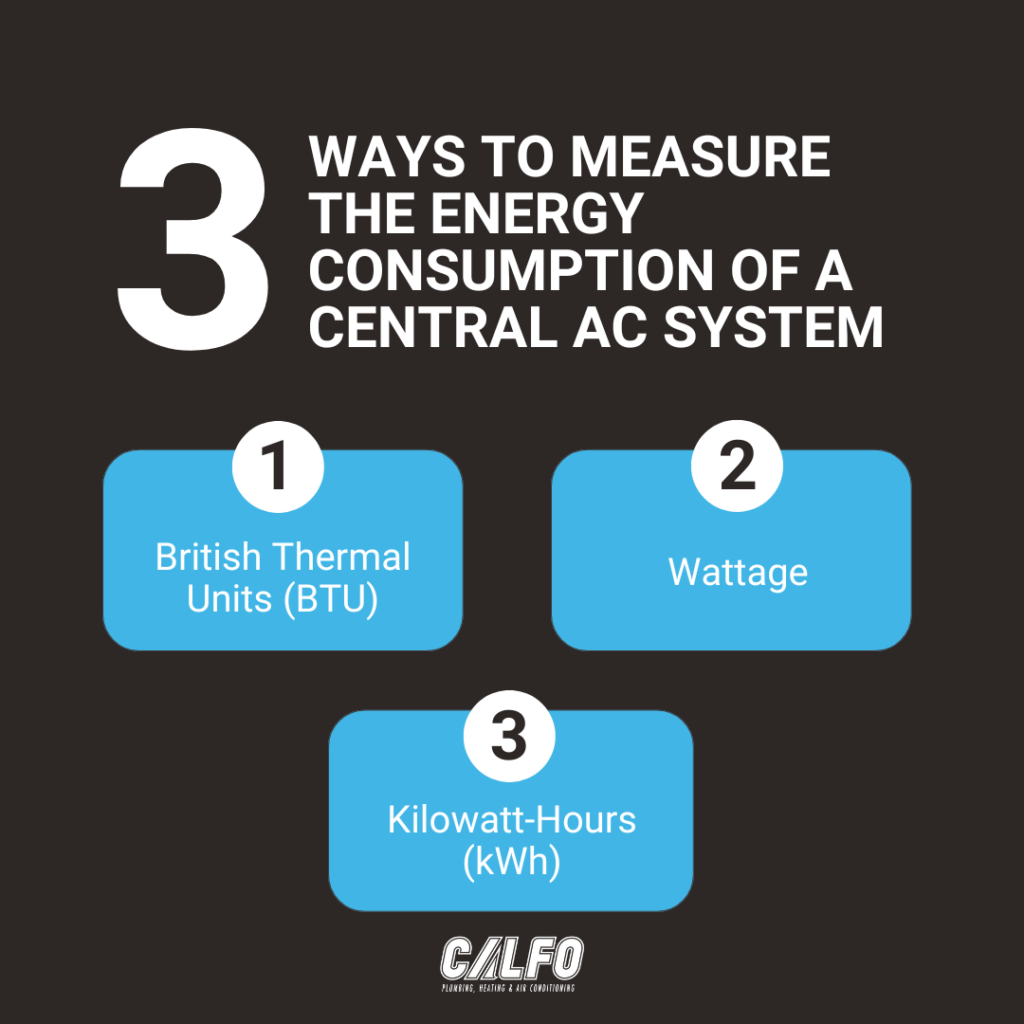
Wondering how many watts your central air conditioner uses? You’re not alone.
Understanding the energy consumption of your AC can help you save money and make smarter choices for your home. You’ll discover exactly how to figure out the wattage of your central air conditioner and why it matters for your electricity bill.
Keep reading to unlock simple tips that could lower your energy costs and keep your home cool without surprises.
Central Ac Power Basics
Central air conditioners use electricity to cool your home. The power they need is measured in watts. Knowing how many watts your AC uses helps you understand energy use and costs.
This guide explains what watts measure and the main parts that use power in a central AC system.
What Watts Measure
Watts show how much electrical power a device uses. One watt equals one joule of energy per second. For central AC units, watts tell you how much energy the system draws to run.
- Power consumption: How much electricity the AC uses while running.
- Energy efficiency: Helps compare different AC models.
- Cost estimation: Knowing watts helps calculate electricity costs.
Ac Power Components
A central air conditioner has several parts that use electricity. Each part adds to the total wattage. The main components are the compressor, fan motors, and control systems.
| Component | Function | Typical Watt Usage |
| Compressor | Compresses refrigerant to cool air | 1500 to 3000 watts |
| Condenser Fan Motor | Moves air over condenser coils | 400 to 700 watts |
| Evaporator Fan Motor | Circulates cool air inside the home | 300 to 600 watts |
| Control System | Runs thermostat and safety features | Less than 100 watts |
Typical Wattage Of Central Ac Units
Central air conditioners use electricity to cool homes. The amount of power they use is measured in watts. Knowing how many watts your AC uses can help you manage energy costs.
Different factors affect the wattage of central AC units. Size and energy efficiency are important considerations. Let’s explore how these factors influence wattage.
Small Vs Large Systems
Small central AC units use less power. They are ideal for cooling small spaces. A small system might use about 3,000 watts. Large systems are for bigger homes and use more power. They can use up to 5,000 watts or more.
Choosing the right size is important. A system too small will work harder and use more energy. A system too large will cycle on and off, wasting power.
- Small systems: 3,000 to 4,000 watts
- Large systems: 5,000 watts or more
- Right size saves energy
Energy Efficiency Ratings
Energy efficiency is measured by SEER ratings. A higher SEER rating means better efficiency. Efficient units use less power to cool the same space.
High-efficiency units may cost more upfront. But they save money on energy bills over time. Look for units with a SEER rating of 14 or higher.
| SEER Rating | Efficiency |
| 13 | Standard |
| 14-16 | Good |
| 17+ | Excellent |
Factors Affecting Ac Wattage
The wattage of a central air conditioner depends on many factors. It is not the same for every home.
Understanding these factors helps you know why some AC units use more power than others.
Climate And Usage
Climate affects how much your AC needs to work. Hotter places need stronger air conditioners.
How often you use the AC also changes the power it uses. More use means more wattage.
- Hot climates increase AC wattage
- Frequent use raises energy consumption
- Cooler climates reduce power needs
Insulation And Home Size
Homes with good insulation keep cool air inside longer. This lowers the AC wattage needed.
Bigger homes need more power to cool all rooms. Small homes use less electricity.
- Better insulation cuts down energy use
- Large houses require higher wattage AC units
- Small homes need less cooling power
Credit: thefurnaceoutlet.com
Calculating Your Ac Power Needs
Knowing how many watts your central air conditioner uses helps you pick the right size unit. Too big or too small can waste energy or fail to cool well.
We will look at two ways to estimate the power needs of your AC system. This helps you understand how much electricity it will use.
Manual J Load Calculation
Manual J is a detailed method used by professionals to find cooling needs for a home. It considers many factors like house size, windows, insulation, and climate.
- Measure the area of each room
- Check insulation quality
- Consider window size and direction
- Account for heat from appliances and people
- Factor in outdoor temperature
This calculation gives the total cooling load in BTUs per hour. You can then match this load to an AC unit that fits your home.
Estimating Wattage From Btus
After finding the BTU value, you can estimate how many watts your AC will need. This helps to understand its power consumption.
| BTU/hr | Approximate Watts |
|---|---|
| 6,000 | 600 |
| 12,000 | 1,200 |
| 18,000 | 1,800 |
| 24,000 | 2,400 |
| 30,000 | 3,000 |
Use this simple formula: Watts = BTU ÷ 10. It is a rough estimate but good for basic calculations.
Energy Consumption And Costs
Central air conditioners use electricity to cool your home. Their power use depends on size and efficiency.
Knowing how many watts your unit uses helps you understand energy costs better.
Average Monthly Usage
Most central air conditioners use between 2000 and 5000 watts per hour. Usage depends on the unit’s size.
On average, a central AC runs 8 hours a day in summer months.
- Small units: about 2000 watts per hour
- Medium units: about 3500 watts per hour
- Large units: about 5000 watts per hour
Impact On Electricity Bills
The higher the wattage, the more electricity the AC uses. This means higher bills.
Electricity cost depends on your local rates and how long you run the AC daily.
| Unit Size | Watts Used Per Hour | Daily Usage (8 hrs) | Estimated Monthly Cost |
|---|---|---|---|
| Small | 2000 W | 16 kWh | $19.20 |
| Medium | 3500 W | 28 kWh | $33.60 |
| Large | 5000 W | 40 kWh | $48.00 |
Assuming $0.12 per kWh electricity rate.

Credit: www.dhontario.com
Ways To Reduce Ac Power Usage
Central air conditioners use a lot of electricity to cool your home. Reducing power usage saves money and helps the environment. Simple changes can lower your AC’s energy needs.
Below are two key ways to reduce how many watts your central air conditioner uses. Follow these tips to keep your system running efficiently.
Regular Maintenance Tips
Keeping your AC unit clean and well maintained helps it use less power. A dirty or faulty system works harder and uses more energy.
- Change or clean air filters every 1-3 months.
- Check and clean the condenser coils annually.
- Clear debris around the outdoor unit for good airflow.
- Inspect refrigerant levels and fix leaks promptly.
- Make sure ducts are sealed and insulated.
Upgrading To Efficient Models
Newer air conditioners use less electricity to cool the same space. Choosing an efficient model lowers your power bills and reduces energy waste.
| Feature | Benefit | Impact on Power Usage |
| Energy Star Certification | Meets strict energy efficiency guidelines | Reduces electricity use by 10-15% |
| Variable-Speed Compressors | Adjust cooling speed to need | Improves efficiency and comfort |
| High SEER Ratings | Seasonal Energy Efficiency Ratio | Lower watts used per cooling output |
Choosing The Right Ac Unit For Your Home
Picking the right air conditioner helps keep your home cool and saves energy. It is important to match the unit’s power to your space size. This way, your AC runs efficiently without wasting electricity.
Understanding how many watts your central air conditioner needs can make a big difference. This guide will explain how to choose the right wattage and consider future needs.
Matching Wattage To Space
The size of your home affects how much power your AC needs. Too little wattage means poor cooling. Too much wattage wastes energy and money. You should pick a unit that fits your space well.
| Room Size (sq ft) | Recommended Wattage (Watts) |
| Up to 500 | 1,200 – 1,500 |
| 500 – 1,000 | 1,500 – 3,000 |
| 1,000 – 1,500 | 3,000 – 4,500 |
| 1,500 – 2,000 | 4,500 – 6,000 |
Considering Future Needs
Think about changes in your home that may affect cooling needs. Adding rooms or new appliances can change how much power your AC requires. It is best to plan ahead to avoid replacing your unit soon.
- Check if you will add more rooms
- Consider new heat-producing appliances
- Think about insulation improvements
- Plan for hotter summers in your area
Credit: thefurnaceoutlet.com
Frequently Asked Questions
How Many Watts Does A Central Air Conditioner Use?
A central air conditioner typically uses between 2,000 and 5,000 watts. Usage depends on unit size, efficiency, and cooling capacity. Larger units consume more power, especially during peak cooling times.
What Affects Central Ac Wattage Consumption?
Central AC wattage depends on the unit’s size, SEER rating, and usage hours. Higher SEER ratings mean better efficiency and lower wattage consumption. Outdoor temperature and insulation also influence power use.
How To Calculate Central Ac Energy Usage In Watts?
Multiply the unit’s horsepower by 746 to convert to watts. For example, a 3-ton unit averages about 3,500 to 4,000 watts during operation. Check the manufacturer’s label for exact wattage.
Can Central Air Conditioner Wattage Impact Electricity Bills?
Yes, higher wattage means more electricity consumption, increasing bills. Efficient units with lower wattage reduce energy costs. Using programmable thermostats and regular maintenance also helps lower bills.
Conclusion
Central air conditioners use different watts depending on size and efficiency. Knowing the wattage helps plan electricity use and costs. Small units use fewer watts, while larger ones need more power. Choosing the right size keeps your home cool without wasting energy.
Always check the unit’s energy label for exact wattage. This way, you save money and stay comfortable. Understanding wattage makes your air conditioning smarter and easier.