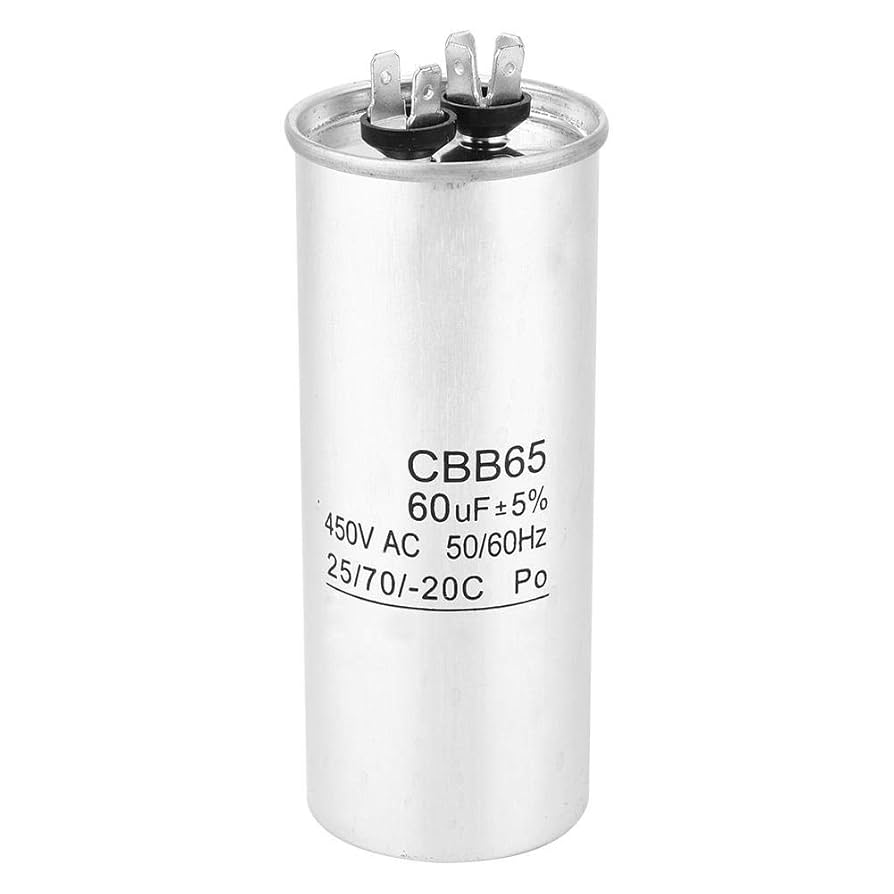
Ever wondered what keeps your air conditioner running smoothly on those sweltering summer days? It’s not just the magic of cool air blowing through your home; there’s a crucial component working behind the scenes — the capacitor.
Imagine your air conditioner as a well-orchestrated symphony where each part plays its role to perfection. Now, picture the capacitor as the conductor, ensuring everything runs in harmony. But what exactly does a capacitor do, and why is it so vital for your air conditioner’s performance?
Understanding this could mean the difference between enjoying a blissfully cool home and enduring the discomfort of a failing unit. Stick around, and you’ll discover how this small but mighty part can impact your comfort and potentially save you from unexpected headaches.

Credit: www.amazon.ca
Role Of Capacitors In Air Conditioners
Capacitors are small parts inside air conditioners. They help the unit start and run smoothly. Without capacitors, the air conditioner cannot work properly.
They store and release electrical energy. This action supports the motors inside the air conditioner. Motors need this energy to keep the system cool and comfortable.
Function In The Cooling System
Capacitors provide the extra push that motors need to start. They keep the motors running at a steady speed. This helps the compressor and fans work well.
The capacitor stores electricity and releases it quickly. This quick energy helps the motor turn on and run without stopping. It makes the cooling system efficient.
- Helps start the compressor motor
- Supports the fan motor for airflow
- Keeps motors running smoothly
Types Of Capacitors Used
Air conditioners use two main types of capacitors. Each type has a special job to keep the system working well.
Choosing the right capacitor helps the air conditioner last longer and use less energy.
- Start Capacitors:Give a strong boost to start motors.
- Run Capacitors:Help motors run efficiently after starting.
- Dual Capacitors:Combine start and run functions in one unit.
How Capacitors Work
A capacitor is a small device inside an air conditioner. It helps the motor start and run smoothly. Capacitors store electrical energy and release it when needed.
Capacitors work by holding an electric charge. This charge helps give the motor a boost to start turning. Then, it keeps the motor running efficiently.
Basic Electrical Principles
Capacitors store electrical energy in an electric field. They have two metal plates separated by an insulator. When voltage is applied, the plates hold opposite charges.
- The capacitor charges up by storing energy.
- It releases energy quickly to help start the motor.
- It smooths the electrical flow to the motor.
- It helps keep the motor running at a steady speed.
Starting Vs Running Capacitors
There are two main types of capacitors in air conditioners: starting and running capacitors. They have different jobs but both help the motor work well.
| Type | Function | When It Works |
| Starting Capacitor | Gives a large energy boost to start the motor | Only during motor startup |
| Running Capacitor | Keeps the motor running smoothly after it starts | All the time motor runs |
Signs Of A Faulty Capacitor
The capacitor is a small part inside your air conditioner. It helps start the motors. If it fails, the AC will not work right.
Knowing the signs of a bad capacitor can save you time and money. You can fix the problem before it gets worse.
Common Symptoms
A faulty capacitor shows clear signs. These symptoms tell you the AC needs repair or replacement parts.
- The AC does not start or stops suddenly.
- Strange humming or buzzing noise from the unit.
- The fan or compressor runs slowly or not at all.
- Unit takes longer to cool the room.
- Visible bulging or leaking on the capacitor casing.
Diagnostic Methods
To check the capacitor, you need some tools and safety steps. Testing helps find if the capacitor is bad or if the problem is elsewhere.
| Method | Description | Tools Needed |
| Visual Inspection | Look for bulges, cracks, or leaks on the capacitor. | Flashlight |
| Multimeter Test | Measure the capacitance to see if it matches the rating. | Digital Multimeter with capacitance mode |
| Capacitor Discharge | Discharge stored power safely before testing or replacing. | Insulated screwdriver, safety gloves |
Replacing Air Conditioner Capacitors
The capacitor helps start the air conditioner’s motor. It stores energy and gives a power boost.
Replacing a bad capacitor can fix many AC problems and save repair costs.
Safety Precautions
Capacitors hold electric charge even after power is off. This can cause shocks.
Always follow safety rules to avoid injury or damage.
- Turn off the AC power at the breaker box.
- Use a voltage tester to confirm no power is present.
- Discharge the capacitor with a screwdriver using an insulated handle.
- Wear safety glasses and insulated gloves.
- Handle the capacitor carefully to avoid damage.
Step-by-step Replacement Guide
Follow these steps to replace your air conditioner’s capacitor safely and correctly.
- Turn off power to the AC unit at the breaker.
- Remove the outer panel of the AC to access the capacitor.
- Take a photo or note the wires connected to the capacitor.
- Discharge the capacitor using a screwdriver with an insulated handle.
- Disconnect the wires from the old capacitor.
- Remove the old capacitor from its bracket.
- Install the new capacitor in the bracket.
- Reconnect the wires exactly as they were.
- Replace the outer panel of the AC unit.
- Turn the power back on and test the AC operation.
Choosing The Right Capacitor
A capacitor is a small part that helps an air conditioner start and run. Picking the right capacitor keeps your AC working well.
Using the wrong capacitor can cause damage or reduce efficiency. It is important to know what to look for.
Specifications To Consider
Check the capacitance value, voltage rating, and type of capacitor. These details must match your air conditioner’s needs.
- Capacitance:Measured in microfarads (µF), it should be the same as the original.
- Voltage rating:Must be equal or higher than the old capacitor’s voltage.
- Type:Most ACs use dual run capacitors, but some use single run or start capacitors.
Compatibility Tips
Match the capacitor with your air conditioner’s brand and model. This helps avoid problems and ensures smooth operation.
Look for the part number on the old capacitor. Buy a replacement with the same or compatible number to ensure fit and function.
- Do not choose a capacitor with lower voltage or capacitance than the original.
- Use capacitors designed for HVAC systems for better durability.
- Consult your AC manual or a technician if unsure about compatibility.
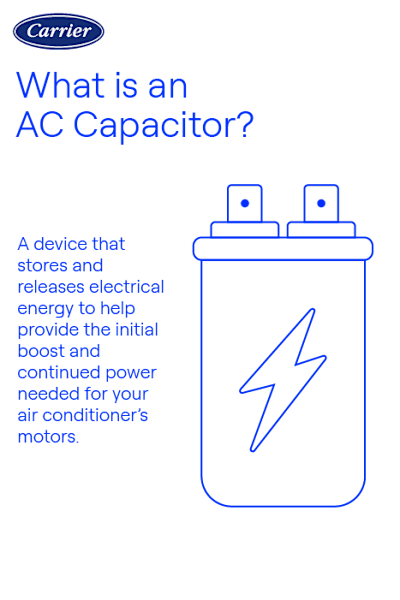
Credit: www.carrier.com
Maintenance Tips For Capacitors
Capacitors are important parts of an air conditioner. They help start the motor and keep it running. Taking care of capacitors can stop breakdowns and save money.
Good maintenance includes checking capacitors often and using simple care steps. This helps the air conditioner work well for a long time.
Regular Inspection
Check capacitors regularly to find problems early. Look for signs like bulging, leaks, or rust on the capacitor body. Listen for humming sounds that might mean trouble.
Use a multimeter to test if the capacitor holds the right charge. Testing helps know if it needs replacing before it fails.
- Inspect capacitors every 6 months
- Look for physical damage or leaks
- Test electrical charge with a multimeter
- Replace if readings are out of range
Preventive Care
Keep the area around capacitors clean and dry. Dirt and moisture can cause damage and shorten capacitor life. Avoid touching capacitors with wet hands.
Turn off power before working near capacitors. Use proper tools and safety gear. Replace capacitors with the right size and type for your air conditioner.
- Keep capacitor area clean and dry
- Turn off power before maintenance
- Use correct replacement parts
- Wear safety gear when handling capacitors
Benefits Of A Well-functioning Capacitor
A capacitor in an air conditioner helps start and run the motor. It stores electrical energy to keep the motor working smoothly. A good capacitor ensures the air conditioner works well and lasts longer.
If the capacitor fails, the air conditioner may not start or run properly. This can cause higher energy use and damage to the system. Keeping the capacitor in good shape has many benefits.
Improved Efficiency
A well-functioning capacitor helps the motor run without extra effort. This lowers the energy the air conditioner uses. The system cools your home faster and uses less electricity.
When the capacitor works right, the air conditioner does not have to work too hard. This means you save money on your energy bills. It also keeps the room temperature steady and comfortable.
Extended Air Conditioner Lifespan
The capacitor supports the motor by giving it the right power at the right time. This reduces stress on the motor and other parts. Less stress means less wear and tear over time.
With a good capacitor, your air conditioner parts last longer. You avoid costly repairs and early replacement. Regular checks and maintenance of the capacitor help keep the whole system healthy.
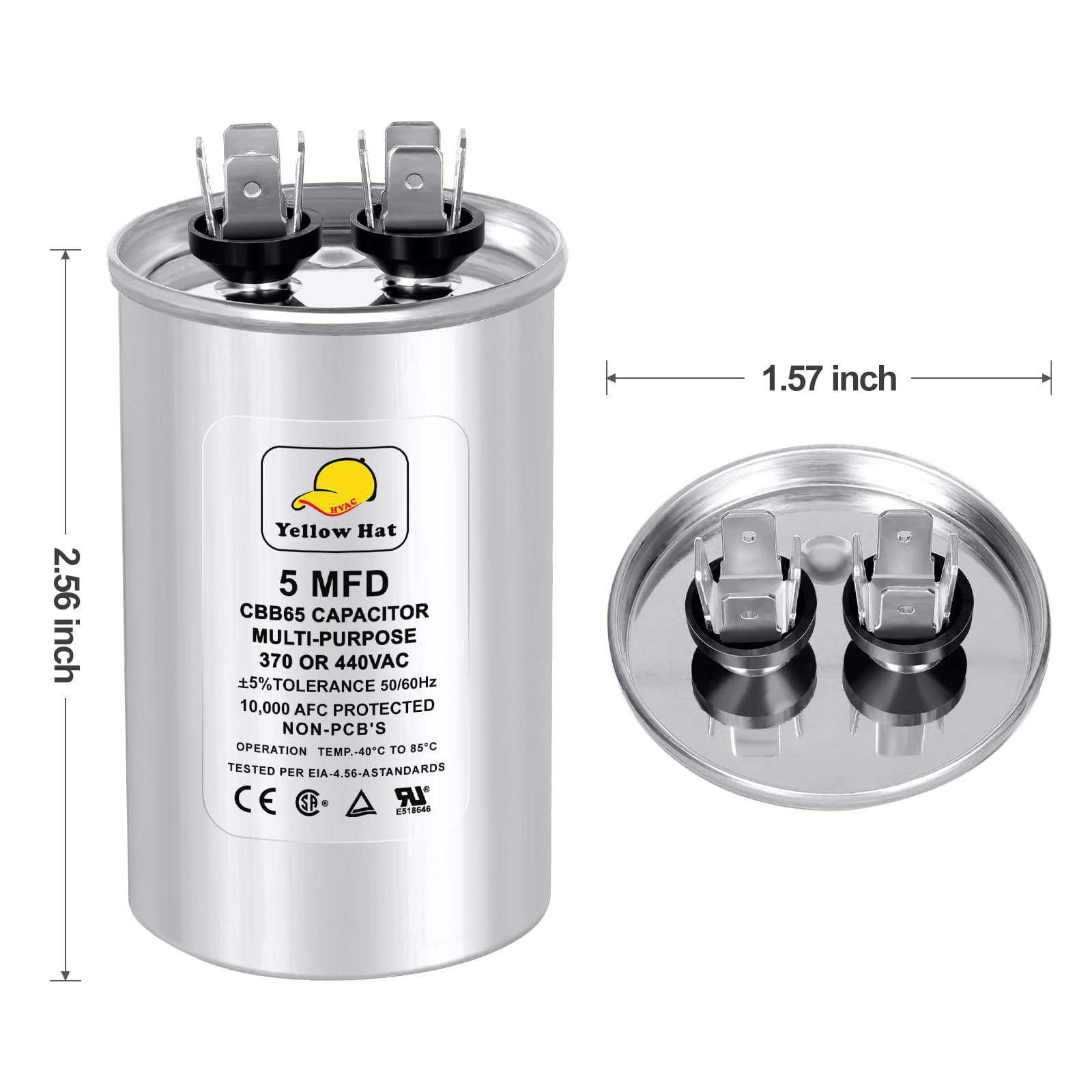
Credit: www.walmart.ca
Frequently Asked Questions
What Is The Role Of A Capacitor In An Air Conditioner?
A capacitor stores and releases electrical energy to start and run the AC motor efficiently. It ensures smooth operation and prevents motor damage.
How Does A Capacitor Affect Air Conditioner Performance?
A capacitor provides the necessary boost to the compressor and fan motors, improving startup and running efficiency. Faulty capacitors cause weak cooling or no start.
What Are Common Signs Of A Bad Ac Capacitor?
Signs include a humming sound, AC not starting, frequent cycling, or warm air output. These indicate capacitor failure needing replacement.
Can I Replace An Air Conditioner Capacitor Myself?
Yes, but only if you have electrical knowledge and safety gear. Otherwise, hire a professional to avoid injury or damage.
Conclusion
A capacitor helps your air conditioner start and run smoothly. It stores energy and gives a boost when needed. Without it, the AC may not work properly or could stop working. Knowing its role helps you understand your AC better.
Keep your capacitor in good shape to avoid big repairs. Regular checks make your air conditioner last longer and stay efficient. Simple care can save money and keep your home cool.