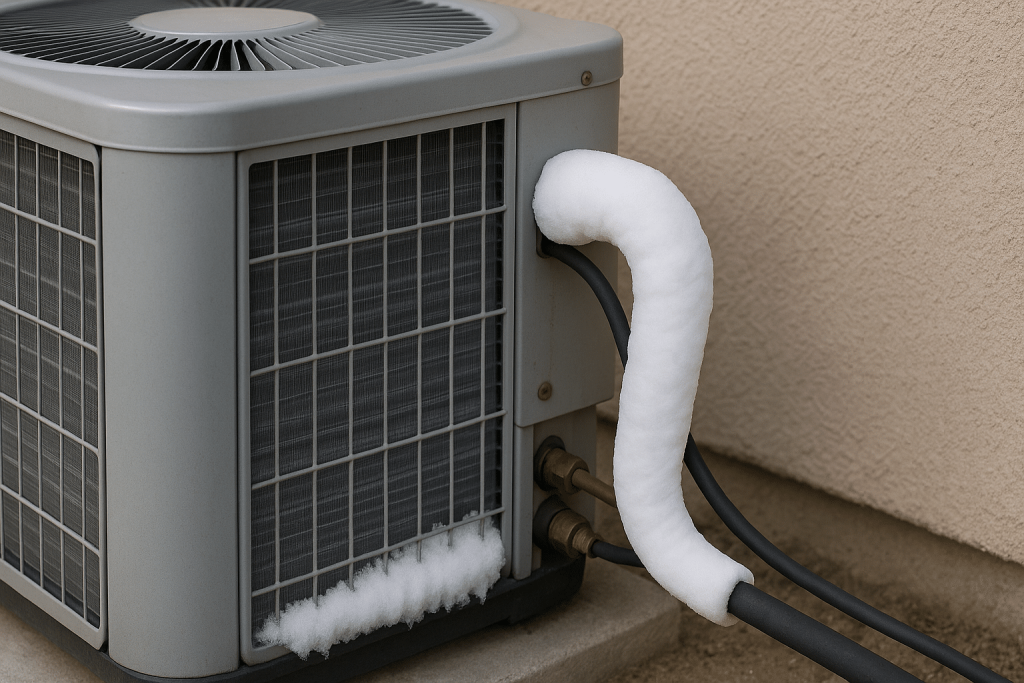
Imagine it’s the peak of summer, and you’re relying on your air conditioner to keep you cool and comfortable. But then, you notice something unusual—your AC is freezing up!
Panic sets in as you wonder what to do next. Take a deep breath. You’re not alone, and this problem is more common than you might think. We’re diving into the reasons behind a frozen air conditioner and, most importantly, what you can do about it.
By the end, you’ll have the knowledge to tackle this issue head-on and keep your home cool and breezy. So, are you ready to restore your comfort and conquer the freeze? Let’s get started!
Signs Of A Frozen Ac
When your air conditioner freezes, it stops working well. You need to know the signs early. Spotting these signs helps you fix the problem fast.
Frozen AC units show clear warnings. These signs often mean ice has built up inside the system. Watch closely for changes in how your AC feels and sounds.
Visible Ice On Coils
One clear sign of a frozen AC is seeing ice on the coils. The coils can be outside or inside the unit. Ice looks like frost or thick white patches.
- Check outdoor condenser coils for frost buildup
- Look at indoor evaporator coils for ice layers
- Notice if ice grows larger over time
- Ice may cause water leaks as it melts
Reduced Airflow
Frozen AC units often blow less air. The airflow feels weaker and cooler air does not reach the room well. This happens because ice blocks the air path.
| Cause | Effect on Airflow |
| Ice on Evaporator Coils | Blocks air, reduces cooling |
| Clogged Air Filters | Limits air movement |
| Low Refrigerant Levels | Cold coils freeze, airflow drops |
| Fan Problems | Less air pushed through vents |
Unusual Noises
Your AC may make strange sounds when frozen. These noises can be loud or unusual. They often mean ice is causing parts to move oddly or struggle.
Listen for these noises:
- Hissing or bubbling sounds from refrigerant leaks
- Grinding or scraping sounds from frozen fan blades
- Clicking noises as the system starts and stops frequently
- Buzzing from electrical components under strain

Credit: www.delcohvac.com
Common Causes Of Freezing
Air conditioners sometimes freeze up and stop working well. This problem can make your home hot and uncomfortable.
Knowing the common causes of freezing helps you fix the issue faster. It also helps prevent future problems.
Dirty Air Filters
Dirty air filters block airflow inside your air conditioner. This causes the unit to get too cold and freeze up.
Filters collect dust and debris over time. If you do not clean or change them often, air cannot flow properly.
Low Refrigerant Levels
Refrigerant helps cool the air inside your home. Low refrigerant means the cooling process is weak.
When refrigerant is low, the coils get too cold and ice forms on them. This makes the air conditioner freeze.
Blocked Air Vents
Blocked or closed air vents stop air from moving well. This causes the air conditioner to work too hard.
When airflow slows, cold spots develop. These spots can freeze the system and stop it from cooling properly.
- Furniture blocking vents
- Closed or partially closed vents
- Obstructions like curtains or rugs
Thermostat Issues
A faulty thermostat can cause wrong temperature readings. This can make the air conditioner run too long.
If the system runs too long, it can freeze. A bad thermostat also stops the air conditioner from turning off at the right time.
Immediate Steps To Take
If your air conditioner freezes, act quickly to avoid damage. Frozen AC units do not cool well and can cause costly repairs.
Follow these simple steps to help your AC thaw and work properly again.
Turn Off The Ac
First, switch off your air conditioner. Running the AC while frozen can harm the compressor.
Turning it off lets the ice melt safely without extra damage.
Switch To Fan Mode
After turning off the AC, set the thermostat to fan mode. This moves air without cooling.
The fan helps melt the ice faster by circulating air inside the unit.
Check And Replace Filters
Dirty or clogged filters reduce airflow and cause freezing. Check your filters right away.
Replace dirty filters with new ones to improve airflow and prevent future freezing.
- Remove the filter from the AC unit
- Inspect for dust and dirt buildup
- If dirty, replace with a clean filter
- Regularly clean or change filters every 1-3 months
Diy Fixes To Thaw Your Ac
If your air conditioner freezes, it stops cooling properly. You can try some simple fixes yourself. These steps help you thaw the ice and get your AC working again.
Always turn off the AC before starting any thawing process. This keeps you safe and prevents damage to the system.
Use Warm Towels Or Hair Dryer
Warm towels help melt the ice on your AC coils. Soak towels in warm water and place them on the frozen parts. Leave them there until the ice melts.
You can also use a hair dryer on a low heat setting. Keep the dryer moving to avoid overheating any part. This method speeds up thawing safely.
- Turn off the AC before using towels or a dryer
- Use warm, not hot, towels to protect parts
- Keep the hair dryer moving around the ice
- Do not use high heat to avoid damage
Clear Blocked Vents
Blocked vents stop air from flowing well. This can cause your AC to freeze. Check all vents and remove any dust or objects blocking them.
Good airflow helps the ice melt faster and keeps your AC working properly. Use a vacuum or brush to clean vents if needed.
- Inspect all air vents in the room
- Remove furniture or objects blocking airflow
- Clean vents using a vacuum or brush
- Ensure vents are fully open and clear
Clean Evaporator Coils
Dirty evaporator coils cause ice buildup. Clean coils improve cooling and stop freezing. Turn off the AC and open the unit to access coils.
Use a soft brush or coil cleaner to remove dirt and dust. Clean coils help your AC run smoothly and prevent ice from forming.
- Switch off power to the AC unit
- Remove the cover to find evaporator coils
- Use a soft brush to clean dirt gently
- Apply coil cleaner if available and safe
- Let coils dry before turning the AC back on
Preventing Future Freezing
Air conditioners freeze due to several reasons. Preventing freezing keeps your AC working well. Follow simple steps to avoid this problem.
Regular care and checks can stop ice build-up. Learn how to maintain your AC for smooth cooling.
Regular Maintenance Schedule
Schedule regular cleaning and tune-ups for your AC unit. This keeps parts working correctly and stops ice from forming.
- Clean or replace air filters every 1-3 months.
- Clear debris around the outdoor unit.
- Check and clean evaporator and condenser coils yearly.
- Inspect and clean the drain line to prevent blockages.
Keep Airflow Unobstructed
Blocked airflow causes the AC to freeze. Make sure nothing blocks vents and air returns.
- Do not cover or close vents in your home.
- Keep furniture and curtains away from vents.
- Check that fans and blowers work well.
Monitor Refrigerant Levels
Low refrigerant causes ice to build on coils. Check levels to keep the AC cool and dry.
| Refrigerant Level | Effect on AC |
| Too Low | Ice forms on coils, less cooling |
| Correct | Efficient cooling, no ice build-up |
| Too High | System stress, possible leaks |
Professional Inspections
Experts find problems before they get worse. Hire a technician yearly for a full check-up.
- Test refrigerant pressure and refill if needed
- Examine electrical connections and controls
- Clean coils and check for damage
- Ensure proper airflow and fan operation

Credit: a1heating.com
When To Call A Professional
Air conditioners can freeze for many reasons. Sometimes, you can fix small problems yourself. Other times, you need a professional to help.
Knowing when to call a professional can save you time and money. It also protects your AC from serious damage.
Persistent Freezing Issues
If your AC freezes often and defrosts only briefly, it shows a deeper problem. This could be poor airflow or a dirty filter.
- Check air filters and clean or replace them.
- Look for blocked vents or closed registers.
- If freezing continues, call a professional for a full inspection.
Refrigerant Leaks
Low refrigerant levels can cause freezing. This happens if your AC has a leak. Only a certified technician can fix this safely.
| Signs of Refrigerant Leak | Why Call a Professional |
| Ice buildup on coils | Detects and repairs leaks safely |
| Warm air from vents | Refills refrigerant correctly |
| Hissing sounds near AC unit | Prevents damage to compressor |
Complex Mechanical Problems
Frozen AC can mean broken parts like fans or motors. These need skill to diagnose and fix. Avoid trying repairs yourself.
Reasons to call a professional for mechanical issues:
- Fan motors not running
- Damaged compressors
- Electrical faults or wiring problems
- Thermostat malfunctions

Credit: www.davisheat.com
Frequently Asked Questions
Why Does My Air Conditioner Freeze Up?
Air conditioners freeze due to poor airflow, low refrigerant, or dirty filters. These issues cause the evaporator coil to get too cold, forming ice. Regular maintenance helps prevent freezing and keeps your AC running efficiently.
How Can I Safely Thaw A Frozen Ac Unit?
Turn off the AC and switch to fan mode to melt the ice. Avoid using sharp objects to remove ice. It usually takes a few hours for the ice to melt completely.
What Causes Low Airflow In An Air Conditioner?
Low airflow results from clogged filters, blocked vents, or faulty fans. This restricts air movement and causes the AC to freeze. Clean filters regularly and ensure vents are unobstructed to maintain airflow.
When Should I Call A Professional For A Frozen Ac?
Call a technician if your AC freezes repeatedly or won’t thaw. Persistent freezing may indicate refrigerant leaks or mechanical problems needing expert repair. Early service prevents costly damage and restores efficient cooling.
Conclusion
A frozen air conditioner needs quick action to avoid damage. Turn off the unit to let the ice melt safely. Check the air filter and clean or replace it. Clear any blockages around the outdoor unit. Keep your home’s thermostat at a steady, moderate temperature.
Regular maintenance helps prevent freezing problems. Call a professional if the issue continues. Taking these steps keeps your AC working well and your home cool. Simple care goes a long way in avoiding frozen AC troubles.