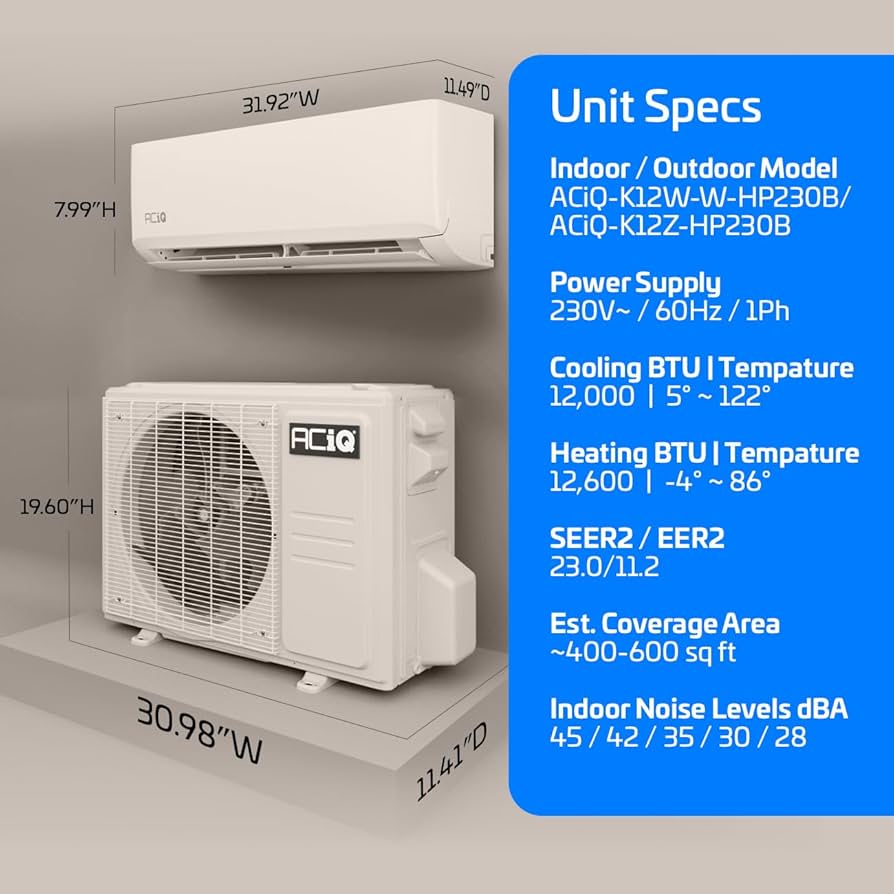
Have you ever wondered what those numbers on your air conditioner really mean? When you see “BTU” on your AC unit, it might look like just a random set of letters.
But understanding what BTU stands for and how it affects your cooling can make a huge difference in your comfort and energy bills. If you want to choose the right air conditioner for your space or get the most out of your current one, knowing about BTUs is a must.
Keep reading, and you’ll discover how this simple measurement can help you stay cool and save money.
Credit: www.bestbuy.com
Btu And Cooling Power
BTU stands for British Thermal Unit. It measures how much heat an air conditioner can remove. Understanding BTU helps choose the right AC for a room.
Cooling power depends on BTU. The higher the BTU, the more cooling the unit provides. This helps keep rooms comfortable in hot weather.
Btu Defined
A BTU is the energy needed to raise one pound of water by one degree Fahrenheit. It measures heat energy in heating and cooling systems.
- One BTU equals about 1055 joules of energy.
- Air conditioners use BTU to show their cooling capacity.
- Higher BTU means stronger cooling power.
How Btu Affects Cooling
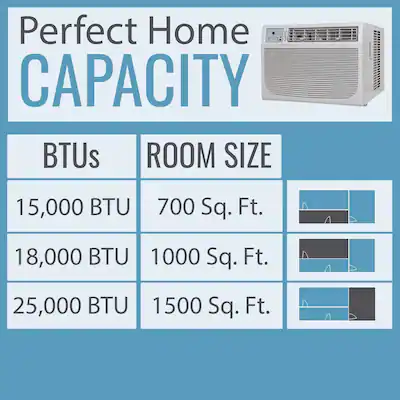
BTU rating tells how fast an AC cools a space. A small room needs fewer BTUs. A large room needs more BTUs for effective cooling.
| Room Size (sq ft) | Recommended BTU |
| 100 – 300 | 5,000 – 6,000 |
| 300 – 500 | 7,000 – 8,000 |
| 500 – 800 | 10,000 – 12,000 |
| 800 – 1,200 | 14,000 – 18,000 |
Btu Vs Wattage
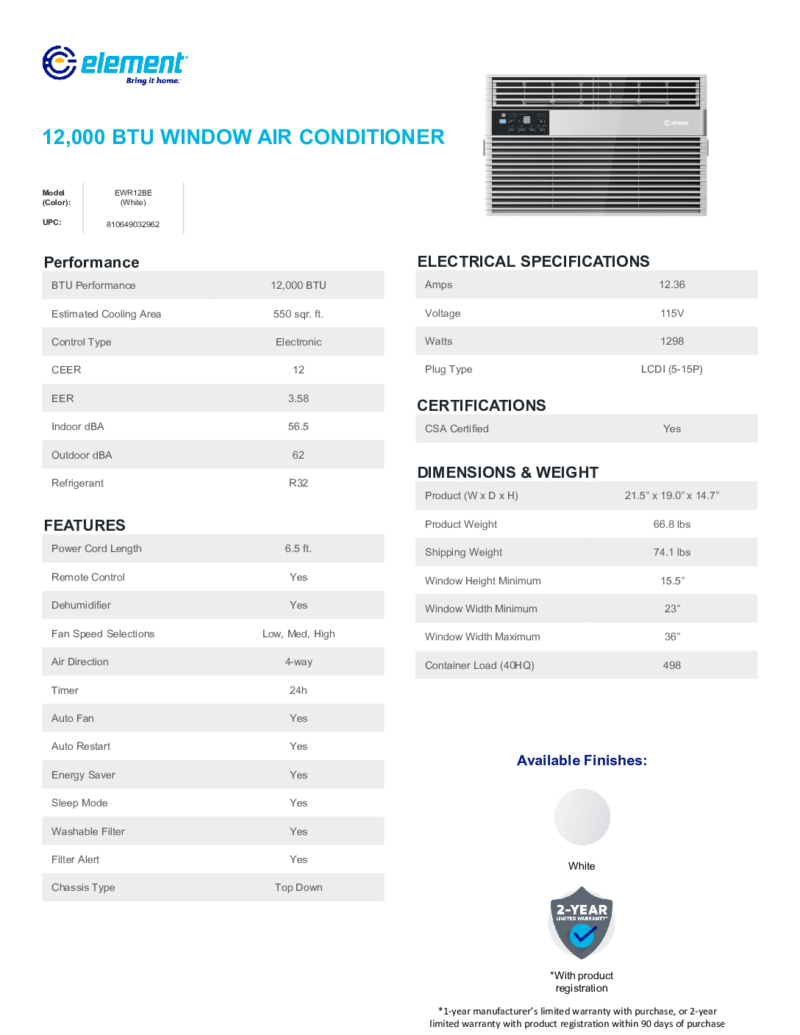
BTU measures heat removed, while wattage shows electricity used. Both numbers help understand an air conditioner’s power and efficiency.
- BTU shows cooling strength.
- Wattage shows energy consumption.
- Higher BTU with low wattage means better efficiency.
Credit: elementelectronics.com
Choosing The Right Btu
BTU stands for British Thermal Unit. It measures how much heat an air conditioner can remove from a room. Choosing the right BTU ensures your room stays cool and comfortable.
If you select the wrong BTU size, your air conditioner may not work well. It may waste energy or fail to cool the space properly.
Room Size And Btu
The size of your room directly affects the BTU needed. Larger rooms require air conditioners with higher BTU ratings to cool effectively.
| Room Size (sq ft) | Recommended BTU |
|---|---|
| 100 – 150 | 5,000 – 6,000 |
| 150 – 250 | 6,000 – 8,000 |
| 250 – 350 | 8,000 – 10,000 |
| 350 – 450 | 10,000 – 12,000 |
| 450 – 550 | 12,000 – 14,000 |
Factors Influencing Btu Needs
Several factors change how much BTU your air conditioner should have. These include sunlight, insulation, and the number of people in the room.
- Rooms with many windows or direct sunlight need higher BTU.
- Poorly insulated rooms require more cooling power.
- More occupants increase the BTU needed.
- Appliances that produce heat raise the BTU requirement.
Avoiding Oversized And Undersized Units
Using the wrong size air conditioner causes problems. Too large a unit cools quickly but wastes energy and causes humidity issues. Too small a unit runs constantly and fails to cool well.
| Unit Size | Problem | Effect |
|---|---|---|
| Oversized | Short cooling cycles | High energy use and poor humidity control |
| Undersized | Runs continuously | Inadequate cooling and high wear |
Btu Ratings On Air Conditioners
BTU stands for British Thermal Unit. It measures how much heat an air conditioner can remove from a room in an hour.
Knowing the BTU rating helps you pick the right air conditioner size for your space. Too low or too high BTU can cause problems.
Interpreting Btu Labels
BTU labels show the cooling power of an air conditioner. The higher the number, the more cooling it provides.
Look for the BTU number on the product label or in the manual. It helps you match the unit to your room size.
- Low BTU units cool small rooms
- High BTU units cool larger rooms
- Correct BTU prevents wasting energy
Common Btu Ranges
Air conditioners come in different BTU sizes. Each size fits different room areas for effective cooling.
| Room Size (sq ft) | BTU Range |
|---|---|
| Up to 150 | 5,000 – 6,000 BTU |
| 150 to 300 | 6,000 – 8,000 BTU |
| 300 to 450 | 8,000 – 10,000 BTU |
| 450 to 600 | 10,000 – 12,000 BTU |
| 600 to 1,000 | 12,000 – 18,000 BTU |
Energy Efficiency And Btu
Higher BTU does not always mean better energy use. It depends on the air conditioner’s efficiency rating.
Choose a unit with the right BTU and a good energy efficiency rating to save power and money.
- Match BTU to room size to avoid waste
- Look for Energy Star or similar labels
- Efficient units cool faster and use less power
Calculating Btu Requirements
BTU stands for British Thermal Unit. It measures the cooling power of an air conditioner. Knowing the right BTU helps cool your room efficiently.
Calculating BTU needs is important to avoid buying a unit that is too weak or too strong. Let’s look at how to find the right BTU for your space.
Measuring Room Dimensions
First, measure your room’s length, width, and height in feet. Multiply these numbers to get the room’s cubic feet. This helps estimate how much cooling power is needed.
For example, if your room is 15 feet long, 12 feet wide, and 8 feet high, multiply 15 × 12 × 8. This equals 1,440 cubic feet.
- Measure length in feet
- Measure width in feet
- Measure height in feet
- Multiply all three numbers
Adjusting For Insulation And Sunlight
Good insulation keeps cool air inside. Poor insulation means you need more BTU power. Also, rooms with lots of sunlight need extra cooling.
If your room has many windows or faces the sun most of the day, add about 10% more BTU. If your home is well insulated, reduce the BTU needs by 10%.
- Add 10% BTU for sunny rooms
- Subtract 10% BTU for well-insulated rooms
- Consider ceiling height and room use
Using Online Btu Calculators
Online BTU calculators make the process easy. You enter your room size, insulation quality, and sunlight exposure. The tool then suggests the BTU size you need.
These calculators save time and reduce errors. They are helpful if you want a quick estimate without manual calculations.
- Enter room length, width, and height
- Select insulation quality
- Choose sunlight level
- Get recommended BTU size instantly
Impact Of Btu On Energy Costs
BTU stands for British Thermal Unit. It measures the cooling power of an air conditioner. The higher the BTU, the more cooling the unit provides.
BTU size affects how much electricity the air conditioner uses. Choosing the right BTU can help control your energy bills.
Btu And Power Consumption
Air conditioners with higher BTU use more power. This can increase your electricity costs. Small rooms need less BTU, so they use less energy.
Using an air conditioner that is too big wastes energy. It cools the room quickly but turns on and off often. This uses more electricity.
Tips For Energy Savings
Choose an air conditioner with the right BTU for your room size. This helps save energy and money.
- Close doors and windows to keep cool air inside
- Use fans to help spread the cool air
- Set the thermostat to a comfortable, not too low, temperature
- Turn off the air conditioner when not needed
Maintaining Efficient Cooling
Keep your air conditioner clean for better performance. Dirty filters reduce cooling and raise power use.
Regular maintenance helps your unit run smoothly. Check for leaks and clear debris around the unit.
- Clean or replace air filters every month
- Check and clean condenser coils
- Keep outdoor unit free of leaves and dirt
- Schedule professional service yearly
Credit: www.comfortzoneproducts.com
Btu In Different Types Of Air Conditioners
BTU stands for British Thermal Unit. It measures the cooling power of an air conditioner.
Different air conditioners have different BTU ratings. This helps you pick the right size for your space.
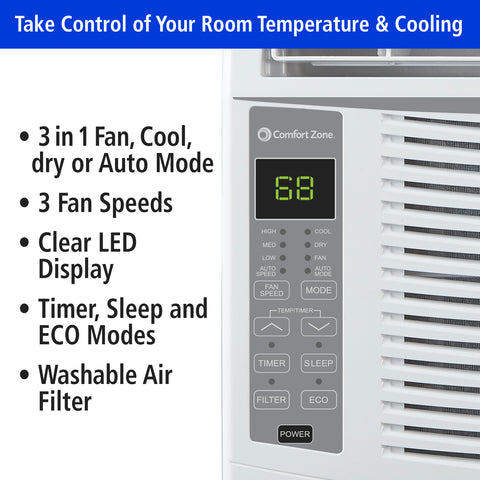
Window Units
Window air conditioners are common for single rooms. Their BTU rating usually ranges from 5,000 to 12,000.
- Small rooms (up to 150 sq ft): 5,000 to 6,000 BTU
- Medium rooms (150-350 sq ft): 7,000 to 8,500 BTU
- Large rooms (350-550 sq ft): 10,000 to 12,000 BTU
Split Systems
Split systems have indoor and outdoor units. They cool larger areas and have higher BTU ratings.
| Room Size (sq ft) | BTU Range |
| Small (250-400) | 9,000 – 12,000 |
| Medium (400-600) | 12,000 – 18,000 |
| Large (600-1,000) | 18,000 – 24,000 |
| Very Large (1,000+) | 24,000+ |
Portable Acs
Portable air conditioners are easy to move. Their BTU usually ranges from 8,000 to 14,000.
- Best for rooms up to 350 sq ft
- Lower BTU models save energy
- Higher BTU models cool faster but use more power
Frequently Asked Questions
What Does Btu Mean In Air Conditioners?
BTU stands for British Thermal Unit. It measures the cooling power of an air conditioner. Higher BTU means more cooling capacity.
How Many Btus Do I Need For My Room?
Calculate room size in square feet. Multiply by 20 BTU per square foot. This gives a rough BTU requirement for efficient cooling.
Why Is Btu Important When Buying Ac?
BTU determines the AC’s cooling efficiency. Choosing the right BTU prevents energy waste and ensures optimal comfort in your space.
Can A Low Btu Ac Cool A Large Room?
No, a low BTU AC cannot effectively cool large rooms. It will overwork and fail to maintain desired temperature.
Conclusion
Understanding Btu is crucial for choosing the right air conditioner. It helps you determine the cooling power needed for your space. A proper Btu rating ensures comfort and efficiency. Too high or too low can cause problems. Consider room size and climate when selecting.
This knowledge aids in making smart decisions. It saves money and energy, too. Always check the Btu before purchasing. It makes a difference in your cooling experience. Choose wisely and enjoy a comfortable home.