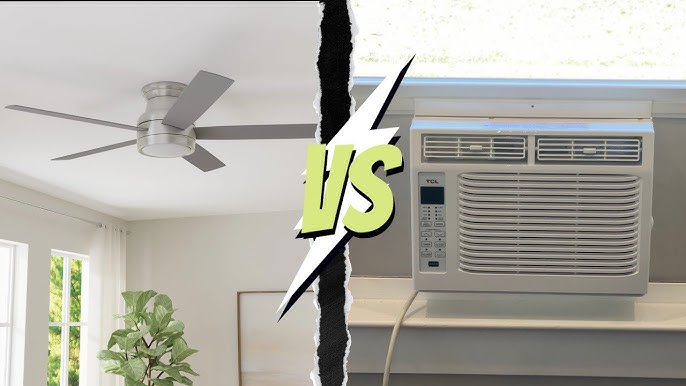
Are you curious about which cools your home without draining your wallet—fans or air conditioners? You might be surprised to learn how much electricity each uses and what that means for your energy bills.
Understanding this can help you make smarter choices to stay comfortable while saving money. Keep reading to discover the truth behind the power consumption of fans versus air conditioners and find out which one is best for your home and budget.

Credit: www.aljazeera.com
Electricity Use In Fans
Fans are a popular way to cool rooms using less energy than air conditioners. They move air to help you feel cooler.
This article looks at how much electricity fans use and what affects their power consumption.
Types Of Fans And Their Power Ratings
Fans come in many types. Each type uses different amounts of electricity based on size and design.
| Fan Type | Power Rating (Watts) |
| Ceiling Fan | 50-75 |
| Table Fan | 40-60 |
| Pedestal Fan | 45-70 |
| Exhaust Fan | 40-80 |
| Box Fan | 60-100 |
Energy Consumption Patterns
Fans use less electricity than many appliances. Their power use depends on how long and how fast they run.
- Running a fan on low speed uses less power than high speed.
- Fans consume power continuously while on.
- Turning off fans when not needed saves energy.
Factors Affecting Fan Efficiency
Some things change how much power a fan uses and how well it cools you.
- Blade size and shape affect air movement and energy use.
- Motor quality influences electricity consumption.
- Proper maintenance keeps fans running efficiently.
- Using fans in well-ventilated rooms improves cooling effect.
Electricity Use In Air Conditioners
Air conditioners cool indoor spaces by removing heat. They use electricity to run compressors and fans.
Understanding how much electricity air conditioners use can help manage energy costs better.
Types Of Air Conditioners And Their Power Ratings
Different air conditioners use different amounts of power. Their sizes and technologies affect electricity use.
- Window units use about 500 to 1500 watts.
- Split systems use between 1000 and 3000 watts.
- Central air conditioners can use 2000 to 5000 watts.
- Portable AC units usually use 800 to 1500 watts.
Energy Consumption Patterns
Air conditioners use more electricity when cooling larger spaces. They run longer on hot days.
Energy use rises if the AC is set to a very low temperature or runs all day.
- High outdoor temperatures increase energy use.
- Frequent on/off cycling wastes electricity.
- Running fans alone uses less power than full cooling.
- Proper maintenance helps reduce energy use.
Factors Affecting Ac Efficiency
Efficiency depends on the AC’s design, age, and condition. Newer models often use less electricity.
Good insulation and sealing of a room also reduce the workload and power use of an AC.
- Regular filter cleaning improves airflow and efficiency.
- Using energy-saving settings lowers power consumption.
- Proper sizing of the AC avoids extra energy waste.
- Shade and ventilation around the AC unit help efficiency.
Comparing Energy Consumption
Fans and air conditioners (ACs) cool your home differently. They use different amounts of electricity. Knowing their energy use helps you save money.
We will look at how much power fans and ACs use. This helps you decide which is better for your budget and needs.
Typical Power Usage Comparison
Fans use much less electricity than air conditioners. A typical fan uses between 10 and 120 watts. Most ACs use between 1000 and 3000 watts.
Because ACs cool the air by removing heat, they need more power. Fans just move air around and use less energy.
| Appliance | Power Usage (Watts) |
|---|---|
| Ceiling Fan | 10 – 120 W |
| Window AC Unit | 1000 – 1500 W |
| Central AC | 2000 – 3000 W |
Cost Implications Of Running Fans Vs Acs
Fans cost less to run than air conditioners. Because fans use less power, your electric bill grows slower with fans.
Running an AC all day will add much more to your electricity bill than running a fan for the same time.
- Fans use about 10 to 120 watts per hour.
- ACs use about 1000 to 3000 watts per hour.
- ACs increase electricity costs by 10 to 30 times compared to fans.
Impact Of Usage Duration On Energy Bills
The longer you use ACs, the higher your electric bill. Fans have a smaller effect on the bill even when used for many hours.
Using a fan all day uses less energy than running an AC for just a few hours. It is important to think about how long you run each device.
| Device | Power (Watts) | Usage (Hours) | Total Energy (Wh) |
|---|---|---|---|
| Fan | 60 | 10 | 600 |
| AC | 1500 | 2 | 3000 |
Credit: ourworldindata.org
Energy Efficiency Tips
Fans and air conditioners both help cool your home. They use different amounts of electricity.
Knowing how to save energy with both can lower your bills and help the environment.
Optimizing Fan Usage
Fans use less electricity than air conditioners. They cool people by moving air.
Use fans in rooms you occupy. Turn them off when you leave.
- Use ceiling fans to circulate air
- Set fans to rotate counterclockwise in summer
- Keep fans clean for better airflow
- Combine fans with open windows for cross-ventilation
Maximizing Air Conditioner Efficiency
Air conditioners cool the whole room but use more electricity. Keep them efficient to save power.
Regular maintenance helps air conditioners run smoothly and use less energy.
- Clean or replace filters monthly
- Seal leaks in windows and doors
- Set thermostat to 78°F (26°C) when home
- Use programmable thermostats to avoid cooling empty rooms
- Close curtains during hot hours
Alternative Cooling Solutions
Some cooling methods use less electricity or none at all. Try these for extra savings.
- Use natural ventilation with windows and vents
- Install shades or blinds to block sunlight
- Plant trees near windows for shade
- Use cooling curtains or reflective films on windows
- Try evaporative coolers in dry climates
Environmental Impact
Cooling devices like fans and air conditioners use electricity. This electricity use affects the environment in different ways.
Understanding their carbon footprints helps us choose better cooling options for the planet.
Carbon Footprint Of Fans
Fans use much less electricity than air conditioners. They only move air and do not cool it.
Because fans use less power, they produce fewer carbon emissions. This means fans have a smaller carbon footprint.
- Fans use about 10 to 120 watts of power.
- Lower power means less burning of fossil fuels.
- Fans do not release refrigerants, which can harm the environment.
Carbon Footprint Of Air Conditioners
Air conditioners use more electricity because they cool the air. This requires compressors and refrigerants.
They produce more greenhouse gases due to higher energy use and refrigerant leaks. This makes their carbon footprint larger.
- Air conditioners can use 500 to 1500 watts or more.
- Electricity often comes from fossil fuels, adding to emissions.
- Refrigerants used can be potent greenhouse gases if leaked.
Sustainable Cooling Practices
You can reduce environmental impact by using cooling devices smartly. Fans and air conditioners both have ways to save energy.
Using natural ventilation and setting air conditioners to higher temperatures helps. Also, maintaining devices keeps them efficient.
- Use fans in rooms with good airflow.
- Set air conditioners to 24-26°C (75-78°F) to save energy.
- Keep filters clean to improve efficiency.
- Use energy-efficient models with good ratings.
- Close windows and blinds when cooling inside.

Credit: www.aljazeera.com
Frequently Asked Questions
Which Uses More Electricity: Fans Or Air Conditioners?
Air conditioners consume significantly more electricity than fans. Fans use about 10-120 watts, while AC units use 1000-4000 watts. Therefore, fans are more energy-efficient for cooling small spaces or personal use.
How Much Electricity Does A Typical Fan Use?
A typical fan uses between 10 to 120 watts per hour, depending on size and speed. This low power consumption makes fans economical for continuous use compared to air conditioners.
Can Fans Reduce Air Conditioner Electricity Use?
Yes, fans help circulate cool air, allowing you to set the AC at a higher temperature. This reduces overall AC energy consumption and lowers your electricity bill.
Are Ceiling Fans More Energy-efficient Than Air Conditioners?
Ceiling fans consume far less electricity, usually 50-75 watts, compared to air conditioners. They cool people by moving air but do not lower room temperature like ACs.
Conclusion
Choosing between fans and air conditioners affects electricity usage. Fans consume less power. They are cost-effective and energy-efficient. Air conditioners, while cooling effectively, require more electricity. This leads to higher bills. Consider your climate and budget before deciding. Fans work well in mild weather.
Air conditioners suit hot climates but increase costs. For savings, use fans when possible. They offer comfort with lower consumption. In extreme heat, air conditioners become essential. Balancing both can maximize comfort and savings. Choose wisely to manage electricity usage effectively.