Setting up your tent securely can make all the difference between a comfortable night under the stars and a restless one. If you’ve ever struggled with loose or tangled guy lines, you know how frustrating it can be.
But what if you could learn a simple, reliable way to tie your tent guy lines every time? In this guide, you’ll discover easy steps to keep your tent steady, even when the wind picks up. Stick with me, and you’ll gain the confidence to set up your shelter quickly and correctly, making your outdoor adventure safer and more enjoyable.
Choosing The Right Guy Lines
Choosing the right guy lines is important for a stable tent setup. Guy lines help keep your tent secure in wind and bad weather.
Different materials, lengths, and features affect how well the guy lines work. Learn what to look for before you buy or use them.
Material Options
Guy lines come in various materials. Each type has its own strength and stretch level. Common materials include nylon, polyester, and polypropylene.
- Nylon:Strong and elastic, good for shock absorption.
- Polyester:Less stretch, very durable and resistant to sun damage.
- Polypropylene:Lightweight and cheap but can degrade faster outdoors.
Length And Thickness
The length and thickness of guy lines affect their strength and ease of use. Longer lines allow flexible setup but need more space.
| Length | Use | Thickness (mm) | Strength |
|---|---|---|---|
| 3-5 meters | Small tents, close anchors | 2-3 | Moderate |
| 5-7 meters | Medium tents, flexible setup | 3-4 | High |
| 7+ meters | Large tents, distant anchors | 4-5 | Very High |
Reflective Vs Non-reflective
Reflective guy lines help you see your tent lines in the dark. They add safety by reducing tripping risks at night.
- Reflective lines glow when light hits them, improving visibility.
- Non-reflective lines blend with the environment, less visible.
- Choose reflective lines for night camping or busy campsites.
- Non-reflective lines suit quiet, daylight-only camping.
Essential Knots For Guy Lines
Tying tent guy lines correctly keeps your tent steady in wind. Using the right knots makes adjustments easy and secure.
Here are three important knots to know for setting up guy lines effectively and safely.
Taut-line Hitch
The taut-line hitch is great for adjustable guy lines. It slides to tighten or loosen the line but holds firm under tension.
This knot is easy to move but will not slip once set. It works well on slippery or nylon ropes.
- Wrap the line twice around the standing part
- Make a loop and wrap the line once outside the loop
- Slide the knot to adjust tension
Trucker’s Hitch
The trucker’s hitch creates a strong pulley system. It tightens guy lines very securely for extra stability.
This knot uses a loop to pull the line tight, then locks it in place with a stopper knot.
- Make a fixed loop in the middle of the rope
- Pass the rope end through the anchor point
- Thread the end through the loop and pull tight
- Secure with a half hitch or two
Bowline Knot
The bowline knot forms a fixed loop at the rope’s end. It is easy to tie and untie after bearing weight.
This knot is reliable for attaching guy lines to tent stakes or anchor points.
- Make a small loop near the rope end
- Pass the end through the loop from the bottom
- Go around the standing part and back through the loop
- Pull tight to form a secure loop
Preparing Your Tent Setup
Tying tent guy lines correctly helps keep your tent stable in wind and rain. Before tying, prepare the area well for safety and comfort.
Proper preparation makes your camping experience smoother. Focus on where to anchor, how to position the tent, and clearing the ground.
Selecting Anchor Points
Choose strong points around your tent to attach guy lines. Look for trees, rocks, or stakes that will hold tension well.
- Pick points that are firm and won’t move
- Make sure anchor points are not too close or too far
- Avoid sharp edges that can cut the guy line
- Check the ground is stable where you place stakes
Adjusting Tent Position
Set your tent so it faces away from strong wind. This reduces pressure on the tent fabric and guy lines.
| Wind Direction | Tent Position |
| North | Face tent entrance south |
| East | Face tent entrance west |
| South | Face tent entrance north |
| West | Face tent entrance east |
Clearing The Ground
Remove rocks, sticks, and debris from your tent spot. A clear ground prevents damage to your tent floor and adds comfort.
- Pick up sharp stones and branches
- Flatten uneven spots if possible
- Clear leaves and loose dirt
- Check for ants or insect nests

Credit: www.reddit.com
Step-by-step Guy Line Attachment
Tying tent guy lines correctly keeps your tent stable in wind. It helps spread tension evenly and protects your tent fabric.
This guide shows you how to attach guy lines, secure stakes, and adjust tension easily.
Attaching Lines To Tent
Start by finding the tent’s guy line loops or tabs. These are usually at the tent’s edges or corners.
Use a strong knot like the bowline or taut-line hitch. Tie the line through the loop and make sure it is tight.
- Pass the guy line through the tent loop.
- Create a bowline knot to prevent slipping.
- Pull the knot tight to secure the line.
- Leave enough line length for staking.
Securing To Stakes
Insert tent stakes firmly into the ground at a 45-degree angle away from the tent. This angle holds the stake better.
| Stake Type | Best Ground | Insertion Angle |
|---|---|---|
| Metal Stake | Hard or Rocky Soil | 45° Away |
| Plastic Stake | Soft Soil | 45° Away |
| Wooden Stake | Loose Soil | 45° Away |
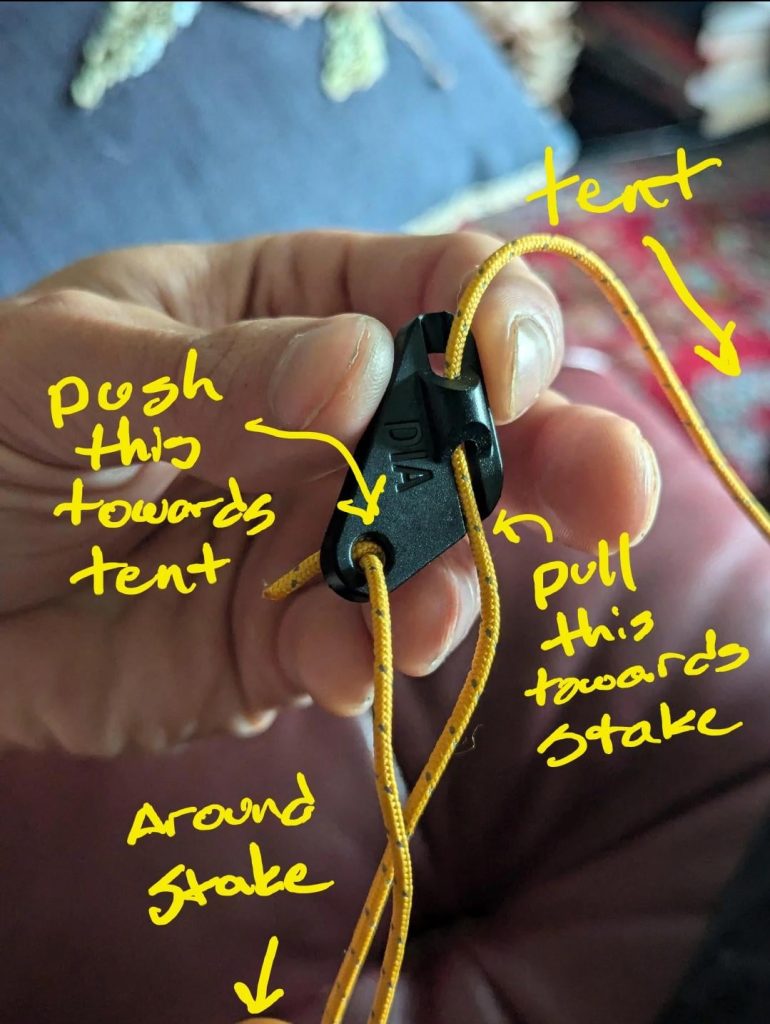
Loop the guy line around the stake. Use a taut-line hitch knot to keep it adjustable but secure.
Adjusting Tension
Pull the guy line to tighten it. Check that the tent fabric is smooth and firm but not stretched too tight.
- Hold the taut-line hitch knot.
- Slide the knot to increase or decrease tension.
- Test the line by pressing on the tent side.
- Adjust until the tent feels stable and secure.
- Trim or tie off excess guy line if needed.
Tips For Maintaining Stability
Tying tent guy lines properly keeps your tent stable. Strong guy lines stop your tent from moving or falling.
Good tension and care help the guy lines last longer. Use these tips to keep your tent steady and safe.
Re-tightening Guy Lines
Tent guy lines can loosen over time. Check them often during your stay to keep your tent tight.
Pull the lines tight again if you feel any slack. Loose lines reduce the tent’s stability in wind or rain.
- Check lines after strong wind or rain
- Pull lines tight but do not over-tighten
- Use a knot or tensioner to hold tight
Weather Considerations
Weather affects how you tie and use guy lines. Windy or wet weather needs stronger tension and better knots.
In rain, wet lines can stretch and loosen. In strong wind, lines need to hold firm to stop the tent from moving.
- Use waterproof lines if possible
- Tie extra guy lines in strong winds
- Check knots often in changing weather
Preventing Line Wear
Guy lines can wear out from rubbing on rocks or dirt. Keep lines clean and away from rough surfaces.
Use line protectors or sleeves to stop damage. Replace lines if you see fraying or damage to keep safety high.
- Avoid dragging lines on sharp rocks or rough ground
- Store lines dry and clean after use
- Use extra protection at contact points

Credit: www.reddit.com
Common Mistakes To Avoid
Tying tent guy lines is important for a stable shelter. Many campers make avoidable errors. These mistakes can cause your tent to collapse or shift in the wind.
Knowing what to avoid helps you keep your tent secure. Pay attention to knots, stake placement, and line angles to improve your setup.
Incorrect Knot Usage
Using the wrong knot can cause your guy lines to slip or loosen. Not all knots hold well under tension or wet conditions.
- Do not use simple knots like the square knot for guy lines.
- Choose knots known for holding tight, like the taut-line hitch.
- Practice tying knots before your trip to ensure security.
- Check knots regularly to make sure they stay tight.
Improper Stake Placement
Placing stakes too close or too far affects tent stability. Incorrect depth or angle can also make stakes pull out easily.
| Common Mistake | Effect | Proper Method |
|---|---|---|
| Stakes too shallow | Pull out under wind | Drive stakes deep into the ground |
| Stakes too close to tent | Line loses tension | Place stakes at a good distance (about 45 degrees from tent) |
| Stakes angled wrong | Easy to pull out | Drive stakes at 45-degree angle away from tent |
Overlooking Line Angles
Guy lines need correct angles to hold tension and keep the tent stable. Lines pulled straight down or too flat weaken support.
Keep these tips in mind for line angles:
- Pull lines at about a 45-degree angle from the tent.
- Avoid vertical or flat lines that reduce tension.
- Check that all guy lines have equal tension.
- Adjust lines if the tent moves or sags.

Credit: www.reddit.com
Frequently Asked Questions
How Do You Tie A Tent Guy Line Securely?
To tie a tent guy line securely, use a taut-line hitch knot. It allows easy adjustment and holds tension well. Wrap the line around a stake, then loop the line twice around the standing part. Tighten to secure the guy line firmly.
Why Are Guy Lines Important For Tents?
Guy lines stabilize tents in windy conditions and prevent collapse. They distribute tension evenly, improving tent durability. Properly tied guy lines keep the tent taut and increase overall safety during camping.
What Materials Are Best For Tent Guy Lines?
Nylon or polyester cords are best for tent guy lines. They offer strength, durability, and resistance to weather conditions. Choose reflective or brightly colored lines for better visibility at night.
How Tight Should Tent Guy Lines Be?
Tent guy lines should be taut but not overly tight. Tight lines prevent flapping and maintain tent shape. Over-tightening can damage tent fabric or stakes. Adjust lines according to wind and ground conditions.
Conclusion
Tying tent guy lines is simple with practice. Follow the steps carefully. Secure knots ensure stability. Double-check your work for safety. A well-pitched tent offers peace of mind. Enjoy your outdoor adventure without worry. Remember, practice makes perfect. With these skills, setting up becomes easier.
Your next camping trip will be a breeze. Happy camping!