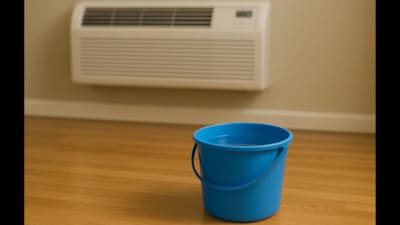
Have you ever wondered if your air conditioner uses water to keep your home cool? It’s a common question that many people ask but don’t always get a clear answer to.
Understanding how your air conditioner works can help you save money, maintain your unit better, and even improve your comfort. You’ll discover the truth about water and air conditioners—what role, if any, water plays in cooling your space. Keep reading, because what you learn might change how you think about your AC forever.

Credit: northnjhvac.com
How Air Conditioners Work
Air conditioners cool indoor air by removing heat and moisture. They do not use water to cool the air directly.
Instead, they use a special cooling process that moves heat from inside to outside your home.
Basic Cooling Cycle
The air conditioner’s cooling cycle has four main parts. They work together to cool your home.
First, the refrigerant absorbs heat from inside air. Then, the heat moves outside and is released.
- The refrigerant evaporates inside the indoor coil, absorbing heat.
- The warm refrigerant gas moves to the outdoor coil.
- The refrigerant releases heat and turns back to liquid.
- The cycle repeats to keep cooling the air.
Role Of Refrigerants
Refrigerants are special fluids that carry heat in air conditioners. They change from liquid to gas and back.
This change helps absorb heat inside and release it outside. Refrigerants make the cooling cycle work well.
- Evaporating refrigerant absorbs heat inside your home.
- Condensing refrigerant releases heat outside.
- Refrigerants keep cycling to cool air efficiently.

Credit: www.evapolar.com
Water Usage In Air Conditioners
Air conditioners cool indoor air by removing heat. Some types use water, while others do not. Knowing how much water an AC uses helps understand its impact.
This article explains water use in different air conditioner types. It compares evaporative coolers and traditional AC units.
Types Of Air Conditioners
There are many air conditioner types. Two common ones are evaporative coolers and traditional ACs. Each works differently with water.
- Evaporative Coolers:Use water to cool air by evaporation.
- Traditional ACs:Use refrigerants and do not need water for cooling.
Evaporative Coolers Vs. Traditional Ac
Evaporative coolers use water to lower air temperature. They pull warm air through wet pads. The water evaporates and cools the air.
Traditional ACs use a closed system with refrigerants. They remove heat without using water directly. Some water forms as condensation but is minimal.
| Feature | Evaporative Cooler | Traditional Air Conditioner |
|---|---|---|
| Water Usage | High – needs constant water supply | Low – only small condensation water |
| Cooling Method | Evaporation of water | Refrigerant cycle |
| Best Climate | Dry and hot areas | All climates |
| Energy Use | Lower energy use | Higher energy use |
Myths About Water Consumption
Many people wonder if air conditioners use water to cool the air. There are common myths about how much water these machines consume. It is important to understand the facts to avoid confusion.
This article explains common misconceptions about water use in air conditioners. It also clarifies how these systems really work.
Common Misconceptions
Some people think air conditioners use water like a fridge uses coolant. Others believe these devices waste large amounts of water daily. These ideas are not always true.
- Air conditioners drink water to cool the air.
- They cause high water bills due to water use.
- All air conditioners need water to work properly.
- Water leaks often happen because of water consumption.
Clarifying The Facts
Most air conditioners do not use water to cool the air. They use refrigerants that cycle inside the system. Water may collect as condensation but is not consumed.
| Myth | Fact |
| Air conditioners consume water daily. | They collect water from air but do not use it as fuel. |
| Water leaks mean water use inside the unit. | Leaks are caused by condensation drainage issues. |
| All AC units require water to work. | Only evaporative coolers use water, standard ACs do not. |
| Water use causes high water bills. | AC water use is minimal and usually does not affect bills. |

Credit: www.pulse.ng
Condensation And Water Production
Air conditioners do not use water to cool the air. They work by removing heat and moisture from the inside air.
This process causes water to form as condensation. This water must be handled properly to keep the AC running well.
Where Does The Water Come From?
Water in air conditioners comes from the air inside your home. Warm air holds moisture, which cools down on the AC’s cold surfaces.
This cooling causes the moisture to turn into water droplets, just like how dew forms on grass in the morning.
- Warm air contains water vapor
- AC cools the air, lowering its temperature
- Water vapor changes to liquid water (condensation)
- Water collects on AC coils and surfaces
Handling Condensate In Ac Units
Air conditioners have ways to remove this water. Most units use a drain pan and pipe to carry water outside or to a drain.
If the water is not removed, it can cause damage or mold growth inside the AC unit or your home.
- Water collects in a drain pan below the coils
- Drain pipe moves water outside or to a drain
- Some units use pumps to push water out
- Regular cleaning prevents clogs and leaks
Environmental Impact
Air conditioners help cool homes but can affect the environment. Some types use water in their cooling process. Understanding this impact is important to protect natural resources.
Water use by air conditioners can add stress to local water supplies. It is important to consider how AC systems manage water to reduce waste.
Water Efficiency Of Ac Systems
Not all air conditioners use water the same way. Some models use water to cool air, while others do not. Water-efficient systems use less water and recycle it when possible.
Evaporative coolers use water but in small amounts. Modern AC units may have features to reduce water loss. These systems help save water and lower environmental harm.
- Use water-saving technologies
- Recycle water within the system
- Monitor water use regularly
- Maintain equipment to prevent leaks
Alternatives To Water-dependent Cooling
Some air conditioners do not rely on water. These systems use electricity and refrigerants to cool air without water use. They reduce water demand and environmental impact.
Other alternatives include passive cooling and improved insulation. These methods lower the need for active cooling and save energy and water.
- Electric air conditioners without water use
- Passive cooling designs in buildings
- Better insulation to keep homes cool
- Use of fans instead of water cooling
Maintaining Efficient Cooling
Air conditioners help keep indoor spaces cool and comfortable. To work well, they need regular care. Efficient cooling saves energy and reduces strain on the unit.
Some air conditioners use water in their cooling process. Knowing how to reduce water use and improve performance helps maintain your AC system.
Tips For Reducing Water Use
Many AC systems use water to cool air or clean parts. You can cut water waste with simple habits. This helps conserve water and lowers bills.
- Check for leaks in your AC’s water lines regularly.
- Use a water-efficient cooling tower if your system has one.
- Set timers to limit water use during non-cooling hours.
- Clean filters and coils to reduce water needed for cooling.
- Recycle water from the AC drip pan for other uses.
Improving Ac Performance
Good AC performance means cooler air with less energy and water. Follow these steps to keep your system running well all year.
| Action | Benefit |
| Regular filter cleaning | Better airflow and cooling |
| Check refrigerant levels | Improved cooling efficiency |
| Clear debris around the unit | Prevents overheating |
| Schedule professional maintenance | Detects issues early |
| Use programmable thermostat | Energy and water savings |
Frequently Asked Questions
Does A Regular Air Conditioner Use Water To Cool Air?
Most standard air conditioners do not use water for cooling. They rely on refrigerants and coils to remove heat. However, evaporative coolers or swamp coolers use water to cool air naturally in dry climates.
How Does Water Play A Role In Some Air Conditioners?
In evaporative coolers, water evaporates to absorb heat, cooling the air. This method is energy-efficient but works best in low humidity areas, unlike traditional ACs that use refrigerants.
Can Water Leakage Indicate An Air Conditioner Problem?
Yes, water leakage from an AC often signals clogged drain lines or frozen coils. Regular maintenance can prevent leaks and ensure efficient cooling performance.
Is Water Consumption A Concern For Air Conditioners?
Traditional ACs do not consume water, but evaporative coolers do. Their water use depends on the climate and frequency of operation, usually requiring regular water refills.
Conclusion
Air conditioners don’t use water to cool air. They use refrigerants. Water only helps in draining moisture. Efficient systems manage this well. Regular maintenance keeps them running smoothly. Always check for leaks and clogs. This ensures optimal performance. Some units use water for cooling.
But these are specific models. Most home units don’t. Understanding your system helps save energy. And costs. Always consult the manual for details. Stay informed. Make smart choices. Keep your space cool and comfortable.