Are you struggling to keep the right humidity levels in your grow tent? If your plants aren’t thriving, low humidity might be the hidden problem.
Getting the moisture balance just right can boost growth, improve health, and increase your yield. You’ll discover simple, effective ways to raise humidity in your grow tent—without spending a fortune or making things complicated. Keep reading to unlock easy tips that will help your plants flourish like never before.

Credit: www.spider-farmer.com
Why Humidity Matters
Humidity is the amount of water vapor in the air inside your grow tent. It affects how plants breathe and grow.
Keeping the right humidity helps plants stay healthy and strong. It also protects them from stress and diseases.
Impact On Plant Growth
Humidity affects how plants absorb water through their leaves. Plants need water to move nutrients from roots to leaves.
Low humidity makes plants lose water fast. This causes leaves to dry out and slow growth. High humidity can cause mold and pests.
- Proper humidity helps plants open and close stomata.
- Good humidity speeds up photosynthesis.
- It reduces plant stress and improves growth.
- Too much humidity can cause mold growth.
- Too little humidity causes leaf damage.
Ideal Humidity Levels
Different plants need different humidity levels at each growth stage. Keeping the right level improves yield and quality.
Here are common humidity ranges for plants in a grow tent:
| Growth Stage | Humidity Range (%) |
|---|---|
| Seedling | 65 – 70 |
| Vegetative | 50 – 70 |
| Flowering | 40 – 50 |
| Harvest | 30 – 40 |
Measuring Humidity Accurately
Keeping the right humidity level in a grow tent helps plants grow well. Measuring humidity accurately is key to control it properly.
Using the right tools and placing them correctly makes measurement more reliable. This guide covers important tips for both.
Choosing The Right Hygrometer
Select a hygrometer that gives precise and fast readings. Digital models often show numbers clearly and react quickly to changes.
- Look for devices with good accuracy, usually ±2% RH or better.
- Choose a model with a clear display for easy reading.
- Consider hygrometers with memory to track humidity over time.
- A combination hygrometer and thermometer saves space and adds value.
- Check if the device is easy to calibrate for best results.
Placement Tips
Place your hygrometer where it can measure air that plants actually breathe. Avoid spots near humidifiers or vents that give false readings.
| Placement Area | Reason |
| Center of the grow tent | Represents average humidity |
| Near plant canopy | Shows humidity plants experience |
| Not next to humidifier | Avoids inflated readings |
| Off the floor | Prevents water damage to the device |
| Away from heat sources | Prevents false low humidity |
Simple Ways To Boost Humidity
Growing plants in a tent needs the right humidity to thrive. Low humidity can slow growth and damage leaves.
Here are easy ways to raise humidity inside your grow tent. These methods help keep your plants healthy.
Using A Humidifier
A humidifier adds moisture to the air in your grow tent. It works well for small to medium tents.
- Choose a humidifier that fits your tent size
- Place it near your plants but not too close
- Keep it clean to avoid mold and bacteria
- Set the humidity level between 50% and 70%
- Use a timer to run it during dry times
Water Trays And Pebbles
Water trays with pebbles add humidity by evaporation. This method is simple and does not need electricity.
| Item | Purpose | Tips |
|---|---|---|
| Tray | Hold water to evaporate | Use shallow trays for faster evaporation |
| Pebbles | Raise plants above water | Keep pebbles clean to avoid mold |
| Water | Source of humidity | Refill daily to maintain level |
Place the tray with pebbles under or near your plants. Water evaporates and raises humidity gently.
Misting Plants
Misting adds quick moisture to leaves and air. Use a spray bottle with clean water.
- Spray plants lightly once or twice a day
- Do not soak soil to avoid root problems
- Use room temperature water for best results
- Avoid misting at night to prevent mold
Credit: blimburnseeds.com
Optimizing Grow Tent Environment
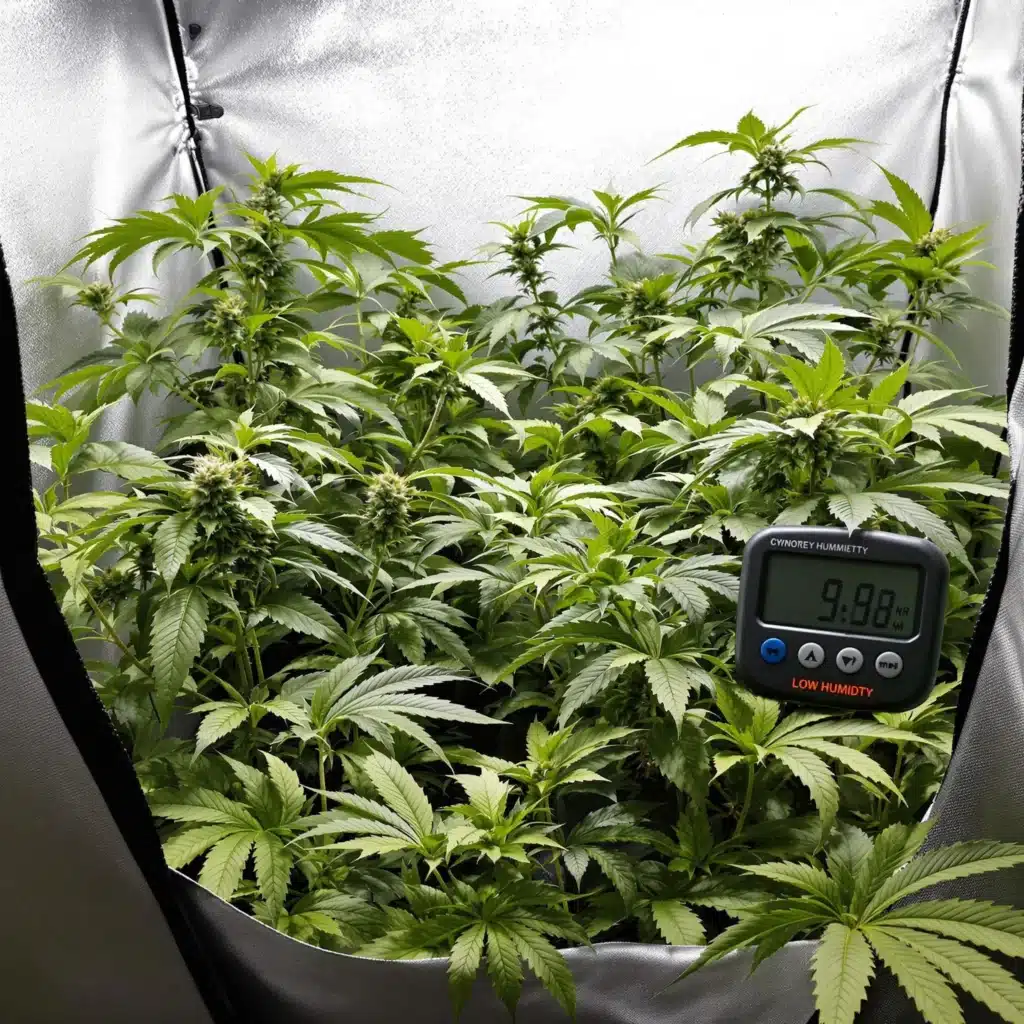
Keeping the right humidity helps plants grow strong inside a grow tent. You can raise humidity by fixing small leaks, changing air flow, and using covers.
These tips will improve humidity and create a better place for your plants.
Sealing Air Leaks
Air leaks let dry air enter and lower humidity. Find holes or cracks in the tent walls, zippers, and vents. Use tape or weather stripping to seal these leaks tightly.
- Check all corners and seams for gaps
- Seal zipper edges and flaps
- Use strong tape made for plastic or fabric
- Inspect regularly to keep leaks closed
Adjusting Ventilation
Ventilation controls air movement, which affects humidity levels. Reduce fan speed or close some vents to keep more moisture inside. Balance airflow to avoid mold.
| Ventilation Setting | Effect on Humidity |
| High fan speed | Lowers humidity quickly |
| Medium fan speed | Maintains steady humidity |
| Low fan speed | Increases humidity |
| Closed vents | Raises humidity, lowers fresh air |
Using Humidity Domes
Humidity domes cover small plants or seedlings. They trap moisture and create a mini humid space. Use domes to boost humidity in early growth stages.
- Place dome over small pots or trays
- Lift dome daily to allow fresh air
- Wipe inside if water builds up too much
- Remove dome once plants grow bigger
Natural Humidity Boosters
Keeping the right humidity in your grow tent helps plants stay healthy. Natural methods can raise humidity without special tools.
Using simple tricks like grouping plants or moist soil can create a better environment for your plants.
Grouping Plants Together
Placing plants close to each other helps trap moisture in the air. Plants release water through their leaves, which adds humidity.
- Group plants with similar water needs
- Use trays to catch excess water
- Keep plants close but leave space for air flow
- Place plants near a water source for extra humidity
Incorporating Moist Soil
Moist soil slowly releases water vapor, raising humidity in the grow tent. Avoid letting the soil dry out completely.
| Soil Moisture Level | Humidity Effect |
| Dry | Low humidity |
| Moist | Moderate humidity |
| Wet (Not soggy) | High humidity |

Credit: www.reddit.com
Avoiding Common Pitfalls
Increasing humidity in a grow tent can help plants grow better. Many growers face problems when trying to raise humidity. Some mistakes can harm plants or equipment.
This guide covers common pitfalls to avoid. Follow these tips to keep your grow tent healthy and balanced.
Preventing Mold And Mildew
Mold and mildew grow fast in high humidity. They can damage plants and cause bad smells. Avoid keeping humidity too high for long times.
Good air circulation stops mold from growing. Use fans to move air inside the tent. Check plants and walls often for signs of mold.
- Keep humidity below 70% to limit mold risk
- Use a dehumidifier if humidity is too high
- Ensure proper airflow with fans or vents
- Remove dead leaves and debris promptly
- Clean the tent regularly to prevent spores
Balancing Humidity And Temperature
Humidity and temperature work together. If temperature is too high, humidity feels higher. If temperature is too low, humidity drops.
Keep both humidity and temperature in the right range. This helps plants grow strong and avoid stress.
- Maintain temperature between 70°F and 80°F (21°C-27°C)
- Keep humidity between 50% and 70% depending on plant stage
- Use a hygrometer and thermometer to monitor conditions
- Adjust humidifier and heater settings as needed
- Avoid sudden changes in temperature or humidity
Frequently Asked Questions
How Can I Naturally Increase Humidity In A Grow Tent?
You can increase humidity by placing water trays inside the tent or using damp cloths. Adding live plants also helps. These methods raise moisture levels without extra equipment.
What Is The Best Device To Boost Grow Tent Humidity?
A humidifier is the best device to increase humidity. It delivers consistent moisture and is easy to control. Choose one suitable for your tent size for optimal results.
How Often Should I Monitor Humidity In A Grow Tent?
Monitor humidity daily to maintain ideal levels. Frequent checks prevent drastic changes and help adjust settings quickly. Use a reliable hygrometer for accuracy.
Can Ventilation Affect Humidity Levels In Grow Tents?
Yes, ventilation impacts humidity. Excessive airflow lowers humidity, while poor airflow raises it. Balance ventilation to maintain steady humidity without risking mold.
Conclusion
Boosting humidity in a grow tent improves plant health. Use water trays and humidifiers. Consider placing wet sponges or towels nearby. Group plants together for better moisture. Monitor levels regularly. Ensure ventilation to prevent mold. Adjust methods based on plant needs.
Consistent care makes a difference. Remember, each plant is unique. Adapt strategies as required. Enjoy seeing healthier, thriving plants. Your efforts will pay off. Keep experimenting and learning. Happy growing!