Is your air conditioner smelling musty or making you sneeze? Mold growing inside your AC can cause bad odors and even affect your health.
You might not see it right away, but mold can hide in places like the filters and vents. The good news? You can clean it yourself and keep your air fresh and safe. You’ll learn simple, step-by-step tips to get rid of mold from your air conditioner quickly and effectively.
Keep reading to protect your home and breathe easier!

Credit: www.youtube.com
Signs Of Mold In Air Conditioners
Mold can grow inside air conditioners if moisture builds up. It causes health problems and bad smells. You should check your unit often for signs of mold.
Knowing the signs helps you clean mold early. This guide covers the main signs to watch for in your air conditioner.
Musty Odors
A strong musty or damp smell is a common sign of mold. The odor comes from spores growing inside the system. You might notice the smell when the air conditioner runs.
- The smell is often worse after long use.
- It may spread to other rooms through the vents.
- Cleaning or replacing filters may reduce the smell temporarily.
Visible Mold Spots
You can sometimes see mold growing on parts of the air conditioner. Check areas like the vents, filters, and coils for black or green spots. These spots may look fuzzy or slimy.
| Location | Appearance of Mold |
|---|---|
| Air Vents | Black or green spots on vent slats |
| Filters | Dark, fuzzy patches on filter surface |
| Evaporator Coils | Slime or discoloration on coils |
Reduced Airflow
Mold buildup can block airflow in your air conditioner. You may notice weaker air coming from the vents. This makes the unit work harder and cool less efficiently.
- Check if the air feels weaker than usual.
- Inspect filters and vents for blockages.
- Clean or replace parts that have visible mold.

Credit: www.reddit.com
Health Risks Of Mold Exposure
Mold in air conditioners can harm your health. It releases tiny spores into the air you breathe.
These spores can cause many health problems, especially for sensitive people.
Allergic Reactions
Mold spores often trigger allergies. People may sneeze, have itchy eyes, or a runny nose.
Some also get skin rashes or feel tired after mold exposure.
- Sneezing and nasal congestion
- Itchy or watery eyes
- Skin irritation or rash
- Fatigue and headaches
Respiratory Issues
Breathing in mold spores can cause breathing problems. People with asthma may have worse attacks.
Coughing, wheezing, and shortness of breath are common symptoms.
- Asthma flare-ups
- Chronic coughing
- Wheezing sounds when breathing
- Difficulty breathing deeply
Long-term Effects
Long exposure to mold can cause serious health problems. It may affect your lungs and immune system.
Some people get chronic sinus infections or lung diseases from mold.
- Chronic sinus infections
- Permanent lung damage
- Weakened immune system
- Increased risk of infections
Safety Precautions Before Cleaning
Cleaning mold from your air conditioner needs care. Safety is very important to protect yourself and your home.
Follow these steps before you start cleaning the mold. They help keep you safe and make the job easier.
Turn Off Power
Always switch off the air conditioner and unplug it. This stops any electric shocks while cleaning.
Check the circuit breaker if you cannot unplug the unit. Make sure no power flows to the air conditioner.
Wear Protective Gear
Protect your body from mold spores by wearing the right gear. This keeps you safe and stops allergies.
- Wear gloves to protect your hands
- Use a mask to avoid breathing mold spores
- Wear goggles to protect your eyes
- Put on long sleeves and pants to cover your skin
Ventilate The Area
Good airflow helps remove mold spores from the air. Open windows and doors near the air conditioner.
| Ventilation Tips |
|---|
| Open at least two windows or doors |
| Use a fan to blow air outside |
| Avoid using the air conditioner during cleaning |

Credit: unitedstatesolutions.com
Tools And Materials Needed
Cleaning mold from your air conditioner needs the right tools and materials. Using proper items helps remove mold safely and well.
Below are the main tools and materials you will need to clean mold effectively.
Cleaning Solutions
Cleaning solutions help kill mold and stop it from growing back. Use solutions that are safe for air conditioners and strong enough to remove mold.
Common options include diluted bleach, white vinegar, or special mold cleaners. Always wear gloves when using these solutions.
- Diluted bleach (1 part bleach to 10 parts water)
- White vinegar (undiluted or mixed with water)
- Commercial mold cleaning sprays
Brushes And Cloths
Brushes and cloths help scrub and wipe away mold from your air conditioner parts. Choose soft brushes to avoid damage.
Microfiber cloths are good for wiping surfaces clean. Use disposable cloths if mold is heavy to avoid spreading spores.
- Soft-bristle brush for scrubbing
- Microfiber cloths for wiping
- Disposable cloths for heavy mold
Vacuum Cleaner
A vacuum cleaner with a HEPA filter helps remove loose mold spores and dust. It prevents spores from spreading in the air.
Use the vacuum carefully on vents and coils before cleaning with solutions and brushes.
- Vacuum cleaner with HEPA filter
- Brush attachment for tight spots
Step-by-step Mold Cleaning Process
Mold can grow inside your air conditioner and cause bad smells and health issues. Cleaning it regularly keeps your AC fresh and safe.
Follow these simple steps to clean mold from your air conditioner carefully and effectively.
Remove And Clean Filters
Turn off the air conditioner before you remove the filters. Take out the filters gently to avoid damage.
Wash the filters with warm water and mild soap. Use a soft brush to remove mold and dirt.
- Rinse filters thoroughly to remove all soap
- Let filters dry completely before putting back
- Replace filters if they are too damaged
Clean The Evaporator Coil
Open the AC panel to access the evaporator coil. Use a soft brush to clear dust and mold gently.
Spray a no-rinse coil cleaner to kill mold and clean the coil. Wait a few minutes for it to work.
- Wear gloves and a mask for protection
- Do not use water directly on electrical parts
- Repeat cleaning if mold is still visible
Disinfect Drain Pan And Lines
Locate the drain pan under the evaporator coil. Remove any water or debris from the pan.
Pour a mixture of water and white vinegar or a mild disinfectant into the drain line to clear mold and blockages.
- Use a small brush to scrub the drain pan
- Flush the drain line with clean water after disinfecting
- Check for leaks or damage in the drain system
Wipe Down Exterior Components
Use a damp cloth with mild soap to clean the AC’s outer parts. Remove dirt and mold from vents and casing.
Dry the exterior parts well to prevent mold from returning. Regular cleaning helps keep your AC safe and fresh.
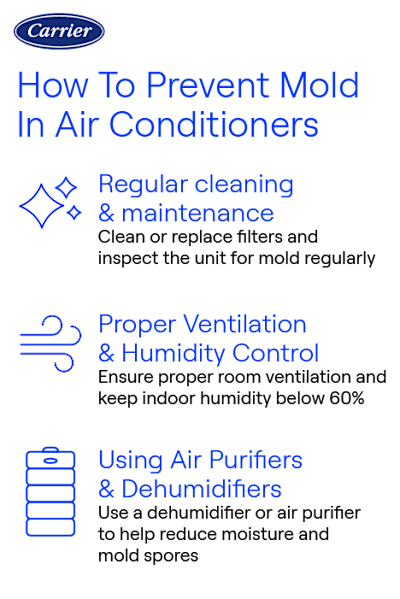
Preventing Mold Growth
Mold can grow inside your air conditioner if you do not keep it clean. It causes bad smells and can affect your health.
Preventing mold is easier than removing it later. Regular care helps keep your air conditioner fresh and safe.
Regular Maintenance Tips
Clean or change your air filter every 1 to 3 months. Dust and dirt can hold moisture and help mold grow.
- Wipe down the exterior and vents regularly.
- Check the drain pan and pipes for blockages.
- Schedule professional service once a year.
Control Humidity Levels
High humidity helps mold grow fast. Keep your home’s humidity below 60% to stop mold.
| Humidity Level | Effect on Mold |
| Below 50% | Prevents mold growth |
| 50% to 60% | Possible mold growth |
| Above 60% | High risk of mold growth |
Use Mold-resistant Products
Use materials that stop mold inside your air conditioner. Mold-resistant paints and coatings help a lot.
Here are common mold-resistant products for air conditioners:
- Mold-resistant spray for coils
- Anti-microbial filters
- Special mold-blocking sealants
When To Call A Professional
Cleaning mold from your air conditioner is important for good air quality. Small mold spots can be cleaned by yourself.
Sometimes, mold problems are too big or dangerous. It is best to call a professional in those cases.
Extensive Mold Infestation
If mold covers large areas inside the air conditioner, do not try to clean it yourself. Large mold growth can spread spores and harm your health.
Professionals have the tools and knowledge to remove big mold problems safely and completely.
Persistent Odors
If your air conditioner smells moldy even after cleaning, it means mold may hide deep inside. This odor can affect your home’s air quality.
Calling a professional will help find and remove hidden mold causing the bad smell.
System Performance Issues
Mold can block air flow and reduce your air conditioner’s performance. If your unit is not cooling well, mold might be the cause.
A professional can inspect your system, clean it properly, and restore its full function.
Frequently Asked Questions
How Do I Safely Clean Mold From My Air Conditioner?
Turn off and unplug the unit before cleaning. Use a mixture of water and vinegar or a commercial mold cleaner. Gently scrub affected areas with a soft brush. Wipe with a damp cloth and let it dry completely to prevent mold regrowth.
What Causes Mold Growth In Air Conditioners?
Mold grows due to moisture buildup from condensation inside the unit. Poor ventilation, dirty filters, and clogged drains increase moisture. Warm temperatures and stagnant air also create ideal conditions for mold to thrive inside your air conditioner.
Can Mold In Air Conditioners Affect Health?
Yes, mold spores can cause allergic reactions, respiratory issues, and irritation. People with asthma or weakened immune systems are more vulnerable. Regular cleaning and maintenance reduce mold risks and keep indoor air quality safe and healthy.
How Often Should I Clean Mold From My Air Conditioner?
Clean your air conditioner at least once every three months. Inspect filters and coils monthly during high usage. Promptly address any visible mold or musty odors to prevent health risks and maintain efficient cooling performance.
Conclusion
Keep your air conditioner mold-free for better air quality. Regular cleaning prevents health issues and keeps your unit efficient. Use simple methods to tackle mold effectively. Protect your family by ensuring a fresh, clean environment. Maintaining your AC regularly helps avoid costly repairs.
Enjoy a healthier home with these easy steps. Consistency is key. Stay proactive, and your air will be fresh. Safe air is essential for well-being. Don’t let mold compromise your comfort. A clean air conditioner leads to peace of mind.
Remember, prevention is always better than cure. Keep your AC mold-free and breathe easy.