Choosing the right air conditioner for your space can feel tricky, especially when you see terms like BTU thrown around. But what exactly is BTU, and why does it matter for your cooling needs?
If you want to keep your home comfortable without wasting energy or money, understanding the right BTU for your air conditioner is key. You’ll discover how to pick the perfect cooling power that matches your room size and lifestyle. Keep reading to make a smart choice that keeps you cool and saves you stress.
Choosing The Right Btu
Choosing the right BTU for your air conditioner is key to keeping your room comfortable. BTU helps you find the right size unit for your space.
Too low or too high BTU can cause problems. Learning about BTU helps you make a smart choice.
What Btu Means
BTU stands for British Thermal Unit. It measures how much heat an air conditioner can remove in one hour.
- 1 BTU cools or heats one pound of water by 1 degree Fahrenheit.
- A higher BTU means more cooling power.
- BTU helps match the air conditioner to room size.
How Btu Affects Cooling
If your BTU is too low, the room stays warm and the AC runs longer.
If the BTU is too high, the AC cools quickly but wastes energy and may cause humidity problems.
| BTU Range | Room Size | Effect |
| 5,000 – 8,000 | 100 – 250 sq ft | Good for small rooms |
| 8,000 – 12,000 | 250 – 550 sq ft | Best for medium rooms |
| 12,000 – 18,000 | 550 – 900 sq ft | Suitable for large rooms |
| 18,000+ | 900+ sq ft | Used for very large spaces |
Calculating Btu Needs
BTU stands for British Thermal Unit. It measures how much heat an air conditioner can remove.
Choosing the right BTU size helps cool your room properly and saves energy.
Room Size And Btu
Room size is the main factor to pick BTU. Bigger rooms need higher BTU air conditioners.
Measure your room’s length and width in feet. Multiply them to get square feet.
- Up to 150 sq ft: 5,000 BTU
- 150 to 250 sq ft: 6,000-8,000 BTU
- 250 to 350 sq ft: 8,000-10,000 BTU
- 350 to 450 sq ft: 10,000-12,000 BTU
- 450 to 550 sq ft: 12,000-14,000 BTU
Impact Of Ceiling Height
Ceiling height changes room volume. Taller ceilings need more BTU to cool the air.
For ceilings over 8 feet, add 10% more BTU for each extra foot.
| Ceiling Height | BTU Adjustment |
|---|---|
| 8 feet or less | No change |
| 9 feet | +10% BTU |
| 10 feet | +20% BTU |
| 11 feet | +30% BTU |
Considering Sunlight Exposure
Rooms with a lot of sunlight get hotter. They need more BTU to stay cool.
If your room faces the sun most of the day, increase BTU by 10-20%.
- South or west-facing windows add heat
- Use curtains or blinds to reduce heat
- Higher BTU helps keep the room comfortable
Occupants And Appliances
People and devices add heat to a room. More heat means higher BTU needed.
Add 600 BTU for each person above two. Add extra BTU for heat from appliances.
- 2 people: base BTU only
- 3 or more: add 600 BTU per extra person
- Large appliances add more heat
- Turn off unused devices to save cooling power
Btu Recommendations By Room
BTU stands for British Thermal Unit. It shows how much cooling power an air conditioner has. Choosing the right BTU size is key for comfort.
Too low BTU means the room stays hot. Too high BTU wastes energy and costs more. Look at the room size to pick the right BTU.
Small Bedrooms
Small bedrooms need less cooling power. A 100 to 300 square feet room usually needs an air conditioner with 5,000 to 7,500 BTU.
This size cools the room well and saves energy. It works best for bedrooms with one or two windows.
Living Rooms
Living rooms are larger and need more BTU. For a 300 to 500 square feet space, choose 7,500 to 12,000 BTU.
This size keeps the living room cool even with more people inside.
Kitchens
Kitchens get hotter because of cooking. Pick an air conditioner with 8,000 to 12,000 BTU for a 200 to 300 square feet kitchen.
Extra cooling helps balance the heat from appliances and ovens.
Large Spaces
Large rooms over 500 square feet need strong air conditioners. Use 12,000 to 18,000 BTU to cool these areas well.
For very large spaces, consider multiple units or a central cooling system.

Credit: senville.ca
Energy Efficiency And Btu
BTU measures the cooling power of an air conditioner. Choosing the right BTU helps save energy and money. Energy efficiency means using less power for the same cooling.
Understanding BTU and efficiency ratings lets you pick the best air conditioner for your home. This guide explains SEER ratings and how to balance power with cost.
Seer Ratings Explained
SEER stands for Seasonal Energy Efficiency Ratio. It shows how well an air conditioner uses electricity over a cooling season. The higher the SEER, the more efficient the unit is.
- SEER rating is a ratio of cooling output to energy used.
- Higher SEER means lower electricity bills.
- Most modern AC units have SEER ratings from 13 to 21.
- Energy-efficient models help reduce environmental impact.
Balancing Power And Cost
Choosing the right BTU size is important. Too small BTU won’t cool well. Too large wastes energy and costs more.
| Room Size (sq ft) | Recommended BTU | Energy Use |
| 100 – 300 | 5,000 – 6,000 | Low |
| 300 – 500 | 7,000 – 8,000 | Medium |
| 500 – 800 | 9,000 – 12,000 | High |
| 800 – 1,200 | 14,000 – 18,000 | Very High |
Common Btu Mistakes
Choosing the right BTU for your air conditioner is important. The BTU number shows how much cooling power the unit has. Picking the wrong BTU can cause problems.
Below are common mistakes people make when selecting BTU. Understanding these can help you pick a better air conditioner.
Choosing Too Low Btu
Choosing an air conditioner with too low BTU means it cannot cool the space well. The room stays warm and uncomfortable. The unit works harder and uses more electricity.
- The room will not reach the desired temperature.
- The air conditioner runs constantly, increasing wear and tear.
- Electric bills rise because the unit is always on.
- Humidity may stay high, causing discomfort.
Oversizing And Its Effects
An air conditioner with too high BTU cools the room quickly but causes other issues. It turns on and off often, which is bad for the unit and air quality.
| Problem | Reason | Effect |
| Short Cooling Cycles | Oversized unit cools fast | Increased wear on parts |
| Poor Humidity Control | Unit shuts off quickly | Room feels damp or sticky |
| Higher Costs | Bigger unit uses more energy | More electricity bills |
| Less Comfort | Uneven temperature | Hot and cold spots |
Btu And Different Ac Types
BTU stands for British Thermal Unit. It measures how much heat an air conditioner can remove from a room. Higher BTU means more cooling power.
There are many types of air conditioners. Each type has different BTU ranges. Knowing these helps you pick the right AC for your space.
Window Units
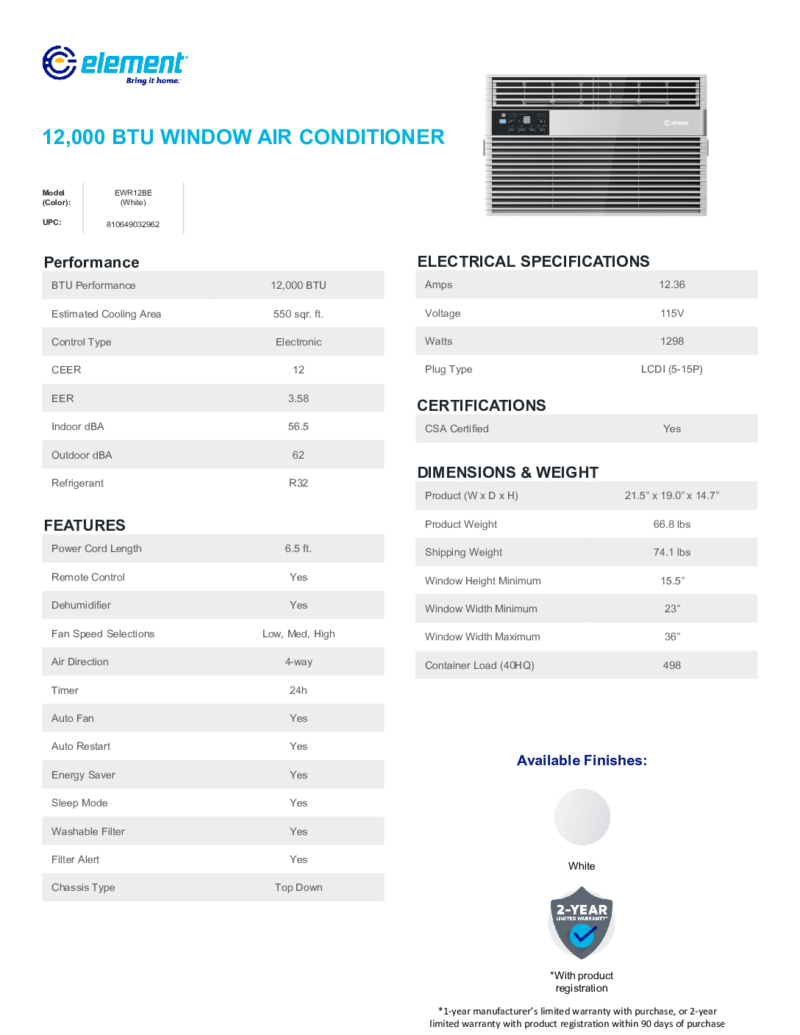
Window AC units fit into a window or a hole in the wall. They are common in small rooms. Their BTU usually ranges from 5,000 to 12,000.
- Easy to install and remove
- Good for single rooms
- Lower BTU models use less power
- Best for cooling small to medium spaces
Split Systems
Split systems have two parts: an indoor unit and an outdoor compressor. They cool larger areas and multiple rooms. Their BTU ranges from 9,000 to 36,000 or more.
| BTU Range | Room Size (sq ft) |
|---|---|
| 9,000 – 12,000 | 350 – 550 |
| 12,000 – 18,000 | 550 – 1,000 |
| 18,000 – 24,000 | 1,000 – 1,500 |
| 24,000 – 36,000+ | 1,500+ |
Portable Acs
Portable air conditioners can move from room to room. They have BTU ratings between 8,000 and 14,000. They need a window vent for hot air.
Advantages of Portable ACs:
- Easy to move and set up
- No permanent installation needed
- Good for cooling one room temporarily
- Lower BTU means less cooling power
Maintaining Optimal Cooling
Choosing the right BTU for your air conditioner helps keep your room cool. BTU measures how much heat the AC can remove.
Regular care makes your air conditioner work well and last longer. Clean and check your unit often to keep it running strong.
Regular Maintenance Tips
Clean the air filter every month. A dirty filter blocks airflow and lowers cooling power.
Check the outdoor unit. Remove leaves and dirt to help air flow freely.
- Turn off power before cleaning
- Use a soft brush for coils
- Keep vents clear of furniture
- Schedule yearly professional checkups
Improving Ac Performance
Set the thermostat to a steady temperature. Avoid quick changes to save energy and keep cool.
Seal windows and doors to stop warm air from entering. This helps your AC cool better.
- Use curtains to block sunlight
- Use ceiling fans to spread cool air
- Keep heat sources away from the thermostat
- Close vents in unused rooms
Credit: elementelectronics.com

Credit: northnjhvac.com
Frequently Asked Questions
What Does Btu Mean In Air Conditioners?
BTU stands for British Thermal Unit. It measures an air conditioner’s cooling power. Higher BTU means more cooling capacity.
How To Choose The Right Btu For A Room?
Calculate room size in square feet. Use a BTU calculator or multiply square footage by 20. Adjust for room conditions.
Can A Low Btu Ac Cool A Large Room?
No, a low BTU AC can’t cool large rooms effectively. It will run longer and struggle to maintain temperature.
What Happens If Ac Btu Is Too High?
An oversized AC cools quickly but wastes energy. It causes frequent on/off cycles and poor humidity control.
Conclusion
Choosing the right BTU for your air conditioner is crucial. It ensures comfort and efficiency. Too high, and you waste energy. Too low, and it struggles to cool. Measure your space accurately. Consider factors like room size and sunlight. Use this guide to make informed choices.
A well-matched AC unit brings comfort. It also reduces energy bills. You now know how to select wisely. Enjoy a cooler, more comfortable home. Stay cool and save money with the right BTU.