Have you ever wondered where the weights go on a fishing line and why their placement matters? If you want to catch more fish and improve your fishing skills, understanding the right spot for your weights is key.
The way you position these small but powerful tools can change how your bait moves, how far it casts, and even how natural it looks underwater. Keep reading, and you’ll discover simple tips that can make a big difference every time you cast your line.

Credit: www.reddit.com
Types Of Fishing Weights
Fishing weights help your bait sink to the right depth. They keep the line steady in the water.
Different weights suit different fishing styles and water conditions. Knowing their uses helps you fish better.
Split Shot
Split shot are small round weights that clamp onto the fishing line. They are easy to add or remove.
These weights work well for light fishing and help your bait sink slowly. They keep the bait near the surface or mid-water.
Egg Sinkers
Egg sinkers are oval-shaped weights with a hole through the middle. The line passes through the hole.
They let the fish take the bait without feeling much resistance. Egg sinkers are good for bottom fishing in rivers and lakes.
Bullet Weights
Bullet weights look like bullets and slide easily through weeds and rocks. They are popular for bass fishing.
These weights help your bait reach deeper water fast. They also keep the bait close to the bottom.
Bank Sinkers
Bank sinkers are heavy and shaped like a cone or teardrop. They have a loop on top to attach the line.
These weights hold your bait firmly in fast currents. They are often used in river fishing.
Bell Sinkers
Bell sinkers are shaped like small bells with a loop on top. They make a sound when they move.
These weights work well to keep bait steady in strong water. The ringing sound can attract fish.
Factors Influencing Weight Placement
Knowing where to place weights on a fishing line helps catch more fish. It affects how your bait moves and reaches fish.
Several factors decide the best spot for weights. These include fishing depth, current strength, bait type, and target species.
Fishing Depth
Weight placement changes with the water depth. In shallow water, weights go closer to the bait. In deep water, weights are placed higher to help the bait sink slowly.
Current Strength
Strong currents need heavier weights or weights placed closer to the hook. This keeps the bait steady. In weak currents, lighter weights or weights placed further from the bait work well.
- Strong current: use heavier weights near bait
- Moderate current: medium weight at middle of line
- Weak current: light weights far from bait
Bait Type
| Bait Type | Weight Placement | Reason |
| Live bait | Weights below the bait | Allows natural movement |
| Soft plastic | Weights inside or near bait | Keeps bait steady |
| Fly or feather | Weights above the bait | Helps sink gently |
Target Species
Different fish prefer different bait depths. Adjust weight placement to match fish habits. Bottom feeders need weights closer to the hook. Mid-water fish require weights higher on the line.
For bass, put weights further up to let bait float mid-water.
Common Weight Placement Methods
Adding weights on a fishing line helps control how your bait moves in the water. Different setups use weights in different spots. These placements affect how the bait sinks and how the fish see it.
Understanding where to put weights can improve your fishing success. Below are common ways to place weights on the line.
Fixed Weight Setup
In a fixed weight setup, the weight stays in one spot on the line. Usually, the weight is tied or crimped below the hook. This setup keeps the bait at a set depth.
This method works well when fishing near the bottom or in strong currents. The fixed weight helps the bait stay steady and in place.
Slip Sinkers
Slip sinkers can slide up and down the fishing line. They are not fixed in one place. This lets the fish take the bait without feeling the weight.
The weight stops at a knot or a bead above it. This setup helps the bait move more naturally. It is popular for fishing in deep water.
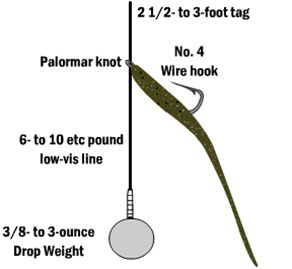
Drop Shot Rig
The drop shot rig uses a weight tied at the very end of the line. The hook is tied above the weight, usually several inches up. This holds the bait above the bottom.
This method keeps the bait visible and lively in one spot. It works great for fish that stay close to the bottom but don’t want to feed right on it.
Carolina Rig
The Carolina rig has a weight fixed on the line above a swivel. The bait is tied to a leader line that runs from the swivel to the hook. This lets the bait float freely behind the weight.
This setup works well for covering large areas. The weight drags on the bottom, while the bait moves naturally behind it.
Step-by-step Weight Placement Guide
Knowing where to place weights on a fishing line helps improve casting and bait presentation. Proper weight placement lets the bait sink naturally and reach the right depth.
This guide shows you how to attach weights, adjust their position, and test your setup for better fishing results.
Attaching Weights To The Line
Start by selecting the right weight size for your fishing needs. Too heavy or too light weights affect casting and bait movement.
- Thread the weight onto the fishing line before tying your hook.
- Use split shot weights by pinching them onto the line carefully.
- Make sure the weight is secure but not crushing the line.
- Check that the weight can slide if using a sliding sinker setup.
Adjusting Weight Position
Move the weight closer or farther from the hook to control bait depth and action. Adjusting position changes how the bait moves in water.
| Weight Position | Effect on Bait |
| Close to Hook | Bait sinks quickly, less natural movement |
| Far from Hook | Bait moves more freely, natural drift |
| Sliding Weight | Allows bait to feel more natural to fish |
Testing The Setup
Test your weight setup before fishing to see how the bait sinks and moves. This saves time and increases success.
- Cast the line into calm water and watch the bait’s movement.
- Adjust weight position if the bait sinks too fast or too slow.
- Change weight size if casting distance is too short.
- Make small tweaks and retest until satisfied with the setup.
Tips For Effective Weight Placement
Placing weights correctly on a fishing line helps catch more fish. It affects how far and how sensitive your line feels.
Learning where to put the weights can make fishing easier and more fun. Let’s look at some useful tips.
Balancing Sensitivity And Casting Distance
Putting the weight too close to the hook can make you feel fish bites better. But it may reduce how far you can cast.
Placing the weight farther from the hook helps you cast farther. But it can lower the feeling of fish nibbling.
- Put weight close to the hook for more bite feeling.
- Put weight farther away for longer casts.
- Try different spots to find the best balance.
Avoiding Line Tangles
Weight placement affects how your line moves in water. Wrong spots can cause tangles.
Here are some tips to keep your line smooth and tangle-free.
- Use smaller weights if you fish in rivers or streams.
- Keep some space between the weight and the hook.
- Check your line often for twists or knots.
- Use swivels to reduce line twists.
Adapting To Different Fishing Conditions
Water type, current speed, and fish species affect where to put weights. Adjust your setup for each condition.
| Condition | Weight Placement |
| Calm water | Near the hook for better sensitivity |
| Strong current | Far from the hook to hold the bait steady |
| Deep water | Heavier weight placed farther out |
| Shallow water | Lighter weight close to the hook |

Credit: www.reddit.com

Credit: www.amazon.ca
Frequently Asked Questions
Where Should Weights Be Placed On A Fishing Line?
Weights should be placed 12 to 18 inches above the hook. This helps the bait sink naturally and improves casting distance. Proper placement ensures better control and increased chances of catching fish.
Why Is Weight Placement Important On Fishing Lines?
Correct weight placement balances the bait’s movement and depth. It prevents tangles and helps achieve accurate casting. Properly placed weights also allow the bait to appear natural to fish, increasing your catch rate.
What Types Of Weights Work Best On Fishing Lines?
Split shot, egg sinkers, and bullet weights are common choices. Each type suits different fishing conditions and techniques. Selecting the right weight improves casting, bait presentation, and overall fishing success.
How Do Weights Affect Fishing Line Casting Distance?
Weights add mass, allowing longer and more controlled casts. Properly placed weights reduce wind resistance and help the line sink quickly. This lets anglers reach deeper or distant fishing spots effectively.
Conclusion
Placing weights on a fishing line is crucial. It affects bait depth. Proper placement improves your fishing success. Beginners often feel confused. But with practice, it gets easier. Remember, different fish need different setups. Experimenting helps find what works best.
Try adjusting weights based on water conditions. Shallow water needs less weight. Deep water might need more. Balance is key for a natural bait presentation. With these tips, you’re ready to enjoy your fishing adventure. Happy fishing!