Is your car’s air conditioner leaking and leaving you uncomfortable on hot days? A leak in your car’s AC can quickly turn a refreshing ride into a sweaty struggle.
But don’t worry—you don’t have to be an expert to fix it. In this guide, you’ll discover simple, effective steps to find and repair that annoying leak. Keep reading, and you’ll learn how to get your AC blowing cold air again, saving money and avoiding costly repairs.
Your comfort on the road starts here.
Signs Of A Leak
Car air conditioners can lose cooling power if there is a leak. Finding the leak early helps avoid costly repairs.
Leaks let refrigerant escape. This causes your air conditioner to work poorly. Watch for these signs to spot a leak fast.
Reduced Cooling Performance
Your car’s air conditioner may not cool as well if there is a leak. It takes longer to cool the air inside the car.
You might feel warm air blowing even when the AC is on full. This means the refrigerant is low due to a leak.
Hissing Sounds
Listen for hissing sounds near the AC system. A leak causes refrigerant to escape with a soft hissing noise.
The sound is often heard near hoses, connections, or the compressor. It helps to check these areas carefully.
Visible Oil Or Refrigerant Spots
Leaks often show as oily or wet spots on AC parts. Refrigerant mixes with oil in the system and leaves marks.
Check the compressor, hoses, and fittings for these spots. Oil stains can point right to the leak location.
- Look under the hood for wet areas
- Inspect hose connections for oily residue
- Check the AC compressor for leaks or stains

Credit: autoacrepair1.com
Tools And Materials Needed
Fixing a leak in a car air conditioner needs the right tools and materials. Having them ready makes the job easier and safer.
This guide will cover the main items you need to find leaks and repair them properly.
Leak Detection Kits
Leak detection kits help find where the air conditioner is leaking refrigerant. They show leaks clearly so you can fix them fast.
These kits often use UV dye or electronic sensors to detect leaks in the system.
- UV dye and blacklight to spot leaks visually
- Electronic leak detectors to sense refrigerant gas
- Soap solution to see bubbles at leak points
Basic Repair Tools
Basic tools let you open and work on the air conditioner parts. They help you reach the leak and fix it safely.
These tools include common hand tools and some specialty items for AC repair.
- Wrenches and screwdrivers to remove panels and fittings
- Pliers for gripping and bending metal parts
- Tube cutters to trim damaged hoses
- Manifold gauge set to check pressure levels
- Vacuum pump to remove air from the system
Sealants And Refrigerants
Sealants help close small leaks inside the AC system. Refrigerants refill the system so it can cool air again.
Choose sealants and refrigerants that match your car’s AC requirements for the best results.
- AC sealant to stop minor leaks inside hoses or connections
- Refrigerant gas (like R134a) to refill the cooling system
- Refrigerant oil to lubricate parts and help seals
Locating The Leak
Finding a leak in your car’s air conditioner is key to fixing it. Leaks let refrigerant escape, which stops cooling.
There are simple ways to find where the leak is. Start by looking closely, then try special tests.
Visual Inspection
Look at the AC system parts for signs of leaks. Check hoses, connections, and the compressor.
- Look for oily stains on hoses and fittings
- Check for cracks or worn-out parts
- Notice any white or green powdery residue
- Inspect the condenser and evaporator coils
Using Uv Dye
UV dye helps find leaks not visible by eye. Add the dye to the AC system and run it for some time.
Use a UV light to scan all AC parts. The dye will glow brightly at the leak spots.
Soap Bubble Test
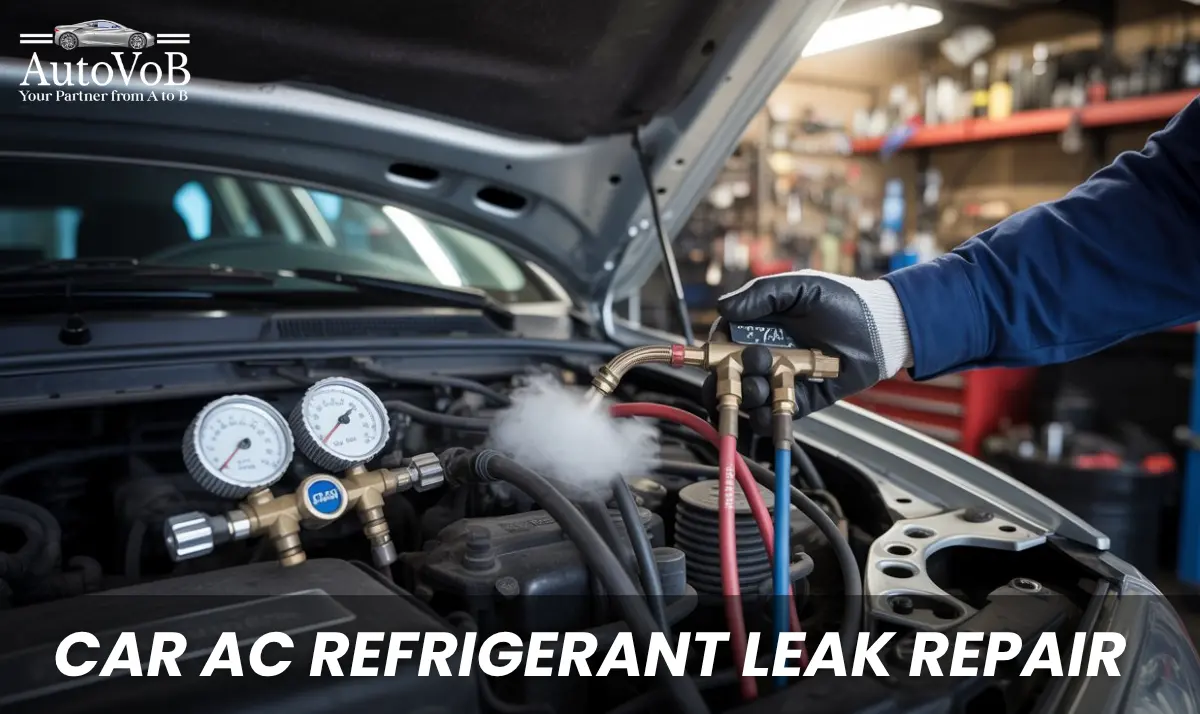
This test finds leaks by making bubbles at air escapes. Mix soap with water in a spray bottle.
Spray the soapy water on AC hoses and joints. Look carefully for bubbles forming. Bubbles mean a leak.
| Area to Spray | What to Look For |
| Hose connections | Small bubbles |
| Compressor seals | Foaming |
| Evaporator lines | Continuous bubbles |
Credit: www.autovob.com
Fixing Small Leaks
Small leaks in a car air conditioner can reduce cooling power. Fixing these leaks early saves money and keeps the system working well.
To fix small leaks, you can apply sealant or tighten loose connections. Both methods are simple and effective for minor problems.
Applying Sealant
Sealant helps close tiny holes and cracks in the AC system. It stops refrigerant from escaping through small leaks.
Use a sealant made for car air conditioners. Follow the product instructions carefully for best results.
- Locate the leak by checking AC components
- Add the recommended amount of sealant
- Run the AC to spread the sealant inside
- Check for leaks again after sealing
Tightening Connections
Loose connections can cause refrigerant to leak. Tightening these connections stops the leak and improves AC performance.
Check all fittings and joints in the AC system. Use the right tools to tighten any loose parts carefully.
- Turn off the car and AC system
- Find loose fittings on hoses and pipes
- Use a wrench to tighten connections
- Do not overtighten to avoid damage
- Test the AC after tightening
Handling Larger Leaks
Large leaks in a car air conditioner need careful attention. Fixing these leaks often requires part replacement.
This guide covers how to replace damaged hoses and repair or replace other components.
Replacing Damaged Hoses
Damaged hoses cause many large leaks in car AC systems. You must find the faulty hose before replacing it.
- Locate the damaged hose by checking for cracks or wet spots.
- Drain the refrigerant safely before removing the hose.
- Disconnect hose clamps and fittings carefully.
- Replace the old hose with a new, compatible one.
- Secure all connections tightly to prevent future leaks.
Repairing Or Replacing Components
Besides hoses, other parts like the compressor or condenser may cause leaks. These parts may need repair or replacement.
| Component | Common Issue | Action |
| Compressor | Seals worn out | Replace seals or the compressor |
| Condenser | Corrosion or punctures | Replace condenser |
| O-rings | Dry or cracked | Replace O-rings |
| Expansion Valve | Blocked or leaking | Replace valve |

Credit: www.youtube.com
Recharging The Ac System
Fixing a leak in your car’s air conditioner often needs recharging the AC system. Recharging fills the system with refrigerant to cool the air again.
It is important to do the recharge carefully to avoid damage and ensure good cooling performance.
Choosing The Right Refrigerant
Use the refrigerant type recommended by your car’s manufacturer. Different cars need different refrigerants.
Using the wrong refrigerant can harm the AC system or reduce cooling power.
- Check the owner’s manual for the correct refrigerant type.
- Common types include R-134a and R-1234yf.
- Buy refrigerant from a trusted supplier.
- Never mix different refrigerants in the system.
Proper Recharge Procedure
Recharging the AC system requires following steps safely and carefully. Always wear safety glasses and gloves.
Use a recharge kit with a pressure gauge to avoid overfilling the system.
- Locate the low-pressure service port on the AC system.
- Connect the recharge hose to the port.
- Turn on the car engine and AC to the highest setting.
- Slowly add refrigerant while watching the gauge.
- Stop adding when the pressure reaches the recommended level.
- Disconnect the hose and replace the port cap.
- Check if the AC cools properly after recharge.
Preventive Maintenance Tips
Fixing leaks in your car air conditioner starts with good maintenance. Simple care can stop leaks before they start. Follow these tips to keep your AC working well.
Regular checks and cleaning help your system stay strong. Quick repairs stop small problems from getting worse. Use these steps to protect your AC system.
Regular System Checks
Check your car AC system often to spot leaks early. Look for wet spots or oily stains near hoses and connections. Listen for strange sounds when the AC runs.
- Inspect hoses and fittings for cracks or wear
- Check refrigerant levels with a gauge
- Test AC pressure to ensure it is within normal range
- Examine the compressor for any signs of damage
- Look under the car for puddles or drips after running AC
Keeping Components Clean
Clean parts help your AC work better and last longer. Dirt and debris can block airflow and cause leaks. Focus on key parts to keep clean.
| Component | Cleaning Tips |
|---|---|
| Condenser | Use gentle water spray to remove dirt and leaves |
| Evaporator | Clean with AC foam cleaner to remove dust inside |
| Hoses and Connections | Wipe with a dry cloth to remove oil and grime |
| Cabin Air Filter | Replace regularly to keep fresh air flow |
Timely Repairs
Fix leaks as soon as you find them. Small leaks waste refrigerant and can damage parts. Quick repair saves money and keeps your car cool.
- Replace worn or cracked hoses immediately
- Seal loose fittings with proper clamps or sealants
- Repair or replace faulty compressors without delay
- Refill refrigerant only after fixing leaks
- Use professional help for complex repairs
Frequently Asked Questions
How Do I Identify A Leak In My Car Ac?
Look for reduced cooling, hissing sounds, or oily residue near AC components. Use a UV dye kit to spot leaks precisely.
Can I Fix A Car Ac Leak Myself?
Yes, minor leaks can be fixed with DIY kits. However, larger leaks need professional repair for safety and effectiveness.
What Tools Are Needed To Fix Ac Leaks?
You typically need UV dye, a leak detector, refrigerant recharge kit, and basic hand tools like wrenches and screwdrivers.
How Much Does It Cost To Repair An Ac Leak?
Costs vary widely from $50 for small fixes to $300+ for major repairs, depending on leak size and labor.
Conclusion
Fixing a car air conditioner leak can seem tough. But with the right steps, it’s manageable. Start by identifying the leak source. Then, use a sealant or seek professional help. Regular maintenance keeps your car cool and comfortable. Don’t ignore small leaks; they can grow.
Always prioritize safety and follow instructions carefully. Remember, a well-maintained AC system improves driving experience. Enjoy your cool rides, and keep your vehicle in top shape. Stay informed and act promptly. Your car will thank you!