If you want your fishing gear to perform at its best, knowing how to crimp fishing line is a skill you can’t skip. Crimping creates strong, reliable connections that keep your hooks and lures secure, even when you’re battling a big catch.
Whether you’re a beginner or looking to improve your technique, this guide will show you simple, step-by-step tips to make your crimps perfect every time. Stick with me, and you’ll soon feel confident that your fishing line won’t let you down when it matters most.
Choosing The Right Crimp Sleeve
Crimp sleeves hold fishing lines securely in place. Picking the right sleeve is key to strong connections.
Different materials and sizes suit different fishing lines. Knowing these helps avoid line slippage or damage.
Materials And Sizes
Crimp sleeves come in various materials like aluminum and copper. Each offers unique strength and corrosion resistance.
| Material | Strength | Corrosion Resistance | Common Use |
| Aluminum | Medium | High | Freshwater fishing |
| Copper | High | Medium | Saltwater fishing |
| Stainless Steel | Very High | Very High | Heavy-duty saltwater |
Size depends on the fishing line diameter. Using a wrong size can weaken the hold or damage the line.
Matching Sleeve To Line Type
- For monofilament lines, use soft aluminum sleeves to avoid cutting the line.
- For braided lines, choose harder copper sleeves for a tight grip.
- For steel or heavy lines, stainless steel sleeves provide maximum strength.
- Check the sleeve packaging for line diameter compatibility.
- Always test your crimp before fishing to ensure it holds securely.

Credit: www.amazon.com
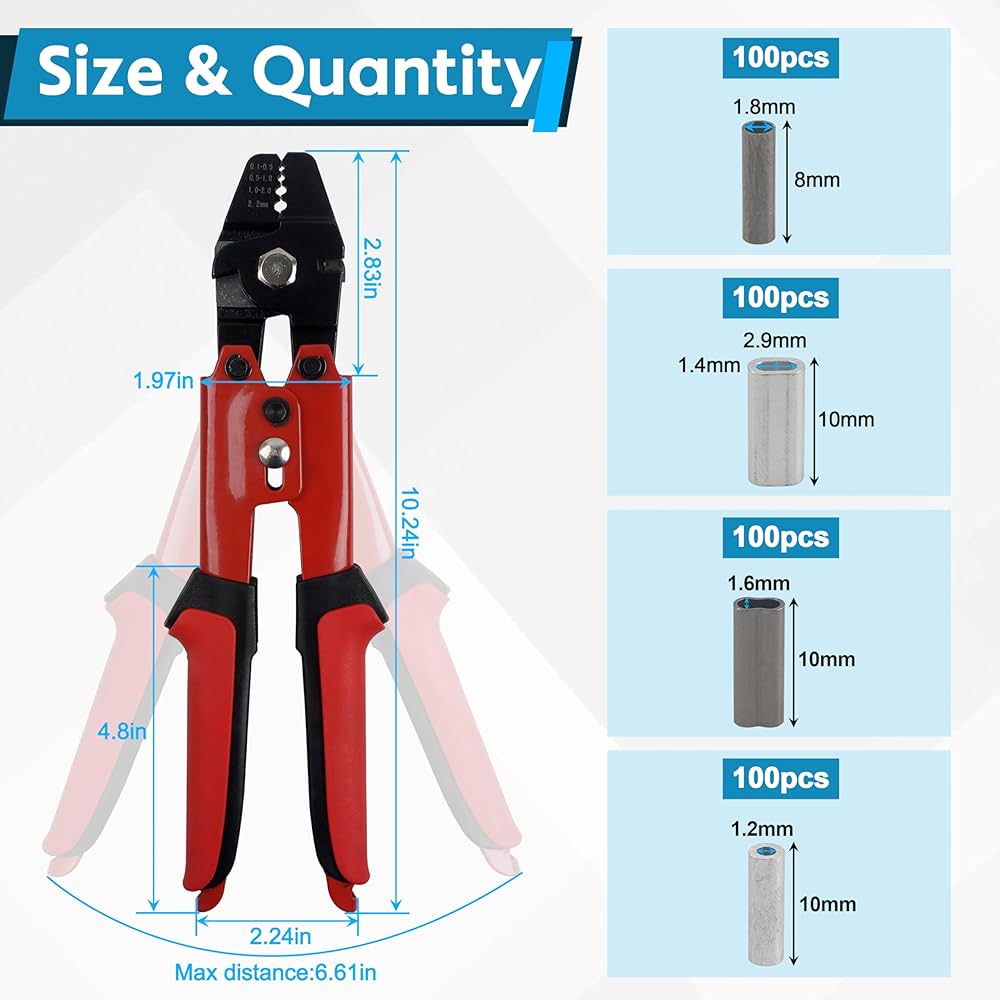
Essential Tools For Crimping
Crimping fishing line requires the right tools to make strong, lasting connections. Using proper tools helps secure hooks and leaders safely.
Choosing the right crimping tools improves the quality and durability of your fishing setup. It also makes the task easier and faster.
Types Of Crimping Pliers
Crimping pliers come in different shapes and sizes. Each type is made for specific crimping tasks on fishing lines and sleeves.
Some pliers have special jaws to fit different sizes of crimp tubes. Others offer adjustable pressure for better control.
- Standard Crimping Pliers:Basic tool for most crimping jobs.
- Double-Barrel Crimping Pliers:Designed for double-barrel sleeves.
- Multi-Function Crimping Pliers:Can cut, crimp, and strip lines.
- Hydraulic Crimping Pliers:Use for heavy-duty, thick lines.
Additional Helpful Gear
Other gear can make crimping easier and more accurate. These tools improve your fishing line setup process.
Using a ruler or caliper helps measure sleeve sizes. A good pair of wire cutters trims excess line cleanly.
- Wire cutters for clean cuts
- Ruler or caliper for precise measurements
- Magnifying glass to see small details
- Fishing sleeves or crimps in various sizes
Preparing The Fishing Line
Preparing the fishing line is an important step before crimping. It helps ensure a strong and secure connection.
This guide covers cutting and cleaning the line, and measuring it for accuracy.
Cutting And Cleaning
Cut the fishing line cleanly to avoid frays that weaken the crimp. Use sharp scissors or a line cutter designed for fishing lines.
- Cut the line straight across for a neat end
- Remove any dirt or debris from the line
- Wipe the line with a soft cloth to ensure it is dry
- Check the line for any damage or weak spots
Measuring For Accuracy
Measure the fishing line carefully to get the right length for crimping. Accurate measurement helps avoid waste and weak crimps.
| Tool | Use | Tip |
| Ruler | Measure straight lengths | Place on flat surface for accuracy |
| Measuring Tape | Flexible for curved measurements | Hold tightly to avoid slack |
| Marker | Mark cutting points | Use light marks to avoid weakening line |
Step-by-step Crimping Process
Crimping fishing line helps secure hooks and swivels to the line. It creates a strong and lasting connection. This guide shows the simple steps to crimp your fishing line correctly.
Using the right tools and following the steps carefully can improve your fishing setup. Let’s start with threading the sleeve.
Threading The Sleeve
Choose the correct crimp sleeve size for your fishing line. Slide the sleeve onto the line before adding any hook or swivel. Make sure the sleeve moves freely on the line.
Thread the fishing line through the sleeve carefully. Leave enough line to loop back after attaching the hook or swivel.
- Select a sleeve that fits your line thickness
- Slide the sleeve onto the line first
- Leave extra line for looping
Positioning The Line
Attach the hook or swivel to the line end. Loop the line back through the sleeve so it creates a secure loop. Position the sleeve near the hook eye or swivel.
Make sure the loop is tight but not too small. The sleeve should cover both parts of the line inside the loop.
- Attach hook or swivel to line end
- Loop the line back through the sleeve
- Keep the sleeve close to the hook or swivel
- Ensure the loop is secure and tight
Applying Pressure
Use a crimping tool to squeeze the sleeve firmly. Place the sleeve in the correct notch of the tool. Apply strong pressure to make the sleeve grip the line.
Check the crimp after pressing. The sleeve should not move or slide on the line. Test the strength by pulling the line gently.
- Use the right crimping tool
- Place sleeve in tool’s proper slot
- Press firmly to secure the sleeve
- Test the crimp for strength
Testing Knot Strength
Testing the strength of your fishing line knot is important. It helps you know if the knot will hold under pressure.
There are simple ways to check your knot. Two common tests are visual inspection and tug and pull tests.
Visual Inspection
Look closely at your crimped knot. Check if the crimp is tight and secure. The line should not slip or slide.
Watch for any cracks or damage on the fishing line near the knot. A good knot looks clean and firm.
- The crimp should be evenly compressed
- No sharp bends or twists in the line
- The line ends should be trimmed neatly
- No visible gaps or loose parts
Tug And Pull Tests
Hold the fishing line near the knot. Pull it hard but steady. You want to see if the knot stays strong.
Try pulling in different directions. A strong knot will not slip or loosen under pressure.
- Pull slowly to feel resistance
- Check if the knot moves or slips
- Repeat the test a few times
- Stop if the line or knot breaks
Common Mistakes To Avoid
Crimping fishing line is a skill that needs care. Mistakes can weaken your setup. Avoiding these errors helps your line hold better.
This guide points out common errors in crimping. Learn what to watch out for to keep your fishing line strong and safe.
Overcrimping And Undercrimping
Applying too much or too little pressure when crimping can cause problems. Overcrimping can damage the line. Undercrimping may cause the sleeve to slip.
- Overcrimping:Squeezing too hard can cut or weaken the fishing line.
- Undercrimping:Not pressing enough makes the sleeve loose and unsafe.
- Use steady pressure to get a secure hold without damage.
- Check the crimp by gently pulling the line after pressing.
Using Incorrect Sleeve Sizes
Choosing the wrong sleeve size harms your crimp. A sleeve too big will not grip well. A sleeve too small can crush the line.
| Sleeve Size | Effect of Wrong Size |
| Too Large | Sleeve slips, weak connection |
| Too Small | Damages line, risk of breakage |
| Correct Size | Strong hold, safe and secure |
Maintaining And Reusing Crimped Connections
Crimped connections keep fishing lines strong and secure. Proper care helps you reuse these connections safely. This saves time and money on fishing trips.
Check your crimps regularly for damage. Clean and store them in dry places to avoid rust and wear. Knowing when to replace sleeves is key for safety.
When To Replace Sleeves
Replace sleeves if they show signs of weakening. Over time, metal can crack or deform from pressure. Also, if crimps loosen, they can fail under load.
- Crimps that slip on the line
- Visible cracks or breaks in the sleeve
- Rust or corrosion on the metal
- Deformed or crushed sleeves
- Repeated use causing loss of grip
Signs Of Wear And Tear
Wear and tear show as weak spots on your fishing line or crimp. Look closely before each use to avoid breaks during fishing.
| Sign | What It Means | Action Needed |
|---|---|---|
| Frayed Line | Line fibers are breaking | Replace line or crimp connection |
| Loose Crimp | Sleeve no longer grips line tightly | Crimp again or change sleeve |
| Corrosion | Metal is rusting | Replace sleeve immediately |
| Cracked Sleeve | Metal is damaged | Do not reuse; install new sleeve |

Credit: www.amazon.com
Advanced Crimping Techniques
Crimping fishing line securely keeps your tackle strong. Advanced methods improve durability. These techniques help anglers handle tough fishing conditions.
Focus on precision and quality tools. Two important methods are double crimping and crimping with wire leaders. Both increase line strength and safety.
Double Crimping
Double crimping means using two crimp sleeves on one connection. It adds extra security and reduces line slipping. This method is good for heavy loads.
- Slide the first crimp sleeve onto the line.
- Insert the fishing line loop and position the sleeve close to the knot.
- Use a crimping tool to firmly press the sleeve.
- Place the second crimp sleeve a small distance away.
- Crimp the second sleeve tightly to lock the first one in place.
- Trim any excess line for a clean finish.
Crimping With Wire Leaders
Wire leaders need special care to avoid damage. Crimp sleeves for wire leaders are thicker and stronger. Use the right tools to avoid crushing the wire.
| Tool | Purpose | Tip |
| Wire crimping pliers | Compress sleeves on wire leaders | Use correct jaw size for the sleeve |
| Cutting pliers | Trim wire ends cleanly | Cut at a straight angle to avoid frays |
| Crimp sleeves (copper or aluminum) | Secure wire leader loops | Match sleeve size to wire thickness |

Credit: www.amazon.com
Frequently Asked Questions
What Is Crimping In Fishing?
Crimping in fishing involves securing a fishing line using a crimp sleeve. This technique ensures strong connections, especially for heavy tackle. By properly crimping, you enhance the line’s strength and reduce the risk of line failure. It’s an essential skill for anglers targeting large fish species.
How Do You Choose The Right Crimp Size?
Selecting the right crimp size depends on your fishing line’s diameter. Ensure the crimp fits snugly but allows the line to pass through. Using the correct size prevents slippage and ensures maximum strength. Always refer to the manufacturer’s guidelines for the best fit.
What Tools Are Needed For Crimping Fishing Line?
To crimp fishing line, you need a crimping tool and crimp sleeves. The crimping tool should match the crimp sleeve size for a secure hold. Additionally, having a pair of sharp scissors or line cutters can help trim excess line efficiently.
How Tight Should You Crimp Fishing Line?
Crimp fishing line tightly enough to secure it without damaging the line. Ensure the crimp sleeve compresses evenly around the line. Over-crimping can weaken the line, while under-crimping might lead to slippage. Practice on scrap pieces to perfect your technique.
Conclusion
Crimping fishing line keeps your gear strong and ready. Use the right tools and follow each step carefully. A good crimp helps prevent line breaks and lost fish. Practice a few times to gain confidence and skill. Remember, safety matters—wear protective glasses when crimping.
With patience, your fishing setup will last longer and work better. Keep your fishing trips fun and worry-free by making solid crimps every time. Simple steps lead to better results on the water.