Are you tired of your fishing line slipping or breaking just when the big catch bites? Choosing the right knot for your braided fishing line can make all the difference between landing your trophy fish and losing it.
But with so many knots out there, which one really holds strong and stays reliable? You’ll discover the best knot that works perfectly with braided line, helping you cast confidently and reel in success every time. Keep reading to find the secret to a knot that won’t let you down.
Braided Line Basics
Braided fishing line is made by weaving many thin fibers together. This makes it very strong and thin.
It has low stretch and high sensitivity. Anglers use it to feel bites better and cast farther.
Features Of Braided Line
Braided line is made from strong fibers like Spectra or Dyneema. It has a small diameter compared to other lines.
The line does not stretch much, so it transfers vibrations well. It is also very durable and resists abrasion.
- High strength with thin diameter
- Very low stretch
- Excellent abrasion resistance
- High sensitivity to bites
- Floats on water surface
Advantages Over Monofilament
Braided line is stronger than monofilament of the same diameter. It lets you use thinner line for the same power.
It also has less stretch than monofilament. This helps detect fish bites faster and improves hook sets.
- Higher strength for thinner diameter
- Less stretch for better sensitivity
- Longer casting distance
- Better durability in rough conditions
- Does not absorb water
Common Uses
Anglers use braided line for many fishing styles. It works well for fresh and saltwater fishing.
The line is popular for heavy cover fishing and deep water. It helps pull fish from weeds and rocks.
- Bass fishing in heavy cover
- Saltwater fishing for big fish
- Deep sea fishing with heavy lures
- Flipping and pitching techniques
- Ice fishing for strong hook sets
Credit: medium.com
Knot Strength Importance
Choosing the right knot is very important for braided fishing line. A strong knot keeps the line from breaking.
Weak knots can cause lost fish and wasted effort. Using the best knot helps you catch more fish.
Why Knot Choice Matters
Not all knots work well with braided fishing line. Some knots slip or weaken the line.
A good knot holds tight under pressure and keeps the line strong. This makes fishing easier and more fun.
Factors Affecting Knot Performance
Knot strength depends on many things. The type of knot, the fishing line, and how you tie it all matter.
- Type of knot: Some knots are better for braided lines.
- Line thickness: Thicker lines may need different knots.
- Tying technique: Tight and neat knots hold better.
- Line condition: Old or worn lines can weaken knots.
- Water and fish type: Strong knots help with bigger fish.
Top Knots For Braided Line
Choosing the right knot for braided fishing line can improve your fishing experience. Braided lines are strong and thin, so some knots work better than others.
This guide explains five popular knots that hold well with braided line. Each knot has its own uses and strengths.
Palomar Knot
The Palomar knot is simple and very strong. It keeps almost all the line’s original strength. It works well with braided lines because it does not slip easily.
Improved Clinch Knot
The Improved Clinch knot is easy to tie and reliable. It is popular for attaching hooks or lures. Make sure to wet the line before tightening to prevent damage.
Uni Knot
The Uni knot is versatile and strong. It can connect line to terminal tackle or join two lines. It works well with braided lines because it grips tightly.
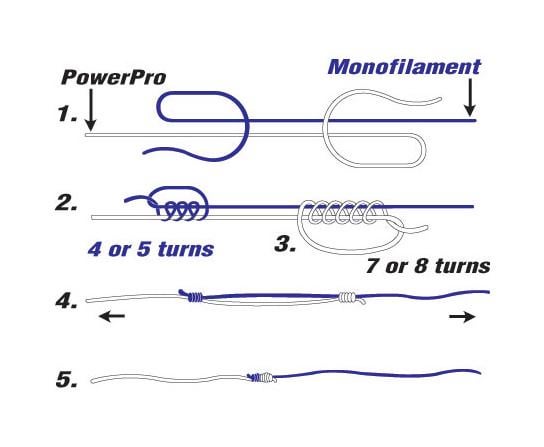
Double Uni Knot
The Double Uni knot is perfect for joining braided line to a fluorocarbon or monofilament leader. It is strong and maintains good line strength.
- Overlap the two lines
- Tie a uni knot with one line around the other
- Repeat with the other line
- Pull both knots together tightly
Fg Knot
The FG knot is the best choice for connecting braided line to a leader. It is very slim and strong. This knot slides smoothly through rod guides.
| Knot | Strength | Ease of Tying | Best Use |
| Palomar Knot | High | Easy | Hooks, lures |
| Improved Clinch Knot | Medium | Easy | Hooks, lures |
| Uni Knot | High | Medium | Hooks, terminal tackle |
| Double Uni Knot | High | Medium | Line to leader |
| FG Knot | Very High | Hard | Line to leader |
Step-by-step Knot Tying
Tying knots correctly is key when using braided fishing line. It keeps your gear strong and reliable. This guide shows clear steps for three popular knots.
Follow each step carefully to tie knots that hold well and resist slipping. Practice will help you get faster and more precise.
Palomar Knot Guide
The Palomar knot is strong and simple. It works well with braided line because it keeps the line from weakening.
- Double about six inches of line and pass it through the hook eye.
- Tie a loose overhand knot with the doubled line.
- Pass the loop over the hook or lure.
- Pull on both ends to tighten the knot close to the hook eye.
- Trim the tag end close to the knot.
Improved Clinch Knot Guide
This knot is popular for braided line and easy to tie. It adds an extra twist for better grip and strength.
| Step | Action |
|---|---|
| 1 | Thread the line through the hook eye. |
| 2 | Wrap the tag end around the standing line 5 to 7 times. |
| 3 | Pass the tag end through the small loop near the eye. |
| 4 | Thread the tag end through the big loop just created. |
| 5 | Wet the knot and pull tight. |
| 6 | Trim the tag end close to the knot. |
Uni Knot Guide
The Uni knot is versatile and holds well on braided lines. It is easy to adjust before tightening.
- Pass the line through the hook eye and double back.
- Make a loop by laying the tag end alongside the doubled line.
- Wrap the tag end around the doubled line and through the loop 6 times.
- Moisten the knot and pull the tag end to tighten the coils.
- Slide the knot to the hook eye and pull the standing line to secure.
- Cut the tag end close to the knot.
Tips For Stronger Knots
Tying strong knots is key for fishing with braided lines. Weak knots can cause lost fish and tackle.
Simple techniques help improve knot strength. Focus on line preparation, moistening, and tightening.
Line Preparation
Prepare your braided line before knot tying. Clean and straighten the line for better grip.
- Cut the line with sharp scissors or a blade.
- Remove any frayed or damaged sections.
- Straighten the line to avoid twists.
- Use a light abrasive to roughen slippery surfaces slightly.
Moistening The Knot
Moistening the knot before tightening reduces friction. It helps the knot slide and tighten evenly.
Use fresh water or saliva to moisten. Avoid oils or lotions as they weaken the line.
| What to Use | What to Avoid |
|---|---|
| Fresh water | Oils and lotions |
| Saliva | Dry knots |
Proper Tightening Techniques
Tighten the knot carefully to keep its strength. Pulling too fast or unevenly can weaken it.
- Hold the knot firmly with one hand.
- Pull the tag end slowly and steadily.
- Keep tension on the main line while tightening.
- Ensure the knot coils neatly without overlapping.
- Trim excess tag ends close to the knot.

Credit: www.reddit.com
Common Mistakes To Avoid
Using the right knot for braided fishing line is important. Many anglers make simple mistakes that weaken their setup. Avoid these errors to keep your line strong and secure.
Below are common mistakes to watch for. Fixing these will improve your fishing experience.
Overtightening
Tightening the knot too much can damage braided line fibers. This weakens the line and may cause it to break easily.
- Pull the knot firmly but gently.
- Stop tightening once the knot feels secure.
- Avoid using pliers or tools that add extra pressure.
Incorrect Threading
Threading the line the wrong way through the knot loops reduces its strength. Make sure the line follows the knot pattern exactly.
| Common Threading Error | Effect |
|---|---|
| Skipping loops | Knot slips under tension |
| Twisting line | Weakens the line fibers |
| Uneven loop size | Causes knot to fail |
Ignoring Line Type
Different braided lines have different characteristics. Using a knot not suited to your line type lowers knot strength.
- Check the manufacturer’s knot recommendations.
- Use knots proven strong for braided lines, like the Palomar or Double Uni.
- Practice tying knots with your specific line before fishing.
Testing Knot Strength
Choosing the best knot for braided fishing line is key for strong fishing. Testing knot strength helps you find a knot that holds well under pressure.
Strong knots keep your line from breaking and help catch more fish. You can test knots at home to see how well they work with braided line.
Diy Strength Tests
You can test knot strength with simple tools. Use a scale or weight to see how much force your knot can hold before breaking.
Tie the knot, then pull on the line slowly. Note the weight where the knot fails or the line breaks.
- Tie the knot tightly and wet it before testing.
- Attach a scale or hang weights from the knot.
- Pull steadily to measure the breaking point.
- Repeat the test several times for accuracy.
- Compare different knots to find the strongest.
When To Replace Your Knot
Replace your knot if it shows signs of wear. A weak knot can break easily and lose your catch.
Look for frayed or damaged line near the knot. Also, retie knots after long fishing trips or heavy use.
- Knot slips or loosens during use.
- Line near the knot looks worn or frayed.
- You experience frequent line breaks at the knot.
- The knot feels stiff or damaged after use.
- It has been tied for many fishing trips.

Credit: www.wikihow.com
Choosing The Right Knot For Your Setup
Choosing the best knot for braided fishing line can improve your fishing success. The right knot keeps your line strong and secure.
This guide helps you pick the best knot based on your fish species and rod and reel type.
Matching Knot To Fish Species
Different fish species need knots that match their fight style and size. Strong, slippery fish need knots that hold tight and resist slipping.
- Pike and muskie: Use knots that resist sharp teeth, like the Palomar knot.
- Trout and bass: Use knots that keep line strength, such as the Improved Clinch knot.
- Saltwater species: Use knots that handle heavy loads and saltwater, like the Double Uni knot.
Considering Rod And Reel Type
| Rod Type | Reel Type | Best Knot |
| Spinning Rod | Spinning Reel | Palomar Knot |
| Baitcasting Rod | Baitcasting Reel | Double Uni Knot |
| Fly Rod | Fly Reel | Improved Clinch Knot |
Some knots work better with certain rods and reels. For example, the Palomar knot is easy to tie on spinning setups.
Frequently Asked Questions
What Knot Is Best For Braided Line?
The Palomar knot is highly recommended for braided fishing line. It is strong, reliable, and easy to tie. This knot maintains nearly 100% of the line’s original strength. It is perfect for anglers who want a secure connection with minimal slippage.
Why Is The Palomar Knot Preferred For Braid?
The Palomar knot is preferred because it is simple and effective. Its double-overhand design ensures a strong hold on slick braided lines. It minimizes line slippage and maintains line strength. This knot is great for various fishing situations and is trusted by many anglers.
Can You Use A Uni Knot With Braided Line?
Yes, the Uni knot works well with braided line. It is versatile and creates a strong connection. The Uni knot is easy to tie and holds securely. Many anglers trust this knot for its reliability. It is suitable for various fishing techniques and conditions.
How Do You Tie A Palomar Knot?
To tie a Palomar knot, double the line and pass it through the hook eye. Tie a loose overhand knot. Pass the loop over the hook, then tighten. This simple knot ensures strength and reliability, making it a popular choice for braided lines.
Conclusion
Choosing the best knot for braided fishing line can make a big difference. Strong knots hold better and help catch more fish. Try different knots like the Palomar or the Double Uni to see what works for you. Practice tying them until you feel confident.
Good knots keep your line from slipping or breaking. Remember, simple and strong knots often work best. Keep your fishing fun and successful by using the right knot every time.