If you want to catch more trout, the right fishing line setup is key. Setting up your line correctly can make the difference between a quick bite and a long, frustrating wait.
You might think it’s complicated, but with a few simple steps, you’ll be ready to fish like a pro. This guide will show you exactly how to set up your line for trout fishing, helping you feel confident and prepared next time you head out.
Keep reading, and you’ll discover tips that can improve your catch and make your fishing trips more enjoyable.

Credit: www.youtube.com
Choosing The Right Line
Picking the right fishing line is key for trout fishing success. The line affects how you cast, feel bites, and land fish. This guide helps you choose the best line type and weight for trout.
Understanding the differences between monofilament, fluorocarbon, and braided lines will improve your fishing experience. Also, consider the right line weight and other factors that impact your choice.
Monofilament Vs. Fluorocarbon Vs. Braided
Monofilament lines are stretchy and easy to handle. Fluorocarbon lines are less visible in water and sink faster. Braided lines are very strong and thin but more visible.
- Monofilament:Good for beginners, floats well, and is soft on reels.
- Fluorocarbon:Hard to see underwater, good abrasion resistance, sinks well.
- Braided:Strong and thin, has little stretch, best for heavy cover fishing.
Line Weight For Trout
| Line Weight (lb) | Best Use | Advantages |
|---|---|---|
| 2-4 lb | Small trout in clear water | Less visible, more natural presentation |
| 4-6 lb | Average trout fishing | Good balance of strength and stealth |
| 6-8 lb | Large trout or heavy cover | Extra strength to avoid breaks |
Factors Affecting Line Choice
Several factors can change which line works best. Water clarity, fishing location, and the type of lure or bait affect your choice. Also think about weather and rod type.
- Clear water needs a less visible line like fluorocarbon.
- Weedy or rocky areas require stronger, abrasion-resistant lines.
- Light lures work better with lighter lines for better action.
- Wind and weather can affect casting and line control.
- Your rod’s strength and action must match the line weight.
Selecting The Best Rod And Reel
Choosing the right rod and reel is key for trout fishing success. The right gear helps you cast better and catch more fish.
This guide explains how to match your rod to your line, the types of reels for trout fishing, and how gear ratios and drag systems work.
Matching Rod To Line
Choosing a rod that matches your fishing line improves casting and control. Light rods work well with light lines for better sensitivity.
- Use a 4-6 weight rod with a 4-6 weight line for small to medium trout.
- Heavier rods are better for bigger trout or strong currents.
- Match rod length to your fishing style: 6-7 feet rods are versatile.
Reel Types For Trout Fishing
Different reels suit various trout fishing methods. Spinning reels are easy to use and good for beginners.
Baitcasting reels offer better control but need more skill. Fly reels are for fly fishing and match the rod and line weight closely.
| Reel Type | Best Use | Skill Level |
| Spinning Reel | General trout fishing | Beginner to intermediate |
| Baitcasting Reel | Precise casting and control | Intermediate to expert |
| Fly Reel | Fly fishing with weighted lines | Intermediate to expert |
Gear Ratios And Drag Systems
Gear ratio shows how fast the reel retrieves line. A higher ratio means faster retrieval but less power.
The drag system controls how much resistance the fish feels when pulling the line. Smooth drag helps avoid line breaks.
- Choose a gear ratio around 5:1 for balanced speed and power.
- Look for reels with adjustable, smooth drag systems.
- Test the drag before fishing to ensure it works well.
Setting Up The Line
Setting up your fishing line correctly is key to a good trout fishing experience. A well-prepared line helps you cast smoothly and catch more fish. This guide covers how to attach the line to the reel, spool it properly, and add leaders and tippets.
Each step ensures your setup works well in different water conditions. Follow these simple instructions to get your line ready before you head out.
Attaching The Line To The Reel
Start by tying the fishing line securely to the reel spool. Use a strong knot like the arbor knot for a firm hold. This prevents the line from slipping during casting or reeling in fish.
After tying the knot, trim any excess line to avoid tangles. Make sure the line is tight on the spool before you begin spooling.
Proper Spooling Techniques
Spooling the line correctly stops twists and tangles. Apply light pressure on the line as you wind it onto the reel. Keep the line tight and even across the spool.
- Place the spool of line on a flat surface or have a friend hold it.
- Attach the line to the reel with a secure knot.
- Hold the line firmly to maintain tension.
- Turn the reel handle slowly to wind the line evenly.
- Fill the spool until it is about 1/8 inch from the edge.
Adding Leaders And Tippets
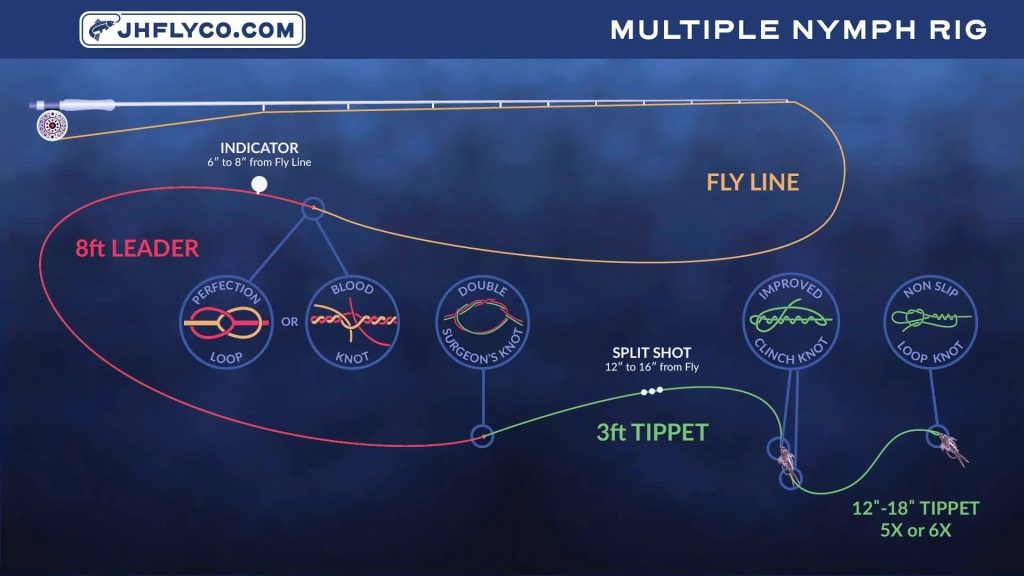
Leaders and tippets connect your main line to the fly or lure. They help present the bait naturally and reduce line visibility in water.
| Component | Purpose | Typical Length |
| Leader | Connects main line to tippet | 7 to 9 feet |
| Tippet | Connects leader to fly or lure | 2 to 4 feet |
Tie the leader to the line using a strong knot like the double surgeon knot. Attach the tippet to the leader with a similar knot. Check all knots for tightness before fishing.
Knot Tying Essentials
Tying the right knot is key for trout fishing success. A strong knot keeps your line and lure secure.
Learn a few simple knots to improve your fishing setup. Each knot has its own use and strength.
Improved Clinch Knot
The Improved Clinch Knot is popular for attaching hooks or lures. It is strong and easy to tie.
Wrap the line around the hook eye five to seven times. Pass the tag end through the loop and tighten.
- Pass line through hook eye
- Wrap line 5-7 times around standing line
- Thread tag end through small loop
- Pass tag end through big loop
- Pull tight and trim excess
Palomar Knot
The Palomar Knot is very strong and works well with braided lines. It keeps line strength high.
Double the line and pass it through the hook eye. Tie an overhand knot and pass the hook through the loop.
- Double 6 inches of line
- Pass loop through hook eye
- Tie loose overhand knot
- Pass hook through loop
- Pull line ends to tighten
Loop Knots For Lures
Loop knots give your lure more movement. This helps attract trout by letting the lure swim naturally.
The Non-Slip Loop Knot is a good choice. It creates a strong loop that allows free lure action.
- Make an overhand knot in the line
- Pass tag end through lure eye
- Thread tag end back through overhand knot
- Wrap tag end around standing line 4-5 times
- Pass tag end back through overhand knot
- Pull to tighten and trim excess
Adjusting Line For Different Conditions
Choosing the right fishing line is key for trout fishing success. Different water and weather conditions need different line setups. Adjusting your line helps you catch more trout and fish smarter.
Below are tips for setting your line in clear or murky water, fast or slow currents, and cold or warm water.
Clear Vs. Murky Water
Water clarity changes how trout see your line. In clear water, use thinner and lighter-colored lines. In murky water, thicker and brighter lines work better to keep control.
- Clear water: Use light green, clear, or fluorocarbon line
- Murky water: Use bright colors like orange or chartreuse
- Clear water: Choose line diameter 4-6 lb test for less visibility
- Murky water: Use 6-8 lb test for better strength and control
Fast Vs. Slow Currents
Fast currents need strong lines to hold your bait or lure in place. Slow currents allow lighter lines that drift naturally. Match your line strength to the water speed.
| Current Type | Line Strength | Line Type | Reason |
|---|---|---|---|
| Fast Current | 8-10 lb test | Braided or monofilament | More strength and less stretch to hold bait |
| Slow Current | 4-6 lb test | Fluorocarbon or monofilament | Lighter line for natural bait drift |
Cold Vs. Warm Water Settings
Water temperature changes trout behavior and line choice. Cold water trout are less active, so use thinner, less visible lines. Warm water trout are more aggressive and line choice can focus on strength.
- Use lighter line (2-4 lb test)
- Choose fluorocarbon for low visibility
- Use longer leaders for delicate presentation
- Use stronger line (6-8 lb test)
- Monofilament works well for stretch and shock absorption
- Shorter leaders can help with quick strikes
Maintaining Your Line
Taking care of your fishing line helps it last longer. A well-maintained line works better for trout fishing.
Regular checks and cleaning keep your line strong and ready for your next trip.
Checking For Wear And Tear
Look closely at your line before each fishing trip. Check for nicks, cracks, or frays that can cause breaks.
Pay special attention to spots near the rod guides and knots. These areas often weaken first.
- Run the line through your fingers slowly
- Look for any rough or thin spots
- Inspect knots for signs of damage
- Check the line near the reel for wear
Cleaning And Storage Tips
Clean your line after fishing to remove dirt and salt. This stops damage and keeps the line flexible.
Store your line in a cool, dry place away from sunlight. Avoid high heat and moisture to prevent weakening.
- Rinse the line with fresh water after use
- Dry the line before storing it
- Keep the line on the reel or spool loosely
- Store away from direct sunlight and heat
When To Replace Your Line
Replace your fishing line if it shows signs of damage or age. Old line can break easily and lose strength.
Also change the line after a big catch or snag. This prevents unexpected breaks during your next fishing session.
- Replace line if it has many frays or cuts
- Change line if it feels brittle or stiff
- Swap line after heavy use or long storage
- Use fresh line for important fishing trips
Tips For Casting And Control
Setting up a line for trout fishing requires good casting and control skills. Proper line handling helps you cast farther and more accurately.
Control over your line gives you better chances to catch trout without losing them. Use these tips to improve your fishing experience.
Line Management Techniques
Good line management helps avoid tangles and improves casting distance. Keep your line neat and organized on your reel.
Check your line often for knots or twists before casting. Use your fingers to guide the line smoothly during casting.
- Keep the line tight when reeling in
- Use your fingers to control slack line
- Practice smooth casting motions
Reducing Line Twist
Line twist can cause tangles and reduce casting quality. It happens when the line spins too much on the reel.
Use swivel connectors to reduce twist. Let the line hang freely before casting to avoid extra spins.
- Use a swivel to connect the line and lure
- Keep the spool level when casting
- Let the line untwist by holding it loosely
Controlling Drag During Fight
Drag control helps you tire the fish without breaking the line. Adjust the drag setting on your reel before fishing.
Keep steady pressure on the fish by controlling your drag. Let the fish pull line when needed, then reel in carefully.
- Set drag tight enough to hold the fish
- Loosen drag if the fish pulls hard
- Use smooth drag settings to avoid line breaks

Credit: flylifecanada.ca

Credit: www.reddit.com
Frequently Asked Questions
What Gear Is Needed For Trout Fishing Setup?
For trout fishing, you need a spinning rod and reel, light line, and small hooks. Use a line with 2-6 lb test. Include split shots, bobbers, and various baits like worms or artificial lures. A tackle box will help organize your gear efficiently.
How To Choose The Right Fishing Line?
Select a line based on water clarity and trout size. For clear water, use a fluorocarbon line. For murky conditions, monofilament works well. The line strength should match your targeted trout size, generally 2-6 lb test is ideal.
What’s The Best Bait For Trout Fishing?
Effective baits include worms, PowerBait, and small lures. Live worms are versatile and attract various trout species. PowerBait is excellent for stocked trout. Small lures like spinners mimic prey and entice strikes. Choose based on conditions and trout preferences.
How To Adjust Line Depth Effectively?
Use a bobber to control your bait’s depth. Slide the bobber up or down the line to change depth. Ensure your bait drifts naturally in the water. Adjust based on trout activity and water conditions to optimize your catch rate.
Conclusion
Setting up a line for trout fishing takes practice and patience. Choose the right line and knots for better control. Make sure your line is clean and free of tangles. Adjust your setup based on water and weather conditions. A good line helps you cast smoothly and catch more fish.
Keep practicing these steps to improve your fishing skills. Enjoy your time by the water and stay patient. Trout fishing is fun and rewarding with the right setup.