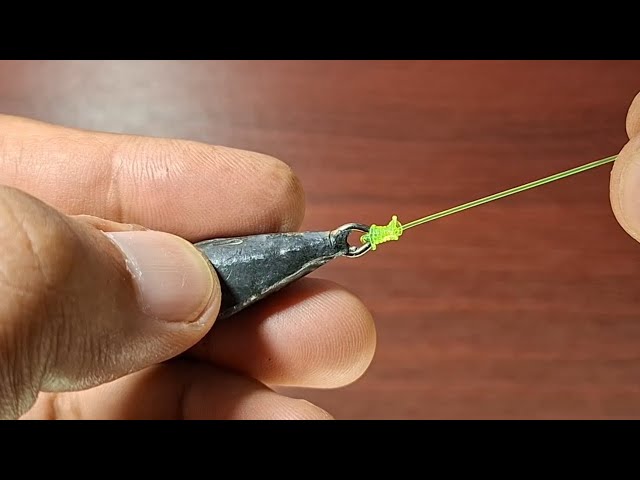
If you want to catch more fish, knowing how to tie a sinker onto your fishing line is a skill you can’t afford to miss. A properly attached sinker helps your bait reach the right depth and stay in place, making your fishing trips more successful.
In this guide, you’ll learn simple, step-by-step instructions to tie a sinker quickly and securely. Keep reading, and you’ll be ready to cast your line with confidence every time.

Credit: www.youtube.com
Choosing The Right Sinker
Sinkers help your fishing line stay in place and reach the right depth. Picking the right sinker makes fishing easier and more effective.
Different sinkers work best in different water types and fishing styles. Learn about the common types and what to think about before choosing one.
Types Of Sinkers
There are many sinker shapes and weights. Each type suits a specific fishing need or water condition.
- Split Shot:Small and round, easy to add or remove.
- Egg Sinkers:Oval-shaped, slide on the line for natural bait movement.
- Bank Sinkers:Teardrop shape, good for strong currents.
- Pyramid Sinkers:Pointed shape, holds well in sand or mud.
- Bullet Sinkers:Slim and pointed, used for fishing in weeds.
Factors To Consider
Choose sinkers based on water type, current speed, and fishing depth. Size and weight also matter for your fishing rod and line strength.
| Factor | Reason |
| Water Type | Freshwater or saltwater affects sinker choice |
| Current Strength | Stronger currents need heavier sinkers |
| Fishing Depth | Deeper water may require bigger sinkers |
| Rod and Line Strength | Match sinker weight to avoid breaking line |
| Bait Type | Some sinkers allow natural bait movement |
Preparing The Fishing Line
Tying a sinker onto a fishing line starts with good preparation. Getting the line ready helps you fish better.
Check your fishing line carefully before adding the sinker. This keeps your gear strong and safe.
Selecting The Line
Choose a fishing line that fits your fishing style. Thicker lines hold bigger fish but are less flexible.
Thin lines work well for small fish and clear water. Pick a line with the right strength for your sinker and fish.
Checking For Wear And Tear
Look closely at your line for any cuts or weak spots. Damaged lines can break when you cast or catch fish.
Replace the line if you find any signs of wear. A strong line helps keep your sinker and bait in place.
Basic Knot Techniques
Tying a sinker onto a fishing line is an important skill for fishing. Knowing how to tie knots properly keeps your sinker secure. This helps you fish better and avoid losing tackle.
This guide covers basic knot techniques for attaching a sinker. It also explains common fishing knots you can use.
Understanding Knots
A knot joins the fishing line to the sinker or hook. A strong knot holds tight and does not slip. It also should not weaken the line.
Good knots are easy to tie and quick to learn. They help you fish with confidence and reduce lost gear.
- Knots should be tight and secure
- Knots must not damage the line
- Practice knots before fishing
Common Fishing Knots
There are many knots for fishing. Some knots work better for sinkers. Here are three popular knots to tie a sinker to your line.
- Improved Clinch Knot:Strong and easy to tie. Good for most sinkers.
- Palm Knot:Simple and fast. Works well with heavier sinkers.
- Uni Knot:Versatile and reliable. Can be used for sinkers and hooks.

Credit: jimswansonmanofthewoods.wordpress.com
Attaching The Sinker
Attaching a sinker to your fishing line helps it reach the right depth. The sinker adds weight, which improves casting distance and bait placement.
Follow simple steps to position and tie the sinker securely. This ensures your fishing setup works well and stays strong in water.
Positioning The Sinker
Place the sinker at the right spot on your fishing line. The position depends on the type of fishing and water depth.
- Slide the sinker above the hook to keep bait near the bottom.
- Use a small stopper knot or bead to hold the sinker in place.
- Adjust the sinker’s position based on how deep you want your bait.
- Make sure the sinker can move freely if using a slip sinker rig.
Tying The Knot
Tying the sinker firmly to the line prevents it from slipping off. Use a strong knot that is easy to tie and holds well.
| Knot Type | How to Tie |
| Improved Clinch Knot | Thread line through sinker eye, wrap line 5 times, pass end through loop, tighten. |
| Palisade Knot | Form a loop, pass line end around standing line, pull tight to secure sinker. |
| Uni Knot | Make a loop, wrap line around both ends 6 times, pull tight, slide knot to sinker. |
Testing The Setup
After tying a sinker to your fishing line, it is important to test the setup. This ensures your knot is secure and the sinker stays in place while fishing.
Proper testing helps avoid losing your sinker or fish due to a weak knot or unstable setup.
Inspecting The Knot
Look closely at the knot to make sure it is tight and neat. A good knot has no loose ends or gaps.
Check that the wraps and loops are smooth and firmly pulled. Loose knots can slip or break easily.
- Make sure the knot sits close to the sinker eye.
- No frayed or damaged line near the knot.
- Knot should not twist or bunch up.
Ensuring Stability
Pull the line gently but firmly to test if the sinker stays in place. It should not slide or move along the line.
Try shaking the line to see if the knot loosens or the sinker shifts. A stable setup resists these movements.
- Pull the line with steady pressure.
- Observe if the sinker moves on the line.
- Repeat the test a few times for safety.

Credit: www.youtube.com
Adjusting For Conditions
Tying a sinker onto your fishing line changes depending on the conditions. Adjusting your setup helps you catch more fish.
Water depth and current strength affect how your sinker works. Learn how to change your line for these factors.
Modifying For Water Depth
Water depth affects how far your sinker needs to drop. Use longer leaders for deep water to reach the bottom.
In shallow water, keep the sinker close to the hook. This helps your bait stay near the fish.
- For deep water, use a longer leader line
- Shorten the leader in shallow water
- Choose a heavier sinker for deep water to reach bottom quickly
- Use a lighter sinker in shallow water to avoid scaring fish
Adjusting For Current
Strong currents move your sinker and bait faster. Use heavier sinkers to hold your position in fast water.
In slow currents, lighter sinkers let your bait move naturally. Adjust your setup to match the flow speed.
- Use heavy sinkers in strong currents
- Choose lighter sinkers in slow currents
- Check how your bait moves and adjust sinker weight
- Try different weights to find what works best
Troubleshooting Common Issues
Tying a sinker onto a fishing line can sometimes cause problems. These issues can make fishing frustrating.
Knowing how to fix common problems helps you fish better and enjoy your time on the water.
Knot Slippage
Knot slippage happens when the knot loosens and the sinker moves down the line. This can cause lost fish or tackle.
To stop knot slippage, wet the line before tightening the knot. This helps the knot grip the line better.
- Use the right knot for your line type, like the improved clinch knot.
- Pull the knot tight and check it before fishing.
- Trim extra tag ends close to the knot to avoid snags.
Line Tangles
Line tangles happen when the line twists or loops around itself. Tangled lines make casting hard and slow you down.
To reduce line tangles, keep the line straight and avoid over-winding your reel spool.
- Use a swivel to reduce line twist.
- Check your line for twists before tying the sinker.
- Cast gently to avoid sudden loops and tangles.
Frequently Asked Questions
How Do You Tie A Sinker To A Fishing Line?
To tie a sinker, thread the line through the sinker’s hole. Use a strong knot like the improved clinch knot. Tighten firmly to secure the sinker. This ensures it stays in place while fishing.
What Type Of Knot Is Best For Sinkers?
The improved clinch knot is best for attaching sinkers. It is strong, reliable, and easy to tie. This knot prevents slippage and holds the sinker securely during casting and retrieval.
Can I Use Any Fishing Line To Tie A Sinker?
Yes, you can use monofilament, fluorocarbon, or braided lines. Ensure the line strength matches your fishing needs. Choose a line that works well with your knot type for best results.
How Tight Should The Knot Be When Tying A Sinker?
The knot should be tight enough to hold the sinker firmly. Avoid over-tightening to prevent line damage. A snug, secure knot ensures the sinker stays attached while fishing.
Conclusion
Tying a sinker onto a fishing line is simple and useful. It helps your bait sink to the right depth. Use the right knot to keep it tight and secure. Practice a few times to get comfortable. This small skill makes fishing more effective and fun.
Try it out on your next fishing trip. You’ll see how much easier it becomes to catch fish. Keep your line strong and your sinker steady for best results. Happy fishing!