When you’re setting up your tent, getting the guy ropes right can make all the difference between a shaky shelter and a sturdy, safe space. If you’re unsure how to tie tent guy ropes properly, you’re not alone.
But mastering a few simple knots will keep your tent secure, even in windy weather. In this guide, you’ll learn easy steps to tie strong, reliable guy ropes that hold fast every time. Stick with me, and you’ll soon feel confident that your tent won’t let you down when it matters most.
Choosing The Right Guy Rope
Choosing the right guy rope helps keep your tent stable in wind and rain. The rope must be strong, the right length, and easy to see at night.
This guide covers materials, thickness, length, and visibility options for guy ropes.
Materials And Thickness
Guy ropes come in different materials like nylon, polyester, and polypropylene. Nylon stretches more, which can loosen the tent. Polyester and polypropylene stretch less and hold tension better.
- Thicker ropes are stronger but heavier to carry.
- Thin ropes save weight but may not hold well in strong winds.
- Look for ropes with a diameter of 4 to 6 mm for good strength and weight balance.
Length Considerations
Choose a rope length based on your tent size and setup area. Longer ropes give more flexibility but can tangle.
| Length | Use Case |
| 3 to 5 meters | Small tents or close anchor points |
| 5 to 7 meters | Medium tents with some space around |
| 7 meters or more | Large tents or uneven terrain |
Reflective Vs Non-reflective
Reflective ropes glow in the dark when light hits them. They help prevent tripping at night.
- Reflective ropes increase safety on busy campsites.
- Non-reflective ropes are less visible but often cheaper.
- Choose reflective ropes for night camps or areas with many people.

Credit: www.amazon.ca
Essential Knots For Guy Ropes
Tying guy ropes correctly keeps your tent stable in wind and rain. Knowing the right knots helps you adjust tension and secure the ropes easily.
This guide covers three important knots used for tent guy ropes. Each knot has a special use and is simple to learn.
Taut-line Hitch
The taut-line hitch is an adjustable knot. It holds tension on the guy rope and slides to tighten or loosen the rope.
- Wrap the rope around the stake or anchor point.
- Make two wraps inside the loop near the standing line.
- Make one wrap outside the loop below the first wraps.
- Pull the knot tight. It should slide when pulled the right way.
Bowline Knot
The bowline knot makes a fixed loop at the end of a rope. It is strong and easy to untie after use.
| Step | Action |
|---|---|
| 1 | Make a small loop leaving enough rope for the loop size. |
| 2 | Pass the rope end through the loop from the bottom. |
| 3 | Wrap the end around the standing rope and back down through the loop. |
| 4 | Pull tight to secure the loop. The knot will not slip. |
Clove Hitch
The clove hitch is good for attaching guy ropes to poles or stakes. It is simple and quick to tie.
To tie a clove hitch:
- Place the rope over the pole, crossing the working end over the standing part.
- Wrap the rope around the pole again below the first wrap.
- Slip the working end under the second wrap.
- Pull both ends to tighten the knot firmly around the pole.
Preparing The Tent And Rope
Tying tent guy ropes is important for stability. Proper setup keeps your tent secure in windy conditions.
Before starting, ensure you have all necessary materials. This includes ropes, tent stakes, and a sturdy tent.
Locating Anchor Points
Finding good anchor points is crucial for stability. Look for strong and stable ground areas.
Choose spots away from obstacles like rocks and roots. Ensure the ground is firm and not too soft.
- Look for flat areas
- Avoid areas with loose soil
- Use natural features for additional support
Attaching Rope To Tent
Securely attach the rope to your tent. Use the designated loops or rings on the tent fabric.
Make sure the knot is tight. This prevents the rope from slipping during use.
- Use a bowline knot for easy adjustments
- Ensure ropes are not tangled
- Keep ropes even in length
Checking Rope Condition
Inspect the rope for any signs of wear. Frayed or damaged ropes can fail under stress.
Replace any rope that looks weak. A strong rope ensures the safety of your tent setup.
- Look for frayed sections
- Check for knots or tangles
- Test the rope by pulling it tightly
Step-by-step Guide To Tying Guy Ropes
Tying guy ropes correctly keeps your tent stable in wind and rain. This guide shows simple steps to secure your ropes well.
Follow each part carefully to make your tent strong and safe during your outdoor stay.
Securing The Rope To The Tent
Attach the guy rope to the tent’s guy line or loop firmly. Use a strong knot to keep it from slipping.
- Pass the rope through the tent’s guy loop.
- Tie a bowline knot to make a fixed loop.
- Pull tight to remove slack.
- Double the knot for extra security.
Anchoring The Rope To The Ground
Secure the other end of the rope to the ground using a peg or stake. This holds your tent steady against wind.
| Anchor Type | Use |
| Metal Tent Peg | Firm soil and grass |
| Snow Stake | Snow and soft ground |
| Sand Anchor | Beach or loose sand |
| Rock or Heavy Object | No soil or hard surfaces |
Adjusting Tension For Stability
Adjust the rope tension to keep the tent firm but not too tight. Proper tension prevents damage and improves stability.
- Loosen the rope slightly if it pulls the tent fabric too hard.
- Tighten the rope if it sags or is loose.
- Check tension after strong wind or rain.
- Use a tensioner or knot to lock the rope in place.
Tips For Maintaining Guy Rope Tension
Keeping your tent guy ropes tight is key to a stable shelter. Loose ropes can cause the tent to collapse or move in the wind.
Here are some simple tips to help you keep your guy ropes tight during your camping trip.
Regular Checks During Camping
Check your guy ropes often to keep them firm. Wind and movement can loosen them over time.
Look for any signs of wear or damage to the ropes and knots.
- Inspect ropes every few hours
- Tighten knots if they feel loose
- Replace frayed or worn ropes quickly
Adjusting For Weather Changes
Weather changes can affect rope tension. Heat can stretch ropes, and cold can make them stiff.
Rain can also make ropes slippery and weaker. Adjust your ropes to stay tight in all conditions.
- Loosen ropes slightly in hot weather to prevent damage
- Tighten ropes after rain to remove slack
- Check ropes before storms and strong winds
Avoiding Rope Slippage
Rope slippage can make your tent unstable. Use knots that hold tight and do not slip easily.
Secure the rope ends and avoid smooth or wet surfaces that cause slipping.
- Use knots like the taut-line hitch or bowline
- Wrap ropes around anchors tightly
- Check knots regularly and retie if needed

Credit: www.amazon.ca
Common Mistakes To Avoid
Tying tent guy ropes might seem easy, but small mistakes cause big problems. These errors can make your tent unsafe or unstable.
Learn the common mistakes to avoid when securing your guy ropes. This will help keep your tent strong and safe in all weather.
Using Incorrect Knots
Using the wrong knot can cause the rope to slip or come loose. Not all knots hold well under tension or outdoor conditions.
Choose knots made for camping like the taut-line hitch or bowline. Avoid simple knots like the square knot that can fail.
- Taut-line hitch adjusts tension and holds tight
- Bowline creates a strong fixed loop
- Avoid knots that slip or loosen easily
Overtightening Or Loosening
Tightening guy ropes too much can damage tent fabric or poles. Loose ropes make the tent unstable and noisy in wind.
Adjust ropes to keep firm tension without straining the tent. Check and re-tighten ropes as the ground or weather changes.
- Too tight ropes risk tearing or bending poles
- Too loose ropes allow tent to flap in wind
- Check tension regularly during your stay
Ignoring Anchor Stability
Anchors must hold guy ropes firmly in place. Soft or loose ground can cause stakes to pull out easily.
Place stakes deep in firm soil. Test anchors by pulling ropes before finishing your setup. Use rocks or logs if stakes fail.
- Use long stakes for better grip
- Drive stakes at an angle away from the tent
- Reinforce anchors if ground is soft or sandy
Additional Gear For Guy Rope Setup
Setting up tent guy ropes needs more than just ropes and knots. Extra gear helps keep your tent stable and safe. This gear makes tying and adjusting guy ropes easier and stronger.
Using the right tools can protect your tent and keep it steady in wind or rain. The following gear is important for a good guy rope setup.
Types Of Stakes And Pegs
Stakes or pegs hold your guy ropes firmly in the ground. Different types work better in different soils and weather. Choose the right peg to stop your tent from moving.
- Metal Stakes:Strong and durable, good for hard or rocky ground.
- Plastic Pegs:Light and easy to carry, best for soft soil.
- Wooden Pegs:Eco-friendly and easy to find in nature but less strong.
- V-shaped Stakes:Hold better in loose or sandy soil.
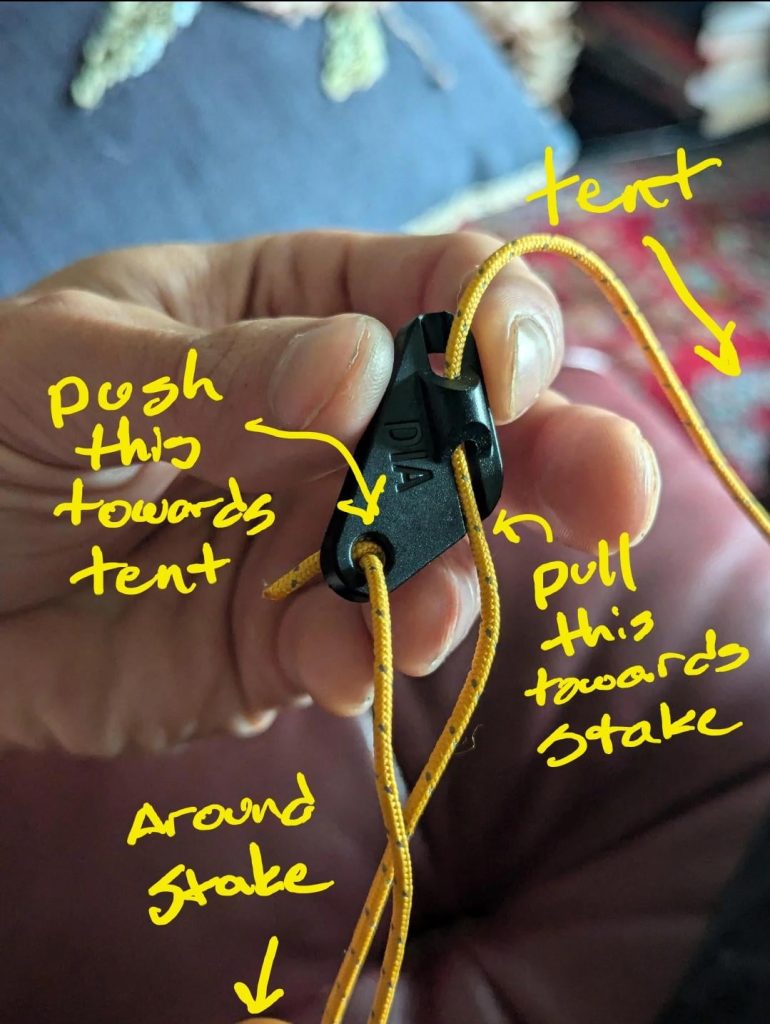
Rope Tensioners And Adjusters
Rope tensioners help you make your guy ropes tight and keep them from loosening. They save time and effort when setting up or changing rope length. Adjusters keep ropes firm even in wind.
- Plastic or Metal Tensioners:Slide to tighten or loosen rope quickly.
- Cam Locks:Lock rope in place with one hand.
- Figure-Eight Adjusters:Easy to use and hold tension well.
- Mini Pulleys:Help adjust tension with less force.
Using Guy Line Reflectors
Guy line reflectors make your tent ropes visible at night. They prevent tripping and damage. Reflectors attach easily and shine when light hits them.
- Bright colors and reflective strips improve night visibility.
- Clip-on reflectors attach to rope without slipping.
- Some reflectors also add small lights for extra safety.
- Place reflectors at eye level or on stakes to catch attention.

Credit: www.reddit.com
Frequently Asked Questions
How Do You Tie Tent Guy Ropes Securely?
To tie tent guy ropes securely, use a taut-line hitch knot. It allows easy adjustment and holds tension well. Ensure the rope is tight and anchored to a sturdy peg or tree. This keeps the tent stable in wind and bad weather.
What Is The Best Knot For Tent Guy Ropes?
The taut-line hitch is the best knot for tent guy ropes. It is adjustable, easy to tie, and holds tension firmly. This knot allows you to tighten or loosen the rope without untying it, ensuring your tent stays stable.
How Tight Should Tent Guy Ropes Be?
Tent guy ropes should be tight enough to keep the tent stable but not so tight that they damage the fabric. Aim for firm tension that prevents sagging but allows slight give to absorb wind movement.
Can You Use Any Rope For Tent Guy Ropes?
Not all ropes are suitable for tent guy ropes. Use durable, weather-resistant ropes like nylon or polyester. These materials resist stretching, fraying, and moisture, ensuring your tent stays secure in various weather conditions.
Conclusion
Tying tent guy ropes right keeps your shelter strong and safe. Use simple knots that hold tight and stay secure. Check the ropes often to avoid loose or tangled lines. Practice tying ropes before your trip for confidence outdoors. Strong guy ropes help your tent stand firm in wind and rain.
Follow these steps to protect your camping spot easily. Enjoy your time outside with a steady, well-set tent.