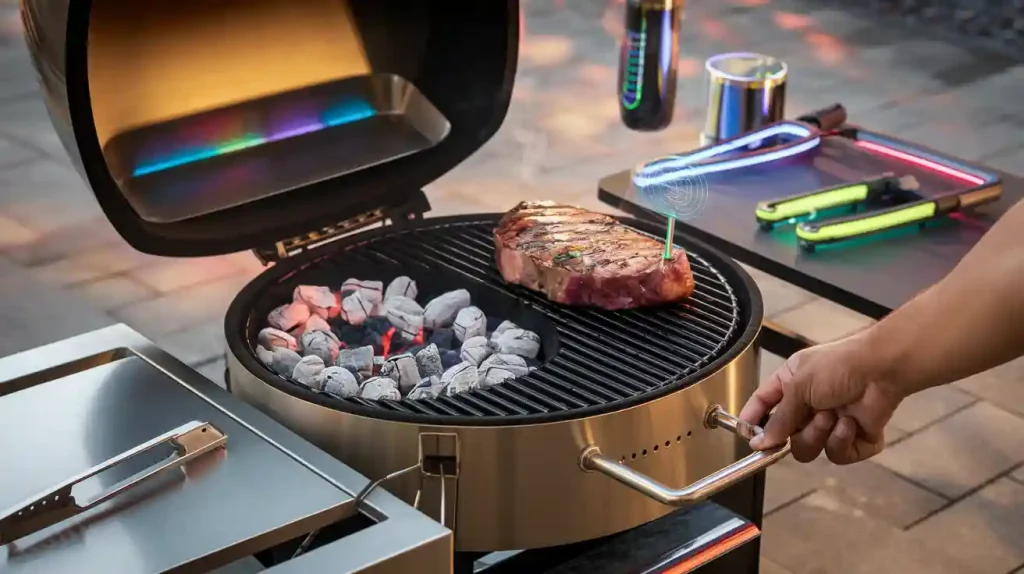
Are you tired of guessing when to flip your food or worrying about flare-ups on your charcoal grill? Controlling the temperature on a charcoal grill might seem tricky, but once you master it, your cooking will reach a whole new level.
Imagine perfectly cooked steaks, juicy burgers, and tender veggies every time you fire up your grill. In this guide, you’ll learn simple, effective tips to take full control of your grill’s heat. Keep reading, and you’ll soon grill like a pro without the stress.
Choosing The Right Charcoal
Controlling temperature on a charcoal grill starts with the charcoal you choose. Different types of charcoal burn differently. This affects how you manage heat while cooking.
Picking the right charcoal helps keep your grill at the perfect temperature. It also makes cooking easier and more consistent.
Types Of Charcoal
There are mainly three types of charcoal used for grilling: briquettes, lump charcoal, and hardwood charcoal. Each type has unique burning qualities.
- Briquettes:Made from compressed sawdust and additives. They burn evenly and last long.
- Lump Charcoal:Made by burning wood chunks with little air. It lights faster and burns hotter but unevenly.
- Hardwood Charcoal:Made from natural hardwood without additives. It gives good flavor and steady heat.
Impact On Heat Control
| Charcoal Type | Burn Time | Heat Level | Temperature Control |
|---|---|---|---|
| Briquettes | Long (up to 3 hours) | Medium | Easy to control with vents |
| Lump Charcoal | Shorter (1-2 hours) | High | Less consistent, needs attention |
| Hardwood Charcoal | Medium (2-3 hours) | Medium to High | Good flavor, steady heat |
Credit: www.vevor.com
Setting Up The Grill
Controlling the temperature on a charcoal grill starts with setting it up right. Proper setup helps you cook food evenly and avoid burning.
Knowing how to arrange charcoal and use the vents lets you manage heat better. This guide explains key steps to prepare your grill.
Arranging Charcoal For Heat Zones
Arrange charcoal to create different heat zones on your grill. This lets you cook food at different temperatures at the same time.
Place more charcoal on one side for high heat. Leave fewer coals on the other side for low heat or indirect cooking.
- High heat zone: Use a thick layer of charcoal for searing.
- Medium heat zone: Use fewer coals for steady cooking.
- Low heat zone: Use very few or no coals for warming or slow cooking.
Using The Grill Vents
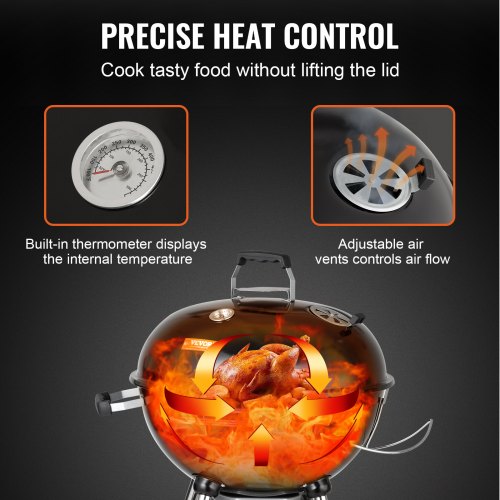
Grill vents control airflow and temperature inside the grill. Open vents let more oxygen in, making the fire hotter.
Close vents to reduce oxygen flow and lower the temperature. Adjust vents slowly to find the right heat level for your cooking.
- Open bottom vents to increase heat quickly.
- Close bottom vents to slow down the fire.
- Use top vents to control smoke and airflow.
- Keep vents partially open to maintain steady heat.
Lighting The Charcoal
Lighting charcoal correctly is key for good grilling. It helps control heat and cook food evenly.
Use safe and effective methods to start your charcoal. Avoid mistakes that can cause poor heat or smoke.
Best Methods To Ignite
Choose a method that lights charcoal quickly and keeps it burning steadily. This makes temperature control easier.
- Use a chimney starter for even lighting without chemicals.
- Arrange charcoal in a pyramid shape to help air flow.
- Light natural fire starters or crumpled newspaper under the chimney.
- Wait until coals are covered with gray ash before cooking.
- If using lighter fluid, apply it carefully and let it soak before lighting.
Avoiding Common Mistakes
Some errors make it hard to control grill temperature or affect food taste. Watch out for these problems.
| Mistake | Problem | How to Avoid |
|---|---|---|
| Lighting charcoal unevenly | Hot spots and cold zones | Use chimney starter or spread coals evenly |
| Using too much lighter fluid | Harsh chemical taste | Apply small amounts and wait before lighting |
| Starting with wet charcoal | Hard to light and smoky fire | Store charcoal in a dry place |
| Not letting coals ash over | Unstable heat and flare-ups | Wait for gray ash before cooking |

Credit: www.bbqspitrotisseries.com.au
Adjusting Airflow
Controlling the temperature on a charcoal grill is important. Adjusting airflow is one way to do this.
The air vents on your grill help regulate heat. Learning to adjust them will improve your grilling.
Controlling Bottom Vents
The bottom vents allow air into the grill. More air increases the fire, making it hotter.
Close the vents to reduce the airflow. This lowers the temperature of your grill.
- Open vents for high heat
- Half-open for medium heat
- Closed for low heat
Managing Top Vents
The top vents let air and smoke out. They also affect the temperature inside the grill.
Keeping them open helps maintain a steady temperature. Closing them traps heat and smoke.
- Open for less smoke flavor
- Half-open for a balanced cook
- Closed for more smoke flavor
Managing Heat Levels
Controlling heat on a charcoal grill is key to cooking food properly. You can adjust the heat by changing how you place the charcoal and how you cook the food.
Understanding different heat zones helps you cook different types of food evenly. This guide explains two main methods and how to add charcoal to keep the heat steady.
Direct Vs Indirect Heat
Direct heat means placing food right above the charcoal. It cooks food fast and is good for grilling steaks and burgers.
Indirect heat means placing food away from the hot charcoal. It cooks food slower and is good for bigger or tougher cuts like chicken or ribs.
- Direct Heat:Food cooks quickly over glowing coals.
- Indirect Heat:Food cooks slowly beside the coals.
- Use Both:Start with direct heat for searing, then move to indirect heat to finish cooking.
Adding More Charcoal
Adding charcoal keeps your grill hot for longer cooking times. Use fresh charcoal and add it safely to avoid losing heat.
| When to Add | How to Add | Tips |
| When flames get low or smoke slows | Place new charcoal on the edge of the fire | Light new charcoal in a chimney starter first |
| For long cooks over 1 hour | Use a two-zone setup to add charcoal on one side | Keep lid closed to keep heat in |
Using Grill Tools To Monitor Temperature
Controlling the temperature on a charcoal grill is key to cooking food well. Using the right tools helps you keep track of heat levels.
Grill tools like thermometers and heat sensors give accurate temperature readings. You can also use visual and tactile cues to judge the heat.
Thermometers And Heat Sensors
Thermometers are the most reliable tools to check grill temperature. They show the exact heat inside the grill and in the food.
- Use a probe thermometer to measure meat temperature.
- Place a grill surface thermometer on the cooking grate.
- Infrared thermometers let you check heat without opening the lid.
- Built-in grill thermometers help monitor the air temperature inside.
Visual And Tactile Cues
You can learn a lot by watching the fire and feeling the heat. These cues help when you do not have a thermometer handy.
| Cue | What to Look For | What It Means |
| Smoke Color | Thin blue smoke | Good temperature for cooking |
| Smoke Color | Thick white smoke | Too cool, needs more heat |
| Charcoal Color | Glowing red coals | High heat ready for searing |
| Hand Test | Hold hand 5 inches above grill |
|
Tips For Consistent Heat
Controlling the temperature on a charcoal grill is key to cooking your food well. Keeping heat steady helps food cook evenly.
Use simple tricks to keep the heat consistent and avoid cold or hot spots on your grill.
Avoiding Lid Lifts
Opening the grill lid lets heat escape. This makes the temperature drop and can change cooking times.
Try to check your food quickly and only open the lid when needed. This helps keep the heat inside the grill steady.
- Plan what to do before opening the lid
- Use a timer to remind you when to check food
- Use a grill light to see without opening the lid
Maintaining Charcoal Supply
Adding charcoal at the right time keeps the fire burning strong. This keeps the grill temperature steady for longer cooking.
Add a few pieces of charcoal before the fire gets too low. This avoids big drops in heat during cooking.
- Check charcoal levels often during long cooks
- Add charcoal in small amounts to avoid flare-ups
- Use quality charcoal for steady burning

Credit: www.amazon.com
Troubleshooting Temperature Issues
Controlling temperature on a charcoal grill can be tricky. Many factors affect heat levels.
Knowing how to fix common temperature problems helps you cook better and enjoy grilling more.
Common Problems And Fixes
Sometimes your grill gets too hot or too cold. The fire might die out or flare up suddenly.
Check these common issues and what you can do to fix them:
- Low heat:Add more charcoal or open the vents to increase airflow.
- High heat:Close vents slightly to reduce oxygen and lower temperature.
- Uneven heat:Spread coals evenly and avoid piling them up on one side.
- Fire dies out quickly:Use dry charcoal and keep vents partly open for steady air.
- Flare-ups:Trim excess fat from meat and move food away from direct flames.
When To Adjust Airflow
Airflow controls the fire’s oxygen. More air means hotter fire, less air cools it down.
Adjust vents based on how hot you want the grill and how steady the temperature stays.
- Open bottom vents to add oxygen and raise temperature.
- Close bottom vents to reduce oxygen and lower heat.
- Open top vents to help smoke escape and keep fire burning well.
- Close top vents to trap heat and smoke for slow cooking.
- Adjust vents slowly and wait 5-10 minutes to see temperature change.
Frequently Asked Questions
How Do I Adjust Air Vents On A Charcoal Grill?
Adjusting air vents controls oxygen flow, affecting heat levels. Open vents increase temperature; closing them lowers it. Start with vents half-open and adjust gradually for desired heat. Proper vent management ensures even cooking and better temperature control on a charcoal grill.
What Is The Best Charcoal Arrangement For Temperature Control?
Use a two-zone setup: pile coals on one side for direct heat, leave the other side empty for indirect heat. This allows easy temperature adjustments by moving food between zones. It helps maintain stable, controlled temperatures for different cooking needs.
How Often Should I Add Charcoal During Grilling?
Add charcoal every 45 minutes to 1 hour for long cooks. Add a small amount gradually to avoid temperature spikes. Maintaining consistent heat ensures food cooks evenly and prevents temperature drops, improving grilling results.
Can Water Pans Help Control Grill Temperature?
Yes, water pans stabilize temperature by absorbing heat and releasing moisture. Place a water pan over coals or on the grill grate for indirect cooking. It helps maintain consistent heat and adds humidity, preventing food from drying out.
Conclusion
Controlling temperature on a charcoal grill takes practice and patience. Use vents to adjust airflow and heat. Add or remove charcoal to raise or lower temperature. Keep the grill lid closed to hold heat inside. Check the temperature often with a thermometer.
Small changes can make a big difference in cooking. Enjoy the process and experiment with your grill. Good control means better grilled food every time. Keep these tips in mind for tasty results.