Setting up your fishing rod the right way can make all the difference between a frustrating day and a successful catch. If you’ve ever felt confused or unsure about how to get your rod ready, you’re not alone.
But don’t worry—this guide will walk you through each simple step. By the end, you’ll feel confident and ready to enjoy fishing like a pro. Ready to learn how to set up your fish rod quickly and easily? Let’s dive in.

Credit: fishingbooker.com
Choosing The Right Rod
Choosing the right fishing rod affects your catch and comfort. Different rods work best for different fishing styles and fish types.
This guide helps you pick the rod that fits your fishing needs. Learn about rod types, materials, lengths, and matching rods to fish species.
Types Of Fishing Rods
Fishing rods come in several types. Each type suits a specific fishing method or environment.
- Spinning rods: Good for beginners and light lures.
- Baitcasting rods: Offer better control for heavier baits.
- Fly rods: Designed for fly fishing using light flies.
- Trolling rods: Built for fishing from a moving boat.
- Surf rods: Long rods for casting from shore.
Material And Length Considerations
Rod material affects weight and strength. Common materials include graphite, fiberglass, and composite blends.
| Material | Features | Best Use |
|---|---|---|
| Graphite | Lightweight and sensitive | Freshwater fishing |
| Fiberglass | Durable and flexible | Heavy fish and saltwater |
| Composite | Mix of graphite and fiberglass | Versatile use |
Rod length affects casting distance and control. Short rods are easier to handle. Long rods cast farther but need more skill.
Matching Rod With Fish Species
Pick a rod that matches the fish size. Use this simple chart to match rod strength and fish type:
| Fish Species | Recommended Rod Power | Rod Length (ft) |
|---|---|---|
| Trout | Light | 6 to 7 |
| Bass | Medium | 6.5 to 7.5 |
| Catfish | Medium-Heavy | 7 to 8 |
| Salmon | Heavy | 8 to 10 |
| Marlin | Extra Heavy | 10 to 13 |
Selecting The Reel
Choosing the right reel is key to setting up your fishing rod. It affects how you cast and control the line. The reel type depends on your fishing style and target fish.
This guide covers the main reel types, reel sizes, gear ratios, and how to keep your reel in good condition.
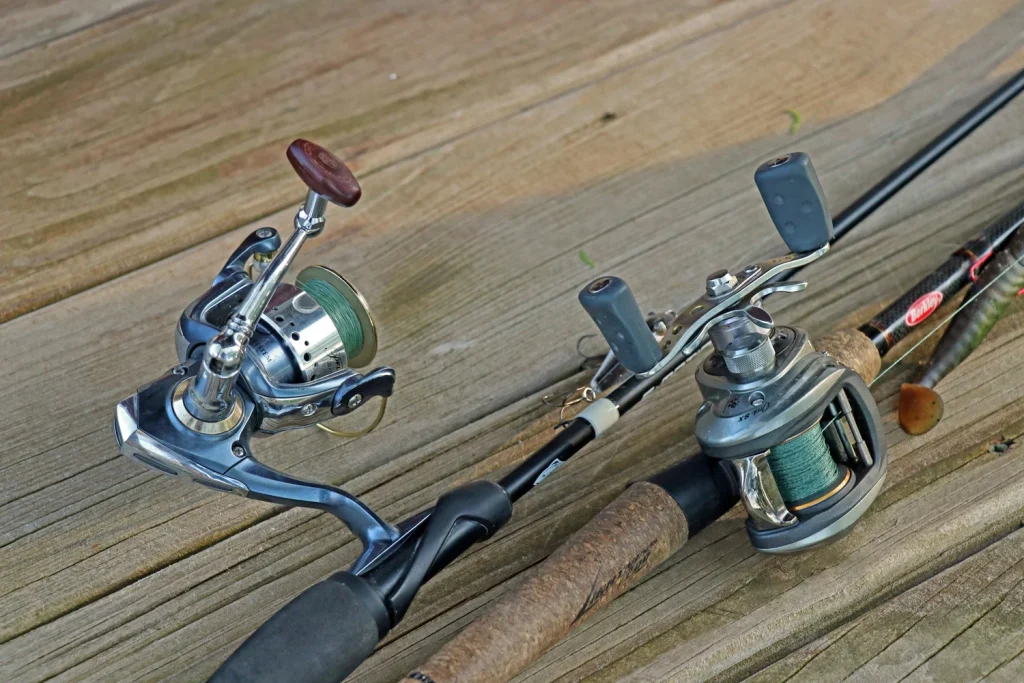
Spinning Vs Baitcasting Reels
Spinning reels are easy to use and good for beginners. They work well with light lures and lines. Baitcasting reels give better control and power. They are better for heavier lines and bigger fish.
- Spinning Reels:Simple design, less line tangles, ideal for light fishing.
- Baitcasting Reels:More accurate casting, good for heavy lures and lines.
- Skill Level:Spinning reels suit beginners, baitcasting reels fit experienced anglers.
Reel Size And Gear Ratio
| Reel Size | Best Use | Gear Ratio | Speed and Power |
|---|---|---|---|
| 1000–2500 | Light fishing, small fish | 5.0:1 to 6.0:1 | Slower retrieve, more power |
| 3000–4000 | Medium fish, versatile use | 6.0:1 to 7.0:1 | Balanced speed and power |
| 5000+ | Large fish, heavy lines | 7.0:1 and higher | Fast retrieve, less power |
Choose reel size by the fish weight and line strength. Gear ratio shows how fast the reel retrieves line. Lower ratios offer more power, higher ratios give faster line retrieval.
Reel Maintenance Tips
Keep your reel clean and oiled to last longer. Dirt and salt can damage parts. Regular care improves performance and prevents problems.
- Rinse reel with fresh water after use
- Dry it completely before storage
- Apply reel oil to moving parts
- Check line for wear and replace if needed
- Store reel in a cool, dry place
Picking The Fishing Line
Choosing the right fishing line is key to setting up your fish rod. It affects how far you can cast and how well you can catch fish.
There are different types of fishing lines. Each type has its own strengths and uses. Let’s look at monofilament, fluorocarbon, and braided lines.
Monofilament
Monofilament line is made from a single strand of nylon. It is flexible and easy to handle. This line works well for beginners and many fishing styles.
Monofilament is visible in water and stretches under pressure. This stretch helps absorb shocks when a fish pulls hard.
Fluorocarbon
Fluorocarbon line looks clear and sinks faster than monofilament. It is less visible underwater. This makes it good for fishing in clear water.
Fluorocarbon is tougher and resists damage from rocks and fish teeth better than monofilament.
Braided Lines
Braided line is made by weaving many thin fibers together. It has almost no stretch and is very strong for its size.
This line is thin but very tough. It casts far and works well in heavy cover. The braid is more visible in water.
Line Strength And Test Ratings
Line strength is measured by its test rating. This rating shows how much weight the line can hold before breaking.
- Choose a test rating based on the fish you want to catch.
- Heavier fish need stronger line with higher test ratings.
- Use lighter line for small fish and better casting distance.
Line Diameter And Visibility
| Type | Diameter | Visibility |
|---|---|---|
| Monofilament | Thicker | More visible |
| Fluorocarbon | Medium | Less visible |
| Braided | Thinnest | Most visible |
Thinner lines cast farther and show less in the water. Pick a line diameter that matches your fishing needs and water clarity.

Credit: fishingbooker.com
Attaching The Reel To The Rod
Attaching the reel to the rod is essential for a successful fishing experience. It provides balance and control when casting and retrieving.
Follow these simple steps to secure your reel correctly for optimal performance on the water.
Securing The Reel Seat
The reel seat holds the reel firmly in place on the rod. It is important to ensure it is secure for smooth operation.
- Start by loosening the reel seat rings.
- Slide the reel foot into the seat.
- Tighten the rings to lock the reel in place.
Aligning The Reel Properly
Proper alignment of the reel ensures easy line retrieval and accurate casting. It’s crucial to get this right for enjoyable fishing.
Make sure the reel is aligned with the rod guides. This helps the line move smoothly through the guides when casting.
Threading The Line Through Guides
Threading the fishing line through the rod guides is an important step. It helps the line flow smoothly and prevents tangles.
Doing this correctly makes casting easier and improves your fishing experience.
Starting From The Tip
Begin threading the line from the very tip of the rod. This is the smallest guide on the rod.
Slowly pull the line through each guide, moving down toward the handle. Keep the line tight as you go.
- Hold the rod steady in one hand.
- Use your other hand to pass the line through each guide.
- Keep the line straight to avoid snags.
- Check each guide for any cracks or dirt before threading.
Checking For Line Twists
After threading, check the line for twists. Twisted line can cause tangles and weak spots.
Hold the rod and let the line hang freely. Watch for any loops or coils forming.
- Spin the reel slowly to see if the line twists.
- If you see twists, unwind the line and try again.
- Keep the line straight as you thread through the guides.
- Regularly check your line during fishing for new twists.
Tying The Knot
Tying the knot is a key part of setting up your fishing rod. A strong knot keeps your line safe and holds your bait well.
Learning simple knots helps you catch fish without losing gear. Let’s explore common knots and how to tie them.
Popular Knots For Fishing
Some knots work better for different fishing lines and hooks. Here are three popular knots:
- Improved Clinch Knot – great for tying hooks and lures
- Palm Knot – used for connecting braided line to leader line
- Palomar Knot – strong and simple, good for all types of lines
Step-by-step Knot Tying
Follow these steps to tie the Improved Clinch Knot, a common knot for fishing:
- Thread the line through the hook eye.
- Wrap the tag end around the standing line 5 times.
- Pass the tag end through the small loop near the hook eye.
- Then pass it through the big loop you just made.
- Pull the tag end and standing line to tighten the knot.
- Trim the extra tag end close to the knot.
Tying knots takes practice. Try each step slowly to get the knot right.
Testing Knot Strength
After tying a knot, test its strength before fishing. This keeps your gear safe.
- Hold the hook or lure firmly.
- Pull the line hard to check if the knot slips or breaks.
- If it slips, retie the knot or try a different one.
- Test knots regularly to avoid losing fish or tackle.
Adding Lures And Baits
Adding the right lures and baits to your fish rod can improve your chances of a catch. Choosing the right ones depends on the fish type and water conditions.
Knowing how to attach hooks safely keeps you and the fish safe. It also ensures your fishing gear works properly.
Choosing The Right Lure
Select lures that match the fish you want to catch. Different fish prefer different colors, sizes, and movements.
- Use bright-colored lures in murky water to attract fish.
- Choose small lures for smaller fish and larger ones for big fish.
- Pick lures that mimic the natural prey of your target fish.
- Try both hard and soft lures to see what works best.
Attaching Hooks Safely
Attaching hooks safely prevents injuries and keeps your tackle secure. Follow these steps to attach hooks properly.
| Step | Action |
| 1 | Hold the lure firmly but gently. |
| 2 | Use pliers to open the split ring. |
| 3 | Attach the hook to the split ring carefully. |
| 4 | Close the split ring securely with pliers. |
| 5 | Check the hook for sharpness and safety. |
Adjusting Drag Settings
Setting the drag on your fishing rod helps control the line tension. It lets fish pull line without breaking it.
Correct drag adjustment improves your chances to catch fish and protects your gear.
Purpose Of Drag
The drag system allows the fishing line to slide out smoothly when a fish pulls hard. This prevents the line from snapping.
- Protects the fishing line from breaking
- Helps tire out strong fish by giving controlled resistance
- Prevents sudden jerks that can damage the rod or reel
- Maintains steady pressure to keep the fish hooked
Setting Drag For Different Fish
Different fish need different drag settings. Use a lighter drag for small fish and stronger drag for big fish.
| Fish Type | Drag Setting | Line Test Strength |
|---|---|---|
| Small Panfish | Low drag (1-3 lbs) | 2-6 lbs |
| Trout or Bass | Medium drag (4-8 lbs) | 6-12 lbs |
| Salmon or Walleye | Medium-high drag (8-15 lbs) | 10-20 lbs |
| Large Catfish or Pike | High drag (15-25 lbs) | 20-30 lbs |
Casting Techniques
Casting is a key skill in fishing with a rod. It helps you place the bait where fish are likely to bite. Learning good casting makes fishing easier and more fun.
This guide explains basic casting steps, tips for accuracy, and common mistakes to avoid. Use these to improve your fishing experience.
Basic Casting Steps
Follow these simple steps to cast your fishing rod properly. Practice them to get smooth and controlled casts.
Hold the rod firmly but not too tight.
Open the reel’s bail to release the line.
Pull the line back behind you with your index finger.
Swing the rod forward in a smooth motion.
Release the line by lifting your finger at the right moment.
Close the bail and reel in slack line.
Tips For Accurate Casting
Accuracy helps you put the bait near fish and avoid obstacles. Use these tips to improve your aim.
- Pick a target spot before casting.
- Keep your eyes on the target while casting.
- Use gentle wrist motion for short, precise casts.
- Adjust the rod angle to control distance.
- Practice casting in different wind conditions.
Common Casting Mistakes
New anglers often make errors that reduce casting success. Avoid these mistakes to fish better.
| Mistake | Effect | How to Fix |
| Gripping the rod too tight | Less control and fatigue | Hold rod firmly but relaxed |
| Releasing line too early or late | Line tangles or short casts | Practice timing finger release |
| Ignoring wind direction | Line drifts off target | Cast against or with wind carefully |
| Using jerky rod movement | Inaccurate and rough casts | Use smooth, steady motion |

Credit: windrider.com
Rod Maintenance And Storage
Proper care of your fishing rod extends its life. Keeping it clean and stored correctly is important.
This guide helps you maintain your rod. Follow these steps for cleaning and storage.
Cleaning After Use
Cleaning your rod after each use prevents damage. Salt, dirt, and grime can harm the rod over time.
- Rinse the rod with fresh water after fishing.
- Use a soft cloth to wipe it dry.
- Check for any signs of wear or damage.
- Apply a light coat of oil to metal parts to prevent rust.
Proper Storage Methods
Storing your fishing rod correctly prevents warping and other damage. Choose a dry, cool place for storage.
Consider these storage options:
- Use a rod rack to keep rods upright.
- Store in a rod tube for long-term storage.
- Avoid leaning rods against walls to prevent bending.
| Storage Option | Benefits |
| Rod Rack | Prevents bending and keeps organized |
| Rod Tube | Protects during transport and long-term storage |
| Wall Hook | Quick access, not ideal for long-term |
Frequently Asked Questions
How Do I Choose The Right Fishing Rod?
Select a rod based on fishing type, target fish, and location. Consider length, power, and action. Match the rod to your reel and line for best performance.
What Is The First Step In Setting Up A Fishing Rod?
Start by attaching the reel to the rod securely. Ensure it fits snugly in the reel seat. This provides stability and balance for smooth casting and retrieval.
How Do I Properly Thread The Fishing Line?
Pass the line through each guide starting at the tip. Keep the line tight and avoid tangles. This ensures smooth casting and prevents line damage during fishing.
What Knot Is Best For Tying The Fishing Hook?
Use the improved clinch knot for a strong, reliable hold. It’s easy to tie and secures the hook firmly. Practice to ensure your knot doesn’t slip or weaken.
Conclusion
Setting up a fish rod is simple with the right steps. Start by choosing the correct rod and reel for your fishing needs. Attach the line carefully, making sure it is secure. Add the hook, sinker, and bait to attract fish.
Check that all parts work well together. Practice casting to improve your skill. Enjoy fishing with your properly set-up rod. Keep your equipment clean and ready for next time. Fishing becomes more fun when your rod is ready to use.
Keep learning and trying new techniques to catch more fish.