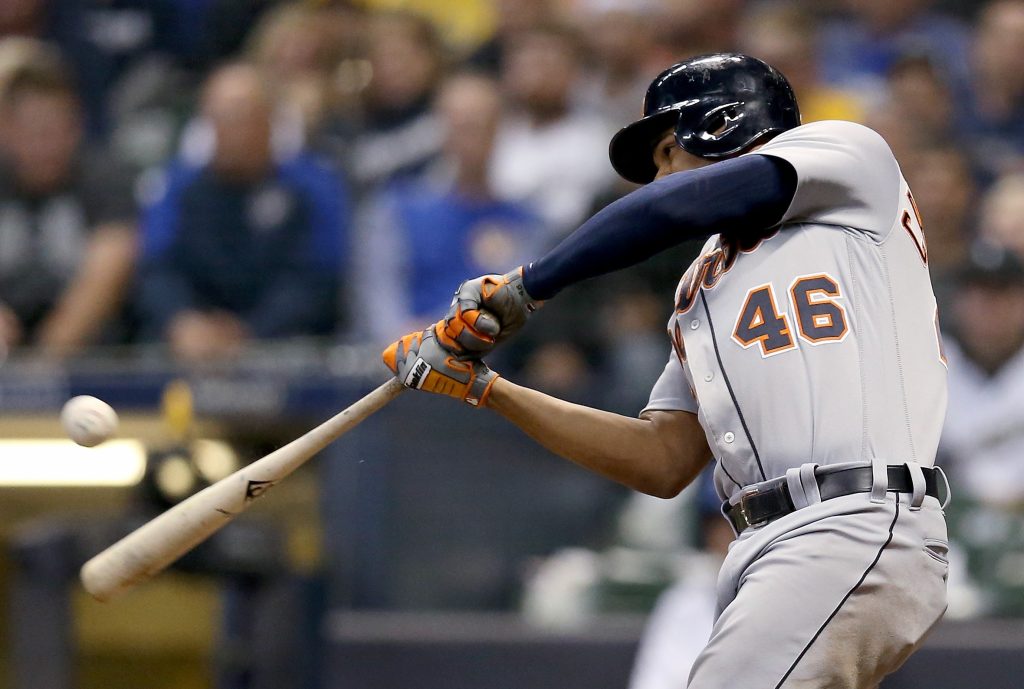
Have you ever watched a baseball game and wondered, “What exactly is an at bat?” It might seem simple, but understanding this key part of the game can change the way you watch and enjoy baseball. Knowing what counts as an at bat helps you follow player stats and see how each moment on the field adds up.
Stick with me, and you’ll discover how this small term packs a big punch in the game you love. Ready to unlock the secrets behind every swing? Let’s dive in!

Credit: www.draysbay.com
Basics Of An At Bat
In baseball, the term “at bat” is important to know. It helps track a player’s performance. Understanding at bats can make watching the game easier.
This guide explains what an at bat means. It also shows how it differs from a plate appearance.
Definition Of At Bat
An at bat is a batter’s turn facing the pitcher. It ends when the batter is out or reaches base. Some results do not count as an at bat.
- Hits count as an at bat.
- Strikeouts count as an at bat.
- Ground outs and fly outs count as an at bat.
- Walks do not count as an at bat.
- Hit by pitch does not count as an at bat.
- Sacrifice bunts and flies do not count as an at bat.
Difference Between At Bat And Plate Appearance
A plate appearance counts every time a batter comes to bat. An at bat is only part of plate appearances. Some plate appearances do not count as at bats.
| Term | What It Means | Examples |
| Plate Appearance | Every time a batter faces the pitcher | Walks, hits, outs, hit by pitch, sacrifices |
| At Bat | Plate appearances minus certain outcomes | Hits, strikeouts, outs but not walks or sacrifices |

Credit: www.vivaelbirdos.com
Rules Affecting At Bats
In baseball, an “at bat” is an important statistic for players. It counts how many times a player faces a pitcher and tries to hit the ball. But not every time a batter goes to the plate counts as an at bat.
Understanding the rules about when an at bat is recorded helps explain player stats better. Some actions do not count as at bats, even if the player comes to the plate.
When An At Bat Is Recorded
An at bat is recorded each time a player completes a batting turn, except in some special cases. The batter must face the pitcher and have a chance to hit the ball.
Common situations where an at bat is recorded include:
- The batter hits the ball and is put out.
- The batter gets a hit, like a single, double, triple, or home run.
- The batter reaches base on an error.
- The batter strikes out.
- The batter is called out on a fielder’s choice.
Situations That Do Not Count As At Bats
Some plate appearances do not count as at bats. These do not affect the player’s batting average.
Examples of situations that do not count as at bats include:
- When the batter receives a base on balls (walk).
- When the batter is hit by a pitch.
- When the batter performs a sacrifice bunt or sacrifice fly.
- When the batter is awarded first base due to interference or obstruction.
- When the inning ends while the batter is still at the plate.
At Bat Statistics
In baseball, an “at bat” is a key statistic. It measures a player’s performance. Understanding at bats helps us know how players contribute to the game.
At bat statistics are important for evaluating players. They affect batting averages, on-base percentage, and slugging percentage.
How At Bats Impact Batting Average
Batting average is a crucial statistic in baseball. It is calculated by dividing hits by at bats. A higher number of at bats can lower the batting average if there are fewer hits.
- More at bats with fewer hits lowers the average.
- Consistent hitting over many at bats raises the average.
- Batting average provides insight into a player’s hitting skill.
Role In On-base Percentage
On-base percentage (OBP) measures how often a player reaches base. It includes at bats, walks, and hit-by-pitches. At bats are a major part of calculating OBP.
| Statistic | Components |
| On-Base Percentage | Hits, walks, hit-by-pitches, at bats |
| Batting Average | Hits, at bats |
Role In Slugging
Slugging percentage shows a player’s power. It considers the total bases a player earns per at bat. More at bats with extra-base hits increase slugging percentage.
Strategies During An At Bat
An at bat in baseball is a key moment for the batter. It is the time they face the pitcher and try to hit the ball. Success during an at bat depends on good strategies.
Batters study the pitcher and adjust their approach. They use different tactics to increase their chances of hitting the ball well.
Approach For Different Pitch Types
Pitchers throw different types of pitches. Each pitch moves or speeds up in a unique way. Batters must recognize the pitch type quickly to respond well.
- Fastballs:Batters try to time their swing to the speed of the ball.
- Curveballs:Batters wait a bit longer and look for the ball’s drop.
- Changeups:Batters avoid swinging too early as the ball comes slower.
- Sliders:Batters watch for the sideways movement and adjust their swing path.
Adjusting To Pitchers’ Tactics
Pitchers try to confuse batters by changing their speed and pitch location. Batters must stay alert and change their plan during the at bat.
| Tactic | Batting Adjustment |
| Throwing inside | Step back slightly and keep hands close to the body |
| Throwing outside | Reach out with the bat and aim for the outer part of the plate |
| Changing pitch speed | Watch the pitcher’s arm speed and timing before swinging |
| Mixing pitch types | Be patient and wait to identify the pitch before swinging |
Common Mistakes In At Bats
An at bat in baseball is when a player tries to hit the ball. Many players make mistakes during their at bats. These mistakes can stop them from getting hits.
Knowing these common errors can help players improve their chances. Two big mistakes are misreading the pitcher and poor timing with swing mechanics.
Misreading The Pitcher
One mistake is not watching the pitcher closely. The pitcher’s movements show what kind of pitch is coming. If a batter guesses wrong, they may swing too early or too late.
Batters should watch the pitcher’s arm and body to guess the pitch type and speed. Not paying attention can lead to poor decisions at the plate.
- Look for the pitcher’s grip on the ball
- Notice the arm angle and release point
- Watch the pitcher’s body movement before the pitch
Poor Timing And Swing Mechanics
Another common mistake is bad timing. Swinging too early or too late often causes missed hits. Timing depends on the pitch speed and type.
Poor swing mechanics, like bad hand placement or body position, also reduce power and accuracy. A smooth, balanced swing works best.
- Start the swing after the ball is released
- Keep eyes on the ball during the swing
- Use the whole body, not just the arms
- Practice a balanced stance for better control
Improving Your At Bat Performance
In baseball, an at bat is when a player tries to hit the ball. Doing well at bat helps your team score runs. You can improve your at bat skills with practice and focus.
Working on your hitting technique and preparing your mind can make a big difference. Let’s explore drills and mental tips to help you perform better.
Practice Drills For Better Contact
Good contact means hitting the ball with the bat’s sweet spot. Drills can help you improve your timing and hand-eye coordination. Practice often to build muscle memory.
Try these drills to improve your contact:
- Tee Drill: Hit the ball off a tee to focus on your swing path.
- Soft Toss: Have a partner toss the ball softly for you to hit.
- Front Toss: Practice hitting balls thrown gently from in front of you.
- Two-Strike Approach: Work on contact and control with two strikes.
Mental Preparation Techniques
Being calm and focused helps you perform better at bat. Mental preparation builds confidence and reduces pressure during the game.
Use these mental techniques to get ready:
- Visualize hitting the ball well before your turn.
- Take deep breaths to stay calm and focused.
- Set small goals for each at bat, like making contact or watching the ball.
- Stay positive, even after a bad at bat.
Famous At Bat Moments
An at bat in baseball is a chance for a player to hit the ball. It can change the whole game. Some at bats are very famous because they changed history.
Fans remember these moments for years. They show skill, courage, and sometimes luck. Let’s look at some of the most famous at bat moments.
Historic Game-changing At Bats
One of the most famous at bats was by Bobby Thomson in 1951. He hit a home run that won the National League pennant for the New York Giants. This moment is called the “Shot Heard ‘Round the World.”
Another historic at bat was by Kirk Gibson in the 1988 World Series. Despite injuries, he hit a walk-off home run that helped the Dodgers win the championship.
- Bobby Thomson’s 1951 home run
- Kirk Gibson’s 1988 World Series home run
- Bill Mazeroski’s 1960 World Series walk-off home run
- Joe Carter’s 1993 World Series winning home run
Legendary Players’ Best At Bats
Babe Ruth had many great at bats. One famous moment was his called shot in the 1932 World Series, where he pointed to the stands before hitting a home run.
Hank Aaron’s best at bat was when he hit his 715th home run in 1974. This broke Babe Ruth’s record for most home runs in a career.
- Babe Ruth’s called shot at bat
- Hank Aaron’s record-breaking 715th home run
- Ted Williams’ final at bat with a home run
- Mickey Mantle’s powerful home runs in the 1950s

Credit: www.youtube.com
Frequently Asked Questions
What Does “at Bat” Mean In Baseball?
An “at bat” is a batter’s turn facing the pitcher. It counts only if the batter hits, gets out, or reaches base without a walk or sacrifice.
How Is An At Bat Different From A Plate Appearance?
An at bat excludes walks, hit by pitch, sacrifices, and interference calls. Plate appearances include all batter turns, including these exceptions.
Why Is An At Bat Important In Baseball Stats?
At bats determine batting average and slugging percentage. They reflect a player’s hitting success and are key for evaluating performance.
When Does An At Bat Not Count In Baseball?
At bats don’t count during walks, hit by pitch, sacrifices, or catcher interference. These are recorded as plate appearances but excluded from at bats.
Conclusion
An at bat is a key part of baseball play. It shows how many chances a player has to hit. Each at bat affects the player’s stats and the team’s score. Understanding at bats helps you follow the game better.
It also makes watching baseball more fun. Keep an eye on at bats to see who is doing well. This simple term tells a lot about the game’s flow. Now, you know what an at bat means in baseball.