Setting up your grow tent ventilation the right way can make all the difference in your plant’s health and growth. If you want to avoid problems like overheating, stale air, or unwanted odors, you need a system that works smoothly and efficiently.
In this guide, you’ll discover simple steps to create the perfect airflow inside your grow tent. By the end, you’ll know exactly how to keep your plants happy and thriving. Ready to get started? Let’s dive in!

Credit: www.reddit.com
Choosing The Right Grow Tent
Choosing the right grow tent is important for proper ventilation and plant growth. The tent size and material affect airflow and light reflection. Location also impacts how well your plants grow.
This guide helps you pick a grow tent that fits your space and ventilation needs.
Size And Material Considerations
Pick a tent size that matches your available space and the number of plants. Larger tents need better ventilation to prevent heat build-up.
- Choose tents with thick, durable fabric to keep light in and pests out.
- Look for materials with reflective inner lining to improve light use.
- Check if the tent has enough vents for air intake and exhaust.
- Consider tents with strong frames to hold fans and filters.
Location And Placement Tips
Place your grow tent where you can easily access it and where ventilation is not blocked. Avoid tight corners or areas with poor airflow.
| Location | Benefit |
| Near a window | Allows fresh air intake and natural light |
| Basement | Stable temperature but check for humidity |
| Garage | Good space but watch temperature swings |
| Closet | Easy to control light but limited airflow |
Essential Ventilation Components
Good ventilation is key for a healthy grow tent. It helps control temperature and humidity. Proper airflow also provides fresh air for plants.
To set up ventilation, you need the right tools. This guide covers the main parts you need and how to use them.
Inline Fans And Exhaust Systems
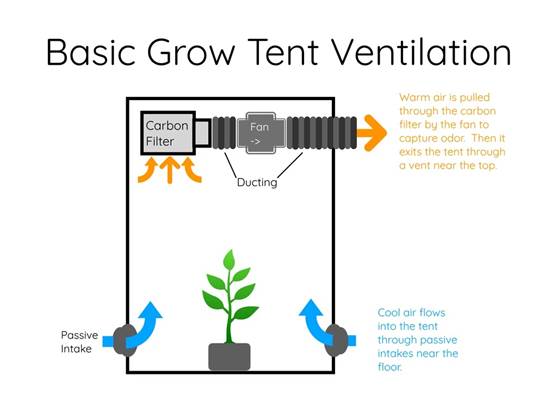
Inline fans move air out of the grow tent. They connect to an exhaust system that removes hot, stale air. This stops heat build-up inside the tent.
Exhaust systems often include carbon filters. These filters clean the air and reduce odors. Inline fans come in different sizes for small or large tents.
- Choose fan size based on tent volume
- Use carbon filters to control smell
- Place exhaust fan near the top for hot air
- Check fan speed for proper airflow
Intake Vents And Passive Airflow
Intake vents bring fresh air into the grow tent. Passive airflow means air moves in without a fan. It happens when exhaust fans push air out.
Keep intake vents open and clean. This helps air flow naturally. You can also add small intake fans if passive airflow is weak.
- Open vents at the bottom of the tent
- Use screens to keep bugs out
- Place intake opposite exhaust for good flow
- Check vents regularly for blockages
Ducting Types And Setup
Ducting connects fans to the tent vents. It carries air in and out. Use flexible or rigid ducting depending on space and noise needs.
Keep ducting as straight as possible. Bends slow airflow and reduce fan efficiency. Seal all connections to avoid leaks.
- Flexible ducting is easy to install
- Rigid ducting reduces noise better
- Use duct clamps to secure connections
- Seal joints with duct tape for no leaks
- Aim ducting outside the grow room
Setting Up Exhaust And Intake
Proper ventilation is key for a healthy grow tent environment. Setting up exhaust and intake fans helps control temperature and humidity.
This guide covers fan placement, balancing airflow, and sealing ducts for the best results.
Positioning Fans For Maximum Efficiency
Place the exhaust fan near the top of the tent. Hot air rises, so this helps remove heat quickly. Intake fans should be near the bottom to bring in fresh air.
- Install exhaust fan at the highest point
- Put intake fan close to the floor
- Keep fans opposite each other for good airflow
- Avoid blocking fan vents with equipment or plants
Balancing Air Intake And Exhaust
Balance the airflow so the exhaust removes air at about the same rate as intake brings it in. This avoids pressure problems inside the tent.
| Fan Type | Airflow Rate (CFM) | Recommended Setting |
| Exhaust Fan | 200 | High |
| Intake Fan | 180 | Medium |
Adjust fan speeds to keep fresh air flowing without causing negative or positive pressure.
Sealing And Insulating Ducts
Seal all duct connections tightly to prevent air leaks. Use duct tape or clamps for a secure fit. Insulate ducts to stop heat loss or gain.
Tips for sealing and insulating ducts:
- Wrap ducts with foam or fiberglass insulation
- Use metal clamps to secure duct joints
- Cover tape seams with additional insulation
- Check for leaks regularly and reseal as needed

Credit: www.fl420grow.com
Controlling Temperature And Humidity
Setting up proper ventilation in a grow tent helps keep temperature and humidity in check.
Good airflow supports healthy plant growth and prevents mold and pests.
Using Ventilation To Manage Heat
Ventilation removes hot air and brings in cool air to control the tent’s temperature.
- Install an exhaust fan near the top of the tent to push out warm air.
- Use an intake vent or fan near the bottom to bring in cooler air.
- Keep fans running continuously for steady airflow.
- Adjust fan speed to match temperature changes.
- Place fans to avoid direct wind on plants, which can cause stress.
Humidity Control Strategies
High humidity can cause mold and slow plant growth. Lower humidity helps plants thrive.
| Method | Description | Best Use |
| Dehumidifier | Removes moisture from the air | In very humid environments |
| Exhaust Fan | Circulates air to reduce humidity | Daily humidity control |
| Open Vents | Allows fresh, dry air in | When outside air is less humid |
| Humidity Monitor | Measures humidity levels | To track and adjust settings |
Optimizing Air Circulation Inside Tent
Setting up a grow tent requires good air circulation. Proper airflow helps plants grow healthy and strong.
Ventilation keeps the air fresh and prevents mold. It’s important to optimize the air circulation inside your grow tent.
Oscillating Fans Placement
Oscillating fans are key for moving air around. They help distribute air evenly inside the tent.
Place fans so they cover all areas. This ensures no hot spots form around your plants.
- Position fans at plant height for best airflow.
- Use multiple fans for larger tents.
- Ensure fans oscillate to cover wide areas.
Preventing Air Stagnation
Air stagnation can harm your plants. It leads to stale air, which is not good for plant health.
Ensure fresh air enters the tent regularly. This helps avoid air stagnation and keeps plants healthy.
- Install intake vents for fresh air entry.
- Use exhaust fans to remove stale air.
- Monitor air movement to prevent stagnant spots.
Monitoring And Adjusting Ventilation
Proper ventilation is key to a healthy grow tent environment. It helps control temperature and humidity.
Monitoring and adjusting ventilation keeps plants growing well. You can avoid problems like mold or heat stress.
Using Thermometers And Hygrometers
Thermometers show the temperature inside the tent. Hygrometers measure humidity levels. Both are important to watch.
Check these devices regularly. They tell you if the air is too hot, cold, dry, or wet for your plants.
- Place thermometers near plants at canopy level
- Keep hygrometers away from vents for accurate readings
- Record data daily to track changes
Adjusting Fan Speeds And Vent Positions
Fan speed controls how much air moves in and out of the tent. Adjust it to keep the right temperature and humidity.
Vent positions affect airflow direction. Open or close vents to balance fresh air and keep the tent stable.
- Increase fan speed if temperature or humidity rises too much
- Lower fan speed if air feels too dry or cold
- Open intake vents to bring fresh air in
- Adjust exhaust vents to remove hot or stale air
Common Ventilation Mistakes To Avoid
Proper ventilation is crucial for a healthy grow tent environment. Many growers make mistakes that reduce airflow and harm plants.
This guide covers common errors to help you set up your grow tent ventilation correctly.
Over Or Under Ventilation Issues
Too much ventilation can dry out plants and waste energy. Too little causes heat and humidity to build up. Both affect plant growth negatively.
- Over ventilation lowers humidity below ideal levels.
- Under ventilation traps heat, stressing plants.
- Unbalanced airflow can cause uneven temperature zones.
- Improper fan size leads to poor air exchange.
- Ignoring ventilation timing disrupts stable conditions.
Ignoring Airflow Patterns
Air must flow evenly around plants to remove heat and bring fresh air. Ignoring this causes dead spots and mold growth.
| Common Airflow Problem | Effect on Plants | How to Fix |
|---|---|---|
| Blocked intake or exhaust | Stale air and heat buildup | Keep vents clear and open |
| Poor fan placement | Uneven air circulation | Position fans for cross ventilation |
| Too many obstacles inside | Reduced airflow around plants | Arrange plants with space in between |
| Ignoring vertical airflow | Hot air trapped at top | Use exhaust fans near tent ceiling |

Credit: canadagrowsupplies.com
Frequently Asked Questions
How Do I Install Ventilation In A Grow Tent?
Install an exhaust fan at the top for hot air removal. Place an intake vent or fan near the bottom for fresh air intake. Use ducting to connect fans and ensure airflow. Seal all openings to maintain tent efficiency.
What Size Exhaust Fan Is Best For Grow Tents?
Choose an exhaust fan based on your tent size and airflow needs. Calculate tent volume (length x width x height). Select a fan with an airflow rate 1-3 times the tent volume per minute. This ensures proper ventilation and temperature control.
How Can I Control Temperature With Grow Tent Ventilation?
Use an exhaust fan to remove hot air and an intake fan for fresh air. Add a thermostat to automate fan operation. Maintain temperatures between 70-85°F for optimal plant growth. Adjust fan speed to balance temperature and humidity.
Why Is Carbon Filter Important In Grow Tent Ventilation?
A carbon filter removes odors and impurities from the exhaust air. It ensures your grow tent smells discreet and prevents unwanted odors. Attach it to the exhaust fan for effective odor control. This maintains a clean and comfortable growing environment.
Conclusion
Setting up grow tent ventilation keeps plants healthy and strong. Good airflow controls temperature and humidity well. It also helps prevent mold and pests. Use fans and vents to move fresh air inside. Keep your setup balanced for best results.
Check your system often to ensure it works right. With proper ventilation, your plants will grow better and yield more. Simple steps lead to a successful indoor garden. Keep learning and adjusting for the best grow tent environment.