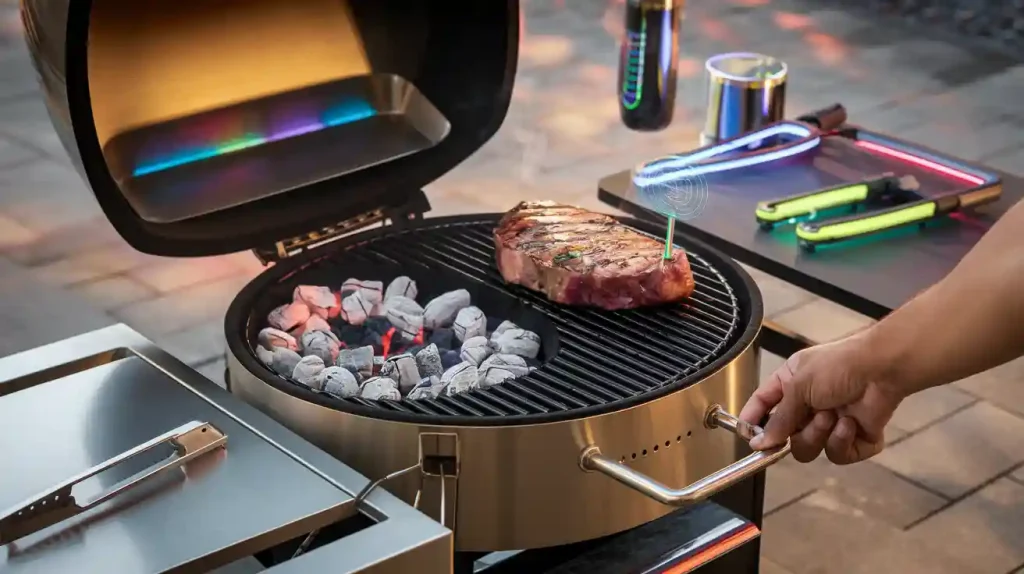
If you’ve ever struggled to control the heat on your charcoal grill, understanding how to use the vents can change everything. The vents are your secret weapon for cooking food perfectly every time.
When you learn how to adjust them, you can easily manage the temperature and keep your grill fires burning just right. You’ll discover simple, clear steps to master your grill vents and take your BBQ skills to the next level.
Ready to become the grill master you’ve always wanted to be? Keep reading!

Credit: www.siuhaau.com
Charcoal Grill Vents Basics
Charcoal grill vents help control the fire and heat inside the grill. They let air in and out, which affects cooking.
Using vents correctly helps you cook food evenly and keep the right temperature for different recipes.
Purpose Of Grill Vents
Grill vents control airflow to the charcoal. Air helps the charcoal burn hotter or cooler.
Opening vents lets more air in, making the fire stronger. Closing vents reduces air, lowering the heat.
- Control cooking temperature
- Manage how fast charcoal burns
- Help add smoke flavor by adjusting airflow
- Prevent fire from going out or burning too fast
Types Of Vents On Charcoal Grills
Charcoal grills usually have two main types of vents. One is on the bottom, and one is on the top.
Each vent has a different role in controlling air and heat inside the grill.
- Bottom Vents:Let air enter the grill to feed the fire. They control how much oxygen reaches the charcoal.
- Top Vents:Let smoke and heat escape. They also help pull air through the grill for better airflow.
How Vents Affect Heat
Vents on a charcoal grill control the airflow inside the grill. This airflow changes the heat level while cooking.
Knowing how to use vents helps you keep the right temperature for your food.
Controlling Oxygen Flow
Charcoal needs oxygen to burn well. The vents let air enter and exit the grill.
Opening the vents more lets in more oxygen. This makes the charcoal burn hotter and faster.
- Open vents = more oxygen = higher heat
- Close vents = less oxygen = lower heat
- Adjust vents to control how fast charcoal burns
Impact On Temperature Levels
Vents help you set the grill’s temperature by changing airflow. More air makes the fire hotter.
Less air slows down the fire, lowering the heat inside the grill.
- Fully open vents can reach high temperatures quickly
- Partially open vents keep heat steady for slow cooking
- Closed vents can almost put out the fire
Adjusting Vents For Cooking
Vents play a crucial role in controlling the temperature of your charcoal grill. By adjusting them, you can manage the heat level for different cooking needs.
Understanding how to set vents is essential for achieving the desired cooking temperature, whether you want high heat for searing, medium heat for grilling, or low heat for slow cooking.
Setting Up For High Heat
To achieve high heat, open the vents fully. This allows maximum airflow, which increases the temperature quickly.
- Ensure the bottom and top vents are wide open.
- Use enough charcoal to cover the grill bottom.
- Allow the grill to preheat for about 10-15 minutes.
Maintaining Medium Heat
For medium heat, adjust the vents to be half-open. This reduces airflow, helping to maintain a steady, moderate temperature.
| Vent Position | Heat Level |
| Fully Open | High |
| Half Open | Medium |
| Quarter Open | Low |
Lowering Heat For Slow Cooking
To achieve lower heat for slow cooking, close the vents to a quarter open. This limits airflow, allowing the temperature to drop slowly.

Credit: prolinerangehoods.com
Common Vent Mistakes To Avoid
Vents on a charcoal grill control airflow and heat. Using vents wrongly can spoil your cooking.
Learn about common mistakes to avoid for better grilling results.
Over-opening Or Closing
Opening vents too wide can cause the fire to burn too fast. Closing vents too much can make the fire die.
Both can lead to uneven cooking or burnt food.
- Keep vents partly open for steady heat
- Adjust vents slowly to control temperature
- Watch your food and change vents if needed
Ignoring Weather Conditions
Wind and cold air affect how vents work. Ignoring weather can cause heat loss or flare-ups.
Check the weather before grilling and adjust vents to keep heat steady.
- Close vents more on windy days to avoid flare-ups
- Open vents wider on cold days to keep heat up
- Use the grill lid to protect the fire from wind
Tips For Mastering Heat Control
Using vents on a charcoal grill is key to controlling heat. Vents control airflow, which changes how hot the fire burns.
Good heat control helps cook food evenly. It also prevents burning or undercooking your meals.
Using Both Top And Bottom Vents
The bottom vents let air in to feed the fire. The top vents let hot air and smoke escape.
Open the bottom vents more to increase heat. Close them to lower the heat. Use the top vents to control airflow and smoke.
- Open bottom vents wide for a hot fire
- Close bottom vents to reduce heat
- Adjust top vents to control smoke and airflow
- Keep top vents open to prevent smoke buildup
Monitoring Temperature With Tools
A grill thermometer helps check the inside temperature. Use it to know when to open or close vents.
Other tools like infrared thermometers can check grill surface heat. This helps cook food at the right temperature.
- Use built-in grill thermometers for general heat
- Check food temperature with a meat thermometer
- Use infrared thermometers for accurate surface heat
- Adjust vents based on thermometer readings
Adapting To Different Charcoal Types
Charcoal types burn differently. Lump charcoal lights fast and burns hotter. Briquettes burn longer and steady.
You may need to open vents more with lump charcoal. Briquettes need less air for a steady fire.
- Lump charcoal: burns hotter, needs more vent opening
- Briquettes: burns steady, vents can stay partly closed
- Mix charcoal types for balanced heat
- Adjust vents based on charcoal type and cooking time
Advanced Vent Techniques
Using vents on a charcoal grill helps control heat and smoke. Learning advanced vent techniques improves cooking results.
Adjusting vents correctly lets you cook different foods at the same time. You can also control smoke flavor with vent settings.
Creating Zones For Direct And Indirect Heat
Use vents to set up two cooking zones on your grill. One side gets high heat for direct grilling.
The other side gets lower heat for indirect cooking. This lets you cook food slowly without burning it.
- Open bottom vents fully under the hot side for more air and higher heat.
- Close bottom vents halfway under the cool side to reduce airflow.
- Keep top vents open above the hot side to let smoke and heat escape.
- Partially close top vents above the cool side to keep heat inside.
Managing Smoke With Vent Adjustments
Smoke flavor depends on how much oxygen enters the grill. More open vents create hotter fire and less smoke.
Closing vents slows the fire and produces thicker smoke. This adds strong smoky taste to your food.
- Open bottom vents fully for a fast, hot fire with light smoke.
- Close bottom vents partially to create slow fire with heavy smoke.
- Adjust top vents to control smoke flow and prevent flare-ups.
- Use small vent openings for long, slow cooks that need steady smoke.

Credit: www.youtube.com
Frequently Asked Questions
How Do Vents Control Temperature On A Charcoal Grill?
Vents regulate airflow, controlling oxygen supply to charcoal. Opening vents increases heat by boosting combustion. Closing vents reduces oxygen, lowering temperature for slow cooking. Proper vent adjustment ensures consistent grilling temperatures and better food results.
When Should I Open Or Close Charcoal Grill Vents?
Open vents fully when lighting charcoal for quick ignition. Adjust vents partially during cooking to maintain desired heat. Close vents near the end to reduce temperature and extinguish charcoal safely. Vent control is key for effective grilling.
Can Vent Placement Affect Charcoal Grill Smoke Flavor?
Yes, vent placement impacts airflow and smoke circulation. Proper vent use enhances smoke flavor by allowing controlled burning. Poor vent management can cause uneven heat and off-flavors. Adjust vents to balance smoke and heat for tasty results.
Why Are Both Top And Bottom Vents Important On Grills?
Bottom vents feed oxygen to charcoal for combustion. Top vents release heat and smoke, controlling airflow direction. Both vents work together to maintain temperature and smoke levels. Adjusting both vents is essential for grilling success.
Conclusion
Controlling vents helps manage heat and smoke on your charcoal grill. Open vents let in more air, making the fire hotter. Closing vents slows the fire and keeps food from burning. Adjust vents often to keep the temperature steady. Practice helps you learn how much to open or close.
Using vents well improves your grilling results every time. Try different settings to see what works best for your meals. Remember, good vent control means better cooking and tastier food. Keep experimenting and enjoy grilling with confidence.