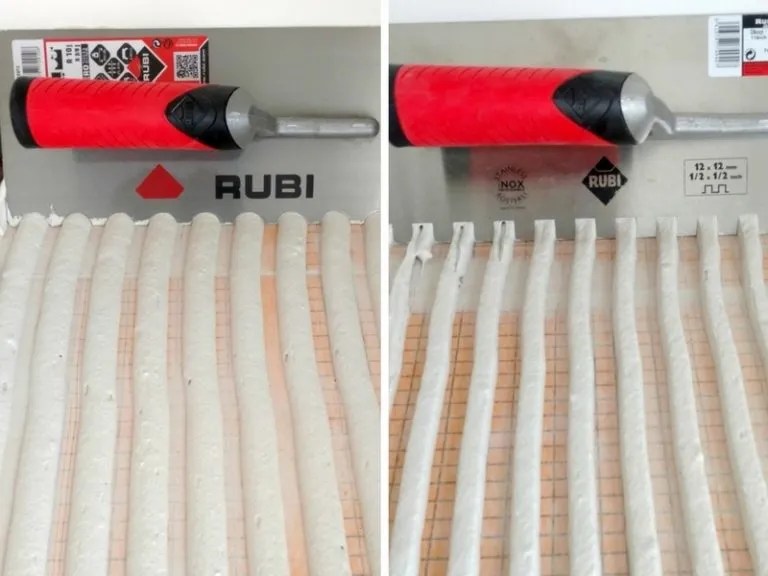
Choosing the right trowel size can make or break your tile project. You might think any trowel will do, but using the wrong one can lead to uneven tiles, weak adhesive bonds, and a finish that looks less than perfect.
If you want your tile job to last and look great, you need to know exactly what size trowel to use. You’ll discover how to pick the perfect trowel for your tile work, so you can save time, avoid costly mistakes, and get professional results every time.
Keep reading to find out what size trowel works best for your tiles and why it matters so much.

Credit: www.floortrendsmag.com
Choosing Trowel Sizes
Selecting the right trowel size is key for tile installation. It helps spread adhesive evenly for a strong hold.
The size depends mainly on the tile size. Using a wrong trowel can cause uneven surfaces or weak bonds.
Small Tiles
Small tiles usually measure less than 4 inches. They need a thin layer of adhesive to stick well.
- Use a 1/4 inch x 1/4 inch square notch trowel
- This size spreads a thin, even layer of adhesive
- Good for mosaics and small ceramic tiles
Medium Tiles
Medium tiles range from 4 to 12 inches. They need more adhesive than small tiles but less than large ones.
| Tile Size | Trowel Size | Notch Type |
| 4 to 8 inches | 1/4 inch x 3/8 inch | Square notch |
| 8 to 12 inches | 1/2 inch x 1/2 inch | Square notch |
Large Tiles
Large tiles are bigger than 12 inches. They require thick and even adhesive for strong support.
For large tiles, use these trowel sizes:
- 3/4 inch x 3/4 inch square notch
- 1/2 inch x 1/2 inch U-notch for uneven backs
- Ensure full coverage to prevent voids

Credit: www.floortrendsmag.com
Trowel Notch Types
Choosing the right trowel notch is important for tile installation. The notch size affects the amount of adhesive spread on the surface. Different notch shapes work best for different tile sizes and types.
There are three main types of trowel notches: square, U-shaped, and V-shaped. Each type has a unique way of holding and applying the adhesive. Understanding these types helps you pick the best trowel for your job.
Square Notch
Square notch trowels have a flat bottom with square-shaped notches. They create uniform ridges of adhesive on the surface. This type is good for most tile sizes, especially larger tiles.
The size of the square notch affects the thickness of the adhesive layer. Bigger notches hold more adhesive, which helps with uneven surfaces or large tiles. Smaller notches work for small tiles and thin-set mortar.
- Good for large and medium tiles
- Provides even adhesive spread
- Works well on flat surfaces
U-notch
U-notch trowels have rounded notches shaped like the letter “U”. They create curved ridges of adhesive. This helps to hold more mortar than V-notches but less than square notches.
These trowels are good for medium-sized tiles. The round shape helps spread adhesive evenly while giving some flexibility for tile placement. U-notch trowels work well with natural stone and textured tiles.
- Best for medium tiles
- Creates curved adhesive ridges
- Good for uneven tile backs
V-notch
V-notch trowels have angled notches shaped like the letter “V”. They make thin, pointed ridges of adhesive. This type is good for small tiles or thin materials.
Because V-notches hold less adhesive, they are used on smooth and flat surfaces. They also help avoid too much mortar squeezing out from under small tiles. V-notch trowels are ideal for wall tiles and mosaics.
- Best for small tiles and mosaics
- Creates thin adhesive ridges
- Good for smooth surfaces
Factors Affecting Trowel Choice
Choosing the right trowel is important for tile installation. Different factors influence the trowel size you need.
Consider tile thickness, substrate surface, and adhesive type before deciding on a trowel.
Tile Thickness
The thickness of the tile affects trowel size. Thicker tiles need larger notches to hold more adhesive.
Thin tiles require smaller notches. This ensures even adhesive spread.
- Thick tiles: Use 1/2 inch or larger notches
- Thin tiles: Use 1/4 inch notches
Substrate Surface
The surface you are tiling on matters. Smooth surfaces need less adhesive than rough ones.
Rough surfaces may need larger notches to fill gaps and ensure strong adhesion.
- Rough surfaces: Choose larger notches
- Smooth surfaces: Smaller notches are suitable
Adhesive Type
The type of adhesive also affects trowel choice. Some adhesives need more space for proper bonding.
Check adhesive instructions for recommended trowel size to ensure effective application.
- Thick adhesives: Use larger notches
- Thin adhesives: Smaller notches work well
Impact On Installation Quality
The size of the trowel affects how well tiles stick to the surface. Using the right trowel helps spread adhesive evenly.
A good trowel size improves the tile fit and prevents future problems like lifting or cracking.
Adhesive Coverage
The trowel size controls how much adhesive covers the floor or wall. Too small a trowel leaves gaps under tiles.
Right coverage means tiles stick firmly and stay in place for a long time.
- Small trowels spread less adhesive
- Large trowels spread more adhesive
- Choose trowel size to match tile size and surface type
Tile Bond Strength
Using the correct trowel size helps create a strong bond between tile and surface. This bond stops tiles from moving.
If the trowel is too small, the bond can be weak and tiles may lift or crack later.
- Proper adhesive thickness improves bond strength
- Trowel size affects adhesive depth
- Match trowel to tile thickness and weight
Grout Joint Consistency
The right trowel size helps keep tiles at the right height and spacing. This keeps grout lines even and neat.
Uneven grout joints happen if tiles are not set properly due to wrong trowel use.
- Consistent tile height keeps grout joints uniform
- Proper adhesive spread helps avoid tile rocking
- Right trowel size supports clean grout lines
Common Mistakes To Avoid
Choosing the right trowel size is important for tiling. Many people make simple mistakes that cause problems. These mistakes can lead to weak tile bonds or uneven surfaces.
This guide covers common errors to watch out for. Avoid these to ensure your tile work lasts long and looks good.
Using Wrong Trowel Size
Using the wrong trowel size can cause poor adhesive coverage. A trowel that is too small will not hold enough adhesive. This leads to weak spots under the tile.
- Small tiles usually need a smaller trowel, like 1/4 inch.
- Large tiles require a bigger trowel, such as 1/2 inch or more.
- Check tile size and backing before picking a trowel.
- Using the correct notch size ensures even adhesive spread.
Uneven Adhesive Application
Uneven adhesive leads to tiles that do not stick well. This causes tiles to crack or come loose over time. You must spread adhesive evenly across the surface.
| Common Error | Effect | Solution |
|---|---|---|
| Too little adhesive | Tiles fall off or crack | Use bigger trowel for better coverage |
| Too thick adhesive | Tiles sit unevenly | Use correct notch size for tile type |
| Skipping adhesive on edges | Edges lift or break | Apply adhesive to entire tile back |
Ignoring Manufacturer Guidelines
Tile and adhesive makers give clear instructions. Ignoring these can cause tile failure. Always read and follow the guidelines for trowel size and adhesive use.
- Manufacturer guidelines match tile type and size.
- They suggest the right trowel notch shape and size.
- Following instructions improves tile bond and durability.
- Check instructions before you start tiling.
Tips For Efficient Installation
Choosing the right trowel size is key for a smooth tile installation. It helps spread adhesive evenly and holds tiles firmly.
These tips will help you handle the trowel well, check adhesive coverage, and keep your tools clean for better results.
Proper Trowel Handling
Hold the trowel at a 45-degree angle to spread adhesive evenly. Use smooth, steady motions to avoid gaps.
Choose a trowel size that matches your tile size. Larger tiles need bigger notches to hold enough adhesive.
- Small tiles: 1/4 inch notch
- Medium tiles: 1/4 to 1/2 inch notch
- Large tiles: 1/2 inch or larger notch
Checking Adhesive Coverage
Check that the adhesive covers the tile back fully. Good coverage prevents tiles from loosening later.
Lift a few tiles after placing them to inspect the adhesive spread. Look for gaps or dry spots.
- Full coverage means better tile grip
- Fix gaps immediately by adding more adhesive
- Consistent coverage helps tiles stay flat
Maintaining Clean Tools
Clean your trowel regularly during the job. Dried adhesive can cause uneven spreading and damage tiles.
Use water and a brush to remove adhesive after each use. Keep tools dry and stored properly between jobs.
- Clean tools improve adhesive application
- Prevent hardened adhesive on trowel edges
- Well-maintained tools last longer

Credit: www.tilemountain.co.uk
Frequently Asked Questions
What Size Trowel Is Best For 12×12 Inch Tiles?
A 1/4 x 1/4 inch square notch trowel works best for 12×12 tiles. It ensures proper adhesive coverage and strong bonding.
How To Choose Trowel Size For Large Format Tiles?
Use a 1/2 x 1/2 inch square notch trowel for large tiles. It holds enough mortar for secure installation and prevents voids.
Which Trowel Size Suits Mosaic Tile Installation?
A 1/8 x 1/8 inch square notch trowel is ideal for mosaics. It provides a smooth, even layer without excess mortar.
Why Does Trowel Size Matter In Tile Setting?
Trowel size controls mortar thickness and tile adhesion. Using the wrong size can cause weak bonds or uneven surfaces.
Conclusion
Choosing the right trowel size helps your tile job go smoothly. Small tiles need a smaller trowel for better adhesive spread. Bigger tiles require a larger trowel to hold more mortar. Using the right trowel size avoids gaps and loose tiles.
It saves time and keeps your work neat. Always check tile size before picking your trowel. This simple step makes a big difference in tile work quality. Trust the process, and your tiles will last longer. Easy and effective—just what every tile project needs.