Have you ever struggled to connect your garden hose to a faucet or sprinkler, only to find the threads don’t match? If so, you’re not alone.
Understanding what size garden hose threads are can save you time, money, and frustration. Whether you’re replacing an old hose or buying new accessories, knowing the right thread size ensures everything fits perfectly and works smoothly. You’ll discover exactly what garden hose thread sizes mean and how to choose the right one for your needs—making your gardening tasks easier and more enjoyable.
Keep reading to get the answers you’ve been looking for!
Common Garden Hose Thread Sizes
Garden hoses connect to faucets and other watering tools using threaded ends. The size of these threads must match for a tight fit. Knowing the common sizes helps you pick the right hose or adapter.
Most garden hoses use standard thread sizes set by the industry. These sizes make it easy to find parts that fit together well. Let’s look at the common thread sizes used.
Standard Thread Dimensions
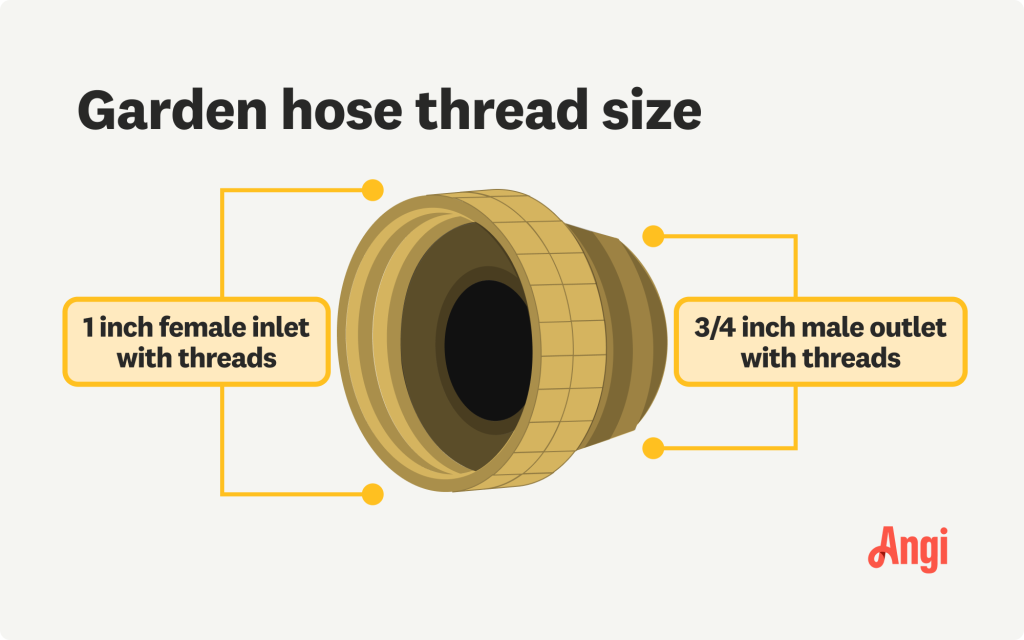
The most common garden hose thread size in the United States is 3/4 inch. This is called GHT, which stands for Garden Hose Thread. The thread has 11.5 threads per inch, which helps create a tight seal.
Other thread sizes are less common but may be found in some hoses or fittings. These include 1/2 inch and 5/8 inch sizes. Knowing the thread count and size helps when matching hoses and accessories.
| Thread Size | Diameter (inches) | Threads Per Inch (TPI) |
|---|---|---|
| 3/4 inch GHT | 0.75 | 11.5 |
| 1/2 inch | 0.5 | 13.5 |
| 5/8 inch | 0.625 | 12.5 |
Differences Between Male And Female Threads
Garden hose threads come in two types: male and female. Male threads are on the outside and screw into female threads. Female threads are on the inside and receive the male threads.
It is important to match male and female ends correctly. Male ends have visible threads on the outside. Female ends have threads inside a fitting or connector.
- Male threads stick out and screw into female threads
- Female threads are inside and accept male threads
- Both must have the same size and thread count to fit

Credit: www.amazon.in
Measuring Garden Hose Threads
Garden hose threads must fit well to avoid leaks. Measuring them correctly helps you find the right connectors and accessories.
This guide shows how to measure garden hose threads with simple tools and clear steps.
Tools Needed For Accurate Measurement
Use the right tools to get exact thread measurements. This prevents buying parts that do not fit your hose.
- Ruler or tape measure with millimeter and inch marks
- Thread pitch gauge (optional for detailed measurement)
- Caliper for precise diameter measurement
- Clean cloth to wipe threads before measuring
Step-by-step Measurement Process
Follow these steps to measure your garden hose threads accurately.
- Clean the threads with a cloth to remove dirt and debris.
- Measure the outside diameter (OD) of the male thread using a caliper or ruler.
- Count the number of threads per inch (TPI) or millimeter pitch with a thread gauge or visually.
- Measure the inside diameter (ID) of the female thread to confirm compatibility.
- Record all measurements carefully for comparison with standard sizes.
| Measurement | Description | Tool Used |
|---|---|---|
| Outside Diameter (OD) | Width across the outside of the male thread | Caliper or ruler |
| Threads Per Inch (TPI) | Number of thread peaks per inch length | Thread pitch gauge or visual count |
| Inside Diameter (ID) | Width across the inside of the female thread | Caliper or ruler |
Thread Types And Standards
Garden hoses come with different thread types and standards. Understanding these is key for compatibility and ease of use. Proper knowledge ensures that your hose fits well with other equipment.
Two common standards are National Hose (NH) Threads and Garden Hose Thread (GHT) Standards. Each has its own specifications and uses.
National Hose (nh) Threads
National Hose (NH) threads are widely used in the United States. They are common in firefighting equipment and larger hoses.
| Thread Type | Usage |
| NH Threads | Firefighting, Large Hoses |
| Compatibility | Equipment with NH connectors |
Garden Hose Thread (ght) Standards
Garden Hose Thread (GHT) is the standard for most garden hoses. It is designed for home use and is easy to connect.
- Commonly used for garden hoses
- Easy to connect and disconnect
- Standard size for home use

Credit: www.amazon.in
Choosing The Right Hose Thread Size
Garden hose threads come in different sizes. Choosing the right size makes connecting easier. It also prevents leaks and damage.
This guide helps you find the right thread size for your hose and accessories.
Matching Threads For Connectors And Accessories
Most garden hoses use two common thread sizes. These sizes fit most connectors and accessories. Knowing these sizes helps you buy parts that fit well.
| Thread Size | Use | Thread Diameter |
| GHT (Garden Hose Thread) | Standard hoses and outdoor faucets | ¾ inch (approx. 1.05 inch outer diameter) |
| NPT (National Pipe Thread) | Indoor plumbing and some hose connectors | Varies, commonly ½ inch or ¾ inch |
Avoiding Common Fit Issues
Fit problems happen when threads do not match. This can cause leaks or broken connectors. Check these tips to avoid issues.
- Measure the hose thread size before buying parts.
- Use thread tape to seal connections and stop leaks.
- Match male and female threads carefully.
- Do not force connectors that feel tight.
- Know if your hose uses GHT or NPT threads.
Adapters And Converters For Hose Threads
Garden hoses often come with different thread sizes and types. Adapters and converters help connect hoses to faucets, sprinklers, or other hoses. These tools make your watering setup more flexible and useful.
Understanding when to use adapters and knowing popular types can save time and avoid leaks or damage. This guide explains the key points about hose thread adapters.
When To Use Adapters
Use adapters if your hose threads do not match the faucet or accessory. They help connect parts with different thread sizes or standards. Common reasons to use adapters include:
- Connecting a garden hose to a faucet with a different thread size
- Joining two hoses with incompatible threads
- Attaching watering tools like sprinklers or nozzles that use unique connectors
- Changing from male to female thread ends
- Switching between standard garden hose thread (GHT) and other thread types
Popular Adapter Types
Adapters come in many forms to fit various needs. Below is a table showing common adapter types and their uses.
| Adapter Type | Description | Common Use |
|---|---|---|
| Male to Female Adapter | Converts male threads to female threads or vice versa | Joining hoses or tools with opposite thread ends |
| Thread Size Converter | Changes thread size between hose and faucet or tool | Connecting hoses to faucets with different thread sizes |
| GHT to NPT Adapter | Converts garden hose thread to National Pipe Thread | Attaching hoses to plumbing fittings |
| Quick Connect Adapter | Allows fast connection and disconnection of hoses | Easy hose hookup without screwing threads |
| Y-Connector Adapter | Splits one hose connection into two | Watering multiple areas at once |
Tips For Maintaining Hose Thread Connections
Garden hose threads connect your hose to faucets and accessories. Keeping these connections tight and leak-free helps water flow well.
Good care and simple checks can stop leaks and extend your hose’s life.
Preventing Leaks
Leaks often start at the threads. Tighten connections by hand, then give a small turn with a wrench if needed. Avoid over-tightening.
- Check washers inside hose ends for cracks or wear.
- Replace washers yearly or if leaks appear.
- Use plumber’s tape on metal threads for a better seal.
- Do not cross-thread when connecting parts.
- Store hoses off the ground to avoid damage.
Cleaning And Care
| Cleaning Task | Frequency | How To |
| Remove dirt from threads | After each use | Use a soft brush or cloth |
| Inspect washers | Monthly | Look for cracks or flattening |
| Lubricate threads | Every 3 months | Apply silicone-based lubricant |
| Store hose properly | After use | Keep in shade and coiled |

Credit: www.amazon.in
Frequently Asked Questions
What Size Are Standard Garden Hose Threads?
Standard garden hose threads are 3/4 inch in diameter. They follow the GHT (Garden Hose Thread) standard used widely in the US. This size ensures compatibility with most outdoor watering tools and accessories.
Are Garden Hose Threads The Same Globally?
No, garden hose thread sizes vary by country. The US commonly uses 3/4 inch GHT, while other countries have different standards. Always check local specifications before purchasing hoses or fittings internationally.
Can Garden Hose Threads Fit Sprinkler Connections?
Yes, most sprinkler connections use 3/4 inch GHT. This makes garden hoses compatible with most sprinkler systems. Adapters are available if thread sizes differ.
How To Measure Garden Hose Thread Size Accurately?
Use a caliper to measure the outer diameter of the hose thread. The standard size is typically 3/4 inch, but precise measurement avoids mismatches. Thread pitch is also essential for proper fitting.
Conclusion
Garden hose threads usually follow standard sizes for easy connection. Most garden hoses use a 5/8-inch diameter with 11. 5 threads per inch. Knowing these sizes helps you pick the right fittings and avoid leaks. Always check your hose and fittings before buying new parts.
Small details make a big difference in garden work. Using the correct thread size saves time and frustration. Keep your garden hose working well with the right thread fit. Simple steps ensure smooth watering every time.