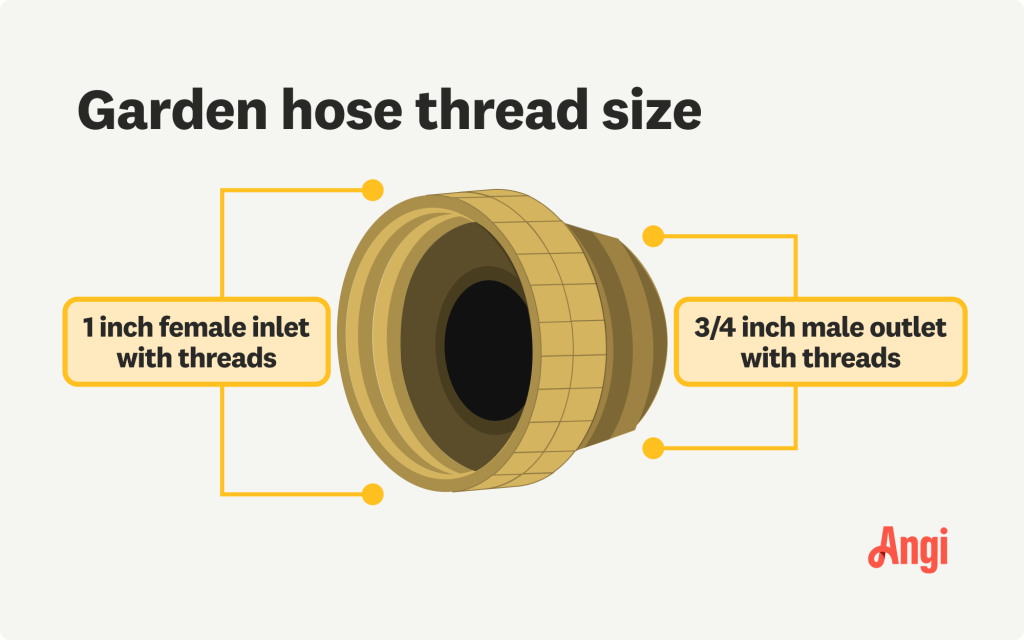
Are you tired of struggling with garden hose fittings that don’t quite match? Knowing the size of a standard garden hose fitting can save you time, money, and frustration.
Whether you’re watering your plants, washing your car, or setting up a sprinkler system, the right fitting makes all the difference. You’ll discover exactly what size you need and why it matters for your garden setup. Keep reading to make your next hose connection simple and hassle-free!
Credit: www.vevor.com
Common Garden Hose Sizes
Garden hoses come in different sizes to fit various needs. The size of the hose fitting is important for water flow and connection.
Knowing the standard sizes helps you pick the right hose for your garden or outdoor tasks.
Standard Diameter Options
The most common garden hose diameters are 1/2 inch, 5/8 inch, and 3/4 inch. These sizes refer to the inside diameter of the hose.
The fitting sizes usually match these diameters to ensure a secure connection with faucets and accessories.
- 1/2 inch:Best for light watering and small gardens.
- 5/8 inch:The most popular size for general garden use.
- 3/4 inch:Used for heavy watering and large yards.
Length Variations
Garden hoses come in many lengths, usually measured in feet. Common lengths are 25, 50, 75, and 100 feet.
Choosing the right length helps avoid kinks and ensures you can reach all parts of your garden.
- 25 feet:Good for small patios and close plants.
- 50 feet:Suitable for most home gardens.
- 75 feet:Useful for larger yards or multiple areas.
- 100 feet:Ideal for very large gardens or farms.
Typical Hose Fitting Dimensions
Garden hose fittings connect hoses to water sources or other hoses. They come in standard sizes to fit most hoses. Knowing the size helps you choose the right fitting for your garden.
Most garden hose fittings use common thread sizes. These sizes ensure a tight and leak-free connection. Understanding the dimensions makes it easier to replace or upgrade hose parts.
Thread Size Standards
Garden hose fittings use a standard thread size called GHT (Garden Hose Thread). This thread size is the same across most garden hoses in the U.S. and Canada. It helps ensure compatibility between hoses and fittings.
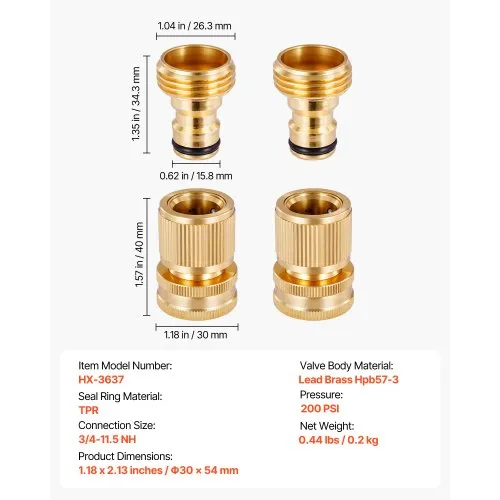
The most common thread size is 3/4 inch diameter with 11.5 threads per inch. This size fits most garden hoses and accessories. Some smaller hoses use 1/2 inch or 5/8 inch sizes but these are less common.
- Standard thread size: 3/4 inch diameter
- Thread pitch: 11.5 threads per inch
- Common name: GHT (Garden Hose Thread)
- Less common sizes: 1/2 inch, 5/8 inch
Connector Types
Garden hose fittings come in several connector types. The most popular are threaded connectors and quick-connect fittings. Each type has different uses and advantages.
Threaded connectors screw onto the hose and water source. They provide a secure and leak-free connection. Quick-connect fittings snap on and off easily. They save time when attaching or detaching hoses.
- Threaded connectors: screw-on, secure fit
- Quick-connect fittings: snap-on, fast attach/detach
- Barbed connectors: slide into the hose, used with clamps
- Compression fittings: tighten to seal, used for repairs
Materials Used In Hose Fittings
Garden hose fittings come in different materials. Each material has its own benefits and uses.
Knowing the material helps you pick the best fitting for your garden hose.
Brass
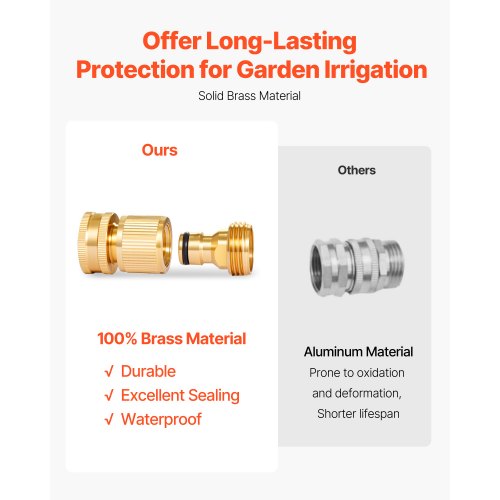
Brass is a popular material for hose fittings. It is strong and does not rust.
Brass fittings last long and work well with water. They handle pressure and heat.
- Durable and corrosion-resistant
- Heavy compared to other materials
- Good for outdoor use
Plastic
Plastic hose fittings are light and easy to handle. They are less costly than brass.
Plastic can crack in cold weather. It works best for light garden tasks.
- Lightweight and affordable
- Not very strong
- Can break in cold or under pressure
Aluminum
Aluminum fittings are lighter than brass but stronger than plastic. They resist rust well.
Aluminum works well for people who want a mix of strength and light weight.
- Light and rust-resistant
- Stronger than plastic
- May dent if hit hard
Credit: www.vevor.com
Choosing The Right Hose Fitting Size
Garden hose fittings come in different sizes. Picking the right size is crucial for a leak-free connection. Understanding the standard sizes helps in selecting compatible fittings.
Most garden hoses use the standard size. This size is typically 3/4 inch in diameter. Knowing this helps you find the perfect fitting for your hose.
Matching Hose And Fitting
Ensure your hose and fitting sizes match. This prevents leaks and ensures a secure fit. Measure the diameter of your hose before buying fittings.
If you’re unsure, bring your hose to the store. Compare it with available fittings. This way, you’ll find a fitting that fits perfectly.
- Measure your hose diameter
- Match with fitting size
- Test fit in-store if possible
Compatibility Tips
Check material compatibility between hose and fitting. Metal fittings work well with rubber hoses. Plastic fittings are best for lightweight hoses.
Consider the water pressure in your area. High-pressure areas need durable fittings. This prevents damage and prolongs the life of your hose.
- Match materials for durability
- Consider water pressure
- Use washers to prevent leaks
Adapters And Specialty Fittings
Garden hoses use fittings to connect to water sources and tools. These fittings come in many types. Adapters and specialty fittings help join hoses with different sizes or shapes.
Knowing the right fitting size is important for a secure connection. This guide covers reducing and expanding sizes and quick connect options.
Reducing And Expanding Sizes
Adapters can reduce or expand hose fitting sizes. This helps connect hoses or tools with different thread sizes. Standard garden hose fittings usually have a 3/4 inch thread size, but adapters allow flexibility.
- Reducing adapters connect a larger fitting to a smaller one.
- Expanding adapters connect a smaller fitting to a larger one.
- These adapters come in brass, plastic, or aluminum.
- They often have male threads on one end and female threads on the other.
| Adapter Type | Common Sizes | Use |
|---|---|---|
| Reducing Adapter | 3/4″ to 1/2″ | Connect smaller hose or tool |
| Expanding Adapter | 1/2″ to 3/4″ | Connect larger hose or tool |
| Thread Converter | 3/4″ to 5/8″ | Match different thread standards |
Quick Connect Options
Quick connect fittings make attaching and detaching hoses easy. They snap together without twisting. These fittings save time and reduce leaks.
- Male quick connect plugs fit into female couplers.
- Some quick connects have built-in washers for a tight seal.
- They come in plastic or metal for durability.
- Quick connects work with standard 3/4 inch fittings.
Maintaining And Replacing Hose Fittings
Garden hose fittings connect your hose to water sources or tools. The standard size is usually 3/4 inch. Keeping fittings in good shape helps water flow well and stops leaks.
Replacing worn or damaged fittings keeps your garden hose working longer. Proper care saves time and money.
Signs Of Wear
Look for cracks, leaks, or rust on hose fittings. These signs mean the fitting may fail soon. A loose connection can also cause water loss.
- Water leaks around the fitting
- Visible cracks or damage
- Rust or corrosion on metal parts
- Loose or wobbly connection
Replacing fittings at the first sign of wear prevents bigger problems. It keeps your garden hose ready for use.
Proper Installation
Install hose fittings tightly but do not overtighten. Use thread tape if needed to stop leaks. Make sure the fitting matches the hose size.
- Check that the fitting size is 3/4 inch for standard hoses
- Use thread tape on threads to seal better
- Hand-tighten fittings, then use a wrench for a small turn
- Avoid cross-threading to prevent damage
Proper installation stops leaks and extends the life of your hose and fittings. Always inspect fittings before use.
Common Issues With Hose Fittings
Garden hose fittings can cause problems if not handled properly. These issues affect how well your hose works and can waste water.
Knowing common problems helps you fix or avoid them. Two frequent issues are leaks and cross-threading.
Leaks And Drips
Leaks and drips happen when hose fittings do not connect tightly. This can waste water and reduce water pressure.
- Worn or damaged washers inside the fitting
- Improperly tightened connections
- Cracks or corrosion on the metal parts
- Dirt or debris caught in the threads
Replacing washers or cleaning threads often solves leaks. Tightening fittings by hand is usually enough.
Cross-threading Problems
Cross-threading happens when fittings are screwed on at the wrong angle. It damages threads and stops a proper seal.
| Cause | Effect | Solution |
| Starting to screw fitting without lining up threads | Damaged or stripped threads | Unscrew and carefully realign threads before tightening |
| Forcing fitting when it feels stuck | Permanent thread damage | Replace damaged fittings or use new hose ends |

Credit: www.amazon.ca
Frequently Asked Questions
What Is The Standard Size Of A Garden Hose Fitting?
A standard garden hose fitting is typically 3/4 inch in diameter. This size fits most garden hoses and outdoor faucets in the US, ensuring compatibility and easy connection.
Are Garden Hose Fittings Interchangeable?
Yes, most garden hose fittings are interchangeable. Standard 3/4 inch fittings connect hoses, nozzles, and spigots from different manufacturers without issues.
How Do I Measure A Garden Hose Fitting?
To measure a garden hose fitting, measure the inside diameter of the fitting’s threaded end. The common size is 3/4 inch for garden hoses.
What Materials Are Standard Garden Hose Fittings Made Of?
Standard garden hose fittings are usually made from brass, plastic, or aluminum. Brass is preferred for durability and corrosion resistance in outdoor use.
Conclusion
Knowing the size of a standard garden hose fitting helps with many tasks. It makes choosing the right hose easier and faster. Avoiding wrong fittings saves water and time. Most garden hoses use a 3/4 inch fitting. This size fits most outdoor faucets and accessories.
Keep this number in mind for smooth gardening work. Simple, right? Now, you can connect your hose with confidence and avoid leaks or loose connections. Gardening becomes less stressful with the right tools. Understanding hose fittings is a small step that makes a big difference.