Choosing the right baseball bat size can make a huge difference in your game. But with so many options out there, how do you know which one fits you best?
Using a bat that’s too heavy or too long can slow you down, while the perfect size helps you swing faster and hit harder. You’ll discover exactly how to find the bat that matches your height, weight, and skill level.
By the end, you’ll feel confident stepping up to the plate with the bat that’s just right for you. Keep reading to unlock the secret to better hits and more home runs!

Credit: www.reddit.com
Factors Influencing Bat Size
Choosing the right baseball bat size depends on several key factors.
These factors affect comfort, control, and performance at the plate.
Age And Height Considerations
Age and height help determine the proper length of a baseball bat.
| Age | Height Range | Recommended Bat Length |
| 5-7 years | 3’6″ – 4’0″ | 24″ – 26″ |
| 8-10 years | 4’0″ – 4’6″ | 26″ – 28″ |
| 11-13 years | 4’6″ – 5’0″ | 28″ – 30″ |
| 14-16 years | 5’0″ – 5’6″ | 30″ – 32″ |
| 17+ years | 5’6″ and taller | 32″ – 34″ |
Weight And Strength Impact
Weight and strength influence the bat’s weight and balance choice.
- Younger or weaker players should use lighter bats.
- Stronger players can handle heavier bats for more power.
- A balanced bat helps with quick swings and control.
- A heavier bat may slow down the swing but add force.
Skill Level Effects
Skill level changes the preference for bat size and weight.
Beginners should start with bats that are:
- Lightweight for easier handling
- Shorter to improve swing mechanics
- Designed for control and contact hitting
Advanced players may choose bats that:
- Offer more weight for power hits
- Are longer for extended reach
- Match their specific hitting style
Measuring For The Right Bat
Choosing the right baseball bat is key for comfort and performance. The bat size depends on your body and skill level.
Measuring height and weight helps find the best bat size. Testing the bat before use ensures it feels right.
How To Measure Height And Weight
Start by measuring your height without shoes. Use a tape measure or a wall chart to get the exact number.
Next, weigh yourself on a scale. Record the weight in pounds or kilograms to match bat size guides.
- Stand straight against a wall for height.
- Use a reliable scale for weight.
- Note both measurements before choosing a bat.
Using A Bat Size Chart
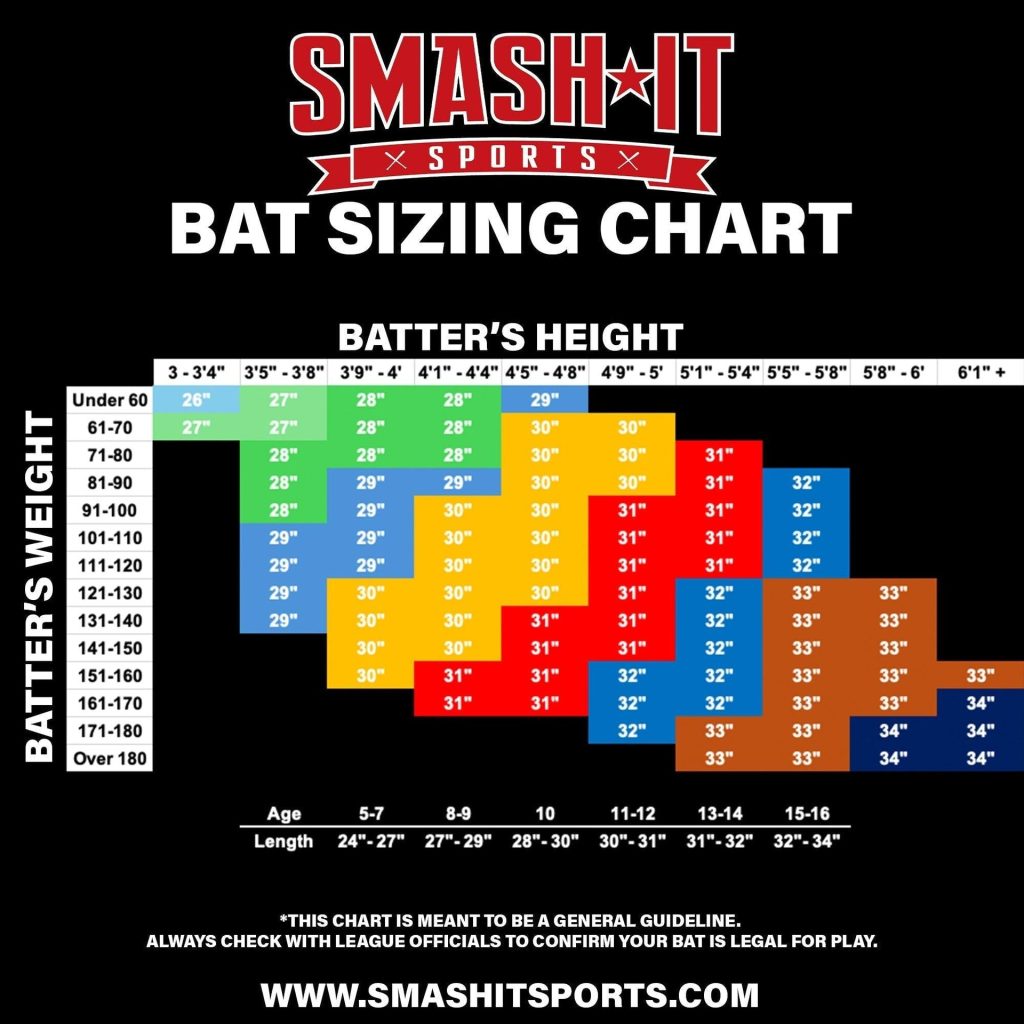
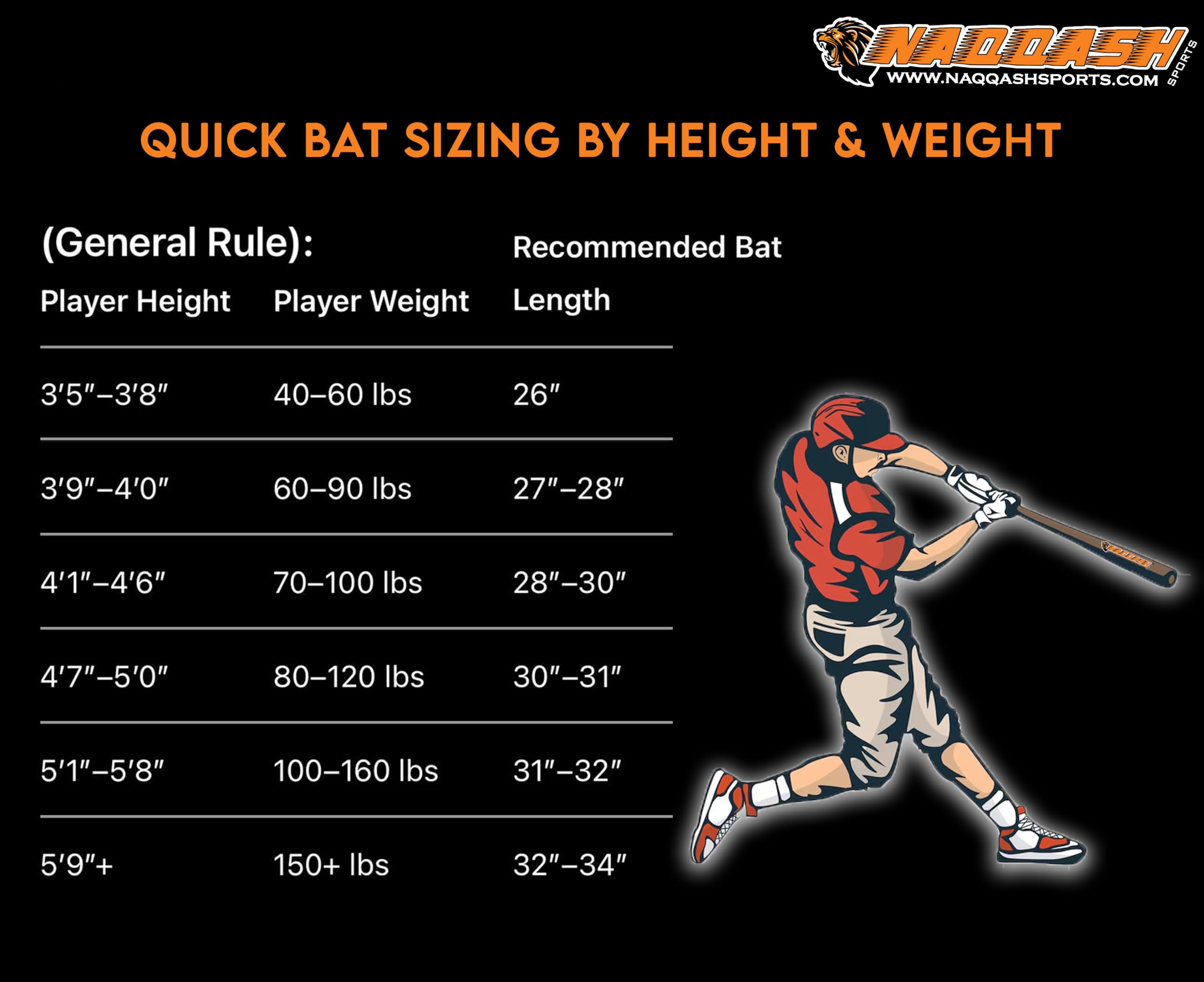
Bat size charts link height and weight to bat length and weight. These charts help pick a bat that fits well.
| Height | Weight | Bat Length (inches) | Bat Weight (oz) |
| 4’0″ – 4’5″ | 50 – 70 lbs | 26 – 28 | 14 – 16 |
| 4’6″ – 4’9″ | 71 – 90 lbs | 28 – 30 | 16 – 18 |
| 4’10” – 5’2″ | 91 – 110 lbs | 30 – 31 | 18 – 20 |
| 5’3″ – 5’7″ | 111 – 130 lbs | 31 – 32 | 20 – 22 |
| 5’8″ and up | 131 lbs and up | 32 – 34 | 22 – 24 |
Test Swing Techniques
Try swinging the bat to check its balance and weight. A good bat should feel comfortable and easy to control.
- Hold the bat with two hands and swing slowly.
- Check if the bat feels too heavy or too light.
- Make sure you can swing smoothly without strain.
- Adjust bat size if the swing feels awkward.
Bat Length And Weight Explained
Finding the right baseball bat size is important. It helps improve your swing and overall game performance.
The bat’s length and weight play a big role. They affect how you hit the ball and your comfort level.
Choosing The Correct Length
Bat length is measured in inches. It should match your height and arm length.
- Shorter players need shorter bats
- Taller players can use longer bats
- Measure from the center of your chest to fingertips
Balancing Bat Weight
Weight affects how you swing the bat. A bat that is too heavy or too light can hinder your swing.
Choose a weight that lets you swing comfortably. Test different weights to find the best one for you.
Drop Weight Importance
Drop weight is the bat’s length minus its weight. It shows the bat’s balance and ease of swing.
| Drop Weight | Effect |
| -3 | Common for high school and college |
| -5 | Younger players, easier to swing |
| -10 | Lightest, for beginners |

Credit: www.betweenthelinesaz.com
Types Of Baseball Bats
Choosing the right baseball bat can affect your performance. Different bat types suit various players and levels. Understanding the main types helps you pick the best fit.
This guide explains Aluminum, Composite, and Hybrid bats. Each type has unique features and benefits for different players.
Aluminum Vs. Wood Bats
Aluminum bats are lightweight and durable. Wood bats offer a traditional feel and better control. Many leagues allow only one type.
| Feature | Aluminum Bats | Wood Bats |
| Weight | Lightweight | Heavier |
| Durability | High | Lower |
| Cost | Moderate to High | Lower |
| Performance | More power | Better control |
| League Use | Mostly youth and amateur | Professional and some amateur |
Composite Bat Benefits
Composite bats combine materials like carbon fiber. They offer a larger sweet spot and less vibration on contact. Players like their balance and feel.
- Lighter than wood but strong
- Reduced sting from bad hits
- Improved swing speed
- May require break-in period
Hybrid Bat Features
Hybrid bats mix metal and composite parts. Usually, a metal barrel pairs with a composite handle. This design gives strength and good vibration control.
- Strong metal barrel for power
- Composite handle for comfort
- Less sting on the hands
- Good balance for many players
Adjusting Bat Size For Different Levels
Choosing the right baseball bat size depends on your playing level. Different levels need different bat lengths and weights.
Using a bat that fits your level helps improve your swing and control at the plate.
Youth Baseball Guidelines
Youth players should use lighter and shorter bats for better handling. The right size helps build good habits early.
- Bat length usually ranges from 24 to 30 inches.
- Weight drops range from -13 to -10 for easier swinging.
- Smaller players should use shorter bats to maintain control.
- Always check your league rules for approved bat sizes.
High School And College Recommendations
At this level, players use bats with more power and speed. Bats get longer and heavier but still need to allow quick swings.
| Level | Bat Length (inches) | Weight Drop |
|---|---|---|
| High School | 31 to 34 | -3 |
| College | 32 to 34 | -3 |
Players should test different bats to find one that balances weight and length for their style.
Adult And Professional Bats
Adult and pro players use wood or metal bats that are heavier and longer. Control and power are key at this level.
Common adult bat sizes include:
- Length: 32 to 34 inches
- Weight: 30 to 33 ounces
- Material: Wood (maple, ash) or metal alloy
Players select bats based on their strength and hitting style.
Common Mistakes In Bat Selection
Choosing the right baseball bat is important for playing well. Many players pick bats that do not fit their needs. This can hurt their performance and comfort.
Below are common mistakes that players make when selecting a bat. Avoiding these can help you find the best bat for your game.
Using Bats That Are Too Heavy
Picking a bat that is too heavy makes it hard to swing quickly. This can slow your reaction time and reduce your hitting power. Heavy bats also cause fatigue faster.
It is better to choose a bat weight that you can control easily. This helps you swing with good speed and accuracy.
- Heavy bats lower swing speed
- They cause quicker arm and shoulder tiredness
- Control and accuracy decrease with heavy bats
Ignoring League Regulations
Each baseball league has rules about bat size and material. Ignoring these rules can lead to disqualification or penalties. It may also cause safety problems for players.
Always check your league’s bat rules before buying. This ensures your bat is legal and safe to use.
- Leagues limit bat length and weight
- Some leagues ban certain materials like metal or composite
- Using illegal bats can result in game loss or fines
Overlooking Personal Comfort
Comfort is key when choosing a bat. A bat that feels good in your hands helps you play better. Some players ignore this and pick bats only by size or brand.
Try holding and swinging different bats before buying. Find one that fits your grip and feels balanced.
- Check the bat’s grip texture and size
- Make sure the bat weight feels natural
- Test swing to see how the bat moves
Tips For Testing And Buying Bats
Choosing the right baseball bat can improve your comfort and performance. Testing bats before buying helps you find the best fit.
This guide covers key points to consider when trying and buying bats in store or online.
Trying Bats In Store Vs. Online
Testing bats in store lets you feel the weight and balance directly. Online shopping offers more options but lacks hands-on experience.
- In store, swing several bats to compare weight and length.
- Online, check return policies to test bats at home.
- Look for size charts and user reviews when buying online.
- Visit stores to try bats before making final online purchases.
Evaluating Grip And Handle
The grip and handle affect your control and comfort. Try different grips to see what feels best in your hands.
| Grip Feature | What to Check |
| Grip Material | Comfort and slip resistance |
| Handle Thickness | Fits your hand size |
| Knob Shape | Prevents slipping during swing |
| Grip Length | Long enough for two hands |
Budgeting For Quality
Good bats come in many price ranges. Set a budget but focus on quality and durability.
- Choose bats made from reliable materials.
- Look for bats with good reviews on performance.
- Consider how long the bat will last for your level.
- Save money by buying last season’s models or sales.
Credit: www.amazon.ca
Frequently Asked Questions
What Factors Determine The Right Baseball Bat Size?
The right baseball bat size depends on age, height, weight, and skill level. Proper size ensures better control and hitting power. Choosing the correct length and weight improves your swing and overall performance in the game.
How To Measure The Perfect Bat Length For Me?
Measure your height and weight, then refer to a bat size chart. Generally, taller and heavier players use longer and heavier bats. Testing different sizes helps find the most comfortable and effective bat length for you.
Can Using The Wrong Bat Size Affect My Game?
Yes, using the wrong bat size can reduce swing speed and accuracy. A bat that’s too heavy or too long can cause fatigue and poor contact. Proper sizing enhances control, power, and confidence at the plate.
What Bat Weight Suits Beginners Best?
Beginners should start with lighter bats for better swing control. A bat weighing about 17 to 20 ounces is ideal. Lighter bats help develop proper swing mechanics and reduce injury risks during practice.
Conclusion
Choosing the right baseball bat size helps you play better and stay safe. Think about your height, weight, and strength first. Try different bats to see what feels right in your hands. A bat that is too big or small can slow you down.
Comfort and control matter most. Keep practicing with your chosen bat to improve your swing. Remember, the best bat fits your body and style. Play smart, enjoy the game, and watch your skills grow.