Setting up proper ventilation in your grow tent is one of the most important steps to ensure healthy, thriving plants. Without good airflow, your plants can suffer from heat stress, mold, and poor growth.
But don’t worry—getting your ventilation right doesn’t have to be complicated. In this guide, you’ll discover simple, effective ways to keep fresh air moving through your tent, control temperature, and maintain the perfect environment for your plants to flourish. Ready to boost your grow tent’s performance and see better results?
Let’s dive in.

Credit: www.reddit.com
Choosing The Right Ventilation System
Good ventilation helps plants grow healthy in a grow tent. It controls temperature and air quality.
Picking the right ventilation system depends on your tent size and plant needs. Learn the types and how to size equipment.
Types Of Ventilation Fans
Ventilation fans move air in and out of the grow tent. There are two main types: inline fans and clip fans.
- Inline Fans:Installed in ducting to pull or push air. They work well for larger tents.
- Clip Fans:Attach inside the tent to circulate air around plants. They help prevent hot spots.
- Exhaust Fans:Remove stale air and heat from the tent.
- Intake Fans:Bring fresh air into the tent to keep oxygen levels high.
Passive Vs Active Ventilation
Passive ventilation uses natural airflow without fans. Active ventilation uses powered fans to move air.
Passive systems rely on vents or windows placed low and high in the tent. Air moves due to pressure differences.
Active systems work well in sealed tents. Fans force air in and out, controlling temperature and humidity better.
| Ventilation Type | How It Works | Best For |
| Passive | Air moves naturally through vents | Small tents with good airflow options |
| Active | Fans push and pull air | Sealed tents or larger setups |
Sizing Your Ventilation Equipment
Choose a fan size that moves enough air for your grow tent volume. Measure tent size in cubic feet.
Calculate the needed fan power in cubic feet per minute (CFM). Multiply tent volume by 1 to 1.5 for good airflow.
- Measure length, width, and height of your tent in feet.
- Multiply these three numbers to get volume (cubic feet).
- Multiply volume by 1 to 1.5 to find needed CFM.
- Pick a fan rated for this CFM or higher.

Credit: canadagrowsupplies.com
Setting Up Intake And Exhaust
Good ventilation helps plants grow healthy in a grow tent. Setting up intake and exhaust vents controls airflow. This keeps the air fresh and removes heat and humidity.
This guide explains how to place intake vents, position exhaust fans, and ensure proper airflow direction in your grow tent.
Placement Of Intake Vents
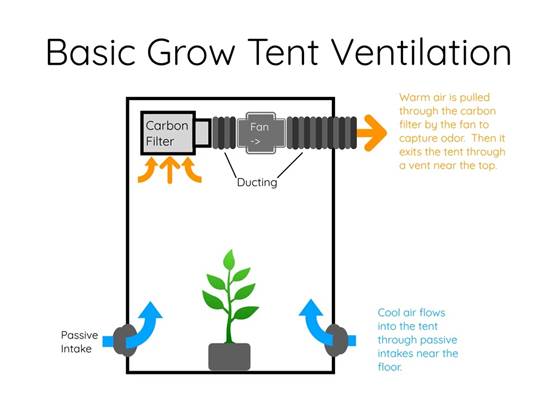
Intake vents bring fresh air into the grow tent. Place them near the bottom of the tent. Cool air enters here because cold air sinks.
Keep intake vents away from exhaust fans. This prevents the same air from moving in and out quickly. Use filters to stop dust and pests.
- Locate intake vents low on the tent walls
- Use mesh or filters for clean air intake
- Avoid placing vents close to exhaust fans
Positioning Exhaust Fans
Exhaust fans remove hot, stale air from the grow tent. Place them near the top because hot air rises. This helps remove heat efficiently.
Install fans so they vent air outside the tent. Make sure the fan size matches the tent volume for proper air exchange.
- Mount exhaust fans high inside the tent
- Connect fans to vents that lead outdoors
- Choose fan size based on tent size
Ensuring Proper Airflow Direction
Air should flow smoothly from intake vents to exhaust fans. This moves fresh air across your plants and removes heat.
Use ducting and fans to guide airflow. Avoid dead spots where air can get trapped. Regularly check airflow with your hand or a small object.
- Keep intake vents at the bottom and exhaust fans at the top
- Use ducting to direct air inside the tent
- Check for smooth, continuous airflow
- Avoid blocking vents with equipment or plants
Installing Carbon Filters
Setting up ventilation in a grow tent is crucial for healthy plants. Carbon filters help remove odors and keep the air clean.
Learn how to install carbon filters and maintain their efficiency for optimal results.
Benefits Of Carbon Filtration
Carbon filters are important in a grow tent. They help remove unwanted smells and purify the air.
- Reduces odors from the grow tent
- Improves air quality for plants
- Helps prevent mold and mildew
Mounting And Connecting Filters
Mounting the carbon filter correctly is vital. It should be placed inside the grow tent for best results.
Connect the filter to the exhaust fan using a duct. Ensure all connections are tight to avoid air leaks.
Maintaining Filter Efficiency
Regular maintenance keeps your carbon filter working well. Check and clean the filter regularly.
- Replace the filter when it becomes less effective
- Ensure no dust clogs the filter
- Keep the exhaust fan clean
Controlling Temperature And Humidity
Keeping the right temperature and humidity in your grow tent is key. Proper control helps plants grow healthy and strong.
This guide covers tools and methods to manage air flow and moisture levels effectively.
Using Inline Fans And Ducting
Inline fans move hot air out and bring fresh air in. Ducting directs air flow inside the tent. This setup keeps temperature steady.
- Place intake fans near the bottom to pull in cool air
- Install exhaust fans at the top to push out hot air
- Use ducting to guide air and reduce noise
- Choose fans with adjustable speed to control airflow
Integrating Humidifiers And Dehumidifiers
Humidifiers add moisture when air is too dry. Dehumidifiers remove excess moisture. Both keep humidity levels balanced for plant health.
| Device | Purpose | Ideal Use |
| Humidifier | Adds moisture | Dry air below 40% humidity |
| Dehumidifier | Removes moisture | High humidity above 60% |
Monitoring With Environmental Sensors
Sensors check temperature and humidity inside your tent. They help you adjust fans and humidifiers fast. This keeps conditions stable.
Common sensor features:
- Real-time data display
- Alerts for high or low readings
- Wireless connection to mobile devices
Noise Reduction Techniques
Setting up ventilation in a grow tent can create noise. Loud fans and airflow may disturb your space. Reducing this noise improves comfort and focus.
Use smart methods to lower sound without losing ventilation power. This guide shows ways to keep your grow tent quiet.
Choosing Quiet Fans
Select fans designed for low noise. Look for models labeled as quiet or silent. These fans use better blades and motors to reduce sound.
- Check decibel (dB) ratings before buying
- Choose fans with variable speed controls
- Look for brands with good reviews on noise levels
- Consider larger fans that run slower to move air quietly
Using Soundproofing Materials
Soundproof materials help block or absorb fan noise. Use them inside and outside the tent to lower sound.
| Material | Use | Benefit |
|---|---|---|
| Acoustic Foam Panels | Attach to tent walls | Absorbs sound waves |
| Mass Loaded Vinyl | Line fan ducts | Blocks noise transmission |
| Weather Stripping | Seal tent openings | Prevents sound leaks |
| Rubber Mounts | Place under fans | Reduces vibration noise |
Optimizing Fan Speed Settings
Adjust fan speeds to balance airflow and noise. Lower speeds make less sound but still move air well in many cases.
Try these tips for fan speed:
- Start with low speed and check airflow
- Increase speed only if needed for temperature control
- Use a fan controller to change speed easily
- Keep fans clean to avoid extra noise from dust buildup
Maintaining Your Ventilation Setup
Good ventilation keeps your grow tent healthy. It helps control temperature and humidity. Regular maintenance keeps everything working well.
Check your ventilation system often. Clean parts and replace worn items. Fix issues early to avoid bigger problems.
Regular Cleaning And Inspection
Dust and dirt block airflow and reduce fan power. Clean fans, ducts, and vents every few weeks. Inspect for damage or loose connections.
- Use a soft brush or cloth to remove dust.
- Check fan blades for dirt buildup.
- Look for cracks or holes in ducting.
- Tighten any loose screws or clamps.
Replacing Filters And Fans
Filters trap dust but get clogged over time. Replace them to keep air clean. Fans wear out and lose power. Replace old or noisy fans promptly.
| Item | Signs to Replace | Replacement Frequency |
| Filter | Visible dirt, bad smell | Every 3 months |
| Fan | Noise, low airflow | Every 1-2 years |
Troubleshooting Common Issues
Ventilation problems affect plant growth. Identify and fix issues quickly. Check power sources, connections, and airflow paths first.
- Fan not working: Check power and switch.
- Low airflow: Clean fan and ducts.
- Unusual noise: Tighten parts or replace fan.
- Bad smell: Replace filters and clean tent.

Credit: www.fl420grow.com
Frequently Asked Questions
How Do I Choose The Right Fan For A Grow Tent?
Select a fan based on your tent size and airflow needs. Inline fans are common for ventilation. Check CFM ratings to ensure proper air exchange. Higher CFM means better airflow. Match fan size to your tent’s volume for effective ventilation.
What Is The Best Ventilation Setup For A Grow Tent?
A common setup includes an intake fan, exhaust fan, and ducting. Exhaust fans remove hot air, while intake fans bring fresh air. Use carbon filters to control odors. Proper airflow prevents mold and ensures healthy plant growth.
How Often Should I Run Ventilation Fans In A Grow Tent?
Ventilation fans should run continuously during the grow cycle. Constant airflow maintains temperature, humidity, and CO2 levels. Use timers or controllers for precise control if needed. Proper ventilation promotes healthy plants and prevents heat buildup.
Can I Use Passive Intake Instead Of An Intake Fan?
Yes, passive intake works by drawing fresh air through vents naturally. It relies on negative pressure created by the exhaust fan. Passive intake is energy-efficient but may be less controlled. Ensure vents are large enough to allow sufficient airflow.
Conclusion
Setting up ventilation in a grow tent helps plants stay healthy. Good airflow controls temperature and humidity well. It also removes bad air and brings fresh air in. Choose the right fan and filter for your space. Place equipment where air flows smoothly.
Check your system often to keep it working. A well-ventilated grow tent means stronger plants and better growth. Simple steps make a big difference in your garden. Keep these tips in mind for best results. Your plants will thank you with great harvests.