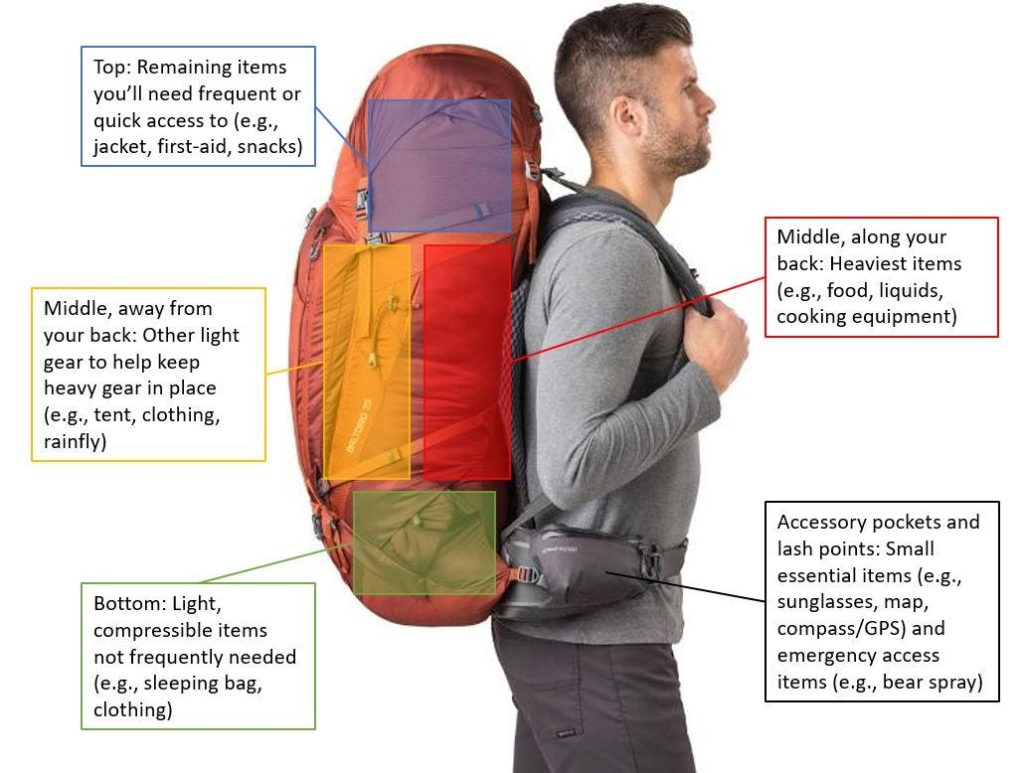
Packing your hiking backpack might seem simple, but doing it the right way can make all the difference on the trail. Imagine feeling comfortable, balanced, and ready for anything—without your pack weighing you down or throwing you off balance.
You’re about to discover easy, practical tips that will help you organize your gear smartly. Keep reading, and you’ll learn how to pack like a pro, making every hike more enjoyable and less stressful.
Choosing The Right Backpack
Packing a hiking backpack starts with picking the right one. A good backpack makes your hike easier and more fun.
Think about the kind of hiking you will do. Choose a backpack that fits your needs and body well.
Backpack Types And Sizes
Backpacks come in many types and sizes. Pick one based on how long your trip will be and what you need to carry.
- Daypacks: Small, for short hikes or day trips
- Overnight packs: Medium size for 1-3 day trips
- Multi-day packs: Large, for trips longer than 3 days
- Technical packs: Designed for climbing or special activities
Fit And Comfort
A backpack that fits well feels comfortable. It should match your torso length and waist size.
Look for padded shoulder straps and a hip belt. These help spread the weight and reduce pain.
- Adjust straps for a snug fit
- Check if the pack sits high on your hips
- Try it with weight before buying
Weight Capacity
Weight capacity tells how much your backpack can hold. Choose one that fits your gear and food needs.
Do not overload your pack. Carrying too much weight can cause injury and slow you down.
- Daypacks usually hold 10-20 liters
- Overnight packs hold 30-50 liters
- Multi-day packs hold 50-70 liters or more
Organizing Your Gear
Packing a hiking backpack needs smart organization. This helps you find things fast on the trail. It also keeps your load balanced and comfortable.
Use simple methods to group your items and keep them safe. Proper packing can make your hike more enjoyable.
Essential Items To Pack
Focus on packing only what you need. Too many items add weight and clutter. Essentials include food, water, clothes, and safety gear.
- Water bottles or hydration system
- Weather-appropriate clothing
- First aid kit
- Map and compass or GPS
- Food and snacks
- Multi-tool or knife
- Headlamp or flashlight
- Emergency shelter
Using Packing Cubes And Bags
Packing cubes and bags help separate your gear. They keep items organized and easy to access. Use different bags for clothes, food, and tools.
| Type of Bag | Purpose |
| Large packing cube | Store clothes and layers |
| Medium dry bag | Keep electronics and documents dry |
| Small zip bag | Hold first aid and small tools |
| Food bag | Keep snacks and meals organized |
Balancing Weight
Balance your backpack to avoid strain. Put heavy items close to your back and center. Lighter items go near the top and outside pockets.
- Place heavy gear in the middle, near your spine.
- Distribute weight evenly on both sides.
- Pack bulky items at the bottom.
- Use side pockets for small, light items.
- Tighten straps to keep gear secure.
Packing Techniques
Packing a hiking backpack properly helps in making your trek more comfortable. This guide will teach you techniques to pack efficiently.
Understanding the right way to pack ensures you have easy access to essentials and keep your load balanced.
Layering For Accessibility
Layering items in your backpack allows you to reach important gear quickly. Keep things you need often near the top or in side pockets.
- Place your rain gear at the top for sudden weather changes.
- Keep snacks and water in side pockets.
- Store your first aid kit in an accessible pocket.
Distributing Weight Evenly
Balancing the weight in your backpack prevents strain on your back. Heavier items should be close to your back and centered.
Imagine your backpack as having three zones:
- Bottom Zone:Light items like sleeping bags.
- Middle Zone:Heavy items such as cooking kits and food.
- Top Zone:Medium weight items for easy access.
Securing Loose Items
Loose items can throw off your balance and get lost. Secure them properly using straps and pockets.
- Use compression straps to tighten the load.
- Attach trekking poles to designated loops.
- Secure small items in zippered compartments.
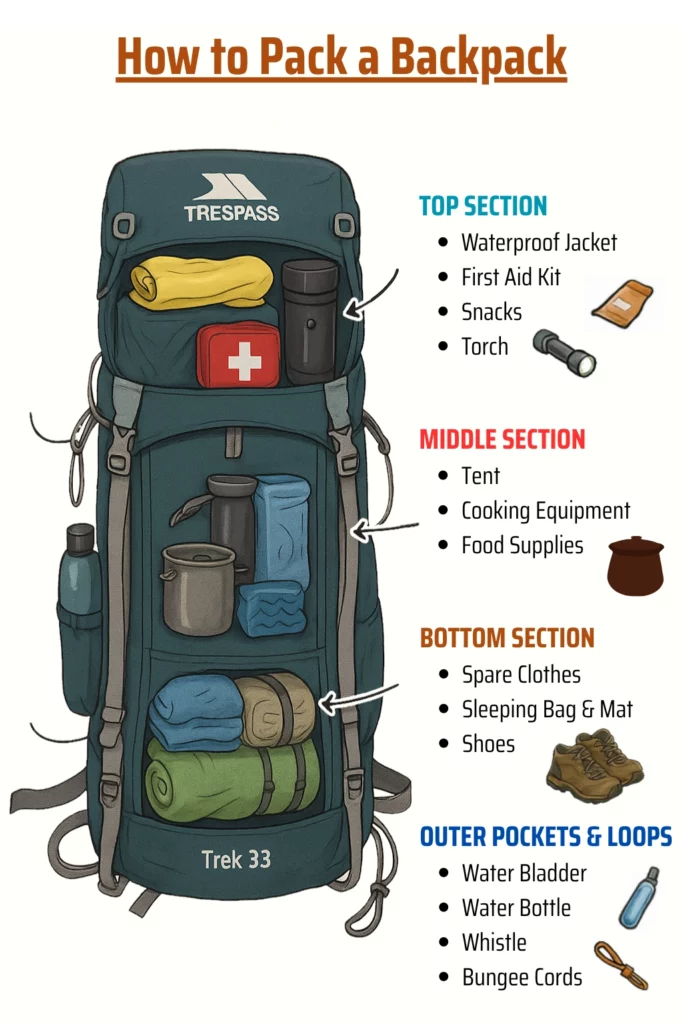
Credit: www.trespass.com
Maximizing Space
Packing a hiking backpack can be tricky. You need to fit everything without making it too heavy or bulky.
Using smart packing methods helps you carry more and stay comfortable on the trail.
Compressing Clothing
Clothes take up a lot of space if not packed well. Compressing them saves room for other gear.
- Roll clothes tightly instead of folding them
- Use compression sacks or bags to squeeze out air
- Pack bulky items like jackets last, compressed flat
- Layer thin clothes inside shoes or corners of the bag
Utilizing External Pockets
External pockets give quick access to small items and free up main space.
| Item | Best Pocket Use |
| Water bottle | Side mesh pockets |
| Map and compass | Top lid pocket |
| Snacks | Front zipper pocket |
| First aid kit | Easy-access side pocket |
Multi-purpose Gear
Choose gear that serves more than one function. This reduces what you need to carry.
- A pot that works as a bowl and cup
- A jacket that doubles as a pillow
- A knife with multiple tools
- Clothing that dries fast and insulates
Safety And Emergency Gear
Packing safety and emergency gear is key for any hiking trip. It keeps you ready for unexpected situations.
Organize your gear well inside your backpack. This helps you find important items fast in an emergency.
First Aid Kit Placement
Place your first aid kit where you can reach it quickly. It should be easy to grab without unpacking everything.
Keep it near the top or in an outer pocket of your backpack. This saves time if you need to treat a wound.
- Choose a waterproof container for your kit
- Check that the kit has essentials like bandages and antiseptics
- Keep the kit organized so items don’t scatter
Navigation Tools
Navigation tools like a map and compass are vital. Store them where you can access them fast.
Use a waterproof case to protect your map. Keep your compass close by, such as in a top pocket or chest strap pouch.
- Carry a detailed trail map
- Bring a reliable compass
- Consider a GPS device as a backup
- Keep all tools in easy-to-reach spots
Emergency Shelter
Emergency shelters protect you from weather if you get stuck outside. Pack one that is light and compact.
Store your shelter at the bottom of your backpack. This keeps it safe and out of the way until you need it.
- Use a space blanket or lightweight tarp
- Choose a shelter suitable for the climate
- Keep it dry by using a waterproof bag
- Practice setting it up before your hike

Credit: www.sport-conrad.com
Final Checks Before The Trail
Before you start hiking, it is important to check your backpack. Final checks help you avoid problems on the trail.
Make sure your backpack feels right and everything is packed well. This saves you time and trouble later.
Weight Adjustment Tips
Adjust the weight of your backpack to balance the load. Keep heavy items close to your back.
Use the straps to tighten the pack. This keeps it steady while walking.
- Place heavy gear in the middle and near your spine
- Light items can go at the top or outside pockets
- Tighten shoulder straps and hip belt for support
Comfort Testing
Try walking with your backpack before the hike. Check if it feels good on your shoulders and hips.
Adjust straps if you feel pain or pressure. A comfortable pack helps you hike longer without issues.
- Walk around to test the fit
- Listen for any rubbing or pinching
- Repack if some areas feel too heavy
Weather Considerations
Check the weather forecast before you leave. Pack rain gear or sun protection as needed.
Keep important items dry by using waterproof bags or covers. Adjust your packing if rain or cold is expected.
- Bring a rain cover for your backpack
- Pack extra layers for cold weather
- Use sunscreen and hats in sunny weather
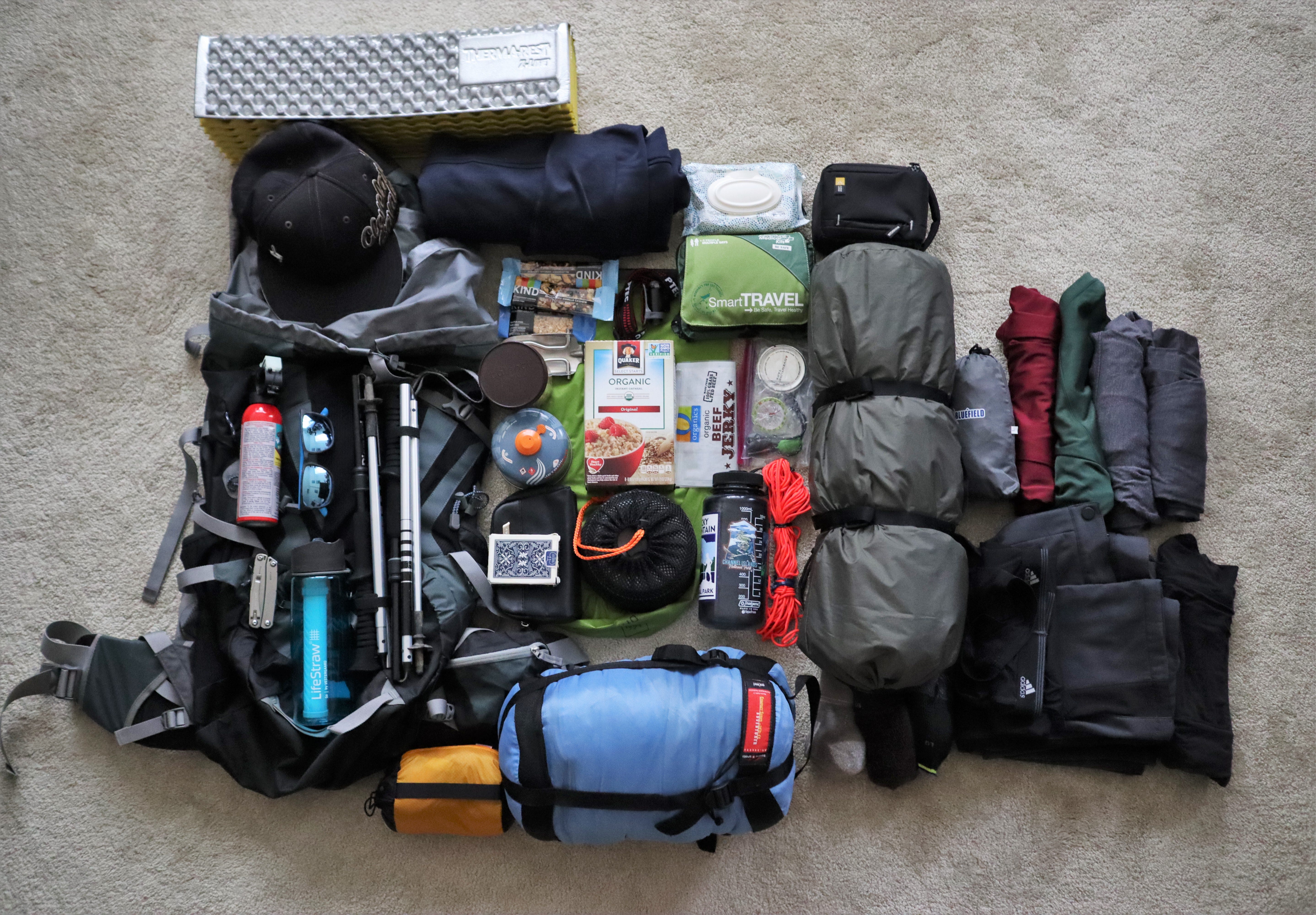
Credit: pangolinswithpacks.com
Frequently Asked Questions
How Do I Pack A Hiking Backpack Efficiently?
Pack heavy items close to your spine for balance. Place lighter gear at the top and sides. Use compression straps to secure everything tightly. Organize by frequency of use to avoid unpacking often.
What Essentials Should I Pack For A Hiking Trip?
Include water, food, first aid kit, map, and weather-appropriate clothing. Don’t forget a headlamp, multi-tool, and sun protection. Adjust items based on trip length and weather conditions.
How Can I Distribute Weight In My Hiking Backpack?
Place the heaviest gear near your back and center. Keep medium-weight items around it. Lighter items should go at the top and outer pockets. This helps maintain stability and reduces strain.
When Should I Use A Rain Cover For My Backpack?
Use a rain cover during wet weather or if rain is forecasted. It protects your gear from moisture and keeps your pack dry. Always carry one, especially in unpredictable conditions.
Conclusion
Packing a hiking backpack takes some practice and planning. Start with the heaviest items close to your back for balance. Keep essentials easy to reach, like water and snacks. Use smaller bags to stay organized and save space. Remember to check your pack’s weight before heading out.
A well-packed backpack makes hiking safer and more fun. Take your time, pack smart, and enjoy the trail ahead.