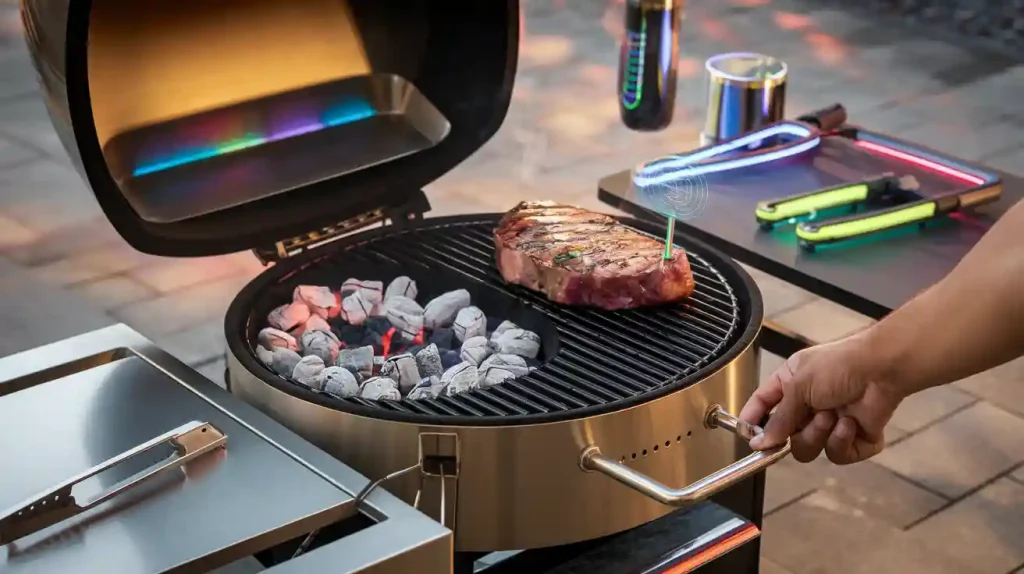
Are you struggling to get the perfect temperature on your charcoal grill? You’re not alone.
Knowing how to adjust the heat can make all the difference between a juicy, flavorful meal and one that’s overcooked or underdone. Imagine serving up perfectly grilled steaks, burgers, or veggies every time. In this guide, you’ll learn simple, effective ways to control the temperature on your charcoal grill so you can cook like a pro.
Keep reading—your best grilling experience is just a few steps away.
Choosing Charcoal Types
Choosing the right charcoal affects your grill’s temperature control. Different types burn in unique ways. This choice helps you cook food evenly and at the right heat.
Understanding how lump charcoal and briquettes differ will guide your grilling experience. Each type has advantages for temperature management.
Lump Charcoal Vs Briquettes
Lump charcoal is made from pure wood chunks. Briquettes are made by compressing charcoal dust and other materials. Lump charcoal lights quickly and burns hotter. Briquettes burn longer and more steadily.
- Lump charcoal produces a strong, smoky flavor.
- Briquettes offer consistent heat for longer cooking times.
- Lump charcoal can burn unevenly due to varied sizes.
- Briquettes are uniform, making temperature easier to maintain.
Impact On Temperature
Temperature control depends on charcoal type, size, and air flow. Lump charcoal burns hotter but cools faster. Briquettes maintain a steady temperature for hours. Knowing these traits helps adjust your grill’s heat precisely.
| Charcoal Type | Burn Temperature | Burn Time | Heat Consistency |
|---|---|---|---|
| Lump Charcoal | High (up to 700°F) | Shorter (1-2 hours) | Less consistent |
| Briquettes | Medium (up to 600°F) | Longer (3-5 hours) | More consistent |

Credit: www.siuhaau.com
Setting Up The Grill
Adjusting the temperature on a charcoal grill is important for perfect cooking. Proper setup of the grill is the first step to control heat levels.
Understanding how to arrange charcoal and use tools will help you manage temperatures. Let’s explore how to set up your grill for cooking success.
Arranging Charcoal For Heat Zones
Creating heat zones on your grill helps cook different foods at the same time. You can have a hot zone for searing and a cooler zone for slow cooking.
To set up these zones, arrange your charcoal in a specific way. This will give you more control over the cooking process.
- Spread charcoal evenly for a single heat level.
- Pile charcoal on one side for direct and indirect heat zones.
- Adjust the amount of charcoal for desired heat intensity.
Using A Charcoal Chimney Starter
A charcoal chimney starter is a great tool for lighting charcoal. It helps you get the coals ready without lighter fluid.
Using a chimney starter makes lighting charcoal easier and quicker. It ensures an even distribution of heat across the grill.
- Fill the chimney with charcoal.
- Place crumpled newspaper underneath the chimney.
- Light the newspaper to ignite the charcoal.
- Wait until the top coals are gray with ash.
- Carefully pour the hot coals into the grill.
Controlling Airflow
Controlling airflow is key to adjusting the temperature on a charcoal grill. Air feeds the fire, so more air means a hotter fire. Less air cools it down.
You control airflow using vents on your grill. Adjusting these vents helps keep your cooking temperature steady.
Adjusting Bottom Vents
Bottom vents let air into the grill. Opening them wide increases oxygen to the coals. This makes the fire burn hotter and faster. Closing the vents slows the fire by reducing oxygen.
- Open vents fully for high heat grilling.
- Partially close vents for medium heat.
- Close vents mostly to lower the temperature or slow the fire.
- Keep vents clean to avoid airflow blockages.
Managing Top Dampers
Top dampers control how air leaves the grill. They help keep smoke inside and control the fire’s burn rate. Open dampers let heat escape faster, cooling the grill. Closed dampers trap heat and raise the temperature.
| Top Damper Position | Effect on Temperature |
| Fully Open | Lower temperature, more smoke exits |
| Partially Open | Moderate temperature, balanced smoke |
| Mostly Closed | Higher temperature, smoke trapped |
Fuel Management
Managing fuel on a charcoal grill helps control cooking temperature. Proper fuel use keeps heat steady and food cooked well.
Knowing how to add charcoal and keep the heat consistent makes grilling easier. This guide covers key fuel management tips.
Adding Charcoal During Cooking
Add charcoal carefully to keep the grill hot without sudden temperature spikes. Use fresh charcoal for best results.
- Open the grill lid slightly before adding charcoal to reduce smoke.
- Use long tongs to place new charcoal near hot coals.
- Add small amounts at a time to avoid overheating.
- Wait a few minutes for new coals to catch fire before closing the lid.
- Spread the coals evenly for consistent heat.
Maintaining Consistent Heat
Keep airflow steady to maintain temperature. Adjust vents to control oxygen flow and fuel burning speed.
| Action | Effect on Heat | When to Use |
| Open vents more | Increases oxygen, raises temperature | When grill is too cool |
| Close vents slightly | Reduces oxygen, lowers temperature | When grill is too hot |
| Spread coals evenly | Creates uniform heat | For even cooking |
| Pile coals | Concentrates heat in one area | For searing or high heat needs |
Using Water And Heat Shields
Adjusting the temperature on a charcoal grill helps cook food evenly. Water and heat shields are great tools to control heat and moisture.
Water adds moisture to the grill, keeping food tender. Heat shields protect food from direct flames and help spread heat.
Moisture Control Techniques
Adding water inside the grill keeps the air moist. This stops food from drying out during cooking. A small pan with water works well for this.
You can place the water pan near the coals. The heat will cause water to evaporate slowly. This adds gentle moisture to the cooking area.
- Use a shallow pan filled with water
- Place the pan on the grill grate, not directly on coals
- Check water level and refill as needed during cooking
- Keep the grill lid closed to trap moisture
Indirect Cooking Setup
Heat shields help create an indirect cooking zone. This means food cooks away from the hottest coals. It prevents burning and cooks food slowly.
Use a heat shield or drip pan between the coals and food. This spreads heat evenly and protects food from flames.
- Push coals to one side of the grill
- Place a heat shield or pan on the opposite side
- Put food on the side without coals
- Close the lid to keep heat steady

Credit: www.amazon.com
Monitoring Temperature
Keeping an eye on your charcoal grill’s temperature is key to cooking food right. You need to know how hot the grill is to cook evenly.
Using the right tools and knowing how to adjust the heat helps you get the best results every time.
Using Grill Thermometers
Grill thermometers show the temperature inside the grill. Many grills have built-in thermometers on the lid. You can also use a digital or probe thermometer for more precise readings.
- Place the thermometer near the food but not touching the charcoal.
- Check the temperature often during cooking.
- Use a probe thermometer to check the meat’s internal temperature.
- Calibrate your thermometer to ensure it is accurate.
Reading And Adjusting Heat Levels
Charcoal heat changes as coals burn down. You can control heat by adjusting air vents and adding or spreading coals.
| Action | Effect on Heat | When to Use |
|---|---|---|
| Open air vents | Increases oxygen, raises temperature | When grill is too cool |
| Close air vents | Reduces oxygen, lowers temperature | When grill is too hot |
| Add more charcoal | Increases heat and cooking time | For longer or hotter cooking |
| Spread coals evenly | Creates uniform heat across grill | For consistent cooking |
| Push coals to one side | Makes a cooler zone for indirect heat | For slow cooking or smoking |
Common Temperature Issues
Controlling the temperature on a charcoal grill can be tricky. Knowing common problems helps you cook better.
Two main issues are overheating and low heat. Fixing these problems keeps your food cooking just right.
Fixing Overheating
Overheating happens when too much air reaches the coals. This makes the grill too hot and can burn food.
Close the grill vents a little to slow the airflow. This reduces the heat inside the grill.
- Partially close top and bottom vents to limit oxygen
- Spread out the coals to lower heat concentration
- Remove some hot coals if heat stays too high
- Use a water spray bottle to cool flare-ups quickly
Dealing With Low Heat
Low heat occurs when the coals do not get enough air. This causes the grill to be too cool for cooking.
Open the vents fully to increase airflow and raise the temperature. Add more charcoal if needed.
- Open bottom and top vents to let in more oxygen
- Add fresh charcoal to boost heat
- Use a chimney starter to light new coals quickly
- Keep the grill lid closed to trap heat inside
Tips For Perfect Heat Control
Controlling the temperature on a charcoal grill is key for great cooking. Adjusting the heat needs careful steps and attention.
Knowing how to manage the charcoal and vents can help keep your grill at the right heat for your food.
Patience And Timing
Waiting for the charcoal to reach the right heat takes time. Do not rush lighting or cooking.
Open or close vents slowly to change the temperature. Quick changes can cause flare-ups or uneven heat.
- Light charcoal and let it burn until covered with white ash
- Open vents to increase heat; close vents to lower heat
- Give time for heat to stabilize after adjusting vents
Practice And Experimentation
Try different ways to place the charcoal to see how heat changes. Practice helps you learn your grill’s behavior.
Test cooking with small changes in charcoal amount and vent opening. This helps find the best settings for your food.
- Use more charcoal for high heat, less for low heat
- Arrange coals in a pile for direct heat or spread for indirect heat
- Adjust vents little by little and watch the temperature

Credit: www.bbqspitrotisseries.com.au
Frequently Asked Questions
How Do I Control Heat On A Charcoal Grill?
Control heat by adjusting air vents and charcoal amount. Open vents increase oxygen, raising temperature. Close vents to lower heat. Spread coals evenly for consistent heat or pile them for high heat.
What’s The Best Way To Set Temperature Zones?
Create temperature zones by arranging coals unevenly. Pile coals on one side for direct high heat. Leave the other side with fewer coals for indirect low heat. This lets you cook different foods simultaneously.
How Can I Add Charcoal To Maintain Heat?
Add fresh charcoal gradually during cooking. Light new coals in a chimney starter first. Then place them among burning coals to avoid temperature drops. This keeps your grill hot and steady.
Why Is Airflow Important For Temperature Control?
Airflow feeds oxygen to the coals, controlling their burn rate. More airflow means hotter coals. Adjust vents to regulate airflow. Proper ventilation helps maintain steady temperatures and prevents smoke buildup.
Conclusion
Adjusting the temperature on a charcoal grill takes practice and patience. Control the air vents to raise or lower heat. Add or spread out charcoal to keep a steady flame. Check the grill’s temperature often to avoid burning food. Remember, small changes make big differences.
With time, you will cook better and enjoy your meals more. Keep these tips in mind for your next barbecue. Grilling can be simple and fun.