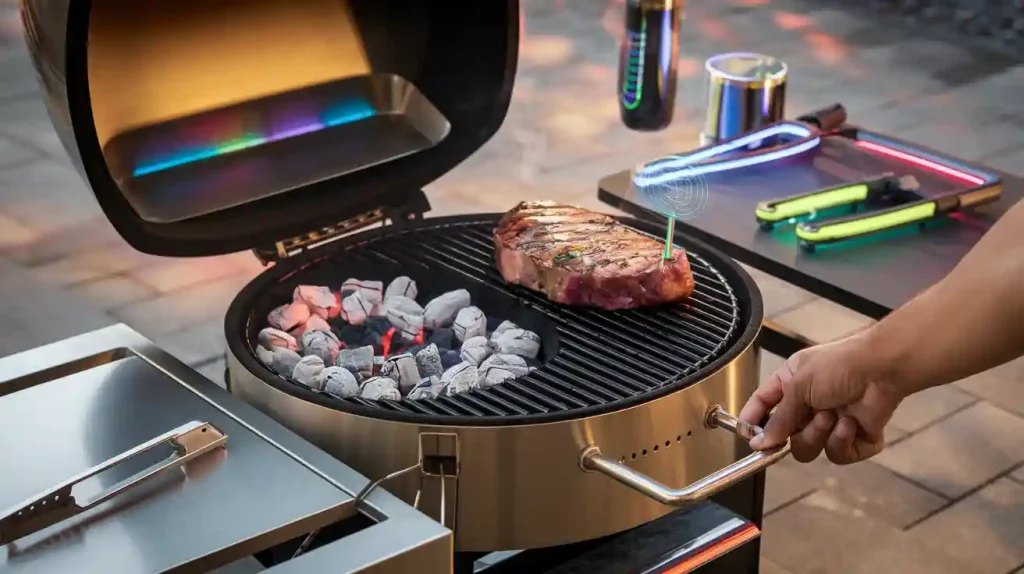
Controlling the temperature of your charcoal grill can be tricky, but it’s the key to cooking perfect meals every time. If you’ve ever struggled with food that’s burnt on the outside and raw inside, or meals that take forever to cook, this guide is for you.
You’ll learn simple tricks to keep your grill at just the right heat, so your food turns out juicy, flavorful, and cooked exactly how you want. Ready to take full control of your charcoal grill and impress everyone at your next cookout?
Keep reading to unlock the secrets.
Charcoal Types And Their Heat
Controlling the temperature of a charcoal grill depends on the type of charcoal used. Different charcoals burn at different heat levels and times.
Knowing how lump charcoal and briquettes perform helps you keep your grill at the right temperature for cooking.
Lump Charcoal Vs Briquettes
Lump charcoal is made by burning wood in low oxygen. It is natural and has no additives. Briquettes are made from compressed charcoal and other materials.
Lump charcoal lights quickly and burns hotter. Briquettes burn longer and provide steady heat.
- Lump charcoal produces less ash.
- Briquettes have a uniform size for even heating.
- Lump charcoal can have uneven shapes and sizes.
- Briquettes may contain fillers or binders.
Heat Output And Burn Time
Lump charcoal reaches higher temperatures fast. It is best for searing and short cooking times.
Briquettes burn slower and maintain heat for a longer time. They suit slow cooking or smoking.
| Charcoal Type | Heat Output | Burn Time |
|---|---|---|
| Lump Charcoal | High heat, quick rise | Short burn time |
| Briquettes | Moderate heat, steady | Long burn time |
Setting Up Your Grill For Success
Controlling the temperature of a charcoal grill is key to cooking great food. Setting up your grill properly helps keep the heat steady.
Good preparation makes grilling easier and more fun. It also helps you avoid burnt or undercooked meals.
Arranging Charcoal For Heat Zones
Creating different heat zones lets you cook various foods at once. You can have a hot side for searing and a cooler side for slow cooking.
Place more charcoal on one side of the grill for high heat. Leave fewer coals or none on the other side for low heat.
- Pile charcoal in a thick layer for direct heat
- Spread charcoal thin or leave empty for indirect heat
- Use a charcoal chimney to light coals evenly
Using The Right Grill Accessories
Some tools help you control the grill temperature better. They make managing heat easier and safer.
Use accessories like vents, thermometers, and grill gloves. These items help you adjust airflow and check heat without opening the lid too often.
- Adjust vents to control oxygen flow and heat level
- Use a grill thermometer to monitor cooking temperature
- Wear heat-resistant gloves to handle hot parts safely
Managing Airflow To Control Temperature
Controlling the temperature of a charcoal grill is key for perfect grilling. Airflow management is crucial for this task. Adjusting the vents helps you control the heat and cook your food evenly.
Understanding how to use both bottom and top vents will make your grilling experience better. Let’s explore these components to ensure your barbecue is always a success.
Bottom Vents And Oxygen Supply
The bottom vents are your primary tool for oxygen control. More oxygen means hotter coals. Less oxygen cools them down. Adjust these vents to set your grill’s base temperature.
- Open the vents wide for high heat.
- Close them halfway for medium heat.
- Almost close them for low heat.
Top Vents And Smoke Release
Top vents control smoke and heat escape. While bottom vents set the temperature, top vents fine-tune it. They also help avoid too much smoke accumulation.

Credit: www.siuhaau.com
Using The Grill Lid Effectively
Controlling the temperature on a charcoal grill is easier when you use the lid right. The lid helps keep the heat inside the grill.
Knowing how to adjust and position the lid can make your cooking better. It can also help you save charcoal.
Trapping Heat And Smoke
Closing the lid traps heat and smoke inside the grill. This raises the temperature and cooks food evenly.
Trapped smoke adds flavor to the food. It also helps keep the meat moist and tender.
- Keep the lid closed during cooking to keep heat in.
- Open the lid only to check or turn the food.
- Use vents on the lid to control airflow and smoke.
Adjusting Lid Position For Temperature
Changing how much the lid is open changes the grill’s temperature. A fully closed lid keeps the heat high.
Opening the lid a little lets some heat escape. This lowers the temperature for slower cooking.
- Close the lid tightly for high heat cooking.
- Open the lid slightly for medium heat.
- Open the lid more to cool down the grill fast.
- Watch the temperature gauge if your grill has one.
Reading And Using Grill Thermometers
Controlling the temperature of a charcoal grill is key to cooking food well. Grill thermometers help you check the heat inside the grill easily.
Knowing how to read and use these thermometers lets you cook your food at the right temperature. This keeps your food juicy and tasty.
Built-in Vs External Thermometers
Built-in thermometers come attached to the grill lid. They show the temperature inside the grill without opening it.
External thermometers are separate tools. You can place them in different spots on the grill for more accurate readings.
- Built-in thermometers are easy to use but may not be very accurate.
- External thermometers give better readings and more control.
- Using both types together can help you monitor heat well.
Ideal Temperature Ranges For Different Foods
Each food needs a different grill temperature to cook properly. Knowing these ranges helps you avoid undercooking or burning.
| Food Type | Ideal Grill Temperature (°F) |
|---|---|
| Steak (Medium Rare) | 130 – 135 |
| Chicken (Whole) | 165 – 175 |
| Fish | 120 – 145 |
| Vegetables | 350 – 400 |
| Burgers | 160 – 165 |
Use your thermometer to keep the grill within these ranges. Adjust the charcoal and vents to raise or lower heat.
Techniques To Adjust Temperature Mid-cook
Controlling the temperature of a charcoal grill during cooking is important. It helps to cook food evenly and avoid burning. You can change the heat by using simple techniques while cooking.
Two main ways to adjust grill temperature are adding or removing charcoal and adjusting airflow. These methods give you control over the heat quickly and easily.
Adding Or Removing Charcoal
If the grill is too hot, remove some charcoal carefully. Use tongs or a fireproof tool to take out burning coals. This lowers the heat and prevents food from burning.
To increase heat, add more charcoal. Light the new coals in a chimney starter before adding them. This helps the new charcoal catch fire faster and raises the temperature quickly.
- Remove charcoal to lower heat
- Add lit charcoal to raise heat
- Use tools to handle hot coals safely
- Light new charcoal before adding
Adjusting Airflow For Quick Changes
Airflow controls how fast the charcoal burns. Open the grill vents to let in more air. This makes the fire hotter and increases the temperature.
Close the vents to reduce airflow. This slows down the burning and lowers the heat. Adjust the vents slowly to find the right temperature for cooking.
- Open vents to increase heat
- Close vents to decrease heat
- Adjust vents slowly for best control
- Watch the grill temperature as you change airflow
Common Temperature Challenges
Controlling the temperature on a charcoal grill can be tricky. Many grillers face issues like uneven heat and sudden flames.
Knowing how to handle these problems helps you cook food perfectly every time.
Preventing Hot Spots
Hot spots are areas on the grill that get much hotter than others. They can burn your food if you are not careful.
To prevent hot spots, spread the charcoal evenly across the grill surface. Avoid piling coals in one place.
- Use a charcoal rake or tongs to move coals around
- Arrange coals in a single layer for even heat
- Create zones with fewer coals for indirect cooking
Dealing With Flare-ups
Flare-ups happen when fat drips onto hot coals and cause sudden flames. These flames can burn food quickly.
To manage flare-ups, keep a spray bottle of water nearby. Use it to calm flames without cooling the grill too much.
- Trim excess fat from meat before grilling
- Move food to a cooler part of the grill if flames rise
- Close the lid to reduce oxygen and control flames

Credit: www.bbqpro.co.nz
Tips For Consistent Results Every Time
Controlling the temperature of a charcoal grill helps cook food evenly. Consistent heat means better flavors and fewer burnt spots. Use simple steps to keep your grill temperature steady.
Small changes in airflow or coal arrangement can change the heat quickly. Learn easy ways to control the temperature for great results every time you grill.
Preheating Your Grill
Always preheat your charcoal grill before cooking. This warms the grill and helps the coals burn evenly. It also cleans the grill grates by burning off leftovers.
Start by lighting your charcoal and letting it burn until covered with white ash. This usually takes 15 to 20 minutes. Then spread the coals out to create an even heat.
- Light charcoal using a chimney starter or lighter cubes
- Wait until coals are covered with white-gray ash
- Spread coals evenly for uniform heat
- Close the lid to trap heat and reach cooking temperature
Using A Water Pan For Heat Control
A water pan helps keep the grill temperature steady. It adds moisture to the cooking space and absorbs heat. This reduces temperature spikes and prevents food from drying out.
Place the water pan between the coals and the food. Use hot water to help the grill reach the right temperature faster. Check the water level and refill if needed during long cooks.
- Use a shallow metal pan that fits your grill
- Fill the pan with hot water before cooking
- Place it near the coals but not directly over flames
- Refill water as it evaporates to keep moisture and heat stable

Credit: www.bbqspitrotisseries.com.au
Frequently Asked Questions
How Do I Adjust Airflow To Control Grill Temperature?
Control the grill temperature by adjusting the vents. Opening vents increases oxygen, raising the heat. Closing vents reduces airflow, lowering the temperature. Balance top and bottom vents for precise control.
What Charcoal Types Provide Better Temperature Control?
Lump charcoal heats faster and burns hotter with less ash. Briquettes offer consistent, steady heat, ideal for long cooking. Choose based on your cooking style and temperature needs.
How Can I Maintain Consistent Heat On A Charcoal Grill?
Use a two-zone fire setup with coals on one side. Place food on the cooler side for indirect cooking. Add charcoal gradually to maintain steady heat throughout cooking.
What Tools Help Monitor Charcoal Grill Temperature?
Use a built-in or standalone grill thermometer for accuracy. Infrared thermometers measure grate temperature instantly. Regular temperature checks ensure better control and cooking results.
Conclusion
Controlling charcoal grill temperature takes practice and patience. Adjust the air vents to raise or lower heat quickly. Use the charcoal amount to control how hot the fire burns. Watch the grill thermometer often to keep the right temperature. Keep a spray bottle handy to cool down flare-ups fast.
With simple steps, you can cook food evenly every time. Enjoy the process and learn from each grilling session. Soon, temperature control will feel natural and easy. Grilling with the right heat makes food taste better and safer to eat.