Setting up your tent is only half the battle. If you want your shelter to stay strong against wind and weather, knowing how to tie guy ropes correctly is essential.
You might have the best tent, but without secure guy ropes, it can wobble or even collapse. In this guide, you’ll learn simple, foolproof ways to tie your guy ropes so your tent stays steady no matter what. Keep reading to discover easy steps that will make your camping experience safer and more comfortable.

Credit: www.amazon.ca
Choosing The Right Guy Ropes
Guy ropes keep your tent stable and safe during wind or rain. Choosing the right ropes matters for strength and ease of use.
Look at the rope material and thickness first. Then, think about the right length for your tent setup.
Materials And Thickness
Guy ropes come in different materials. Nylon is strong and stretches a little. Polyester does not stretch much and handles sun well. Polypropylene is light but can wear out faster.
- Nylon:Strong, stretchy, good for windy conditions.
- Polyester:Durable, low stretch, good under sun.
- Polypropylene:Light, less durable, budget option.
Thickness affects rope strength. Thicker ropes hold more weight but can be heavier to carry. Thin ropes save weight but may break easier.
Length Considerations
Choosing the right length helps you set your tent properly. Too short ropes may not reach the ground or stakes. Too long ropes add extra weight and tangle easily.
| Rope Length | Best Use | Notes |
| 3–4 meters (10–13 feet) | Small tents | Light and easy to handle |
| 5–6 meters (16–20 feet) | Medium tents | Good balance of reach and weight |
| 7+ meters (23+ feet) | Large tents or uneven ground | Extra length for flexibility |

Credit: www.amazon.ca
Selecting Anchor Points
Choosing the right anchor points is key to securing your tent properly. Good anchors keep your tent stable in wind and rain.
Pick anchor points that hold well and suit the ground. This helps your guy ropes stay tight and safe.
Natural Vs. Artificial Anchors
Natural anchors are parts of the environment you can use to tie your guy ropes. Trees, rocks, and bushes are common examples.
Artificial anchors include tent pegs, stakes, or other gear you bring with you. They work when natural anchors are not available or not strong enough.
- Natural anchors:no extra gear needed, but not always reliable
- Artificial anchors:require equipment but provide firm hold
- Use natural anchors only if they are strong and stable
- Bring extra stakes for soft or loose ground
Ground Conditions
Ground type affects how well you can secure your tent. Hard, rocky, or sandy ground needs different anchor choices.
Soft soil lets stakes go deep and hold well. Rocky or sandy ground may need heavier or specialized anchors.
- Soft soil:use long stakes and push them deep
- Rocky ground:tie to rocks or use heavy bags
- Sandy soil:use wide or specialized stakes for better grip
- Frozen ground:try rocks or heavy objects as anchors
Basic Knot Techniques
Learning how to tie knots is essential for setting up a tent securely. The right knot keeps your tent stable in all weather conditions.
In this guide, we cover three basic knots that are useful for tying guy ropes to your tent. These knots ensure your tent stays in place.
Taut-line Hitch
The taut-line hitch allows you to adjust the tension of the rope easily. It is ideal for securing tent guy lines.
- Wrap the rope around the anchor point.
- Loop the rope back over itself twice.
- Make a final loop and pull it tight.
- Slide the knot to adjust tension.
Bowline Knot
The bowline knot is known for forming a fixed loop at the end of a rope. This knot is strong and reliable.
To tie a bowline knot:
1. Make a small loop in the rope, leaving enough rope on either side.
2. Pass the end of the rope through the loop.
3. Bring the rope end back around the standing part.
4. Pass the rope end back down through the loop.
5. Pull tight to secure the knot.
Clove Hitch
The clove hitch is simple yet effective for attaching a rope to a pole or tree. It is quick to tie and untie.
| Step | Action |
| 1 | Wrap the rope around the object once. |
| 2 | Cross the rope over itself. |
| 3 | Wrap the rope a second time. |
| 4 | Slide the end under the second wrap. |
| 5 | Pull tight to secure. |
Step-by-step Guide To Tying Guy Ropes
Tying guy ropes correctly helps keep your tent steady in wind and rain.
This guide shows simple steps to attach and secure your guy ropes safely.
Preparing The Rope
Choose a strong, weather-resistant rope that suits your tent size. Cut the rope to a length that allows good reach from the tent to the anchor.
- Measure the distance from the tent’s guy point to the ground anchor.
- Add extra length to allow for knots and tension adjustments.
- Check the rope for any damage before use.
Attaching To Tent
Secure the rope to the tent’s guy point using a reliable knot. The knot should be tight but easy to adjust.
- Use a bowline knot for a secure loop that won’t slip.
- Alternatively, use a taut-line hitch for adjustable tension.
- Make sure the rope is firmly fastened and does not slip.
Securing To Anchor
Fix the other end of the rope to a strong ground anchor. This anchor can be a tent peg or a natural object.
| Anchor Type | Best Use |
| Tent Peg | Firm soil or grass |
| Rock or Tree | Hard or loose ground |
| Deadman Anchor | Snow or sand |
Adjusting Tension
After securing, tighten the rope to hold the tent firm. Check tension regularly and adjust if needed.
Follow these tips for adjusting tension:
- Pull the rope until the tent fabric is smooth but not overstretched.
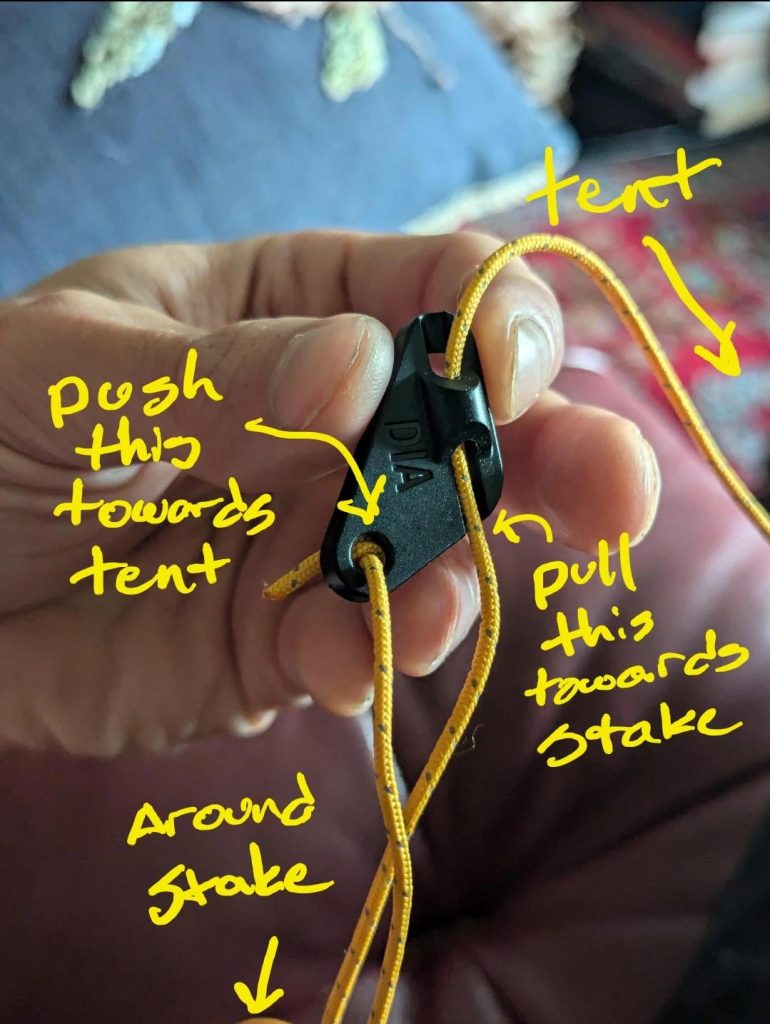
- Use a taut-line hitch knot to make tension changes easy.
- Recheck tension after strong wind or rain.
Tips For Maintaining Stability
Keeping your tent stable is important for safety and comfort. Guy ropes help hold the tent in place during wind and bad weather. Proper care of these ropes keeps the tent steady.
This guide explains how to check knots, re-tighten ropes, and consider weather for the best tent stability.
Checking Knots Regularly
Knots can loosen over time and reduce tent stability. Check all knots before and during your camping stay. Look for any signs of slipping or wear.
- Inspect knots every few hours in windy conditions
- Look for frayed or damaged rope sections
- Tighten or redo any loose knots immediately
- Use knots that are easy to adjust and secure
Re-tightening Guy Ropes
Guy ropes stretch and slacken due to weather and tent movement. Re-tighten ropes regularly to keep the tent firm. Check after rain or strong wind.
- Start from the main tent poles
- Pull each rope tight without damaging it
- Secure the rope with a firm knot or tensioner
- Walk around the tent to check all ropes
Weather Considerations
Weather affects how you tie and maintain guy ropes. Wind, rain, and temperature changes can loosen ropes or damage knots.
| Weather | Effect on Guy Ropes | Action to Take |
| Windy | Ropes may loosen or pull unevenly | Check and tighten knots more often |
| Rainy | Ropes can stretch when wet | Re-tighten ropes after rain stops |
| Cold | Ropes may become stiff and brittle | Use ropes suited for low temperatures |
| Hot | Ropes may weaken from sun damage | Use UV-resistant ropes and check regularly |

Credit: www.amazon.ca
Common Mistakes To Avoid
Tying guy ropes to a tent seems simple but can cause problems. Many campers make mistakes that affect tent stability.
Fixing these errors helps keep your tent safe and strong during wind or rain.
Loose Knots
Tying loose knots can cause the guy ropes to slip. This weakens the tent’s support and may cause it to collapse.
Always pull the knots tight and check them often. Loose knots let wind loosen the ropes quickly.
Incorrect Anchor Placement
Placing anchors too close or in soft ground reduces their hold. This makes the tent unstable during bad weather.
Choose firm ground and space anchors far enough to keep the ropes tight and the tent steady.
- Pick hard soil or rock for anchors
- Place anchors at a 45-degree angle from the tent
- Keep equal distance for all anchors
Using Worn Ropes
Old ropes may look fine but can break easily. Worn ropes lose strength and can snap under pressure.
Check your guy ropes before use. Replace any rope with frays, cuts, or weak spots to avoid accidents.
Frequently Asked Questions
How Do You Tie Guy Ropes To A Tent Securely?
To tie guy ropes securely, use a taut-line hitch or bowline knot. Attach the rope to the tent’s guy line loops. Ensure the rope is tight but adjustable to maintain tension in changing weather.
What Is The Best Knot For Tent Guy Ropes?
The taut-line hitch is the best knot for guy ropes. It allows you to adjust rope tension easily. This knot holds well under pressure and is simple to tie and untie.
How Many Guy Ropes Should You Use For A Tent?
Use at least three guy ropes for a small tent. Larger tents may need four or more for stability. Proper placement of ropes improves wind resistance and tent durability.
Where Should Guy Ropes Be Anchored Around A Tent?
Anchor guy ropes at designated loops on the tent’s exterior. Secure them to sturdy stakes driven firmly into the ground. Space the anchors evenly to balance tension and support.
Conclusion
Tying guy ropes to your tent keeps it steady and safe. Use strong knots that hold tight in wind and rain. Check the ropes often to avoid loosening or damage. Practice tying different knots to find what works best. A well-secured tent makes camping more comfortable and worry-free.
Simple steps can protect your shelter and gear. Try these tips next time you set up your tent. Enjoy your outdoor adventure with confidence and ease.