If you’re serious about fishing, knowing how to tie braided fishing line to mono is a skill you can’t afford to miss. This simple step can make a huge difference in your casting distance, strength, and overall success on the water.
But if you’ve ever struggled with knots slipping or breaking, you’re not alone. You’ll discover easy-to-follow methods that will keep your line strong and secure every time. Ready to improve your fishing game? Let’s dive in and get your lines tied perfectly.

Credit: www.reddit.com
Choosing The Right Knot
Tying braided fishing line to mono requires the right knot. The knot must hold tight and not slip.
Different knots work better for braided to mono connections. Choosing the right one makes fishing easier.
Popular Knots For Braided To Mono
The Albright knot is very popular for joining braided line to mono. It is strong and easy to tie.
The Double Uni knot is another good choice. It creates a smooth and strong connection.
- Albright Knot: Good for different line sizes
- Double Uni Knot: Strong and reliable
- FG Knot: Very slim and strong, but harder to tie
Knot Strength And Reliability
Strength is important to keep the lines from breaking. A good knot holds under tension.
Reliability means the knot stays tied and does not slip. Some knots work better with braided line.
| Knot | Strength | Ease of Tying | Slip Resistance |
|---|---|---|---|
| Albright Knot | High | Easy | Good |
| Double Uni Knot | High | Medium | Very Good |
| FG Knot | Very High | Hard | Excellent |

Credit: www.youtube.com
Preparing Your Lines
Preparing your braided and monofilament fishing lines properly makes tying easier. Good preparation helps the knot hold strong and last longer.
Take time to prepare both lines before you start tying. This ensures a smooth and secure connection.
Trimming And Aligning Lines
Trim the ends of both lines to remove any frays. Clean, even ends help create a tight knot.
Align the braided line and mono line side by side. Make sure they are even in length before tying.
- Use sharp scissors or a line cutter
- Cut straight across the ends
- Match line ends to the same length
Moistening For Better Grip
Moisten the lines before pulling the knot tight. Wet lines reduce friction and keep the knot from weakening.
Use water or saliva to wet the lines. This helps the knot slide smoothly and hold better once tightened.
- Dip the knot area in water
- Or lick your fingers and moisten the lines
- Avoid using too much water to keep lines manageable
Step-by-step Knot Tying
Tying braided fishing line to mono can be tricky. Here are simple methods to help you tie these lines together.
Each method ensures a strong connection. Choose the one that suits your needs best.
Double Uni Knot Method
The Double Uni Knot is reliable. It works well for joining different types of fishing lines.
- Overlap the ends of the braided line and mono line.
- With the braided line, create a loop over the mono line.
- Wrap the braided line around both lines six times.
- Tighten the knot by pulling on the braided line.
- Repeat the process with the mono line.
- Pull both lines to slide the knots together.
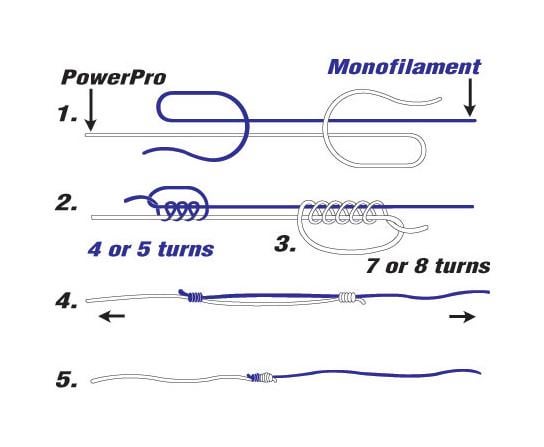
Albright Knot Method
The Albright Knot is useful for connecting lines of different diameters. It provides a smooth finish.
- Make a loop in the mono line.
- Pass the braided line through the loop.
- Wrap the braided line around itself and the loop ten times.
- Bring the braided line back through the mono loop.
- Tighten the knot by pulling on both lines.
Improved Clinch Knot Variation
The Improved Clinch Knot Variation is simple. It is often used for lighter lines.
- Thread the braided line through the mono hook or eye.
- Wrap the braided line around itself five times.
- Pass the end of the braided line through the first loop above the eye.
- Bring it back through the big loop.
- Tighten the knot by pulling on the braided line.

Credit: www.reddit.com
Testing Knot Strength
Tying braided fishing line to mono requires a strong knot. Testing the knot strength helps avoid losing fish and gear. This guide explains how to check and fix your knot for safety.
After tying the knot, pull on the line to test its hold. If it slips or loosens, you need to adjust or retie it. Proper testing saves time and frustration on the water.
Pulling And Checking Security
Hold the braided line and mono line firmly. Pull slowly and evenly to feel if the knot tightens securely. Watch for any slipping or movement in the knot area.
- Use steady pressure, not a quick jerk
- Check if the knot stays tight under tension
- Look for any visible gaps or loose wraps
- Make sure both lines do not slip against each other
- If the knot slips, do not use the line
Adjusting And Retying Tips
If the knot fails the test, adjust it carefully. Tighten all wraps and ends. If still weak, cut the knot and retie it from the start. Follow these tips to improve strength.
| Tip | Action |
| Check tag ends | Leave about 1/8 inch for better grip |
| Wrap tightly | Make firm, neat wraps without gaps |
| Moisten knot | Wet the knot before tightening to reduce friction |
| Pull test again | Repeat pulling to confirm knot security |
| Try different knot | Use a stronger knot if problems persist |
Common Mistakes To Avoid
Tying braided fishing line to mono requires care. Avoid mistakes to keep your line strong and reliable. Some errors can cause the line to break or slip.
This guide covers two common mistakes anglers make. Learn what to watch for and how to tie knots correctly.
Overtightening And Line Damage
Pulling the knot too tight can damage the line. Braided lines are thin and strong but can cut under pressure. Overtightening weakens the knot and may cause failure.
- Do not pull the knot with excessive force
- Use steady, gentle tension to snug the knot
- Check the line for cuts or abrasions after tying
- Trim excess tag ends carefully to avoid fraying
Skipping Moistening Step
Failing to moisten the line before tightening causes friction. Friction heats the line and weakens it. This can lead to knot failure during fishing.
| Step | Effect Without Moistening | Effect With Moistening |
|---|---|---|
| Tightening the knot | High friction, heat damage | Reduced friction, smooth tightening |
| Knot strength | Weakened, prone to break | Strong, reliable hold |
| Line durability | Shortened life due to heat | Maintained strength and life |
Maintaining Your Knots
Tying braided fishing line to mono creates a strong connection. Maintaining these knots keeps your line reliable.
Check your knots often. Proper care helps avoid losing fish or gear.
Regular Inspection
Look at your knots before and after fishing. Check for any signs of damage or wear.
Look for frayed fibers, loosening, or slipping. These signs mean your knot may fail soon.
- Untie and retie knots if they look weak
- Feel the knot for tightness and smoothness
- Make sure no line is cut or damaged near the knot
Replacing Worn Knots
Replace knots that show damage or are old. Do not risk fishing with weak knots.
Cut the old knot carefully. Use fresh line to tie a new, secure knot.
- Trim damaged line close to the knot
- Tie a strong knot like the FG knot or Double Uni knot
- Test the new knot by pulling it firmly
- Trim excess line after tying
Frequently Asked Questions
How Do You Tie Braided Line To Mono Line?
To tie braided to mono, use strong knots like the Double Uni or FG knot. These knots ensure a secure, smooth connection and reduce line slippage for better fishing performance.
What Is The Best Knot For Braided To Mono?
The Double Uni knot is widely recommended. It creates a strong, reliable join without damaging the lines, making it ideal for tying braided fishing line to monofilament.
Can I Use Any Knot To Connect Braided And Mono?
Not all knots work well. Use knots like the Double Uni or FG knot, which maintain line strength and prevent slipping, ensuring a durable connection.
Why Is Connecting Braided To Mono Important?
Connecting braided to mono allows anglers to combine braided line’s strength with mono’s shock absorption, improving casting distance and reducing line breakage during fishing.
Conclusion
Tying braided line to mono is simple with practice. Use the right knot and tighten it well. Check the knot before fishing to avoid losing your catch. This skill helps you fish better and enjoy more time on water. Keep trying and soon it will feel natural.
Don’t rush; take your time for a strong connection. Good knots mean fewer line breaks and more successful fishing trips. Try different knots to find what works best for you. Stay patient and enjoy every fishing moment.